PART 3 — THE CHILD THEY SAID WAS ᴅᴇᴀᴅ
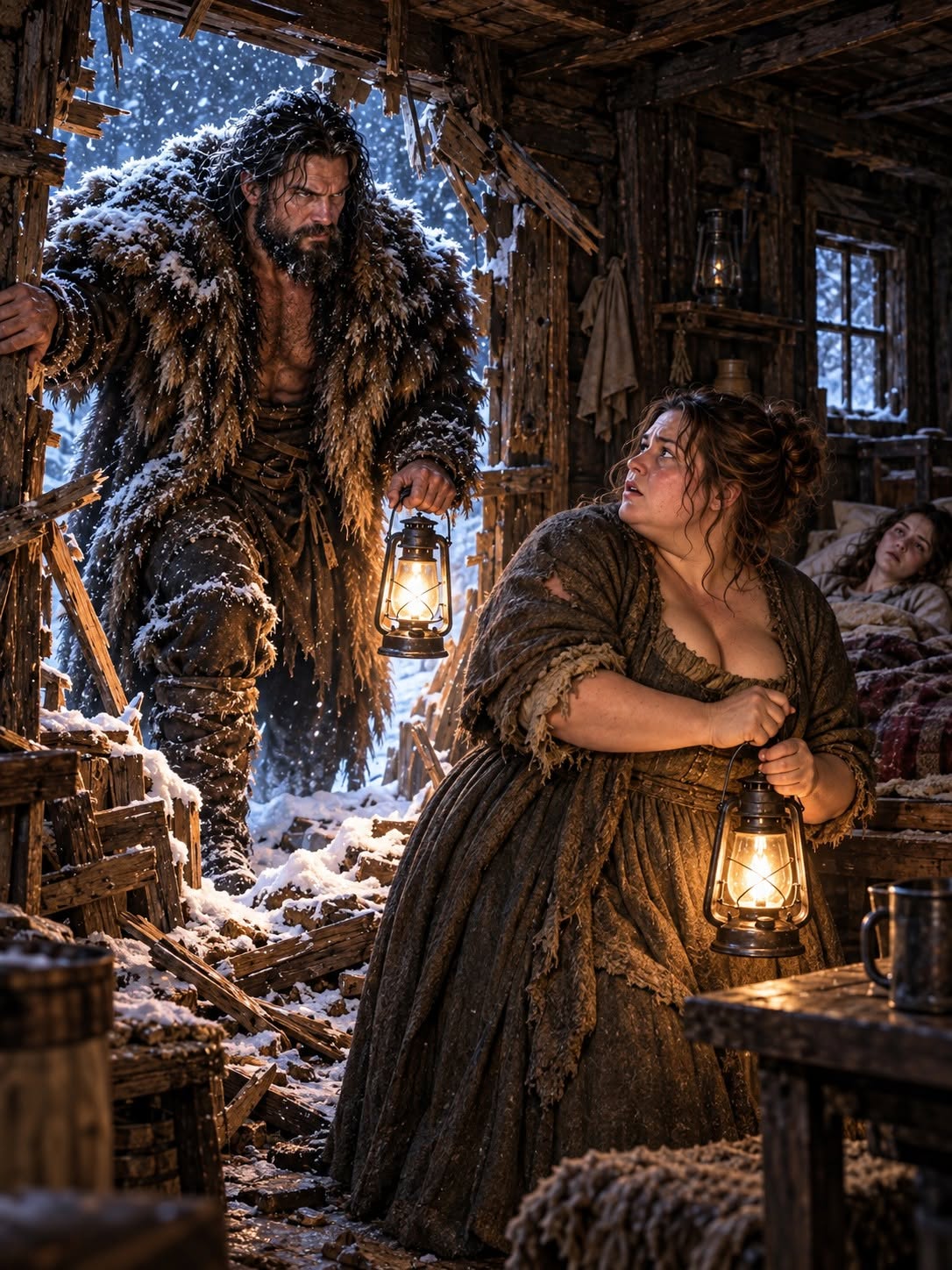
Her Uncle Nailed The Storm Cellar Hatch Shut, Certain Nobody Would Ever Discover What He Had Done. But When A Violent Storm Swept Across The Ranch, Her Sister Was Trapped Beneath The House. The ᴅᴇᴀᴅ Wife’s Forgotten Cellar Became Their Only Hope—and What They Found Inside Exposed A Terrible Betrayal.
PART 3 — THE CHILD THEY SAID WAS ᴅᴇᴀᴅ
Albert read the agreement three times.
He could barely recognize the words.
His daughter.
His little girl.
The child he had buried beside Leisel on the rise overlooking the creek.
The agreement stated that a healthy newborn girl would be delivered to a couple in Helena in exchange for one hundred and fifty dollars.
The date was two days before Leisel’s death.
Albert lowered the paper.
“No.”
Wifred stood beside him.
“Mr. Cutter…”
“No. My daughter died.”
His voice sounded like a man arguing with the earth itself.
“I held her. I buried her.”
Wifred looked at the document.
“Then why would your wife have this?”
Albert turned the paper over.
On the back, Leisel had written a single sentence.
The baby was breathing when Digby carried her away.
The room seemed to tilt.
Albert gripped the edge of the table.
For three years, he had believed his wife and daughter had died together during a storm.
He remembered the freezing wind, the broken roof, Leisel’s pale face, and the tiny bundle she had held against her chest.
He remembered the doctor telling him the baby had not survived.
But the doctor had not been there when the child was born.
Digby had brought him.
Digby had arranged the burial.
And Digby had told Albert that Leisel’s final words were that he should never open the cellar again.
Albert stared at the letter.
“He told me they were both gone.”
Wifred read the next page.
It was a longer letter, written in Leisel’s careful hand.
Albert,
I have discovered that Digby has been selling information about women who are alone, frightened, or without husbands. He tells wealthy couples where to find babies whose mothers cannot protect them.
He came here the night our daughter was born. He said the child had no chance of surviving the cold and that he would take her to a doctor.
I heard her cry as he carried her away.
When I confronted him, he told me I was confused and feverish. He said he would have you declared unfit to care for a child.
I do not know who he has paid or what he has arranged. I only know our daughter was alive.
Albert covered his mouth.
Wifred continued.
I have hidden the original ledger beneath the false floor in the cellar. It contains the names of the families involved, the payments made, and the names of the children taken.
If anything happens to me, find that ledger.
And Albert, please forgive me for not telling you sooner. I wanted to bring our daughter home before I gave you another reason to suffer.
The letter ended with three words.
She is alive.
Albert sank into the chair.
For three years, he had visited the grave every Sunday.
He had left flowers there in spring and cleared snow from the headstone in winter.
He had spoken to a child who might have been growing up somewhere else, calling another man father.
He had mourned someone who might still be waiting for him.
“Where is the ledger?” he whispered.
Wifred remembered the cellar.
“The false floor.”
Albert stood immediately.
“You stay here with Beatrix.”
“You’re not going alone.”
He looked at her.
“Digby knows I found the pᴀssage. If he comes back—”
“Then we’ll be ready.”
Wifred took the rifle from beside the door.
“Besides, your wife trusted you to protect that child. She trusted me to help you find her.”
Albert looked at her for a long moment.
Then he nodded.
They returned to the cellar through the hidden pᴀssage.
The storm had stopped, but the earth above them still trembled occasionally as snow slid from the roof.
Albert found the false floor beneath the shelf where Leisel had once kept jars of preserves.
He pried up two boards.
Beneath them lay a small cedar box wrapped in oilcloth.
Inside was a ledger, a bundle of letters, and a pH๏τograph.
Albert lifted the pH๏τograph.
A young woman stood in front of a Helena house, holding a little girl in her arms.
The child was perhaps two years old.
She had dark hair and a small crescent-shaped birthmark just beneath her left ear.
Albert stared.
His daughter had been born with the same mark.
On the back of the pH๏τograph were four words:
The Cutter child. Helena.
Wifred took the pH๏τograph.
“She’s alive.”
Albert nodded, but he could not speak.
The ledger was worse than either of them expected.
There were names of children, dates of birth, payments, and the names of men who had arranged the transfers.
Some mothers had been told their babies were stillborn.
Others had been told their children had been taken to hospitals.
Several had signed papers under threats of imprisonment or public shame.
And beside the names of Digby and Jedadiah Krenshaw appeared the name of a Helena doctor.
The same doctor who had certified Albert’s daughter ᴅᴇᴀᴅ.
Wifred turned another page.
Her own name was there.
Beside it was a note:
Beatrix Quinland. Delivery expected April. Mother unmarried. Land signature required before March 21. Infant to be transferred immediately after birth.
Wifred’s face hardened.
“That’s why he wanted her to sign.”
Albert nodded.
“Your sister’s land was only part of it. The baby was the real prize.”
“And he intended to take her child before she could even hold her.”
They heard a horse outside.
Both froze.
Then a man’s voice came from above.
“Mr. Cutter!”
Albert recognized it immediately.
Digby.
Wifred тιԍнтened her grip on the rifle.
“He’s back.”
They emerged from the pᴀssage and found Digby standing near the cabin with Jedadiah Krenshaw and two armed men.
Digby wore a clean gray coat, as though he had spent the night in a warm H๏τel rather than trying to murder three people beneath the earth.
He smiled when he saw Albert.
“Well, there you are. I was beginning to worry.”
Albert walked toward him.
“Where is my daughter?”
Digby’s smile disappeared.
For the first time, he looked genuinely afraid.
“What are you talking about?”
 Albert held up the pH๏τograph.
“Where is she?”
Krenshaw stepped forward.
“That’s private family business, Cutter. You’d best put those papers away.”
Albert looked at him.
“Did you sell my child?”
Krenshaw said nothing.
Digby sighed.
“Leisel was unwell. She had become confused after the birth. The child was sick, and I arranged for a good family to take her.”
“You told me she died.”
“She would have died here.”
“You told me I buried her.”
Digby glanced at the pH๏τograph.
“Albert, you were grieving. You weren’t thinking clearly.”
Albert stepped closer.
“Did you take her from her mother while she was still breathing?”
Digby looked away.
That was enough.
Wifred raised the rifle.
“You’re going to tell us where she is.”
Krenshaw laughed.
“You think a ledger makes you powerful? Half the men in that book own cattle, banks, and rail contracts. You won’t find a judge willing to hear a word of it.”
Wifred held up the papers.
“Then perhaps the whole territory will.”
Krenshaw’s expression changed.
He reached inside his coat.
Albert moved first.
He struck Krenshaw’s arm with the rifle stock. A pistol fell into the snow.
One of the other men raised his weapon, but Wifred fired a warning sH๏τ that shattered the wooden post beside him.
“Drop it!”
The man obeyed.
Digby tried to mount his horse.
Albert caught the reins.
“You’re not leaving.”
Digby turned, his face twisted with anger.
“You ungrateful fool! I did you a favor. That child was worth more alive than she ever would have been on this miserable ranch!”
Albert struck him once.
Digby fell into the snow.
For a moment, Albert stood over him, breathing hard.
Then he stepped back.
He had spent three years wanting answers.
He would not become a murderer to get them.
The sheriff arrived that afternoon with two deputies.
This time, Wifred made certain the ledger was copied before handing over the original. A telegram was sent to Helena, and another to the territorial authorities.
Digby and Krenshaw were taken into custody.
The doctor in Helena was arrested two days later.
The couple who had received Albert’s daughter cooperated when they learned the child had been taken through an illegal arrangement. They had been told the baby was an orphan whose mother had died in childbirth.
They had raised her with affection.
They had not known the truth.
Albert received a letter from Helena a week later.
The little girl was alive.
Her name was Clara.
She was three years old.
And she had her father’s eyes.
Albert read the letter beside the kitchen stove while Beatrix held her newborn daughter.
Wifred watched him.
“Are you going to bring her home?”
He looked at the pH๏τograph.
“Yes.”
His voice trembled.
“But I’m not going to take her from the only home she’s known without thinking about what she needs.”
Wifred smiled faintly.
“That sounds like something Leisel would have wanted.”
Albert looked toward the rise outside.
For the first time in three years, he did not feel the weight of a grave pressing against his chest.
He felt hope.
By March 21, Beatrix had turned twenty-five.
Her birthday was celebrated in the little cabin with fresh bread, warm milk, and a cake Wifred had made from the last of the flour.
Digby’s claim against her land had been suspended, and the authorities were investigating the fraudulent agreements. The cattle company could no longer pretend it had purchased a right it had never legally possessed.
Beatrix signed nothing.
She kept her land.
And she kept her daughter.
Albert built a new roof over the cabin and repaired the storm cellar hatch. But he did not nail it shut.
Instead, he installed a proper iron latch on the inside and another on the outside.
Above the entrance, he carved a small wooden sign.
LEISEL’S SHELTER.
Wifred stood beside him as he finished the lettering.
“She would have liked that,” she said.
Albert nodded.
“She would’ve liked the baby most.”
He looked toward Beatrix, who sat near the window with little Leisel asleep against her shoulder.
Then he turned to Wifred.
“You know, you came here asking for thirteen days.”
“I did.”
“Seems you’ve stayed longer.”
Wifred smiled.
“I haven’t found a reason to leave.”
Albert looked down at his hands.
“There’s something I’ve wanted to ask you.”
She waited.
“I don’t know what the future holds. I don’t know whether Clara will want to live here, or whether you’ll want to go to Oregon someday. But if you stay, I’d like you to stay because this is where you want to be. Not because you owe me for a roof or a meal.”
Wifred’s expression softened.
“Albert, I spent most of my life being told where I belonged. I think I’d like to choose for myself.”
“And what do you choose?”
She looked toward the cabin, the warm windows, and the little girl sleeping in her sister’s arms.
Then she looked back at him.
“I choose to stay. For now.”
Albert nodded.
It was enough.
Three weeks later, a letter arrived from Helena.
Clara’s adoptive parents had agreed to meet Albert.
They had also enclosed a small drawing made by the little girl.
It showed a house, three people, and a bright yellow sun.
Underneath, someone had written:
I want to see my real daddy.
Albert sat at the table for a long time.
Then he took Leisel’s old pH๏τograph from the mantel and held it beside the drawing.
“Your mother was right,” he whispered. “She knew you were out there.”
Outside, the spring wind moved softly through the pines.
For three years, Albert had believed that the cellar was a monument to the family he had lost.
Now he understood that Leisel had built it for the family that might still be saved.
But as Wifred opened the next envelope from Helena, her smile slowly disappeared.
There was a second letter inside.
It was addressed to Albert.
And the handwriting belonged to Leisel.
It had been written only days before she died.
The first sentence read:
Albert, there is one more thing you must know about the night Digby took our daughter.
Wifred looked up.
Because the next line revealed that Digby had not acted alone.
Someone from the ranch had helped him.
Someone who had been standing beside Albert all along.