The Little Boy Whose Body Grew Differently: Ethan’s Life with Proteus Syndrome
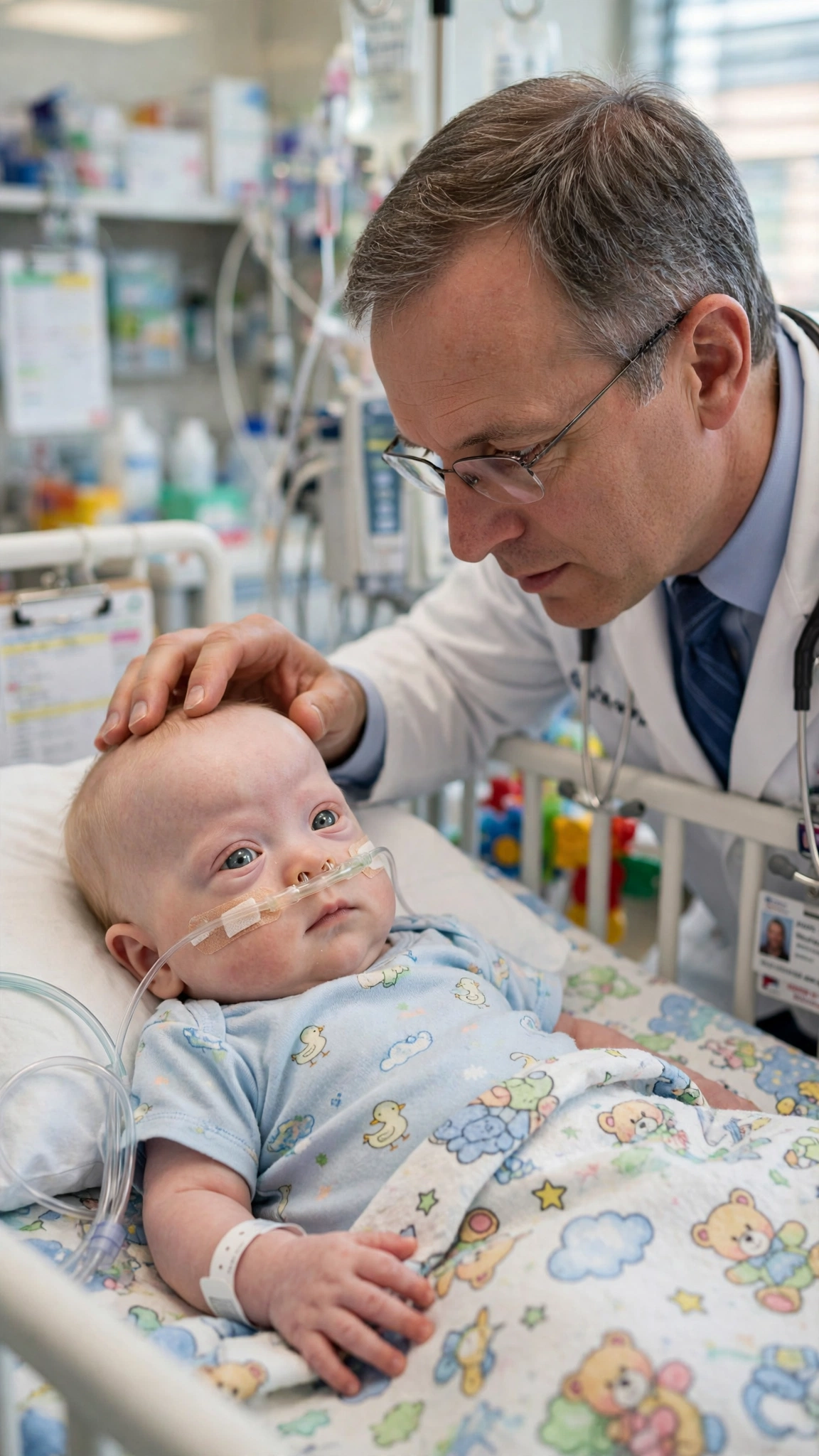
At just four years old, little Ethan was facing a medical condition so rare that very few families ever encounter it.
His childhood had begun like that of many other babies. When he was born, his parents had no reason to believe that his physical development would eventually become so different.
But as the months pᴀssed, they began noticing changes in his body.
One of his legs appeared to be growing faster than the other. At first, the difference was subtle, but gradually it became more noticeable. His parents also observed unusual changes in certain areas of his skin and soft tissue.
His body seemed to be developing unevenly, and the differences became increasingly difficult to ignore.
Concerned about what they were seeing, his parents took him to medical specialists for further evaluation. They wanted to understand why one part of his body was growing differently and whether the changes could affect his health.
After numerous examinations and specialist consultations, Ethan received a diagnosis of Proteus Syndrome.
Proteus Syndrome is an extremely rare genetic disorder that causes progressive, disproportionate overgrowth of different tissues and structures in the body. It can affect bones, skin, fatty tissue, and other parts of the body. The condition is ᴀssociated with a genetic change that usually occurs spontaneously during early development rather than being inherited from a parent.
Its effects can vary considerably between individuals. Some children experience noticeable changes in their limbs, while others develop overgrowth in different areas of the body.
For Ethan, one of the most visible differences was the unusual size of his leg.
As he continued growing, his family needed to pay close attention to changes in his physical development. His doctors monitored the affected limb and evaluated his bones, joints, muscles, and soft tissues to understand how the condition might influence his movement.
The medical team also needed to watch for possible complications ᴀssociated with abnormal tissue growth.
For Ethan, however, the condition was not just something discussed during medical appointments. It affected parts of his everyday life.
At an age when most children were learning to run, jump, climb, and explore their surroundings without thinking twice, Ethan sometimes had to approach these activities differently.
Walking for extended periods could require additional effort. Running alongside other children was not always easy, and certain movements could become uncomfortable depending on his physical condition.
Even choosing everyday clothing and footwear required more consideration. His parents needed to find comfortable options that accommodated the differences in his legs without causing unnecessary pressure or discomfort.
His family understood that his journey might involve ongoing medical care and additional support as he grew older.
There were moments when his parents worried about what the future would bring. They wondered how his condition might progress, whether his mobility would change, and what challenges he might face as he entered school and began making friends.
Yet despite these concerns, they remained determined to give Ethan a childhood filled with love, encouragement, and as many happy experiences as possible.
Every morning, his mother helped him get dressed. She made sure his clothes were comfortable, gently ᴀssisted him whenever he needed help, and held his little hand as they began another day.
She never wanted him to feel that he was different in a way that made him less deserving of happiness.
She reminded him that his body did not determine who he was.
Ethan was still a curious four-year-old who wanted to discover new things. He wanted to play with toys, laugh with his family, make friends, and enjoy the simple adventures of childhood.
His parents encouraged him to explore the world at his own pace. They celebrated his little achievements and tried to make sure that his medical condition never overshadowed his personality.
Some days were more difficult than others, but his family continued to stand beside him through every examination, every uncertainty, and every new challenge.
Ethan’s story is about more than a rare genetic condition. It is about a young child growing up in a body that develops differently, and a family determined to make sure he never feels defined by that difference.
He may face challenges that other children do not, but his dreams are just as meaningful.
He deserves friendship, laughter, education, opportunities, and the freedom to experience childhood in his own way.
Because a child’s worth has never been measured by the shape of their body, the size of their limbs, or the appearance of their skin.
It is found in who they are, not in how they look.