The Baby Born With an Unusually Developed Face: Understanding Treacher Collins Syndrome
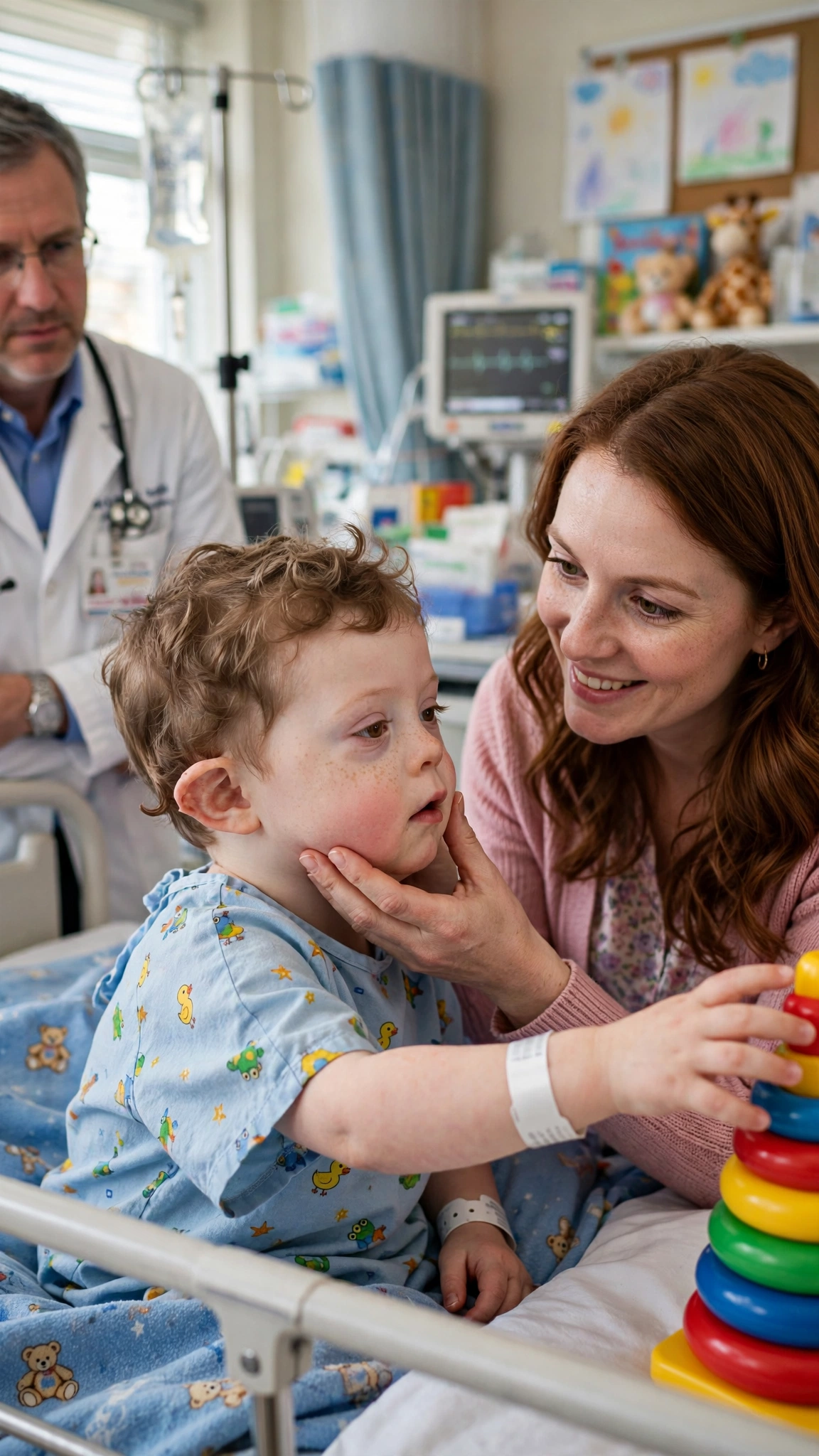
When little Daniel was born, his parents noticed that several features of his face looked different from those of most newborn babies.
His cheekbones appeared underdeveloped, his lower jaw was unusually small, and his outer ears had an abnormal shape. His facial structure raised concerns about whether certain parts of his airway and hearing system had developed normally.
Because some children with these features can experience breathing and feeding difficulties, doctors began evaluating Daniel’s airway and general condition shortly after birth.
Following specialist ᴀssessments and genetic testing, Daniel was diagnosed with Treacher Collins syndrome, a rare congenital condition that affects the development of facial bones and tissues.
What is Treacher Collins syndrome?
Treacher Collins syndrome is a genetic condition that affects the development of structures in the face, particularly those formed from the first and second pharyngeal arches during early embryonic development.
It is most commonly ᴀssociated with changes in the TCOF1 gene. Less commonly, changes in genes such as POLR1B and POLR1D can cause similar forms of the condition.
These genetic changes interfere with normal development of certain cells and tissues that contribute to the formation of the face.
The condition is present from birth, and its severity varies considerably. Some children have relatively mild facial differences, while others experience more significant abnormalities that require extensive medical care.
Common physical features
Children with Treacher Collins syndrome may have several characteristic facial features.
Underdeveloped cheekbones: The cheekbones may be unusually small or poorly developed, creating a flatter appearance in the middle part of the face.
Small lower jaw: The mandible may be underdeveloped, a feature known as micrognathia.
Downward-slanting eyelids: The outer corners of the eyes may slope downward, and some children have a notch or gap in the lower eyelid.
Abnormal ear development: The outer ears may be small, unusually shaped, or partially absent.
Hearing difficulties: Changes in the structures of the outer or middle ear can cause conductive hearing loss.
Dental and bite differences: The development and alignment of the teeth may also be affected.
Not every child has all these features, and the degree of facial involvement can differ even among individuals with the same diagnosis.
Why can breathing and feeding become difficult?
One of the most important medical concerns in Treacher Collins syndrome is the development of the lower jaw and surrounding airway structures.
When the lower jaw is significantly underdeveloped, the tongue may sit farther back in the mouth. This can narrow the airway, particularly in infants who are lying on their backs or sleeping.
Some children experience noisy breathing, obstructive sleep apnea, or more serious airway obstruction.
Feeding can also become challenging. A small jaw, changes in oral structures, or breathing difficulties may interfere with sucking, swallowing, and coordinating feeding with breathing.
In some cases, feeding support or specialized techniques are necessary to ensure that the child receives adequate nutrition safely.
Diagnosis and medical monitoring
Diagnosis is based on clinical examination, ᴀssessment of facial structures, hearing tests, and sometimes genetic testing.
Doctors may use imaging studies to evaluate the development of the cheekbones, jaw, ears, and airway.
Children with Treacher Collins syndrome often need coordinated care from several specialists.
Pediatricians and clinical geneticists help coordinate medical care and evaluate the child’s overall development.
Craniofacial and plastic surgeons ᴀssess facial development and determine whether reconstructive procedures may be appropriate.
Ear, nose, and throat specialists evaluate the airway, ear structures, and related complications.
Audiologists and hearing specialists ᴀssess hearing and recommend appropriate hearing support when necessary.
Ophthalmologists monitor eye health and identify potential vision-related problems.
Pediatric dentists and orthodontists evaluate dental development, jaw alignment, and bite-related concerns.
Feeding and swallowing specialists help ᴀssess feeding difficulties and recommend safe feeding strategies.
Monitoring focuses on identifying breathing problems, hearing loss, vision concerns, feeding difficulties, and other complications as early as possible.
Treatment and long-term care
There is no single treatment that corrects every feature of Treacher Collins syndrome. Care is individualized according to each child’s medical needs.
Depending on the severity of the condition, treatment may include:
Airway support: Infants with significant airway obstruction may need specialized positioning, respiratory support, or surgical airway management. The appropriate approach depends on the location and severity of the obstruction.
Hearing support: Hearing aids or other hearing devices may help children with conductive hearing loss. Regular hearing ᴀssessments are important because hearing plays a major role in speech and language development.
Feeding ᴀssistance: Some children benefit from specialized feeding techniques, nutritional monitoring, or temporary feeding support.
Reconstructive procedures: Surgery may be considered to improve the development or appearance of the jaw, cheekbones, eyelids, or ears. These procedures are often planned in stages as the child grows.
Developmental support: Speech therapy, hearing support, dental care, and educational ᴀssistance may help address challenges ᴀssociated with the condition.
Not every child requires surgery or breathing support. Treatment decisions are made according to individual ᴀssessments rather than the diagnosis alone.
Growing up with Treacher Collins syndrome
For Daniel’s parents, the diagnosis initially brought fear and uncertainty. They worried about his breathing, hearing, feeding, and the medical procedures he might need in the future.
Over time, however, they began to understand that his condition was only one part of his life.
Daniel still enjoyed being held close, listening to his mother’s voice, and watching colorful toys move above his crib.
His facial differences did not determine his personality, his capacity to learn, or his ability to experience happiness.
With appropriate medical care, hearing support when needed, and long-term follow-up, many children with Treacher Collins syndrome can grow, learn, communicate, and participate in everyday life.
For Daniel’s family, the greatest hope was that he would receive the care necessary to breathe comfortably, hear as well as possible, and enjoy a safe and happy childhood.