The Freeloader’s House Part 5: The Final Twist — A Home Worth Saving
My darling Margaret,
If you’re reading this, then perhaps something has happened that I hoped would never happen.
You have always believed that loving someone means giving them whatever they need.
It’s one of the reasons I fell in love with you.
But sometimes, my love, giving people everything prevents them from becoming who they need to be.
Natalie has a good heart somewhere beneath her fear of failure. I’ve watched her make mistakes and watched you rescue her from them.
I worry that one day she will mistake your generosity for an obligation.
If that day comes, please remember that you are her mother, not her servant.
I stopped reading.
Tears ran down my cheeks.
Walter quietly pushed a box of tissues toward me.
The letter continued.
I have established a separate education trust for Lily. It cannot be used by her parents to pay their debts or support their lifestyle.
Whatever happens between you and Natalie, please don’t let our granddaughter believe she has lost her family.
As for Natalie, I haven’t left her an inheritance that she can simply collect.
Instead, I’ve left you the freedom to decide whether she deserves another opportunity.
Not another rescue.
An opportunity.
There is a difference.
Love her if you can.
Forgive her when you’re ready.
But never surrender yourself to prove that you are a good mother.
See more Stories :
Always yours,
Frank.
I folded the letter carefully.
For the first time since my birthday dinner, I felt something other than anger and grief.
Peace.
Frank hadn’t left behind a fortune to punish Natalie.
He had left behind a way to protect Lily without rewarding her parents’ behavior.
And he had given me permission to stop sacrificing myself.
Over the next several months, my life changed.
I repainted the bedroom Natalie and Greg had occupied.
I turned the garage back into a woodworking and gardening space.
I invited Ruth and my old friends over for Sunday lunches.
I joined a watercolor class.
I even booked a trip to Maine, somewhere Frank and I had always wanted to visit.
The financial investigation continued.
Greg eventually admitted his involvement in the unauthorized application. Natalie also acknowledged concealing important correspondence and participating in the false paperwork.
Their legal matters were handled through the appropriate process, including accountability measures and financial resтιтution.
Greg closed his failing food truck business and found steady employment.
Natalie took a second job.
Their marriage became strained, and eventually, they separated.
I didn’t celebrate their difficulties.
But I no longer considered them mine to solve.
Lily visited me regularly with arrangements agreed upon by her parents.
We baked cookies, planted strawberries, and worked on school projects.
Sometimes she asked why grown-ups made such terrible mistakes.
I always told her the same thing.
“People can make bad choices without being bad forever. But they have to choose to change.”
See more Stories :
Nearly a year after my birthday dinner, someone knocked on my front door.
Natalie stood outside.
She wore an inexpensive winter coat. Her hair was tied back, and she looked exhausted.
In her hands was a white envelope.
“Can we talk?”
I stepped aside.
She sat at the kitchen table, in the same chair where she had once demanded that I buy Lily’s yogurt.
For a long time, she stared at her hands.
Then she placed the envelope in front of me.
Inside was a check for three hundred dollars.
“What’s this?” I asked.
“The first payment toward what I owe you.”
I looked at her.
“Walter already has the resтιтution arrangements.”
“I know. This is separate. For the groceries, the bills, everything you did for us.”
Her voice trembled.
“I know three hundred dollars isn’t much.”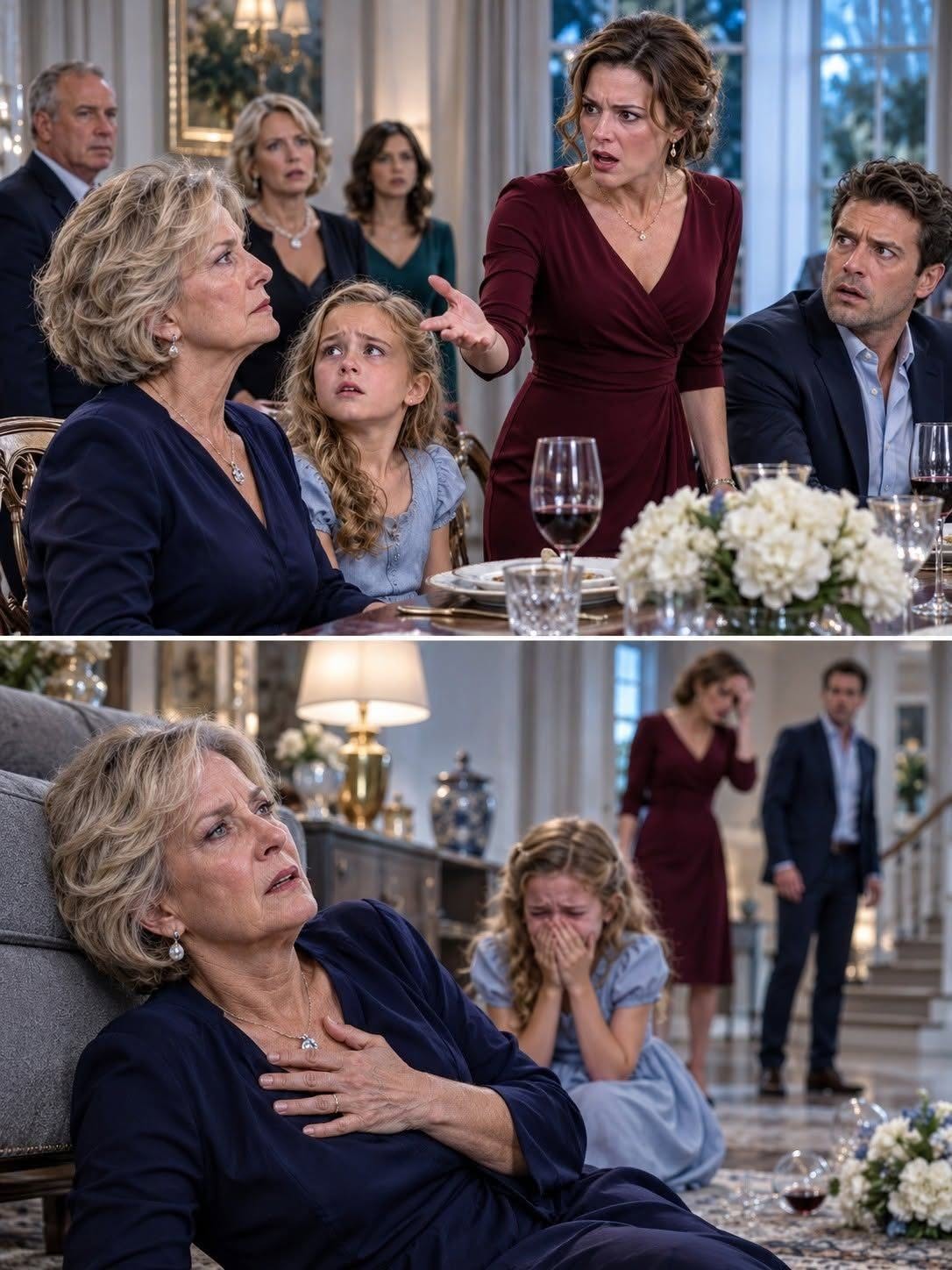
“It’s a start.”
She began crying.
Not the angry tears she had shed when she lost access to my credit card.
These were different.
“I used to think you had an easy life,” she whispered. “Then I had to pay rent, work two jobs, buy groceries, take Lily to school, and figure everything out myself.”
She wiped her face.
“I finally understood how much you were doing for us.”
I remained silent.
“And I realized something worse.”
“What?”
“I was embarrᴀssed by my own failures. Calling you a freeloader made me feel better about being one.”
There it was.
The apology I had waited nearly a year to hear.
She reached into her handbag and removed another object.
Frank’s missing sealed envelope.
“I took this from his box. I thought it contained something that would help us get the property.”
She placed it beside the check.
“I never should have opened it.”
Inside was a pH๏τograph of Natalie as a newborn, asleep against Frank’s chest.
On the back, he had written:
The greatest thing I can leave my daughter is not money, but the ability to stand on her own feet.
Natalie covered her mouth.
“I’ve spent months thinking about that.”
I looked at the pH๏τograph.
Then I looked at my daughter.
“I love you, Natalie. But loving you doesn’t mean things can go back to the way they were.”
“I don’t want them to.”
She took a shaky breath.
“I want to become someone you can trust again.”
I didn’t immediately forgive everything.
Trust is not restored by one apology.
But I invited her to stay for dinner.
That was enough for one evening.
Over the following months, Natalie kept her promises.
She made payments.
She attended counseling.
She stopped asking me for money.
And slowly, carefully, we began rebuilding our relationship.
Then came my sixty-seventh birthday.
I invited twelve guests, just as I had two years earlier.
The dining room was decorated with white flowers.
Ruth sat beside me.
Lily, now nine, wore a beautiful blue dress and insisted on helping serve the cake.
Natalie stood at the head of the table, holding a glᴀss.
For a moment, the memory of that terrible birthday returned.
See more Stories :
She looked at me.
“I’d like to make a toast.”
The room became quiet.
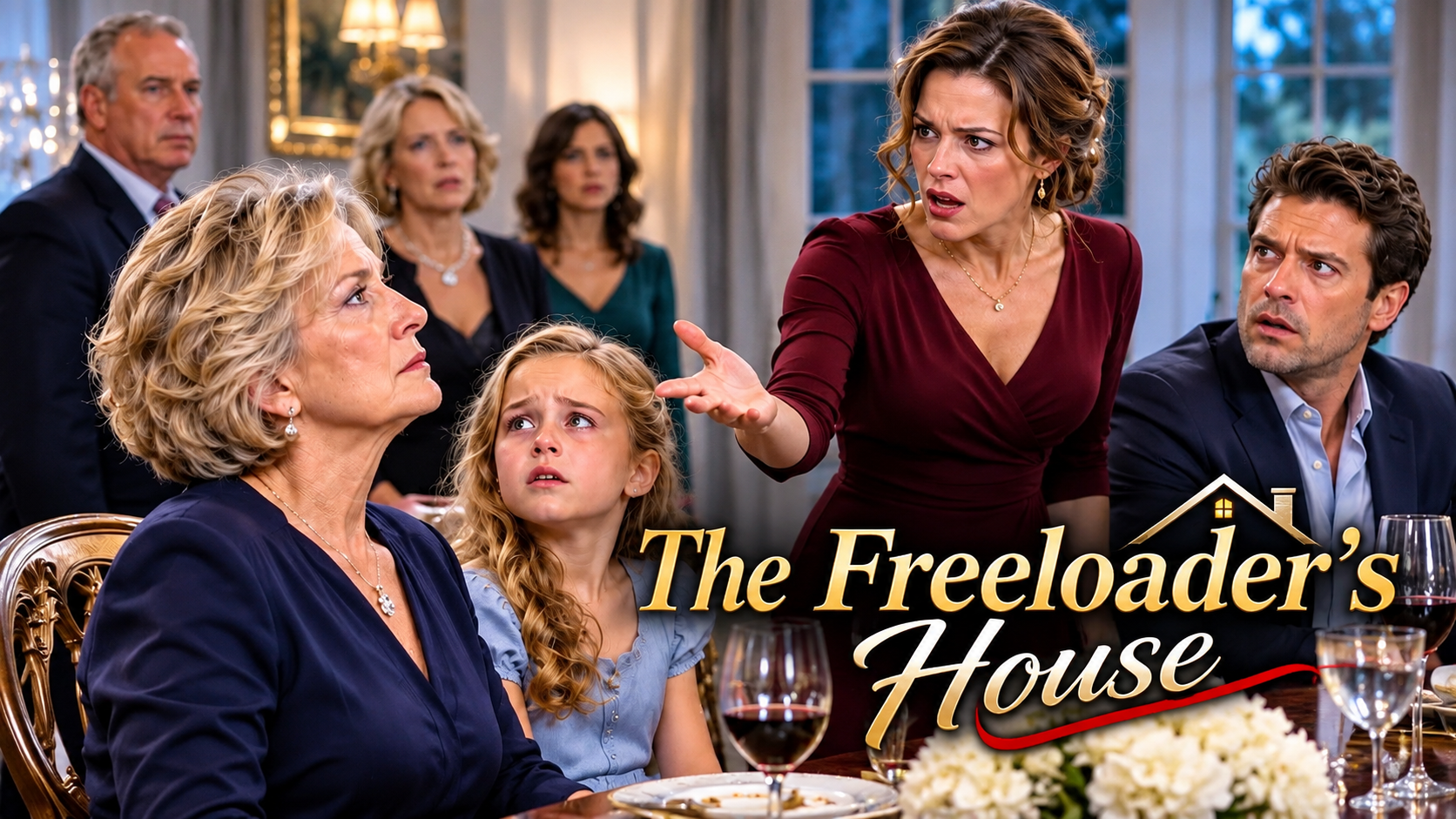
“Two years ago, I stood in this exact spot and called my mother a freeloader.”
Her voice cracked.
“I was cruel, ungrateful, and dishonest. I humiliated the woman who had given me more than anyone else in my life.”
She turned toward Lily.
“I hope my daughter grows up understanding that kindness is a gift, not something we’re enтιтled to.”
Then she raised her glᴀss.
“To Margaret Bennett. My mother. The strongest woman I know.”
Everyone applauded.
Lily threw her arms around me.
And Natalie smiled through her tears.
But there was one more surprise.
After dinner, I handed Natalie an envelope.
She looked nervous.
“What is this?”
Inside was a job offer.
I had recently used part of my trust income to establish a small community program that helped older adults understand household finances and recognize financial exploitation.
Natalie had spent months taking bookkeeping courses and volunteering with community organizations.
The program’s independent manager had interviewed her, reviewed her qualifications, and agreed to offer her an entry-level administrative position with appropriate supervision and no access to client funds.
She would earn her salary.
She would follow the same rules as everyone else.
And she would have the opportunity to turn the lessons of her mistakes into something meaningful.
Natalie stared at the letter.
“Mom, after everything I did?”
“This isn’t an inheritance,” I said.
“It isn’t a rescue, either.”
I smiled.
“It’s an opportunity.”
She began sobbing.
This time, I hugged her.
Not because I had forgotten what happened.
But because she had finally shown me that she was willing to change.
Later that evening, after everyone left, I walked through my beautiful, quiet house.
Frank’s pH๏τograph stood beside the fireplace.
I touched its frame.
“You were right,” I whispered.
For years, I had believed that keeping my family together meant giving them everything.
But the greatest gift I ever gave my daughter was the day I stopped giving her everything.
She learned to stand on her own.
Lily kept her grandmother.
And I finally reclaimed the life I had nearly surrendered.
The house Natalie once called a freeloader’s house became a place where love no longer required sacrifice without limits.
It became my home again.
And this time, everyone who entered understood the difference between being welcomed and being enтιтled.
THE END.