The Baby Born With Extremely Short Arms and Legs: Understanding Severe Skeletal Dysplasia
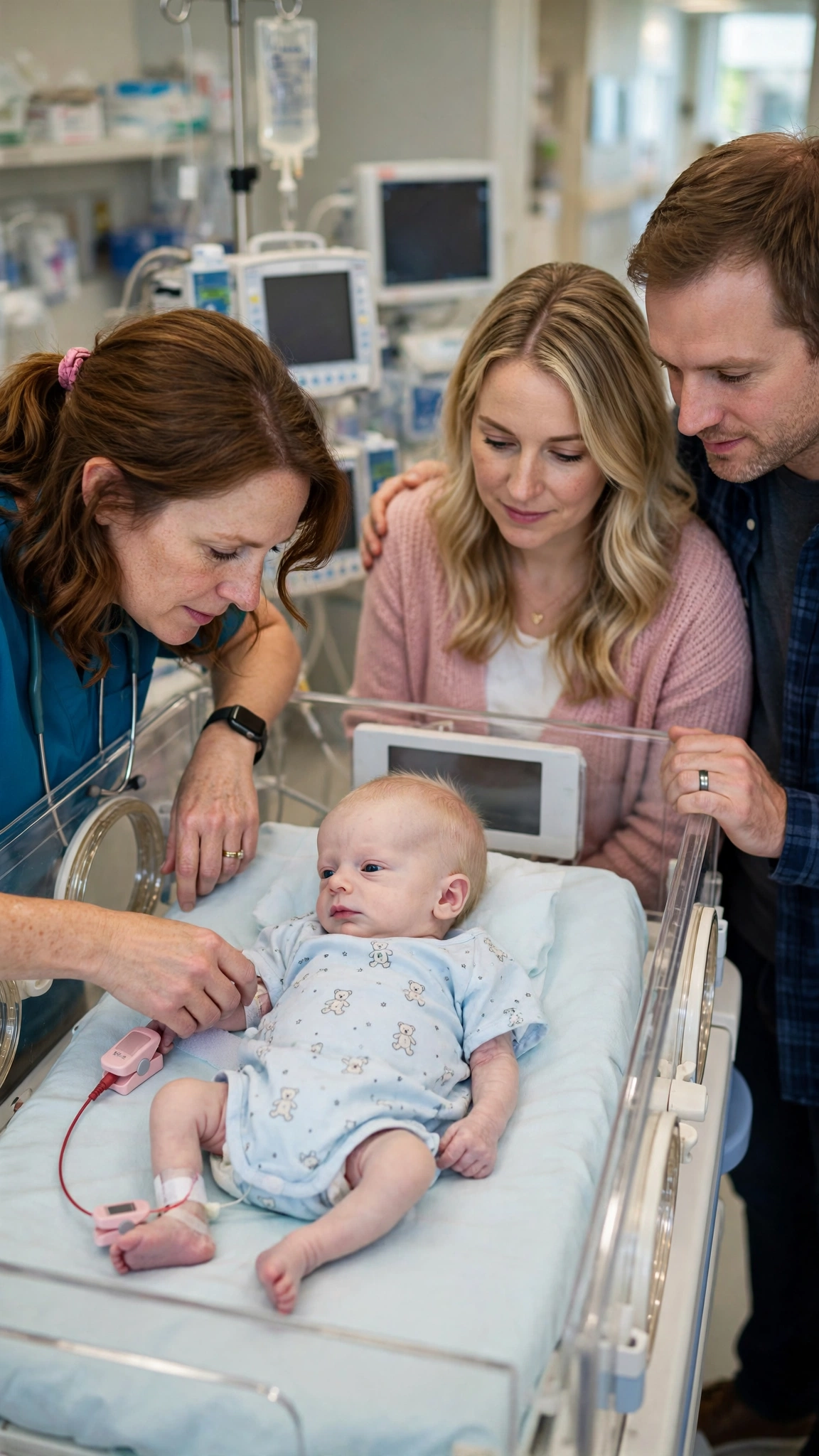
When little Lucas was born, his parents immediately noticed that his body proportions were very different from those of other newborn babies.
His arms and legs appeared unusually short compared with his head and torso. The upper portions of his limbs were particularly underdeveloped, and his chest had an unusual shape.
His parents were overwhelmed by the sight of their newborn son. They wanted to understand why his bones had developed differently and whether the condition could affect his breathing, movement, and future growth.
Doctors quickly arranged a series of specialized examinations to investigate the abnormalities.
After skeletal imaging and genetic testing, Lucas was diagnosed with a severe form of skeletal dysplasia, a broad group of rare disorders that affect the development and growth of bones and cartilage.
What Is Skeletal Dysplasia?
Skeletal dysplasia refers to a group of genetic conditions that interfere with the normal formation, growth, and structure of the skeleton.
The human skeleton develops through a complex process involving bone-forming cells, cartilage, and multiple genetic signals.
When certain genes responsible for skeletal development contain abnormalities, bones may grow differently from normal.
Depending on the specific disorder, affected children may develop unusually short limbs, abnormal bone shapes, a narrow chest, spinal curvature, or differences in the development of the skull and facial bones.
There are more than 400 recognized types of skeletal dysplasia, and their severity varies considerably.
Some forms cause relatively mild differences in height and bone proportions, while others can result in severe physical abnormalities and life-threatening complications.
Why Are the Baby’s Arms and Legs So Short?
One of the most noticeable features in some forms of skeletal dysplasia is disproportionate short stature.
The long bones of the arms and legs may fail to grow at the expected rate.
In certain conditions, the upper portions of the limbs, particularly the upper arms and thighs, are more severely affected. This pattern is called rhizomelic shortening.
In other forms, the middle or lower portions of the limbs may be disproportionately short.
The exact appearance depends on the underlying genetic condition.
Some children also have unusually shaped bones, curved limbs, small hands and feet, or differences in joint development.
These abnormalities can affect how a child moves, sits, stands, and eventually learns to walk.
The Chest and Breathing Complications
One of the most serious concerns in severe skeletal dysplasia is abnormal development of the chest.
In certain conditions, the ribs may be unusually short, and the chest cavity may be significantly smaller than normal.
Because the lungs need sufficient space to expand during breathing, a severely restricted chest can prevent normal lung development.
This may lead to pulmonary hypoplasia, a condition in which the lungs do not develop fully.
Affected newborns can experience respiratory distress, low oxygen levels, and difficulty maintaining normal breathing.
Depending on the severity, some babies may require oxygen therapy, respiratory support, or specialized intensive care.
However, not every form of skeletal dysplasia affects the lungs. The degree of respiratory risk depends on the specific diagnosis and the structure of the chest.
Genetic Testing and Diagnosis
To understand Lucas’s condition, doctors performed detailed skeletal examinations and genetic investigations.
X-rays helped specialists evaluate the length, shape, and development of his bones.
Doctors examined the spine, ribs, pelvis, arms, and legs to identify characteristic skeletal abnormalities.
Genetic testing was also important because many forms of skeletal dysplasia are ᴀssociated with specific genetic changes.
Depending on the suspected condition, testing may involve individual gene analysis, a skeletal dysplasia gene panel, or broader genetic sequencing.
Identifying the exact genetic cause can help doctors estimate potential complications, understand how the condition may progress, and provide more accurate information about future care.
It is particularly important because two children with similarly short limbs may have completely different underlying disorders and medical needs.
Medical Treatment and Specialized Care
There is no single treatment that can correct every form of skeletal dysplasia.
Management depends on the specific diagnosis, the severity of the abnormalities, and the complications experienced by the child.
For Lucas, the medical team focused on several important areas.
Respiratory care
Doctors monitored his breathing, oxygen levels, and chest development. If respiratory difficulties occurred, appropriate respiratory support would be provided.
Orthopedic care
Specialists evaluated his bones, joints, and spine to identify abnormalities that might require treatment.
Some children may need braces, physical therapy, or orthopedic procedures to manage skeletal complications.
Neurological monitoring
Certain skeletal dysplasias can affect the spine and the structures surrounding the spinal cord. Regular examinations may be necessary to detect spinal narrowing or nerve compression.
Nutrition and growth
Adequate nutrition is essential for supporting overall health and development. Feeding difficulties, when present, require individualized ᴀssessment and support.
Physical and developmental therapy
Physical therapy and occupational therapy can help children develop movement skills, improve functional independence, and adapt to physical limitations.
Growing Up With a Rare Skeletal Condition
For Lucas’s parents, receiving the diagnosis was only the beginning of a challenging journey.
They had to learn unfamiliar medical terminology, understand genetic test results, and prepare for the possibility of long-term medical care.
They worried about whether their son would experience breathing problems, how his bones would develop, and what daily life might look like as he grew older.
They also knew that some children with severe skeletal dysplasia require multiple medical interventions throughout childhood.
However, they gradually understood that a diagnosis alone could not determine every aspect of Lucas’s future.
His development would depend on the exact condition, the presence of complications, and the support available to him.
His family remained committed to providing the medical care, encouragement, and opportunities he needed.
A Future Beyond His Diagnosis
Lucas’s arms and legs might look different, and his medical journey might involve challenges that other children would never experience.
But his parents wanted him to grow up knowing that he was not defined by his physical appearance.
They hoped he would have opportunities to learn, play, make friends, explore his interests, and develop confidence in his abilities.
Every medical examination was another opportunity to understand his needs. Every small developmental milestone was something worth celebrating.
His parents knew they could not predict everything about the future, but they could promise to support him through every stage of his life.
Lucas was more than a rare skeletal diagnosis. He was a child with his own personality, dreams, and the right to experience a life filled with love, dignity, and happiness.