Spinosaurus – The “Aquatic Monster Dinosaur”: Did It Really Live in the Deep Sea? Science Says No.lh
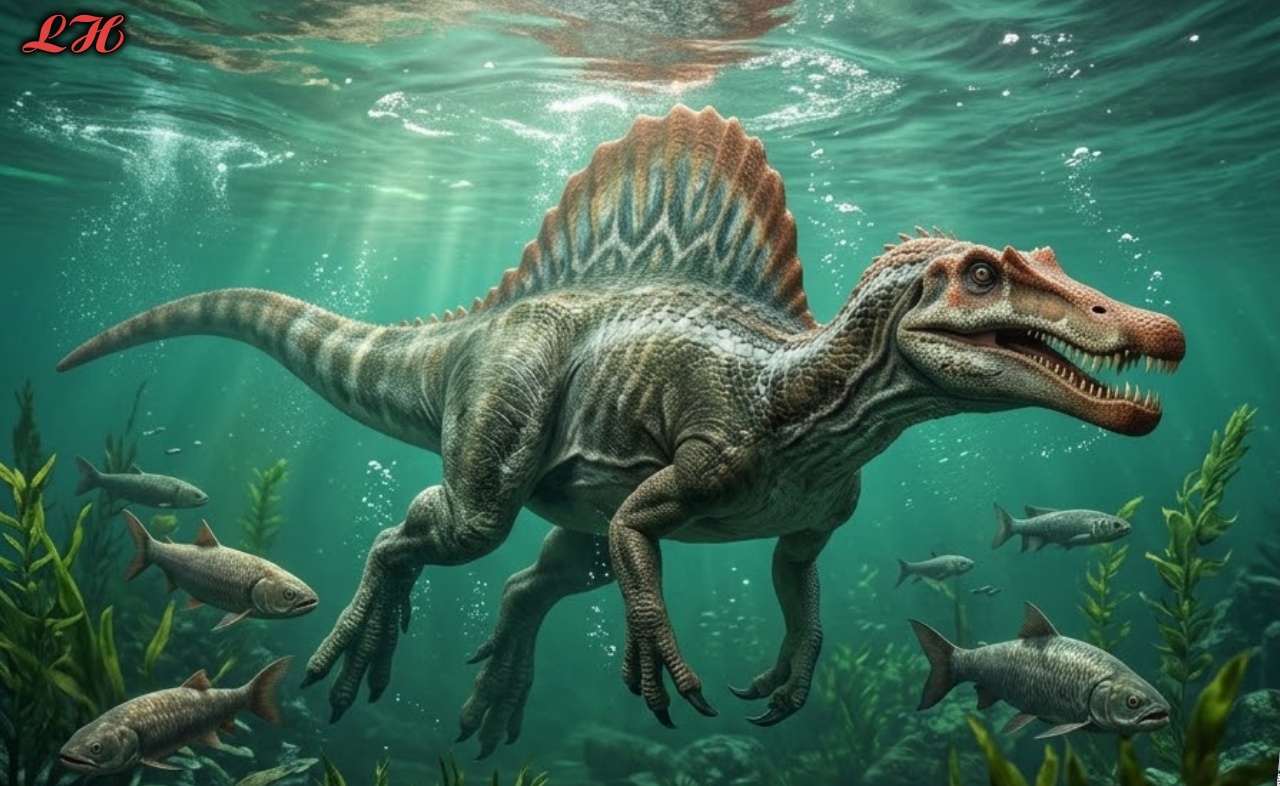
Spinosaurus – The “Aquatic Monster Dinosaur”: Did It Really Live in the Deep Sea? Science Says No.
Sensational claims that Spinosaurus was a deep-sea monster have been dramatically overstated. The latest research shows this giant sail-backed predator was a semi-aquatic wader that hunted in shallow rivers and coastal margins—not a deep-ocean swimmer.
A landmark 2022 study in eLife by Paul Sereno and colleagues used CT-based 3D reconstructions to test the “aquatic pursuit predator” hypothesis. The model revealed Spinosaurus was too buoyant and unstable to dive effectively and could only achieve slow surface swimming (<1 m/s) with weak propulsion from its tail and limbs. Inland fossils from river deposits in Algeria and Niger, hundreds of kilometers from any ancient coastline, further contradict a fully marine lifestyle.
Follow-up papers in 2024 and 2025 reinforced these findings. Bone-density arguments once cited as evidence for diving have been shown to be overstated—similar densities occur in large terrestrial animals like elephants. The dense bones more likely strengthened its hind limbs for wading and supporting its mᴀssive body on land.
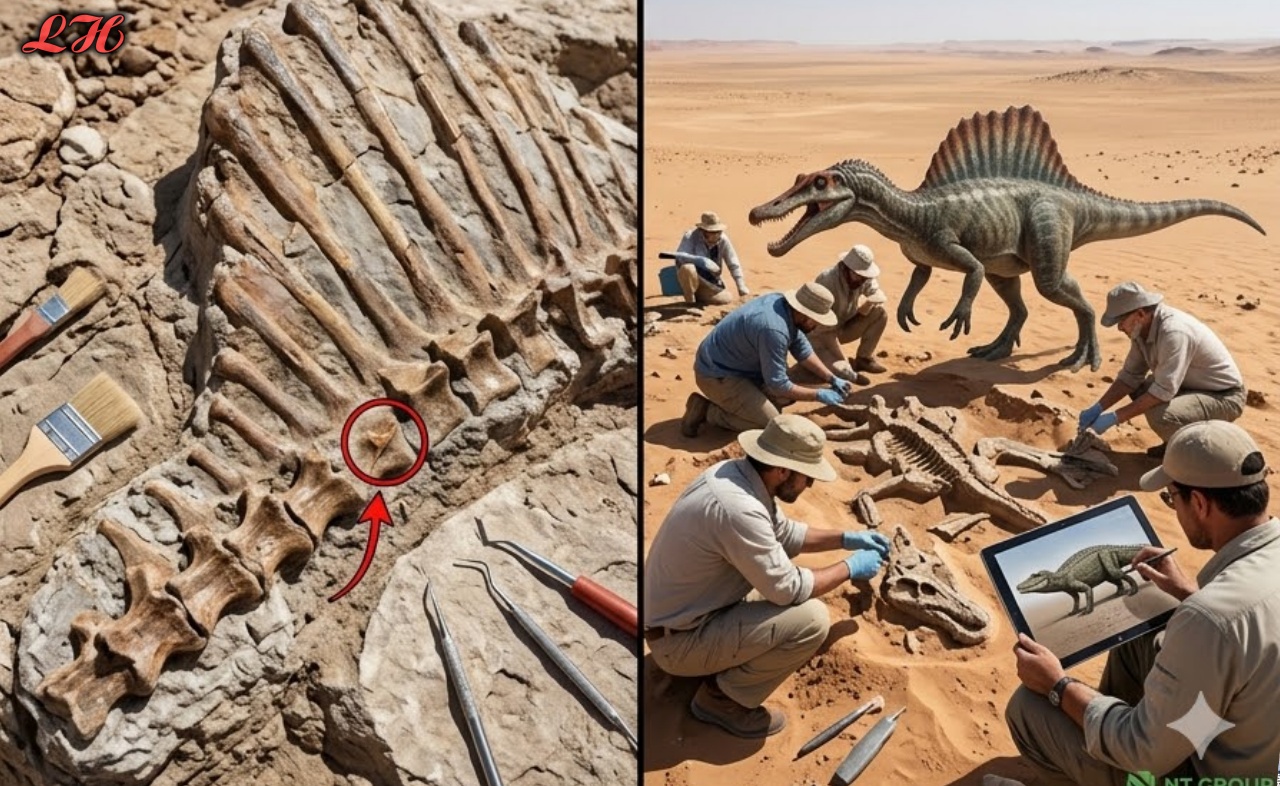
All known Spinosaurus fossils come from river channels, floodplains, and nearshore environments in North Africa (~95–100 Ma), not deep marine strata. Its crocodile-like snout, conical teeth, and raised nostrils were perfect for ambushing fish while standing in shallow water—more like a giant heron than a submarine.
The “deep-sea dinosaur” myth collapses under scrutiny. Spinosaurus was a versatile riverine hunter that occasionally ventured into brackish coastal waters, thriving in the dynamic waterways of Cretaceous North Africa. From the Sahara’s ancient rivers, this “aquatic monster” emerges as a fascinating but thoroughly terrestrial-rooted predator. Paleontology’s spinosaur story just got its most accurate—and least sensational—chapter yet.