The Little Girl with Retinoblastoma Who Dreamed of Going Back to Kindergarten
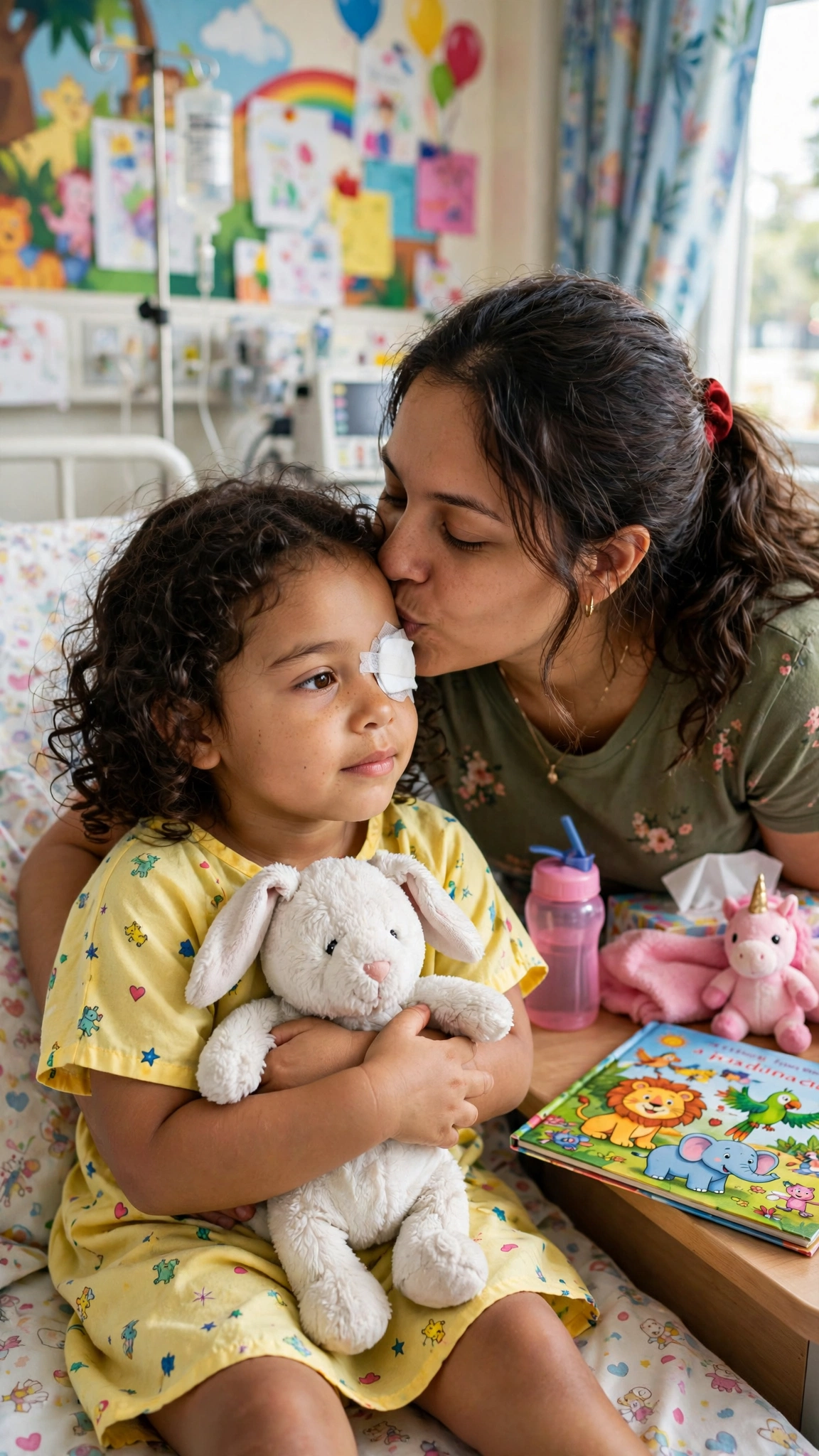
Four-year-old Sofia was a little girl who found happiness in the simplest things.
She loved colorful picture books, especially those filled with friendly animals, magical forests, and cheerful characters. Every evening, she would sit beside her mother and listen carefully as stories came to life through the pages.
She also loved drawing, playing with her toys, and spending time with her little friends.
Her favorite stuffed animal was a soft little rabbit that she carried almost everywhere. She often placed it beside her pillow at night and held it close whenever she felt sleepy.
To her parents, Sofia was a bright and curious little girl who seemed to discover something wonderful in every ordinary day.
But gradually, they began noticing something unusual about her eyes.
In some family pH๏τographs, one of her eyes appeared different from the other. Sometimes, when light reflected from her pupils, the pH๏τographs showed an unusual white appearance.
They also noticed that Sofia occasionally struggled to follow moving objects with her eyes.
At first, her parents did not understand what was happening. They knew something was not right, but they never imagined that the explanation would change their lives so dramatically.
Concerned about her vision, they arranged medical examinations.
After further ᴀssessments, doctors discovered that Sofia had retinoblastoma, a rare type of cancer that develops in the retina, the light-sensitive tissue at the back of the eye.
The diagnosis was devastating for her family.
Suddenly, the little girl who had once spent her days looking through picture books was facing a medical journey that no four-year-old should have to experience.
Her parents had to learn about the disease, understand the available treatment options, and prepare themselves for repeated hospital appointments.
Sofia’s treatment involved difficult medical procedures, frequent examinations, and long periods away from the familiar comfort of home.
Some days were especially exhausting.
The hospital environment was unfamiliar and frightening. There were medical rooms, bright lights, doctors, nurses, and procedures that she could not fully understand.
She sometimes became anxious before appointments, holding her mother’s hand тιԍнтly as they walked through the hospital corridors.
Through it all, her little stuffed rabbit remained by her side.
She brought it to hospital visits, held it during waiting periods, and hugged it whenever she felt frightened.
The rabbit was more than just a toy. It was a familiar reminder of home, bedtime stories, and the safe little world she knew before her illness.
Her mother tried to make each hospital visit a little easier.
She would sit beside Sofia, read her favorite stories, gently brush her hair, and remind her that she was surrounded by people who loved her.
Sometimes, they would talk about kindergarten.
Sofia missed her classroom, her colorful drawings, her teachers, and the little friends she used to play with.
She missed sitting around a table with other children, listening to stories, singing songs, and learning new things.
One afternoon, after another difficult hospital visit, Sofia hugged her stuffed rabbit and looked up at her mother.
“Mommy, when can I go back to kindergarten?”
Her mother gently held her hand.
It was such a simple question, but it carried the sadness of a childhood temporarily interrupted by illness.
Sofia did not ask for anything extraordinary.
She wanted to return to the place where she could laugh with her friends, look at picture books, color little animals, and enjoy the ordinary happiness of being four years old.
Her family continued supporting her through treatment, following the guidance of her medical team and hoping for the best possible outcome.
There were still uncertain days and difficult moments ahead, but they tried to fill each day with small things that made Sofia happy.
A favorite storybook, a familiar song, a warm hug, or simply having her stuffed rabbit beside her could make the hospital room feel a little more like home.
Sofia’s story reminds us how precious the ordinary moments of childhood can be.
For some children, going to kindergarten, playing with friends, and listening to bedtime stories are everyday experiences.
For Sofia, they became the little things she missed most.
And through every difficult day, she continued holding her stuffed rabbit close, dreaming of the moment she could return to her classroom and open another colorful picture book.
Because sometimes, a child’s greatest wish is simply to have her childhood back.