The Little Girl Who Had to Fight Every Day
At seven years old, Amara should have been spending her childhood doing the things little girls love most. Her afternoons should have been filled with playground adventures, laughter with friends, outdoor games, and the excitement of discovering something new every day.
But Amara’s childhood had taken a very different direction.
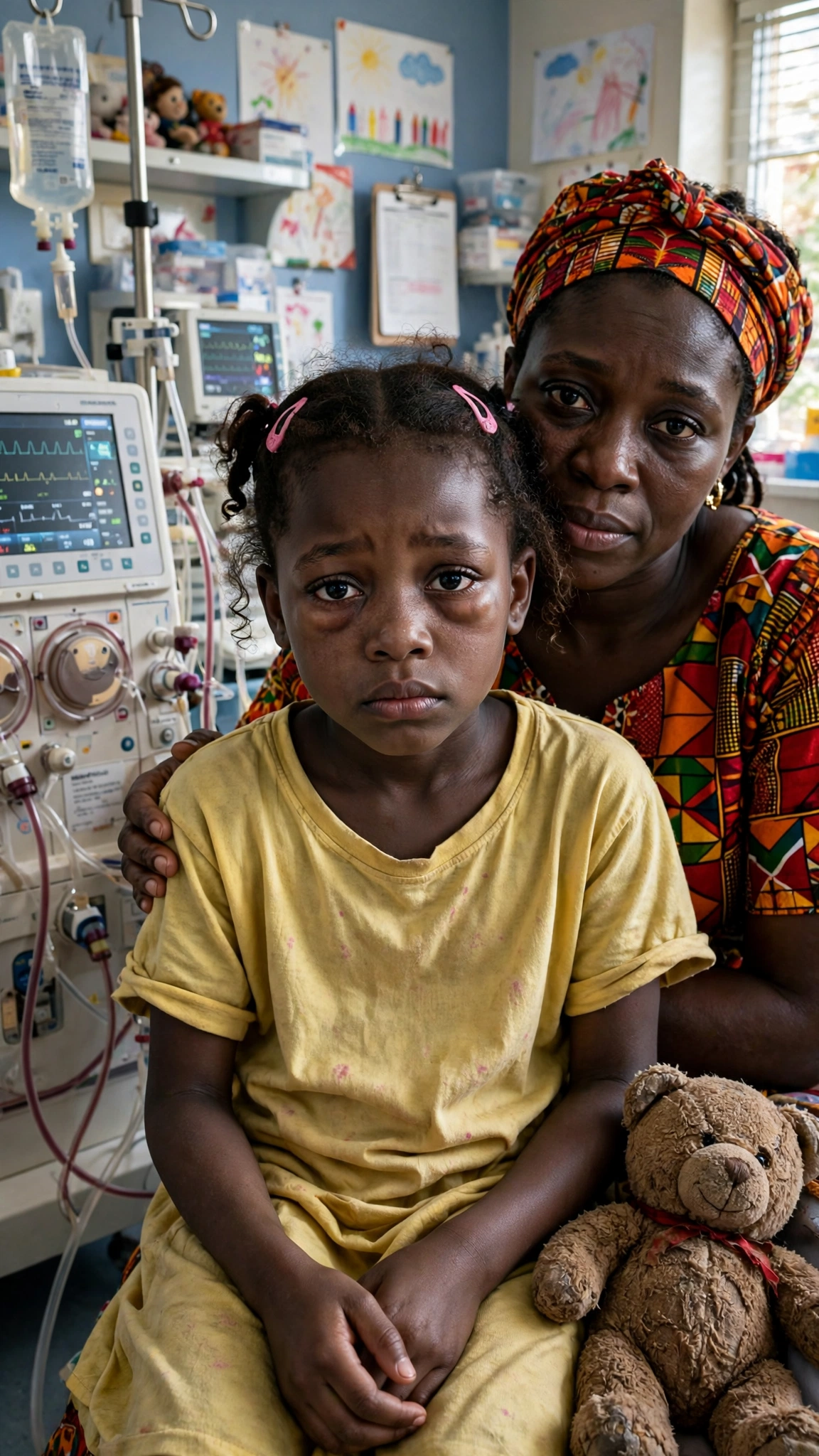
Instead of spending her time running through gardens and playing outside, she spent much of her week inside hospital rooms, connected to a dialysis machine.
She was living with end-stage kidney disease, a serious medical condition in which her kidneys could no longer adequately filter waste and remove excess fluid from her blood.
For a child so young, the reality of living with such a condition was difficult.
Her body often appeared exhausted, and there were days when her energy was extremely limited. She sometimes looked pale and tired, and even simple activities could become challenging.
Regular dialysis had become an essential part of her life. The treatment helped remove waste products and excess fluid from her blood, performing some of the functions her kidneys could no longer manage.
But each session required time, preparation, and patience.
While other children were enjoying their afternoons, Amara was often sitting beside medical equipment, waiting for another treatment to finish.
Her mother, Grace, had become her constant companion.
She learned the hospital routines, medication schedules, and instructions from the medical team. She knew which little things helped Amara feel more comfortable and how to recognize when her daughter needed extra reᴀssurance.
Grace tried to make the hospital feel less frightening.
She brought familiar belongings from home, spoke softly to her daughter, and stayed close throughout every treatment session.
There were moments when Amara felt tired, uncomfortable, or frustrated. At seven years old, she could not always understand why her days had to be so different from those of other children.
Sometimes, she would watch children playing outside the hospital window and quietly turn toward her mother.
“Mommy, when can I go home and play with my friends?”
Those words were never easy for Grace to hear.
She wanted to tell her daughter that everything would immediately become better. She wanted to promise that the hospital visits would end and that Amara could return to the carefree life she deserved.
But she knew that her daughter’s medical journey was complicated and that the future remained uncertain.
So she gently brushed Amara’s hair, held her hand, and whispered:
“We’re going to take this one day at a time, sweetheart. Mommy will always be here for you.”
Amara also had a little teddy bear that accompanied her through nearly every hospital visit.
It was soft, familiar, and comforting.
She kept it beside her during treatment sessions and hugged it тιԍнтly whenever she felt frightened. Sometimes, she would rest her cheek against its soft fur while watching the medical equipment around her.
The teddy bear could not make the treatments disappear, but it gave her something familiar to hold onto.
Her mother understood how much that little companion meant to her.
She made sure it was always nearby, especially on days when Amara needed extra comfort.
One afternoon, after another long dialysis session, Amara looked toward her mother.
She seemed tired, but there was something she wanted to say.
Holding her teddy bear close, she quietly whispered:
“Mommy, when I get better, I want to run in the garden again.”
Grace looked at her daughter and felt tears gathering in her eyes.
She imagined Amara running across the grᴀss, laughing freely, chasing ʙuттerflies, and playing with her friends beneath the warm afternoon sunshine.
It was such a simple dream.
Yet for a little girl whose life revolved around hospital treatments, that dream represented something incredibly precious.
Amara was not asking for expensive toys, elaborate birthday parties, or extraordinary gifts.
She wanted to have enough energy to play.
She wanted to walk outside without feeling exhausted.
She wanted to enjoy the sunshine, hear her friends laughing, and experience the ordinary happiness that other children her age often take for granted.
Her parents knew that her condition would require ongoing medical care, and they understood that her journey would not be easy.
There would be more appointments, more treatments, and days when progress might feel slow.
But they continued supporting her, celebrating the moments when she felt comfortable, and reminding her that she was loved every step of the way.
For Grace, every smile from her daughter was precious. Every peaceful afternoon and every moment of laughter became something worth remembering.
Amara’s story is a reminder that childhood should never be defined by hospital schedules or medical equipment.
Behind every diagnosis is a little person with dreams, feelings, favorite toys, and a desire to experience the world.
And sometimes, the biggest dream of all is beautifully simple.
To run through a garden.
To play with friends.
To feel the sunshine.
To be a child again.
Sometimes, a child’s biggest dream is simply to enjoy being a child.