The Baby Born With Treacher Collins Syndrome: Understanding a Rare Facial Genetic Condition
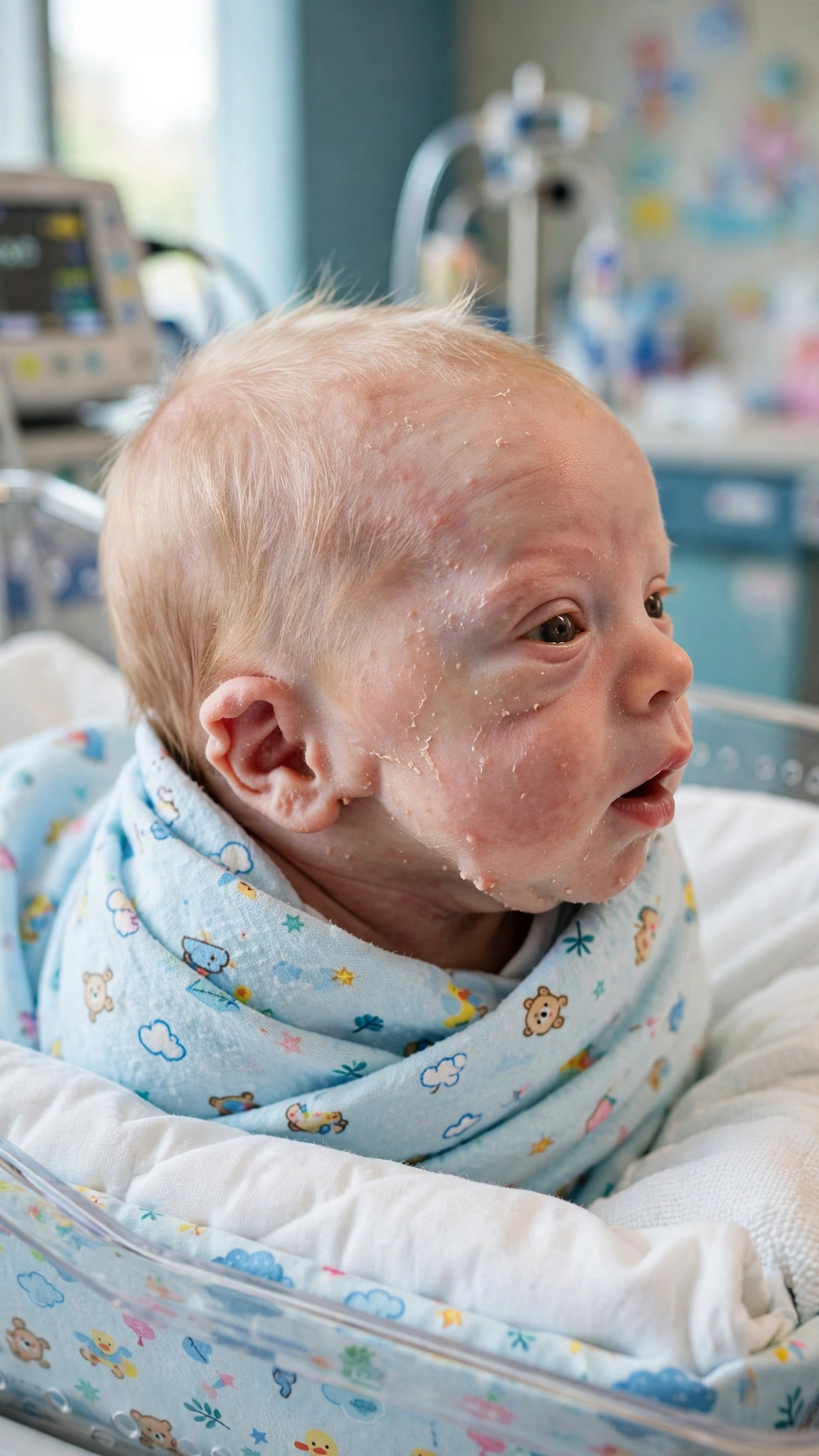
When little Daniel was born, his parents immediately noticed that his facial appearance was different from what they had expected.
His cheekbones appeared unusually flat, his lower jaw was noticeably smaller than normal, and his ears had an irregular shape. Several facial structures seemed underdeveloped, creating a distinctive appearance that raised concerns among his family and medical team.
At first, his parents were overwhelmed. They wanted to understand why their newborn son had these physical differences and whether they would affect his ability to breathe, eat, hear, and develop normally.
Following a series of specialized examinations, doctors diagnosed Daniel with Treacher Collins syndrome, a rare genetic condition that affects the development of bones and soft tissues in the face.
What Is Treacher Collins Syndrome?
Treacher Collins syndrome is a congenital craniofacial condition that affects how certain facial structures develop before birth.
It is most commonly ᴀssociated with changes in genes involved in the formation of facial bones and tissues, particularly the TCOF1 gene. Less commonly, changes in POLR1B, POLR1C, and other related genes may also cause the condition.
These genetic changes interfere with normal development during early pregnancy, particularly in the structures that eventually form the cheekbones, jaw, ears, and other parts of the face.
The severity can vary significantly from one child to another.
Some babies have relatively mild facial differences, while others experience more extensive abnormalities that require multiple medical procedures and long-term support.
In many cases, the condition occurs because of a new genetic change rather than being inherited from a parent. However, it can also be pᴀssed down through families.
Why Does the Baby’s Face Look Different?
One of the characteristic features of Treacher Collins syndrome is underdevelopment of the cheekbones.
The cheekbones, medically known as the zygomatic bones, help give the middle portion of the face its normal shape.
When these bones do not develop fully, the cheeks may appear flatter or less prominent than usual.
Another common feature is micrognathia, which refers to an unusually small lower jaw.
Because the lower jaw is underdeveloped, the chin may appear recessed, and the space available for the tongue and airway may be reduced.
Some children also have downward-slanting openings of the eyes, a notch or gap in the lower eyelids, and sparse eyelashes.
These differences can create a distinctive facial appearance, although not every child experiences all of these features.
Ear Abnormalities and Hearing Difficulties
Treacher Collins syndrome can also affect the development of the ears.
Some babies are born with small or unusually shaped external ears. In more significant cases, parts of the external ear may be missing or severely underdeveloped.
The middle ear structures responsible for transmitting sound can also develop abnormally.
As a result, some children experience conductive hearing loss, meaning sound cannot travel efficiently through the outer and middle ear to reach the inner ear.
This does not necessarily mean that the child cannot hear at all. The degree of hearing loss varies, and many children benefit from appropriate hearing support.
Daniel’s doctors therefore arranged specialized hearing ᴀssessments to determine whether his ears were functioning properly.
Depending on the results, treatment may include bone-conduction hearing devices, other hearing technologies, and regular audiological monitoring.
Hearing support is particularly important during childhood because it helps children develop language, communication, and learning skills.
Breathing and Feeding: Important Early Concerns
One of the most important aspects of managing Treacher Collins syndrome is evaluating the baby’s airway.
Because the lower jaw may be unusually small, the tongue can sit farther back in the mouth. This may narrow the upper airway and cause breathing difficulties.
Some infants experience noisy breathing, obstructive sleep apnea, or episodes of breathing obstruction, particularly during sleep.
In more severe cases, medical intervention may be necessary to maintain a safe and stable airway.
Feeding can also be challenging.
The abnormal development of the jaw and facial structures may interfere with the baby’s ability to coordinate sucking, swallowing, and breathing.
Some children may need specialized feeding techniques or nutritional support to ensure adequate growth.
Doctors carefully evaluate these functions before determining the appropriate treatment plan.
Diagnosis and Medical Evaluation
Diagnosing Treacher Collins syndrome usually involves a detailed clinical examination of the baby’s facial structures.
Doctors ᴀssess the development of the cheekbones, lower jaw, external ears, eyelids, and other facial features.
Genetic testing may be recommended to identify changes ᴀssociated with the condition and provide additional information for the family.
Imaging studies, including specialized scans, can help evaluate the development of facial bones and the structures of the ears and airway.
Hearing examinations and airway ᴀssessments are also important parts of the evaluation.
Because the condition affects several interconnected facial structures, treatment planning requires cooperation between multiple medical specialists.
A Multidisciplinary Treatment Journey
There is no single treatment that corrects every feature of Treacher Collins syndrome.
Instead, care is individualized according to the child’s specific medical needs.
A multidisciplinary team may include pediatricians, craniofacial surgeons, plastic surgeons, ear, nose and throat specialists, audiologists, speech-language therapists, orthodontists, and other healthcare professionals.
Treatment may involve several stages.
Airway management
Children with significant breathing difficulties may require specialized airway support or surgical procedures to improve airflow. The specific approach depends on the severity and location of the obstruction.
Hearing rehabilitation
Children with hearing loss may benefit from bone-conduction hearing devices or other appropriate hearing technologies. Regular hearing ᴀssessments help monitor progress.
Facial reconstructive surgery
As children grow, surgeons may consider procedures to reconstruct or improve the development of the cheekbones, lower jaw, and external ears.
Some procedures are performed during early childhood, while others are delayed until the facial bones have developed further.
Dental and speech care
Because jaw development and dental alignment can be affected, regular dental examinations and orthodontic treatment may be necessary.
Speech-language therapy can also support communication, particularly when hearing difficulties or structural differences affect speech development.
Growing Up With Treacher Collins Syndrome
For Daniel’s parents, receiving the diagnosis was only the beginning of a long journey.
They knew their son might need several medical procedures, repeated examinations, and specialized support throughout childhood.
They worried about whether he would experience difficulties at school, whether other children would understand his facial differences, and whether he would feel confident as he grew older.
However, they also learned something important: Treacher Collins syndrome does not usually affect intelligence.
Many children with the condition have typical intellectual development and can attend school, form friendships, pursue interests, and build independent lives.
With appropriate medical care, hearing support, and family encouragement, children can develop the skills and confidence they need to participate fully in everyday life.
A Child Deserving of Every Opportunity
Daniel’s facial differences were visible from the moment he was born, but they were only one part of his story.
Behind his unusual appearance was a child who deserved the same affection, protection, education, and opportunities as any other baby.
His parents remained committed to supporting him through every medical examination and treatment decision.
They understood that his journey might be complicated, but they also knew that modern craniofacial medicine could offer many options to improve his health and quality of life.
Their greatest hope was that Daniel would grow up knowing that he was never less valuable because he looked different.
His face might tell the story of a rare genetic condition, but his future would be shaped by far more than his diagnosis.
Daniel deserved to grow up feeling loved, accepted, and confident in the person he was becoming.