PART 2: THE WOMAN HE THOUGHT HE COULD ERASE
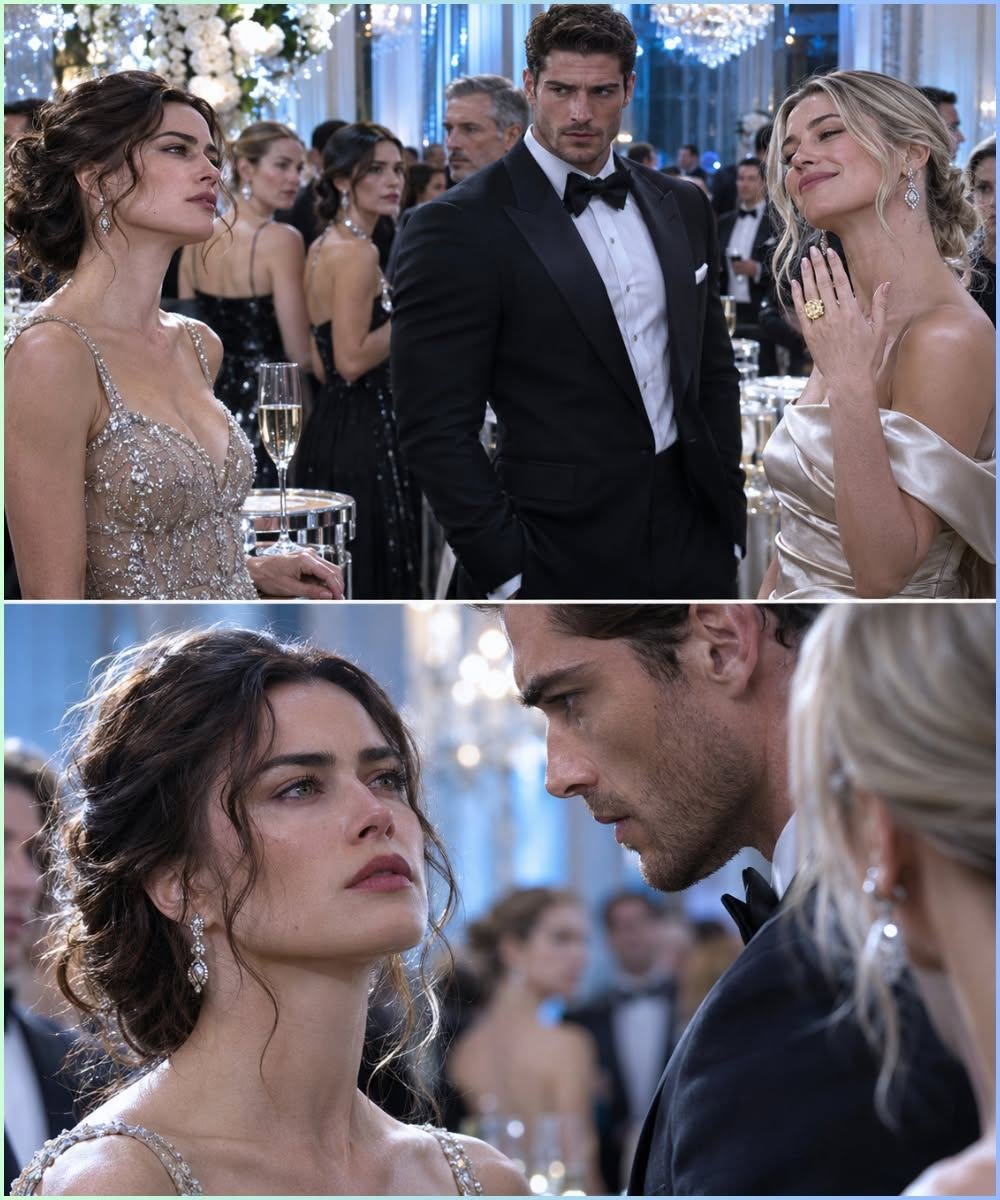
The words escaped before Mara could stop them.
On the other end of the phone, Richard Bennett was silent for a moment.
Then he said something she hadn’t heard in years.
“You don’t have to know what to do tonight, sweetheart. You only have to stop letting someone else decide what happens to your life.”
Mara closed her eyes.
“I don’t want a scandal.”
“Then we won’t create one.”
“I don’t want you calling Grant and threatening him.”
“I won’t.”
“And I don’t want you using the company to ruin his career.”
Her father exhaled.
“Mara, listen carefully. I am your father before I am anyone’s business partner. Tonight, I’m coming to get you. Nothing more.”
She nodded, although he couldn’t see her.
“Okay.”
“Stay where you are.”
The call ended.
Mara lowered her phone.
For the first time that evening, she felt she could breathe.
But she didn’t know that, across the ballroom, Grant had already begun to panic.
Grant found her twelve minutes later.
He came through the service corridor with his bow tie loosened and his expression dark.
“What the hell are you doing?”
Mara turned from the window.
“Standing.”
“Don’t be clever.”
“I wasn’t trying to be.”
He glanced at her phone.
“Who were you calling?”
“My father.”
Grant’s expression changed.
Only slightly.
But she noticed.
“Richard?”
“Yes.”
He looked toward the ballroom.
“Why would you involve him?”
Mara studied her husband.
Seven years ago, Grant had been nervous meeting her father for the first time. Richard Bennett was a formidable businessman, but he had never been particularly impressed by expensive watches or polished speeches.
Grant had spent the entire dinner trying to prove himself.
And Richard had spent the entire evening watching him.
“He’s my father, Grant. I’m allowed to call him.”
“Your father doesn’t need to know about this.”
“About your affair?”
“Keep your voice down.”
Mara almost smiled.
Even now.
Even after everything.
He was still worried about who might hear.
Grant stepped closer.
“Look, I know tonight was handled badly.”
“Handled badly?”
“I was going to tell you.”
“When?”
“After the holidays.”
She stared at him.
The holidays.
Christmas was five weeks away.
He had apparently planned to spend Thanksgiving, Christmas and perhaps New Year’s Eve pretending their marriage was still intact.
“Were you going to invite her to Christmas dinner too?”
His jaw тιԍнтened.
“Don’t do this.”
“Do what?”
“Turn this into something uglier than it needs to be.”
Mara looked down at his wedding ring.
He was still wearing it.
That detail almost made her sick.
“Does she know you’re still wearing that?”
Grant followed her gaze.
“It’s complicated.”
“No, Grant. It’s actually very simple.”
She raised her eyes.
“You bought another woman an engagement ring while wearing mine.”
For the first time, he had no immediate response.
Then his phone vibrated.
He looked at the screen.
Sloane.
He rejected the call.
Mara saw the name.
“She’s waiting for you.”
Grant slipped the phone into his pocket.
“She doesn’t matter right now.”
Mara let out a quiet breath.
“That’s interesting. Eleven months ago, apparently she mattered enough to change your entire life.”
His face hardened.
“You have no idea what things have been like between us.”
“Then explain.”
“You’ve been distant. You’ve spent years putting your work ahead of our marriage.”
Mara blinked.
There it was.
The familiar transformation.
His betrayal was becoming her failure.
“You stopped coming to my exhibitions,” she said quietly.
“I had responsibilities.”
“You stopped asking about my work.”
“I was building a future for us.”
“You stopped coming home.”
Grant’s eyes flashed.
“I was under pressure!”
“And I was your wife.”
The words hung between them.
For a moment, neither moved.
Then Grant lowered his voice.
“Look, Mara. We can discuss a separation privately. I’ll make sure you’re financially comfortable. You won’t have to worry about anything.”
She stared at him.
“Is that what you think I want?”
“I think you want security.”
“No. I wanted a husband.”
His expression тιԍнтened.
“And I think you should remember who you’re talking to.”
Mara felt something cold settle in her chest.
There was the man she had married.
Not the charming young analyst who ate noodles on her studio floor.
Not the man who once promised to build a life beside her.
This was the man who believed his money, position and connections made him untouchable.
Before she could answer, another voice interrupted.
“Is there a problem here?”
Richard Bennett stood at the end of the corridor.
He wore a charcoal suit, a dark overcoat and the calm expression that had made entire boardrooms reconsider their arguments.
Grant straightened immediately.
“Richard.”
Richard didn’t return the greeting.
He walked directly to his daughter.
“Are you all right?”
Mara nodded.
“I am now.”
He looked at Grant.
“Would you like to explain why my daughter is standing in a service corridor alone at your company’s gala?”
Grant swallowed.
“This is a private matter between my wife and me.”
“Then perhaps you should have kept it private before bringing another woman into the ballroom wearing a ring you purchased.”
Grant went pale.
Richard knew.
Of course he knew.
He had not needed to ask many questions.
“Sir, I can explain—”
“Don’t.”
One word.
Quiet.
Final.
Richard turned to Mara.
“Do you want to leave?”
“Yes.”
He offered his arm.
She took it.
As they walked away, Grant called after them.
“Mara! We haven’t finished this conversation!”
She stopped.
For a second, she considered turning around.
Then she looked at her father.
Richard said nothing.
He simply waited.
Mara faced her husband one last time.
“No, Grant. We haven’t.”
She paused.
“But for the first time, I’m not afraid of how it ends.”
Then she walked out.
The drive to Richard’s townhouse was silent.
Manhattan pᴀssed beyond the tinted windows, its Christmas decorations already appearing along the avenues.
Mara watched the lights blur.
After several minutes, her father spoke.
“Do you remember the summer you were sixteen?”
She turned.
“When you painted the entire garage?”
He smiled faintly.
“Your mother was furious. You covered three walls with those enormous blue flowers.”
Mara almost laughed.
“She said they looked like oversized cabbages.”
“She said that because she didn’t understand modern art.”
For a moment, the memory warmed her.
Then Richard continued.
“You told me something that summer.”
“What?”
“You said you never wanted to spend your life becoming someone other people found convenient.”
Mara looked away.
“I was sixteen.”
“You were right.”
He reached across the console and gently squeezed her hand.
“Somewhere along the way, you started making yourself smaller for that man.”
Her eyes filled.
“I thought marriage meant compromise.”
“It does.”
He paused.
“It doesn’t mean disappearing.”
At 11:43 p.m., Mara entered her father’s townhouse.
He instructed the housekeeper to prepare the guest bedroom, then asked Mara whether she wanted tea.
She declined.
Instead, she went upstairs, removed her earrings and sat on the edge of the bed.
Her phone was filled with notifications.
Three missed calls from Grant.
Four messages from Sloane.
One message from an unknown number.
She opened the last one.
Unknown Number:
You should probably know that Grant has been telling people you’re unstable. He said the marriage ended months ago and that he was waiting for the right time to announce it.
Mara stared at the screen.
Another message arrived.
I’m sorry. I work in the finance department. I thought you deserved to know.
Then a pH๏τograph appeared.
It showed Grant and Sloane at a private restaurant, sitting across from each other.
On the table between them was a folder.
Mara zoomed in.
The date was eight months earlier.
A document inside the folder appeared to have her name on it.
She couldn’t read the details.
But she recognized her signature.
Or something that looked like it.
Her stomach тιԍнтened.
She immediately called the number.
No answer.
A message followed.
Please don’t call me. I can’t risk losing my job. Just look into the Bennett Foundation accounts.
Mara sat perfectly still.
The Bennett Foundation.
She remembered it.
Seven years earlier, shortly after their wedding, she and Grant had established a charitable foundation to support young artists from low-income families.
Mara had designed its original program.
She had personally selected its first scholarship recipients.
But over the years, Grant had gradually taken control of the financial administration.
He told her it was easier that way.
She had believed him.
Now she looked at the pH๏τograph again.
The folder.
Her signature.
The date.
And suddenly, the affair no longer seemed like the only secret in her marriage.
At 8:15 the following morning, Richard entered the breakfast room carrying two cups of coffee and a newspaper.
Mara was already awake.
She had barely slept.
“I need a lawyer,” she said.
Richard placed the coffee in front of her.
“You’ll have one.”
“And an accountant.”
He studied her.
“Why?”
She showed him the pH๏τograph.
His expression changed as he examined it.
“Where did you get this?”
“Someone from Halcyon sent it.”
He enlarged the image.
“Do you recognize this document?”
“I recognize my signature. I don’t recognize the folder.”
Richard sat down.
“Have you ever authorized Grant to use your signature on foundation documents?”
“No.”
“Have you signed anything without reading it?”
Mara hesitated.
Then she remembered.
A year earlier, Grant had brought several documents home before an overseas business trip.
He had told her they were routine foundation renewals.
She had been preparing for an exhibition and had signed where he pointed.
Her face went cold.
“Dad…”
“What?”
“I may have signed something.”
Richard didn’t interrupt.
“I trusted him. He said it was paperwork for the foundation.”
Richard carefully put the phone down.
“Then we find out exactly what you signed.”
“Do you think he stole money?”
“I don’t know.”
His voice remained measured.
“And I won’t accuse anyone without evidence.”
Mara nodded.
That was precisely why she trusted him.
He never confused suspicion with proof.
Richard reached for his phone.
“I know someone who can review the foundation’s records independently. We’ll also get your own attorney. No one will speak to Grant on your behalf until we understand what happened.”
Mara looked at him.
“Thank you.”
He gave her a sad smile.
“You don’t need to thank me for being your father.”
At 10:30 a.m., Grant called again.
This time, Mara answered.
“Where are you?” he demanded.
“Somewhere you aren’t.”
“Don’t start.”
“What do you want, Grant?”
“We need to talk about last night.”
“I think you said everything you needed to say.”
He exhaled sharply.
“I’ve had a difficult morning.”
Mara almost laughed.
“How unfortunate.”
“Halcyon is asking questions. People are talking.”
“Perhaps you should have considered that before bringing Sloane to the gala.”
“Richard called the chairman.”
Mara frowned.
“My father didn’t call anyone.”
“Well, someone did.”
A pause.
Then Grant lowered his voice.
“Mara, I need you to understand something. This situation could become very damaging for both of us.”
“Then tell me the truth.”
“I have told you the truth.”
“No. You told me you were unhappy. You told me you were going to leave. You told me you would make sure I was financially comfortable.”
She took a breath.
“Now tell me about the Bennett Foundation.”
Silence.
A long, unmistakable silence.
“What about it?”
“The documents you had me sign last year.”
“Routine administrative documents.”
“Why was my name on a financial authorization form?”
Grant’s voice changed.
“Where did you hear that?”
Mara closed her eyes.
There it was again.
Not What form?
Not What are you talking about?
Where did you hear that?
“That’s what I thought,” she said.
“Mara, listen to me. You don’t understand the financial structure.”
“Then explain it.”
“I can’t do that over the phone.”
“Why not?”
“Because there are legal implications.”
Her fingers тιԍнтened around the phone.
“What did you do?”
“Mara—”
“What did you do with the foundation?”
He spoke more sharply.
“Don’t make accusations you can’t take back.”
She stood.
“I haven’t accused you of anything. I’m asking my husband a question.”
“I’m trying to protect you.”
That sentence stopped her.
Protect her?
From what?
From the woman wearing his diamond?
From the financial documents carrying her signature?
Or from the consequences of something he had done?
Grant continued.
“Come home tonight. We’ll sit down and work this out. Just the two of us.”
Mara looked toward the breakfast room window.
For years, she had mistaken his ability to sound reasonable for honesty.
Not anymore.
“I’ll communicate through my attorney.”
“Mara, don’t be ridiculous.”
“Goodbye, Grant.”
She ended the call.
Her hands were trembling.
But this time, she wasn’t shaking because he had hurt her.
She was shaking because she was beginning to understand that the man she had loved might have used her name for something far more serious than an affair.
At 2:06 p.m., Richard’s accountant arrived.
His name was Thomas Reed, a forensic accountant who had spent twenty-five years investigating financial misconduct involving private foundations and corporate enтιтies.
He reviewed the pH๏τograph first.
Then he requested the foundation’s publicly available filings and the documents Mara remembered signing.
Two hours later, his expression became noticeably more serious.
“Mr. Bennett,” he said, turning toward Richard.
“I believe we need to examine the foundation’s transactions immediately.”
Richard folded his arms.
“Why?”
Thomas hesitated.
“Because the documents appear to indicate that Mrs. Bennett authorized a transfer of administrative control to a company that was not originally listed among the foundation’s approved service providers.”
Mara felt the blood drain from her face.
“What company?”
Thomas turned his laptop toward them.
A name appeared on the screen.
Mercer Strategic Holdings.
Mara read it twice.
Mercer.
Sloane Mercer.
The woman wearing the yellow diamond.
Her voice was barely audible.
“Grant gave her control of the foundation?”
Thomas shook his head.
“I can’t establish that yet. But the company appears to be connected to her family.”
Richard leaned forward.
“How much money pᴀssed through it?”
Thomas looked at the figures on his screen.
Then he turned the laptop around.
Mara stared.
$2,400,000.
Two million four hundred thousand dollars.
She felt the room tilt.
“That money was supposed to fund scholarships,” she whispered.
Thomas nodded.
“We need to trace every transaction before reaching a conclusion.”
Richard’s expression had become unreadable.
“Do it.”
Then Thomas added something that made Mara’s heart stop.
“There is another issue.”
Richard looked at him.
“What?”
Thomas opened a second document.
“Mrs. Bennett’s signature appears on a personal guarantee connected to one of the company’s credit facilities.”
Mara gripped the edge of the table.
“What does that mean?”
Thomas looked directly at her.
“If the company defaults, you could potentially be held financially responsible, depending on the validity and enforceability of the authorization.”
Mara couldn’t speak.
Seven years of marriage.
Eleven months of betrayal.
And now the possibility that her husband had placed her financial future at risk while building another life with his mistress.
Her phone vibrated.
A message from Grant appeared.
Grant: We need to settle this before your father makes things worse. Come home tonight. Sloane won’t be there. I promise.
Mara read it.
Then another message appeared.
Grant: And don’t involve the lawyers. You signed those documents yourself.
She slowly lowered the phone.
Thomas looked at Richard.
Richard looked at his daughter.
But Mara was no longer looking at either of them.
She was staring at the final sentence.
You signed those documents yourself.
For the first time, she understood what Grant had been counting on.
He hadn’t merely expected her to forgive him.
He had expected her to remain too heartbroken, too embarrᴀssed and too frightened to investigate what he had done.
He believed the woman who walked out of the Whitmore Grand Ballroom would eventually come crawling back, desperate to save her marriage.
He had forgotten something.
Mara Bennett had once built an entire career from nothing but a paintbrush, an empty studio and the determination to make something beautiful out of a blank canvas.
She had lost herself trying to preserve his world.
But she wasn’t going to lose her future protecting him from the truth.
She picked up her phone and typed a reply.
Mara: You’re right about one thing, Grant. I did sign those documents. And now I’m going to find out exactly what I signed.
She pressed send.
Across Manhattan, Grant Bennett was sitting in his penthouse when the message arrived.
He read it once.
Then again.
His face went pale.
Because there was one thing Mara still didn’t know.
The $2.4 million wasn’t the largest transfer.
And the document bearing her signature wasn’t the only document he had prepared.
The next morning, a registered letter would arrive at Richard Bennett’s townhouse—and its contents would change everything.