Part 2 — The Notebook on the Bench
Part 2 — The Notebook on the Bench
The girl was already gone when Ethan arrived.
On the slats: a composition book, the cheap kind, name written small on the cover. Sofia.
Ethan sat. Opened it. Read. His face changed the way a face changes when a child realizes the game has adults in it.
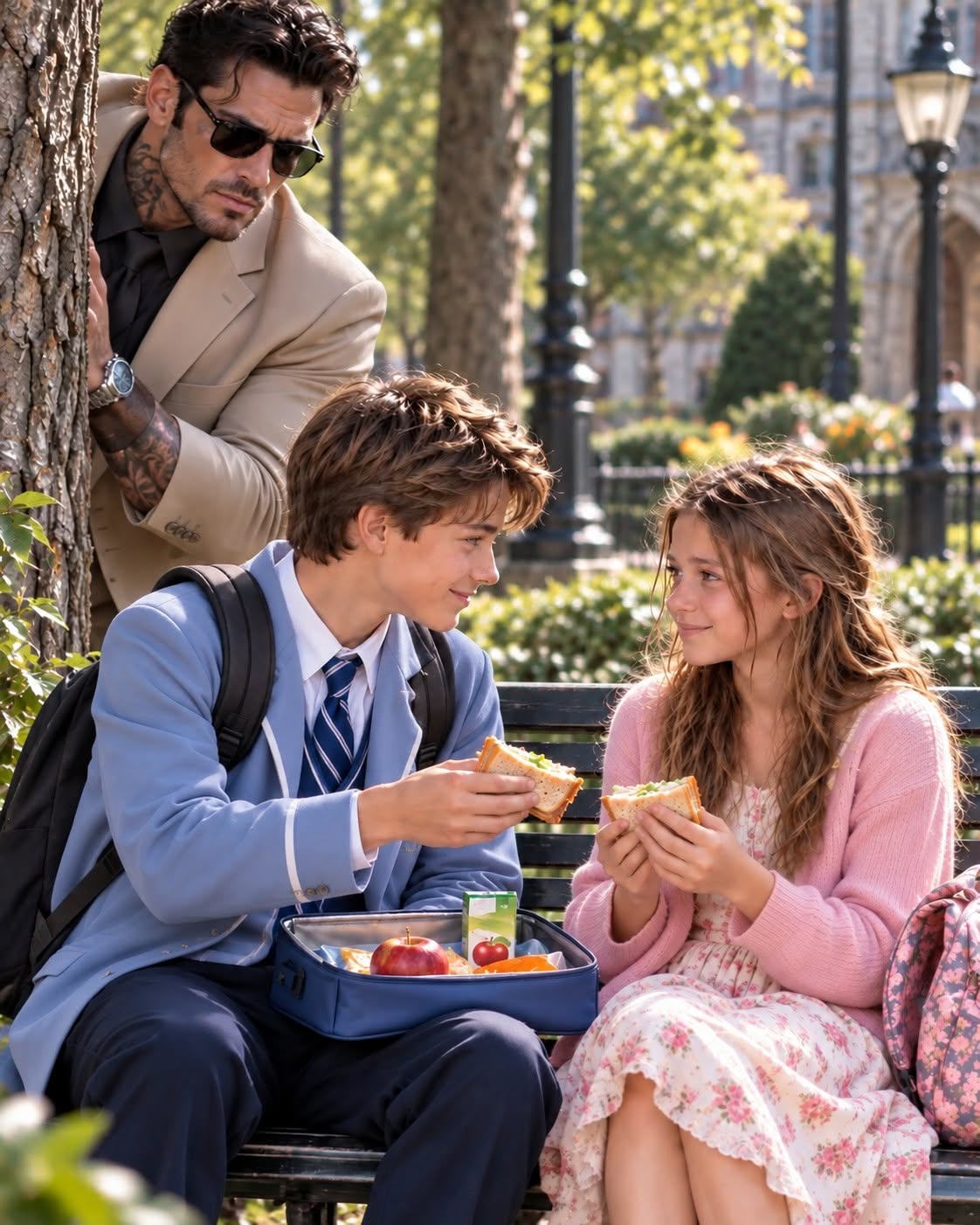
Daniel stepped out from the tree before his son could run.
Ethan shut the book too fast. “Dad—”
“Give it to me.”
Inside: lists in a twelve-year-old’s printing. Lunch. $12. Bus. Don’t tell anyone at school. If a black car waits, go in the side door of St. Mark’s. A page of times. A page of license plates. A last line, newer, darker:
He followed you yesterday. I saw the glᴀsses. Don’t come Friday.
She had spotted the most powerful man in the city before the man had spotted that he was seen.
Sofia Reyes. Eleven. Her father had kept books for a warehouse Daniel owned on paper and other men owned in practice. When the warehouse was raided, the bookkeeper took the weight and then took a heart attack in a holding cell. The family name was still useful to people who liked orphans as leverage.
Ethan had not been buying a friend a sandwich.
He had been running a small, stubborn rescue with an allowance and a lunchbox, because Sofia would not walk into a police station with Carter on the tip of her tongue and expect to walk out whole.
 Daniel sat on the bench his son had made holy and felt, for the first time in years, outranked.
“You should have told me.”
“You would have sent men,” Ethan said. “Men make her mother cry.”
That sentence did more than any rival ever had.
Daniel could erase a problem. That was the business. Erasing this problem would teach his son that kindness is a mess you hire someone to mop.
He did it the slower way.
No black car at the plaza. A lawyer who did not wear the house crest. A stipend that arrived as a scholarship committee, not a bag. St. Mark’s side door became an official after-school desk, not a hide. The plates in the notebook were handed to people whose job was to make watchers lose interest.
Ethan lost the secret. He kept the lunchbox habit anyway—two of everything—because some rules are worth more than cover.
Sofia did not come to the estate. She did not owe a don a scene. She sent the notebook back with one new line:
Thank you for not sending the car.
Daniel Carter had followed a child to catch a lie.
What shocked him on that bench was not that his son could be good.
It was that his son had already learned which parts of his father’s power were safe to use—and which parts would get a girl killed if they ever learned her name.
He drove Ethan home the long way, past the plaza, and did not tell him to look away.
“Next time,” Daniel said, “you bring me the book first. You don’t hunt license plates with a juice box.”
Ethan nodded.
“And you don’t sit on a bench thinking I can’t be the kind of man who splits a sandwich.”
Ethan looked at him, twelve and older than the tuition suggested.
“I didn’t think you couldn’t,” he said. “I thought you wouldn’t.”
Daniel had no answer that belonged to the organization.
He packed two lunches the next morning anyway.