PART 2: THE MESSAGE THAT CHANGED EVERYTHING
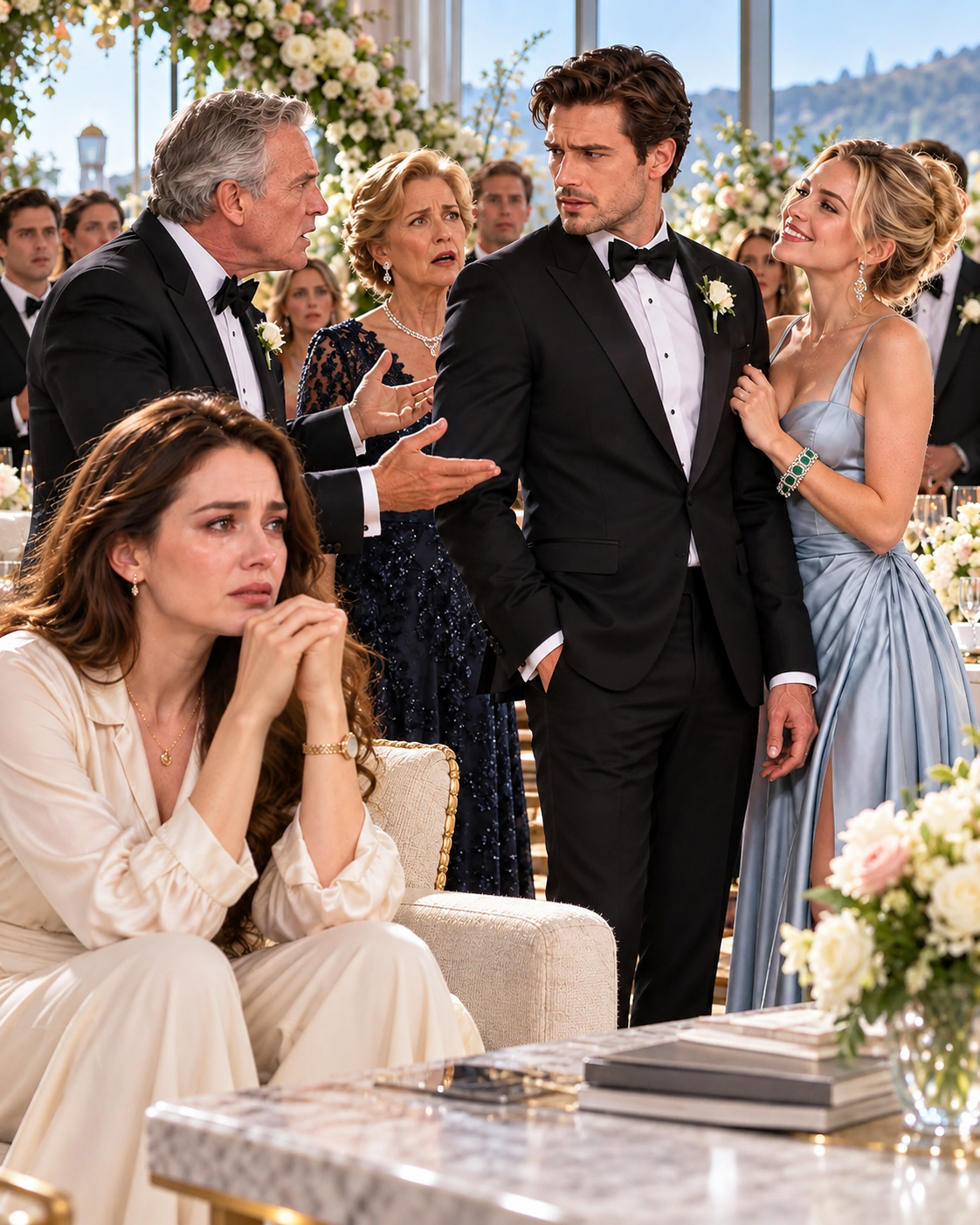
“Claire, please don’t make any decisions until you hear the truth. I swear to you, I never intended for things to go this far. The bracelet wasn’t supposed to leave my possession. Sophia told me Eleanor had promised it to her years ago. I believed her. But there’s something else you need to know. My mother has the original letter Eleanor left for you, and she’s on her way to see you. Please, Claire. Don’t end our marriage over one terrible mistake.”
I read it twice.
Then I laughed.
Not because anything was funny, but because Adrian had managed to turn the theft of my most precious possession into one terrible mistake.
He had lied about me being sick. He had humiliated me in front of his friends. He had given another woman the bracelet his dying grandmother had personally placed in my hands.
And now he was asking me not to end our marriage.
As if the only thing that mattered was whether I would continue wearing his wedding ring.
I typed a reply.
“I’m not ending our marriage over a bracelet, Adrian. I’m ending it because you showed me exactly what our marriage means to you.”
I sent it, placed my phone facedown, and went to make coffee.
At 7:26 a.m., someone knocked on my door.
When I opened it, Margaret Moretti stood on my doorstep, still wearing the elegant navy dress she had worn to the wedding. Her eyes were swollen, and her hands trembled around a cream-colored envelope.
“Claire,” she whispered. “May I come in?”
I stepped aside.
She entered my living room, glanced at the untouched breakfast on the table, and suddenly began to cry.
“Oh, sweetheart. I am so sorry.”
I had spent two years trying to earn this woman’s affection. I had remembered her birthday, accompanied her to medical appointments, and listened patiently to stories about her late husband. I had convinced myself that if I tried hard enough, she would eventually see me as a daughter rather than the woman who had married her only son.
Yet the first time she called me sweetheart with that much tenderness, my marriage was already falling apart.
“What happened last night?” I asked quietly.
Margaret placed the envelope on the table.
“Eleanor’s letter.”
I stared at it.
The handwriting on the front was unmistakable. Adrian’s grandmother had written my name in the same careful script she had used on every birthday card she sent me.
Margaret sat down and took a shaky breath.
“When Eleanor was dying, she asked me to keep this letter safe. She told me to give it to you if Adrian ever forgot what kind of woman he had married.”
My throat тιԍнтened.
“What does it say?”
“Read it.”
I opened the envelope carefully.
Inside was a single sheet of cream-colored paper.
My dearest Claire,
If you are reading this, then perhaps the world has become unkind to you, or perhaps someone has made you feel that your place in this family was never secure.
I want you to understand something.
The bracelet I gave you does not belong to you because you married my grandson. It belongs to you because I chose you.
I have watched how you treat people when you believe nobody is watching. I have seen you sit beside me on the difficult days when Adrian was too busy to visit. I have watched you defend him even when he did not deserve it, and I have seen you give this family more kindness than you have ever received in return.
That is why I entrusted the bracelet to you.
Never allow anyone to convince you that love must be earned through endless sacrifice. A woman can love her husband with her entire heart and still deserve to be treated with dignity.
If Adrian ever asks you to make yourself smaller so that someone else can feel important, remember this: you were never meant to compete for a place that was freely given to you.
You are a Moretti by my choice, Claire. Not by his permission.
With all my love,
Eleanor.
I reached the last line and pressed the paper against my chest.
For two years, I had believed that my worth in Adrian’s family depended on Adrian himself.
His grandmother had understood something I had been too afraid to admit.
I had spent so long trying to prove that I belonged that I had forgotten I was allowed to walk away from people who treated me as though I didn’t.
Margaret reached across the table and covered my hand.
“Eleanor would have been heartbroken if she had seen what Adrian did.”
I wiped my cheeks.
“Where is the bracelet now?”
Margaret looked down.
“Adrian took it from Sophia last night.”
“Why?”
“Because his best friend’s father confronted him in front of the entire reception. Then Sophia made the mistake of telling everyone that Eleanor had promised her the bracelet.”
I stared at her.
“And you knew Eleanor had given it to me?”
“Of course I knew. I was there.”
“Then why did you allow your son to treat me like I was a stranger?”
Margaret flinched as if I had slapped her.
For a moment, she said nothing.
Then she answered honestly.
“Because I kept telling myself that Adrian would eventually grow out of his selfishness. I thought if I stayed quiet, I could keep the peace.”
“And did you?”
“No,” she whispered. “I only taught him that he could hurt you without consequences.”
That answer hurt more than any excuse could have.
I stood and walked to the window.
“Margaret, I appreciate you bringing me the letter. But I need you to understand something. I cannot keep being the person who suffers so everyone else can pretend their family is perfect.”
She rose slowly.
“You shouldn’t have to.”
At the door, she turned back.
“Adrian is coming here.”
“Not today.”
“He says he needs to explain.”
“He has had two years to show me who he is. I don’t need another explanation.”
Margaret nodded, tears shining in her eyes.
Then she left.
I returned to the table and read Eleanor’s letter one more time.
For the first time since I had married Adrian, I didn’t wonder what I could do to save our marriage.
I wondered why I had spent so long trying to save it alone.
PART 3: THE WOMAN WHO REFUSED TO BE REPLACED
At 9:14 a.m., Adrian arrived.
I knew it was him before I opened the door. His black car had barely stopped outside when he began knocking.
“Claire! Please, open the door!”
I stood on the other side, my hand resting on the lock.
“Go home, Adrian.”
“I brought the bracelet.”
“I don’t want to see you.”
“Please. Just give me five minutes.”
I closed my eyes.
Some part of me still remembered the man who had once waited outside my office for two hours because he wanted to surprise me with dinner. The man who had kissed my forehead on our wedding night and promised that no matter what happened, we would always face it together.
But memories were not evidence that a person still deserved access to your life.
I opened the door.
Adrian stood before me in yesterday’s wrinkled suit. His tie was missing, his hair was disheveled, and dark circles shadowed his eyes.
In his hand was a small velvet box.
“Claire,” he said, his voice breaking. “I’m sorry.”
I looked at the box.
“Put it on the table.”
He entered cautiously, as though he were walking into a courtroom.
He placed the box on the table and opened it.
The emerald-and-diamond bracelet lay inside, catching the morning light.
For a moment, I remembered Eleanor’s warm hands closing around mine.
Then I looked away.
“Why did you give it to Sophia?”
Adrian rubbed his face.
“She told me Eleanor had promised it to her when they met years ago. She said she had always believed it would be hers.”
“And you believed her over me?”
“I thought there had been a misunderstanding.”
“You knew where the bracelet came from. You knew your grandmother gave it to me. You even told me you were having it repaired.”
“I know.”
“Then explain how you convinced yourself that handing it to Sophia was reasonable.”
He opened his mouth, then closed it.
Finally, he said, “Sophia and I have known each other since we were children. When she came back into my life, things became complicated.”
“No. They became convenient for you.”
He looked up sharply.
I continued.
“You wanted Sophia beside you at the wedding. You didn’t want to explain why your wife wasn’t there, so you told everyone I was sick. You wanted Sophia to feel special, so you gave her something that wasn’t yours to give.”
“I never wanted to humiliate you.”
“Then why did you?”
His face crumpled.
“I don’t know.”
“That is the problem, Adrian. You don’t even seem to have asked yourself why my feelings mattered so little.”
He stepped toward me.
“I love you.”
I moved back.
“Don’t.”
“Claire—”
“You don’t get to use those words as a bandage every time your actions expose the truth.”
He stopped.
For the first time since I had known him, Adrian Moretti seemed to have no idea what to do next.
He was accustomed to negotiations. He knew how to persuade investors, silence compeтιтors, and turn an uncomfortable conversation into an opportunity.
But I was no longer negotiating for the bare minimum.
“I can fix this,” he said. “I’ll make a public statement. I’ll tell everyone the truth about last night. I’ll apologize to you in front of the entire family.”
“You should tell the truth because it’s the truth, not because you’re afraid of losing me.”
“I am afraid of losing you.”
“Then you should have thought about that before you gave another woman my bracelet.”
He swallowed hard.
“Sophia means nothing to me compared with you.”
I looked at him for a long moment.
“Then why did you treat her as though she mattered more?”
Silence filled the room.
Adrian lowered his head.
“I thought you would understand.”
“Understand what?”
“That Sophia has always been part of my life. She came back after a difficult breakup, and she needed someone. I didn’t want her to feel alone.”
“And I was supposed to feel what? Nothing?”
“No.”
“Did you ask me how I felt when you canceled our plans? Did you ask whether I was comfortable with her wearing a bracelet your grandmother entrusted to me? Did you even consider how it would look when she posted that pH๏τograph?”
He had no answer.
I pointed toward the door.
“You need to leave.”
His eyes filled with panic.
“Claire, please. We have been married for two years. You can’t throw everything away because of one night.”
I shook my head.
“I’m not throwing anything away. I’m finally acknowledging what you have been throwing away for months.”
He glanced at the bracelet.
“Take it. Please. It’s yours.”
I picked up the box and closed the lid.
“I will keep Eleanor’s gift. But I won’t keep pretending that receiving it means I have to stay married to you.”
His expression changed.
“You’re serious.”
“Yes.”
“Are you asking for a divorce?”
“I am telling you that I need space, and I want you to respect that. I will speak to a lawyer before making any final decisions.”
He stared at me as though he had never considered that I might make a decision he couldn’t influence.
Then his phone rang.
The name on the screen was Sophia.
He rejected the call.
It rang again.
He rejected it once more.
“Answer it,” I said.
“Claire, she’s irrelevant.”
“Then you have nothing to hide.”
He hesitated.
I almost laughed at the irony.
Adrian had expected me to trust him without questions, even as he gave away the most personal symbol of our family to another woman. Now, when asked to answer a simple phone call, he looked terrified.
He finally accepted it and put the phone to his ear.
“Sophia, not now.”
Her voice was loud enough for me to hear.
“Adrian, you need to tell Claire what happened. You promised me you would!”
His face drained of color.
“What are you talking about?”
“You told me she already knew you wanted to end the marriage. You said the bracelet was the only thing Eleanor had left that could make the family accept me!”
Adrian froze.
I slowly turned toward him.
Sophia continued.
“You said you were going to announce our relationship after the wedding! You said Claire would understand once you explained everything!”
Adrian ended the call.
For several seconds, neither of us moved.
Then I asked the question that had been waiting inside me since the previous afternoon.
“Were you planning to leave me for her?”
He looked at the floor.
“Claire—”
“Answer me.”
He swallowed.
“I was confused.”
“That wasn’t my question.”
His shoulders sagged.
“Yes,” he whispered. “I thought about it.”
The room seemed to tilt.
Not because I was surprised that he had betrayed me, but because some small, stubborn part of me had still hoped that the bracelet had been an impulsive mistake rather than a deliberate message about where I stood in his life.
“How long?”
“Three months.”
I nodded slowly.
Three months of dinners. Three months of kisses before work. Three months of him asking about my day while secretly considering a future with someone else.
Three months of me believing we were building a life together.
“And the bracelet?”
He rubbed his hands together.
“I thought if Sophia wore it to the wedding, my family would stop treating her like an outsider.”
“So you decided to make your wife the outsider instead.”
He looked up, tears running down his face.
“I didn’t think of it that way.”
“Of course you didn’t.”
I opened the front door.
“Leave, Adrian.”
This time, he didn’t argue.
He walked out slowly, stopping once to look back at me.
“Claire, I swear I’ll spend the rest of my life making this right.”
I held his gaze.
“You should spend the rest of your life learning why you thought it was acceptable in the first place.”
Then I closed the door.
And for the first time in two years, the silence inside my home felt peaceful.
PART 4: THE FAMILY DINNER THAT ENDED EVERYTHING
Three days later, Margaret invited me to dinner at the Moretti family home.
I nearly declined.
Then I received a message from Eleanor’s former attorney, Mr. Bennett, confirming that he had kept copies of the documents relating to the bracelet’s transfer. He wanted to make sure the family understood that Eleanor’s wishes had been recorded clearly.
I agreed to attend.
Not for Adrian.
For Eleanor.
When I arrived, the atmosphere was painfully tense.
Margaret sat at the head of the table. Adrian stood near the fireplace, looking as though he hadn’t slept in days. His older sister, Isabella, was beside the window, her arms crossed.
Sophia was not there.
Adrian approached me.
“Thank you for coming.”
“I came to hear what your family has to say. That doesn’t mean I’ve changed my mind about needing space.”
He nodded.
“I understand.”
We sat down.
Mr. Bennett opened a folder and placed several documents on the table.
“Eleanor made her wishes very clear,” he said. “The bracelet was given to Claire personally. The accompanying letter confirms that this was a deliberate gift, not a temporary loan.”
Isabella looked at her brother.
“You told us Grandma had wanted Sophia to have it.”
“I was mistaken.”
“No,” Isabella replied sharply. “You were told the truth by your wife, and you chose to believe the story that suited you.”
Adrian said nothing.
Mr. Bennett continued.
“There is no evidence that Sophia had any claim to the bracelet. Eleanor’s letter and the witnesses to the gift support Claire’s account.”
Margaret turned toward me.
“Claire, I want you to know that you have never needed to prove yourself to this family. Eleanor loved you. I love you, too, and I should have said that long before now.”
My eyes stung.
“Thank you.”
Adrian leaned forward.
“I want to apologize to everyone. Especially Claire.”
I looked at him.
“An apology doesn’t erase what happened.”
“I know.”
“Do you? Because you keep saying you made a mistake, but you spent three months considering leaving me. You lied to me, lied about me, and gave away something that wasn’t yours.”
His eyes lowered.
“You’re right.”
It was the first time I had heard him say those words without immediately following them with an excuse.
But even then, I felt no sudden desire to forgive him.
Isabella spoke next.
“Adrian, you need to understand that this isn’t just about Sophia or the bracelet. It’s about how you treated your wife when you thought nobody would hold you accountable.”
He nodded.
“I understand.”
“No,” she said. “You’re beginning to understand. There’s a difference.”
Margaret reached for my hand.
“Whatever you decide, Claire, you will always have a place in this family.”
I squeezed her fingers gently.
“I appreciate that. But I need you to understand something, too. I cannot remain in a marriage simply because I love the people around it.”
Her eyes filled with tears.
“I know.”
Adrian stared at me across the table.
“Is there anything I can do to change your mind?”
I took a slow breath.
“Not tonight. Maybe not ever. I need you to stop trying to manage the outcome and start accepting the consequences.”
He nodded, his jaw тιԍнт.
“I will.”
The dinner ended without shouting, accusations, or dramatic declarations.
Yet when I walked out of that house, I felt as though something enormous had finally shifted.
For the first time, I was no longer the woman trying to earn the Morettis’ acceptance.
I was the woman deciding what kind of treatment she would accept from them.
And that made all the difference.
PART 5: NINETY-EIGHT MISSED CALLS
Over the following week, Adrian called constantly.
Sometimes he left long voicemails.
Sometimes he sent only a single sentence.
I miss you.
I can’t sleep.
Please tell me you’re safe.
I know I don’t deserve a reply, but I need you to know I’m sorry.
I didn’t answer.
Not because I wanted to punish him, but because every conversation seemed to pull me back into the same exhausting cycle: Adrian would apologize, I would explain why I was hurt, and eventually I would find myself comforting him for the pain his own actions had caused.
I was finished doing that.
On the eighth day, I met with a divorce attorney.
She listened while I explained what had happened, then asked me a simple question.
“What do you want your life to look like six months from now?”
I had no immediate answer.
For two years, every major decision had been shaped around Adrian’s schedule, his preferences, and the demands of his business.
I had postponed a professional certification because he said we were too busy. I had declined a consulting opportunity because he wanted me available for a family holiday. I had stopped meeting friends because he often complained that our evenings should belong to each other.
None of those choices had seemed enormous on its own.
Together, they had made my world smaller.
“I want to recognize myself again,” I finally said.
My attorney nodded.
“Then that’s where we start.”
I rented a small furnished apartment across town and began arranging my finances. I gathered copies of our marriage documents and made a list of the personal belongings I wanted to retrieve.
I did not take revenge.
I did not contact Adrian’s business partners or post accusations online.
I simply began building a life that no longer depended on his permission.
Meanwhile, the story of the wedding spread through the Moretti family and their social circle. People asked questions. Some apologized. Others stayed silent.
Sophia sent me a long message.
She admitted that Adrian had told her our marriage was effectively over. She said she had believed him and had allowed herself to accept the bracelet without asking enough questions.
She ended with:
I know I hurt you. I am sorry.
I read the message, then replied.
“You and Adrian are responsible for your own choices. I won’t carry your guilt for you. I hope you learn from this, but I don’t want further contact.”
Then I blocked her.
A few days later, Adrian arrived at my new apartment building.
The concierge called to ask whether I wanted to see him.
I considered saying no.
Then I agreed to meet him in the lobby for ten minutes.
He looked thinner. His eyes were red, and he held a small paper bag.
“I brought your books,” he said. “And the blue scarf you left in the bedroom.”
“Thank you.”
He placed the bag on the table.
“I also wanted to tell you that I have ended things with Sophia.”
I looked at him steadily.
“That was your decision to make.”
“I know. I’m not telling you because I expect you to come back. I just thought you should know.”
For a moment, I saw the man I had married beneath all the pride and defensiveness.
“I am sorry, Claire,” he said. “Not just for the wedding. I’m sorry for every time I made you feel as though you had to compete for my attention. I’m sorry for every time I ᴀssumed you would forgive me because you loved me.”
I felt a quiet ache in my chest.
“I did love you, Adrian.”
His eyes filled.
“I know.”
“But love isn’t the same as trust. And I don’t trust you anymore.”
He nodded, struggling to breathe evenly.
“Can trust ever come back?”
“Maybe for some people. But I can’t promise you that. And I won’t stay married to you while you wait for me to become the woman I was before.”
He wiped his face.
“I understand.”
I stood.
“Our lawyers can handle the next steps.”
He rose, too.
Then, just before leaving, he turned around.
“Can I ask you one thing?”
I waited.
“When you switched off your phone that night, did you already know you were leaving me?”
I thought about the pH๏τograph, the bracelet, and Eleanor’s letter.
“No,” I said honestly. “That night, I only knew I couldn’t keep living like that. The decision came later, when I realized you were more afraid of losing control than you were of losing me.”
He looked down.
“I wish I had understood sooner.”
“So do I.”
Then he walked out.
I returned upstairs, placed Eleanor’s bracelet in its velvet box, and set it beside her letter.
For the first time, neither one felt like a reminder of what I had lost.
They reminded me of what I had finally learned.
PART 6: THE LAST PROMISE
Two months later, Adrian and I met to discuss the final details of our separation.
We sat across from each other in a quiet conference room, our attorneys nearby. The conversation was calm and practical. There were no accusations, no desperate promises, and no attempts to rewrite the past.
When the meeting ended, Adrian asked whether we could speak privately for a moment.
I agreed.
He reached into his jacket and placed a small pH๏τograph on the table.
It was from our wedding day.
I stood beneath a canopy of white flowers, smiling at him as though the world had never given me a reason to doubt him.
“I found this while packing,” he said. “I almost threw it away because I couldn’t bear to look at it.”
I studied the pH๏τograph.
“We were happy that day.”
“Yes,” he whispered. “And I keep asking myself how I became the person who hurt you.”
I slid the pH๏τograph back toward him.
“I don’t think you became that person overnight. I think you kept making small choices that told you your wants mattered more than my feelings. Eventually, you stopped noticing what those choices were doing to me.”
He stared at the pH๏τograph.
“Is there anything you want me to remember?”
I thought for a moment.
Then I said, “Remember that I wasn’t asking you to choose between me and everyone else. I was asking you to treat me as your wife.”
His eyes filled again.
“I should have.”
“Yes.”
He nodded slowly.
“I loved you, Claire. I still do.”
I believed him.
That was perhaps the saddest part. I no longer needed to convince myself that every moment of our marriage had been a lie. There had been genuine tenderness, laughter, and beautiful memories.
But there had also been choices that broke something essential.
And love, however real, could not make those choices disappear.
“I hope you become someone who never does this to another person,” I told him.
“I will try.”
“Don’t try for me. Do it because it’s the right thing to do.”
He gave a small, broken smile.
“You always were better at knowing what mattered.”
I stood and picked up my bag.
At the door, he said my name one last time.
“Claire?”
I turned.
“Thank you for loving me.”
My throat тιԍнтened.
“Thank you for the good memories, Adrian.”
Then I left.
Outside, the afternoon sun warmed the pavement. Cars moved through the intersection, people hurried along the sidewalk, and somewhere nearby a child was laughing.
The world had not stopped because my marriage was ending.
Neither had I.
EPILOGUE: THE BRACELET I CHOSE TO KEEP
Six months later, I attended a small charity dinner organized by a foundation Eleanor had supported for years.
I wore a simple black dress and the emerald-and-diamond bracelet on my wrist.
Not because I wanted the Morettis to see it.
Not because I wanted Adrian to regret losing me.
I wore it because it had always been mine.
Before the dinner began, Margaret approached me and embraced me warmly.
“You look beautiful, Claire.”
“Thank you.”
She glanced at the bracelet.
“Eleanor would be so happy to see you wearing it.”
I smiled.
“I think she would be happy to see me happy.”
Margaret’s expression softened.
“Yes. I think she would.”
We spoke for a few minutes before she returned to her table.
Across the room, I noticed Adrian standing beside his sister. He saw me and hesitated, as though unsure whether approaching me would violate the boundaries we had established.
I gave him a polite nod.
He returned it.
That was all.
There was no dramatic confrontation, no desperate declaration, and no sudden realization that could undo what had happened.
We were two people who had once loved each other and were now learning how to exist separately.
And for the first time, that felt right.
Later that evening, I stepped outside onto the terrace. The air was cool, and the city lights shimmered in the distance.
I touched the bracelet gently.
I remembered Eleanor’s letter.
You are a Moretti by my choice, Claire. Not by his permission.
For so long, I had mistaken being chosen by a man for being worthy of love.
I had thought that if I were patient enough, understanding enough, and forgiving enough, I could protect my marriage from anything.
But marriage was not something one person could preserve alone.
It required honesty when lying was easier. Loyalty when temptation appeared. Respect even when no one was watching.
And above all, it required two people who understood that love was not permission to hurt each other without consequence.
My phone vibrated.
A message from my closest friend appeared on the screen.
How are you feeling tonight?
I looked at the bracelet and smiled before typing back.
“I’m happy. Truly happy.”
Then I slipped my phone into my bag and returned to the ballroom.
I had not won Adrian back.
I had not destroyed Sophia’s reputation.
I had not made the Moretti family pay for what they had allowed.
I had done something far more important.
I had stopped abandoning myself to keep other people comfortable.
And that morning, when I woke up to ninety-eight missed calls, I had believed the number represented how desperately my husband wanted me to answer.
Now I understood the truth.
Those calls had marked the moment he realized I was no longer waiting for him to decide my worth.
For the first time in my life, I was choosing myself.