“I Will Always Love You” was written by Dolly Parton in 1973 as a farewell to her longtime professional partner and mentor, Porter Wagoner.
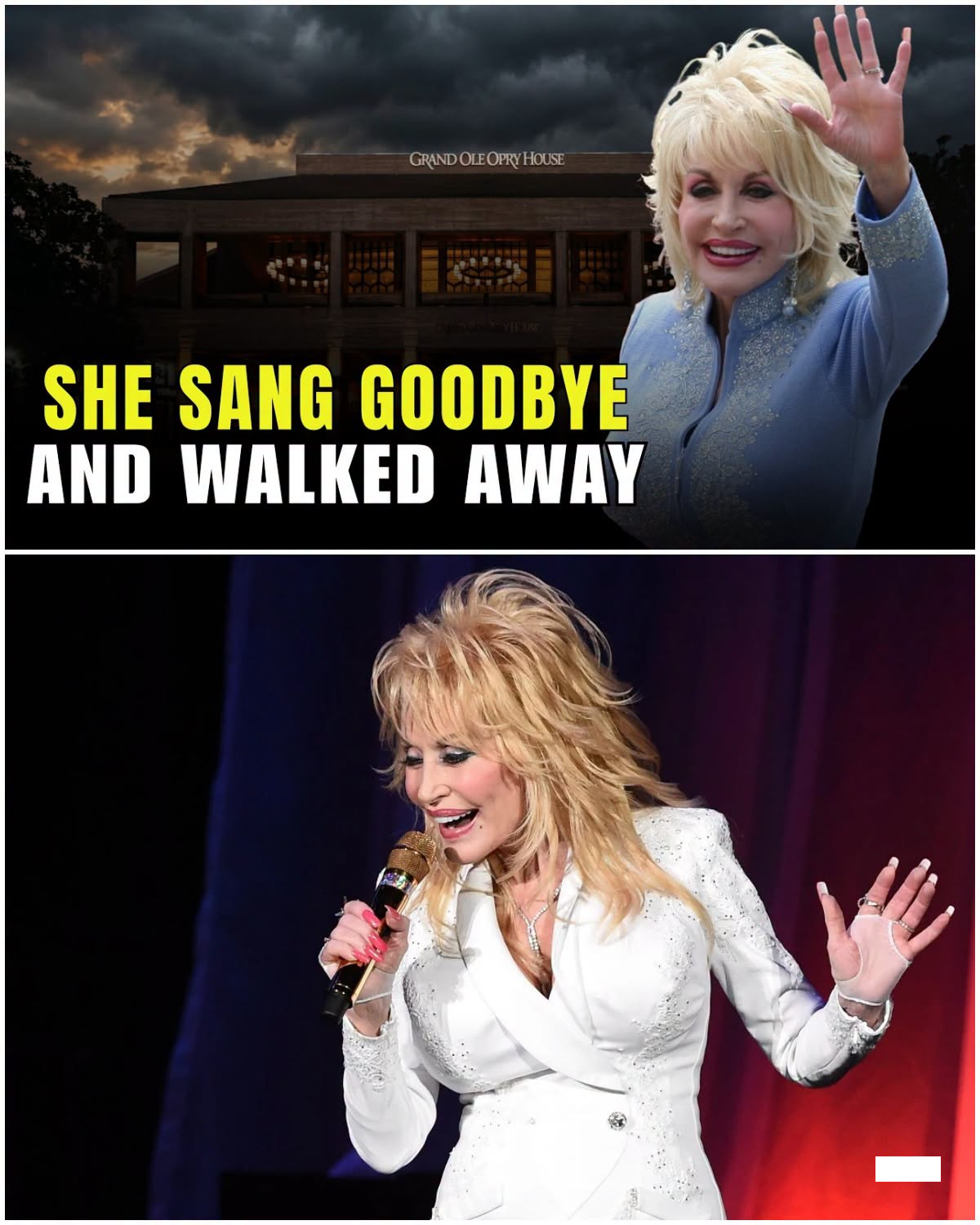
Dolly Rebecca Parton was born January 19, 1946, in Sevier County, Tennessee, the fourth of twelve children raised in a one-room cabin with no electricity or running water.
Her father, Robert Lee Parton, worked as a sharecropper and in construction and never learned to read or write; her mother, Avie Lee, filled the house with singing in the absence of a working radio or television.
Parton has said she didn’t fully understand they were poor as a child, since everyone around them lived similarly — but she understood early that music was, in her words, not a possible way out, but the only one she could see.
She was singing in church before starting school, encouraged and driven around to radio stations and talent shows by her uncle, Bill Owens.
She’d recorded her first single by 13, and the day after graduating high school in June 1964, she boarded a bus for Nashville with a guitar and a single bag.
Her early years there were difficult; she signed with Monument Records in 1965, but the label initially wanted to market her as a bubblegum pop act rather than let her pursue the country songwriting she’d built her idenтιтy around.
Her 1967 single “Dumb Blonde” hinted at what would become a career-defining strategy: appearing to be exactly what people expected while quietly being something else entirely — a persona she later described bluntly: “It costs a lot of money to look this cheap.”
The turning point came in 1967, when established country star Porter Wagoner — whose syndicated television program reached more than 100 stations nationally — invited the then-21-year-old Parton to join his show as his featured female vocalist, replacing his previous singer, Norma Jean Beasler.
What followed over the next seven years was a complicated professional partnership.
Wagoner gave Parton genuine access — helping broker her deal with RCA Victor, producing her records, booking her on national tours — but structured the arrangement clearly around his own stardom, billing himself first and referring to her as “his girl singer,” with business terms that kept her financially dependent on his decisions.
By 1973, with her own songwriting drawing real industry attention and “Jolene” becoming a genuine hit, Parton understood she’d outgrown the arrangement and began telling Wagoner she needed to leave.
By multiple accounts, he wouldn’t accept it.
Unable to get through to him in conversation, she went home and wrote “I Will Always Love You” — a song about graтιтude, professional debt, and the right to leave someone who gave you something essential without giving you everything you needed.
She brought it to him the next morning and sang it to him directly.
He cried, and reportedly told her it was the prettiest song he’d ever heard — and that she could go, provided he got to produce the record.
He did. She left. Released in March 1974, the song reached number one on the country charts.
The story didn’t end there.
In 1979, five years after she’d left, Wagoner sued Parton for breach of contract, reportedly seeking a multimillion-dollar sum tied to a claim that he was enтιтled to a share of her career going forward.
The case was ultimately settled out of court in 1980, with reported terms involving a substantial payment from Parton to Wagoner over time.
Whatever the precise figures, Parton later summarized her feelings about it plainly: “I made up my mind that if he could live with it, I could live without it.”
Around the same period, in 1974, Elvis Presley’s camp expressed interest in recording “I Will Always Love You” — an extraordinary commercial opportunity for a rising country artist — on the condition that Parton surrender half the song’s publishing rights.
She refused, reportedly in tears over what she was turning down, but unwilling, after everything she’d just fought through with Wagoner, to sign away ownership of something she’d created.
Elvis never recorded it.
In 1992, Whitney Houston’s version for The Bodyguard became one of the best-selling singles in history, and because Parton had kept full ownership of the song, every dollar it generated came back to her.
“I was crying all the way to the bank,” she later said.
That instinct to own her own work, hard-won through the Wagoner years, became the financial foundation for a career of extraordinary generosity.
In 1995, drawing on the memory of growing up in a home without books and a father who never learned to read, she founded the Imagination Library, initially funding it herself in Sevier County alone, mailing one free book a month to every enrolled child from birth through kindergarten.
State-commissioned studies in Tennessee showed measurable improvements in kindergarten readiness among participating children, and the program expanded steadily until, by the time of her death, it had distributed more than 300 million books across the U.S., Canada, Australia, the U.K., Ireland, and beyond — the largest childhood literacy program in the world.
She also quietly funded COVID-19 vaccine research at Vanderbilt University, and was honored over her career with the Presidential Medal of Freedom, ten Grammy Awards, a Grammy Lifetime Achievement Award, and induction into the Rock and Roll Hall of Fame — an honor she initially tried to decline, feeling it belonged to rock artists rather than a country singer, before the Hall’s voters kept her on the ballot regardless.
Throughout it all, she maintained her marriage to Carl Dean, whom she met outside a Nashville laundromat the day after arriving in the city in 1964.
They married in Ringgold, Georgia, in 1966, in a ceremony they held there partly because they couldn’t afford a church wedding at home.
Dean never appeared publicly at her side in nearly sixty years of marriage — no concerts, no red carpets, no interviews — a private arrangement Parton described as the anchor that let her be fully herself professionally, precisely because she had somewhere entirely separate to return to.
He died in March 2025.
Parton told people afterward that she’d been worn down and worn out, and that she hadn’t taken proper care of herself while grief consumed her attention.
She died roughly seventeen months later, on August 25, 2026, at 80.
What emerges from the fuller record isn’t simply the warmth and generosity most people already ᴀssociate with her, but the sheer difficulty of what it took to become entirely her own — fighting free of a man who believed he owned her future, refusing to hand over ownership even to Elvis Presley, and building an entire philanthropic legacy on the foundation of money she’d fought hard, more than once, to keep.