Ancient “Pink” Fossil from Spain Challenges Long-Held Views of Early Human Migration Into Europe
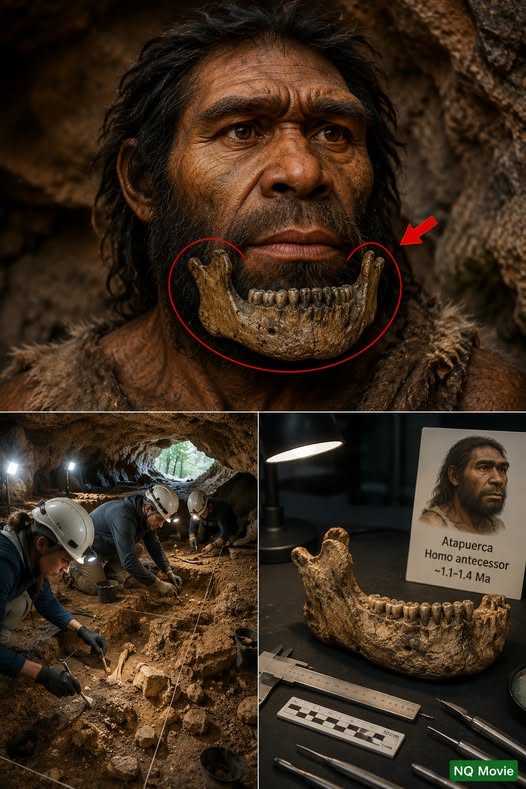
A remarkable fossil discovery from the famous Atapuerca archaeological complex in northern Spain is prompting scientists to reconsider the timeline of early human migration into Western Europe. The fossil, nicknamed “Pink” by researchers, is estimated to be between 1.1 and 1.4 million years old, making it one of the oldest known pieces of evidence for human occupation in the region.
The discovery comes from Atapuerca, a UNESCO World Heritage site renowned for producing some of the most significant human fossils ever found in Europe. For decades, the site has provided valuable insights into the evolution, behavior, and migration of ancient human populations. The newly identified remains add another important chapter to this ongoing story, offering clues about when and how early members of the genus Homo expanded beyond their ancestral homelands.
Researchers believe the fossil may represent a previously unknown or poorly understood population of early humans that lived in Western Europe much earlier than many existing models suggested. The age of the remains indicates that human groups were already reaching and surviving in parts of Europe during a period characterized by environmental instability and changing climates.
The finding is particularly significant because it challenges the traditional view that early human settlement of Western Europe occurred through a relatively straightforward migration process. Instead, scientists increasingly suspect that the movement of ancient populations was far more dynamic, involving multiple migration waves, temporary occupations, local extinctions, and later recolonizations.
Evidence from various archaeological sites across Eurasia has already suggested that human expansion out of Africa was not a single event. The “Pink” fossil strengthens this idea by providing additional proof that different groups of early humans may have entered Europe at different times, following diverse routes and adapting to a range of environmental conditions.
Surviving in Western Europe more than a million years ago would have presented numerous challenges. Early human populations would have encountered fluctuating temperatures, unfamiliar landscapes, and changing food resources. Their ability to adapt to these conditions likely played a crucial role in the success and spread of human populations across continents.
The Atapuerca region continues to be one of the most important windows into this distant past. Excavations at the site have revealed evidence of some of Europe’s earliest inhabitants, helping researchers reconstruct the evolutionary relationships between ancient human species and understand how populations changed over hundreds of thousands of years.
Scientists are now conducting additional analyses of the “Pink” fossil using advanced imaging technologies and comparative studies with other early human remains. These investigations may help determine exactly where this individual fits within the human family tree and whether the fossil represents a known species or a distinct population previously unrecognized by science.
The discovery underscores how new fossil evidence can dramatically alter established theories about human origins and migration. Rather than a simple and linear expansion across the globe, the emerging picture of early human history appears increasingly complex, shaped by repeated movements, environmental pressures, and evolutionary adaptations.