PART 2: THE DEBT THAT COULD STEAL ELEVEN HOMES—AND THE WOMAN WHO REFUSED TO LET HIM FACE IT ALONE
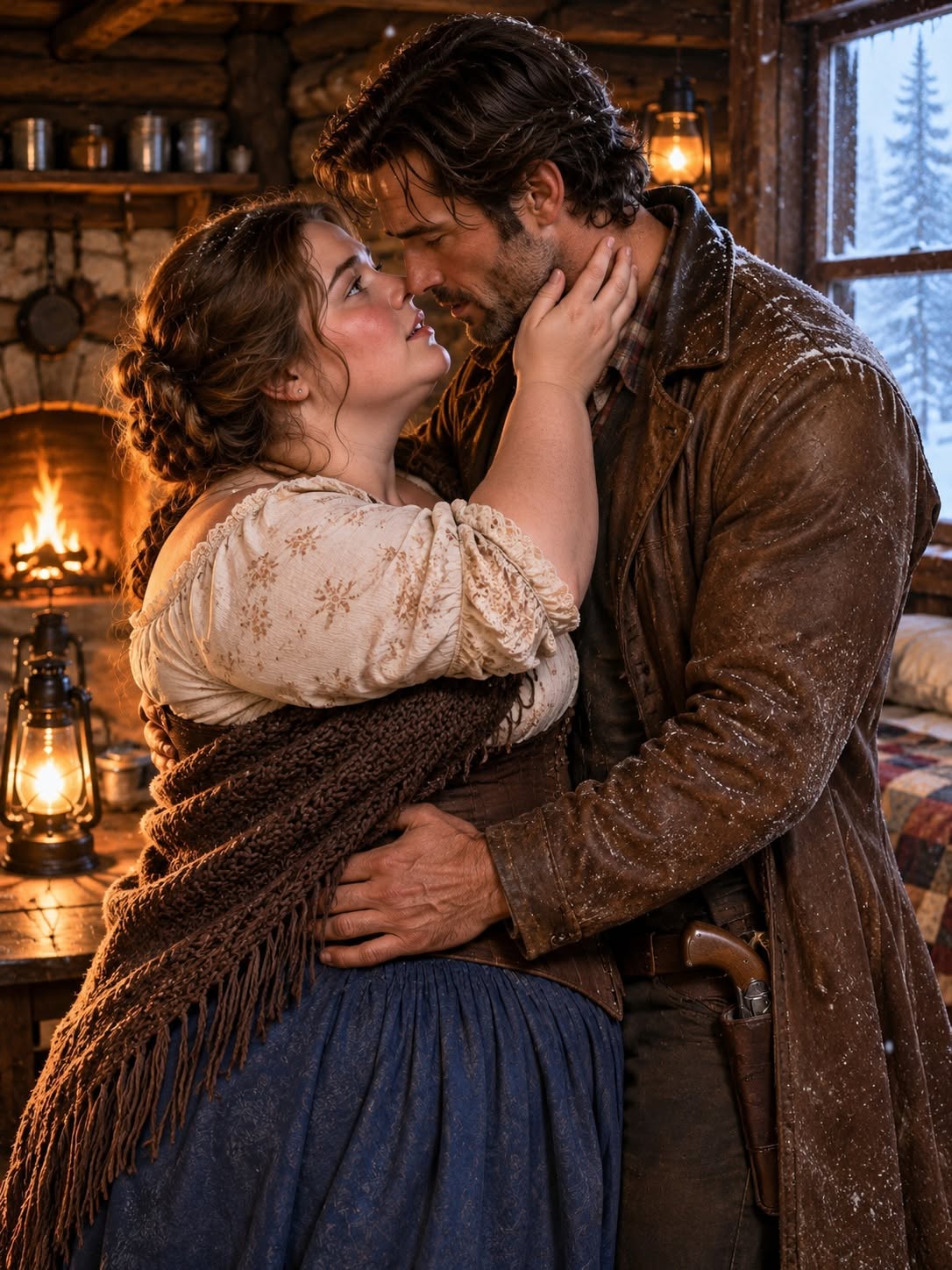
THE RANCHER’S CABIN HAD ONLY ONE BED—AND A RELENTLESS SNOWSTORM TRAPPED THEM TOGETHER FOR DAYS
PART 2: THE DEBT THAT COULD STEAL ELEVEN HOMES—AND THE WOMAN WHO REFUSED TO LET HIM FACE IT ALONE
For a long while after Everett Slade rode away, nobody spoke.
Hollis stood beside the porch rail, staring down the trail. His jaw was тιԍнт, and one hand rested on the post as though he needed something solid beneath it.
Josie watched him.
“How much did he lend you?”
“Four hundred dollars.”
“And how much does he claim you owe?”
“Six hundred and twenty, including interest and fees.”
“Did you receive a copy of the original agreement?”
Hollis shook his head.
“His agent said the document would be recorded in Ouray. I signed where he pointed.”
Josie closed her eyes briefly.
“Mr. Tarrant, you may have signed away more than your grazing road.”
“I know.”
“No, I don’t think you do. Slade is offering to erase my father’s nine-hundred-dollar debt in exchange for your land. But he cannot cancel a debt he doesn’t own and take your road without proving his claim. He is using one piece of paper to frighten two people into surrendering everything.”
Hollis looked at her.
“Then what do we do?”
Josie straightened.
“We find out what he actually owns.”
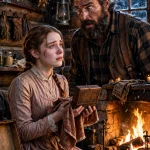
That evening, she spread the documents across the kitchen table. Hollis brought his account books, every receipt he could find, and a battered tin box that had belonged to Ada.
Minnow sat nearby, drawing a horse with six legs.
“Are you making a picture of Mr. Parsons?” Josie asked.
“No. Mr. Parsons has four legs. This is a different horse. He’s carrying all our troubles.”
Hollis glanced at the drawing.
“That’s a heavy load.”
“That’s why he has extra legs.”
Josie smiled, then returned to the papers.
For hours, she examined dates, signatures, amounts, and filing marks. Something bothered her about Slade’s documents.
The loan against Hollis’s grazing road had been signed two years earlier, but the recording stamp was dated only four months ago.
That meant Slade had waited.
He had allowed the interest to grow, then filed the claim when the land was worth considerably more.
But the most troubling detail was the witness signature.
Josie recognized it.
“Who is Gideon Pike?”
Hollis looked over.
“Used to work for the toll road office. Why?”
“Because he witnessed your signature. And he also witnessed my father’s loan agreement.”
Hollis went still.
“Could be a coincidence.”
“Perhaps. But I don’t believe in coincidences that charge interest.”
She reached for another paper.
There it was again: Gideon Pike.
The same handwriting. The same peculiar way of crossing the letter G.
“Slade used the same witness for both agreements,” she said. “And I suspect he did not merely buy my father’s note. He arranged the original loan himself.”
Hollis leaned over the table.
“Can you prove it?”
“Not yet.”
She turned another page.
Then she found the mistake.
A date had been altered.
Her father’s signature appeared beneath a sum of nine hundred dollars, but the ink in the amount was newer than the ink used elsewhere on the page.
Josie felt her pulse quicken.
“My father never borrowed nine hundred dollars.”
Hollis looked at her.
“What?”
“He borrowed four hundred and fifty. I remember the original amount. He told me himself.”
She touched the paper.
“Someone doubled it.”
The room seemed to grow colder.
Hollis pulled a chair closer.
“Can you show that?”
“I can show that the ink is different. I can also show that the witness was involved in both transactions. But I need the original loan agreement, not this copy.”
“Where would Slade keep it?”
“With the county recorder, unless he’s hiding it.”
Hollis looked toward the window.
“Then we’ll ride to Ouray tomorrow.”
“No.”
His eyebrows lifted.
“No?”
“You’re not riding into town with a man who may be trying to steal your land. Not without knowing what we’re walking into.”
“I’ve faced worse men than Everett Slade.”
“And I’ve seen men lose everything because they believed courage was the same as preparation.”
Hollis studied her for a moment.
Then he nodded.
“All right. We’ll prepare.”
The next morning, Mrs. Odessa Bright arrived with bread and a warning.
“Slade’s been asking questions at the way station,” she said. “Wanted to know whether Miss Pruitt was staying here permanently.”
Josie set down her cup.
“What did you tell him?”
“That I was too old to answer foolish questions before breakfast.”
Minnow giggled.
Odessa did not.
“He also asked whether Hollis had been seen in town with you.”
 Hollis’s expression hardened.
“Let him ask.”
“He’s not asking out of curiosity, Hollis. He’s spreading stories.”
Josie understood before Odessa finished.
By noon, the first rumor had reached the nearest ranch.
By evening, someone had told the church ladies that Josie had spent eight nights alone with a bachelor in a cabin with one bed.
By the following morning, the story had become that she had trapped Hollis into marrying her.
Josie heard it from a woman at the general store when she and Odessa rode into town for supplies.
She stood very still.
“I beg your pardon?”
The woman looked embarrᴀssed.
“I didn’t say I believed it.”
“But you repeated it.”
The woman lowered her eyes.
Josie paid for the flour and left.
Outside, Hollis was waiting beside the horses.
He saw her expression.
“What’s happened?”
“Nothing that hasn’t happened before.”
He looked toward the store.
“Who said it?”
“It doesn’t matter.”
“It matters to me.”
Josie took a breath.
“People will always find something to say about a woman who doesn’t fit their idea of what a woman ought to be. I won’t spend my life arguing with every tongue in town.”
Hollis stepped closer.
“Then let them hear one thing from me.”
“What?”
He looked straight at her.
“That you are welcome in my home. That you have done more for me and Minnow in eight days than most people have done in eight years. And that no one gets to turn your kindness into something shameful.”
Josie looked away, afraid he might see how deeply those words affected her.
“Thank you, Hollis.”
He touched the brim of his hat.
“You needn’t thank me for telling the truth.”
That night, Minnow fell asleep early.
Josie sat at the table, reviewing the documents by lamplight. Hollis came in from the barn and placed a cup of tea beside her.
“You’ve been at those papers all day.”
“I found something.”
He pulled out a chair.
“Tell me.”
Josie showed him the altered figure in her father’s agreement.
Then she explained the dates.
“If we can get the original record, we may be able to challenge the entire debt. And if your agreement was altered in the same way, Slade could lose his claim on the grazing road.”
Hollis listened carefully.
“What if he has already destroyed the originals?”
“Then we’ll need someone who remembers preparing them.”
“Gideon Pike.”
“Exactly.”
Hollis looked toward the fire.
“I know where he lives.”
Josie folded the papers.
“Then we’ll find him.”
He did not answer immediately.
Instead, he looked at her hands, stained with ink, and the tiredness in her face.
“Josie?”
“Yes?”
“If we win this, will you stay?”
Her fingers stopped moving.
“Stay where?”
“Here.”
She looked at him.
He seemed to regret asking.
“I don’t mean because of the debt. Or because Minnow needs help. I mean…”
He struggled for the words.
Josie waited.
“Since Ada died, I’ve kept this house exactly as it was. I thought that was what remembering her meant. Then you came here and started mending harnesses, sorting my books, and telling my little girl that a six-legged horse was perfectly reasonable.”
A faint smile touched his mouth.
“And somehow, the cabin feels less empty.”
Josie’s eyes grew wet.
“Hollis, I don’t want to replace Ada.”
“You couldn’t.”
He said it gently.
“Nobody could. I don’t want you to.”
He looked down at his hands.
“I just don’t want to spend the rest of my life pretending that loving someone once means I must never love anyone again.”
For a moment, Josie could not speak.
Then she reached across the table and laid her hand over his.
“You are allowed to miss her and still let me sit here.”
Hollis closed his eyes.
His hand turned beneath hers, holding it.
He did not kiss her.
He did not ask her to promise anything.
But when they finally went to bed, he left the door to Ada’s room open for the first time in twelve years.
The following morning, they rode toward Gideon Pike’s cabin.
They found it empty.
The door stood open, and a fire had burned down to gray ash.
On the table lay a single envelope addressed to Josephine Pruitt.
Inside was a short letter.
Miss Pruitt,
I know what Slade has done. I witnessed the original agreements, and I know the figures were changed after your father signed them.
I have kept silent because Slade threatened my family.
If you want the truth, come to the old toll office at midnight. Come alone.
Josie read it twice.
Hollis took the letter from her.
“You’re not going alone.”
“It says alone.”
“Then it was written by someone who doesn’t know me.”
Before Josie could answer, a rifle sH๏τ cracked from the trees.
Hollis pulled her from the saddle.
The bullet struck the fence post where her shoulder had been.
A second sH๏τ followed.
Hollis drew his revolver and fired toward the ridge.
Then a rider broke from the trees and galloped down the trail.
He left something behind in the snow.
A small leather pouch.
Josie picked it up.
Inside was a brᴀss key and a torn strip of paper.
On it, in Gideon Pike’s unmistakable handwriting, were five words:
THE ORIGINALS ARE IN SLade’s SAFE.
Hollis looked toward the distant town.
“Then we know where to go.”
Josie closed her fingers around the key.
“No,” she whispered. “Now we know why he’s afraid of us.”
And somewhere beyond the ridge, another rifle was being loaded.