PART 2 — THE PROMISE THAT MADE HER FEAR HIM
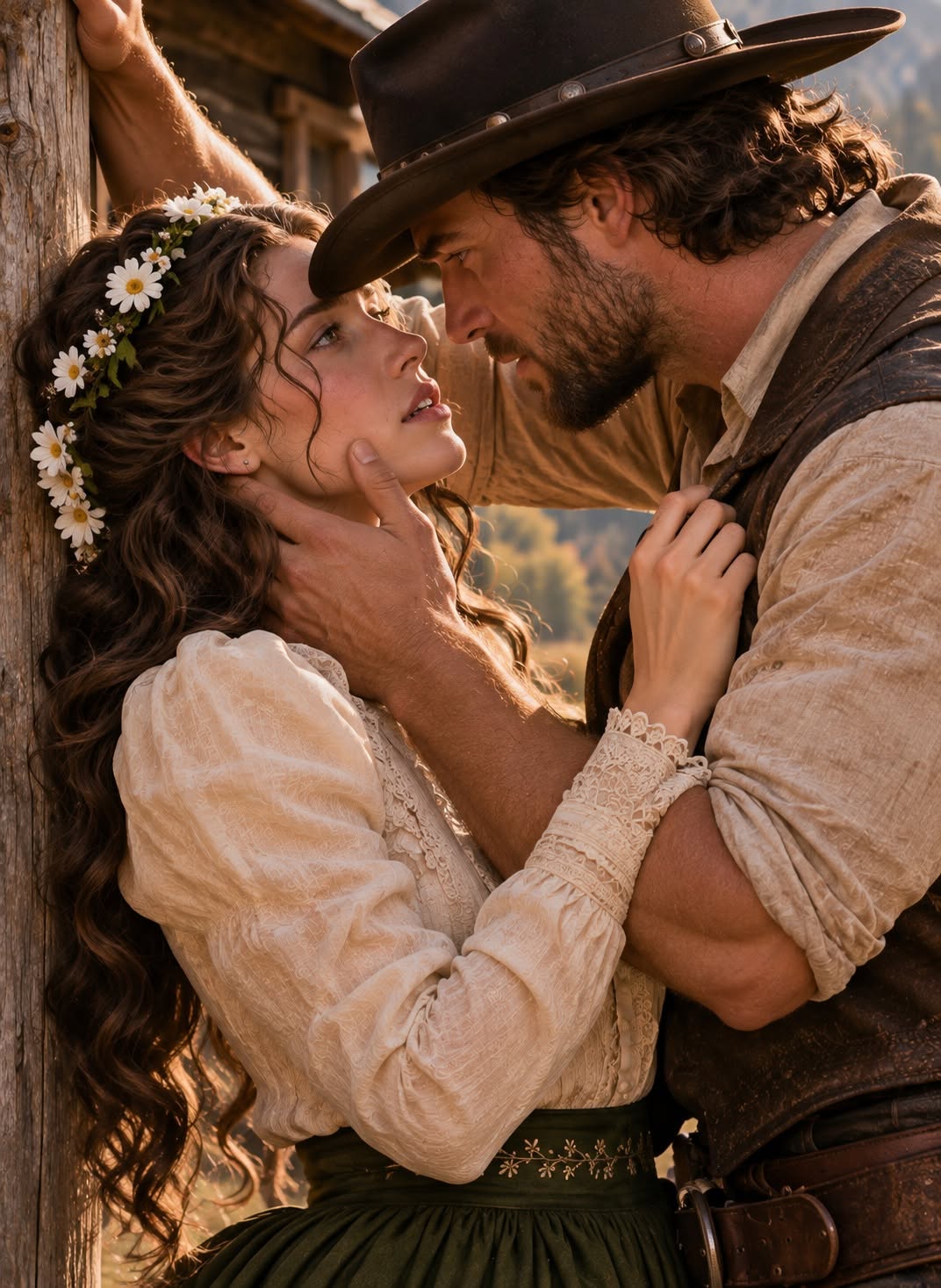
PART 2 — THE PROMISE THAT MADE HER FEAR HIM
“Because, Mrs. Vance, there’s something about you that no other woman in this territory has.”
Clara тιԍнтened her grip on the axe.
“And what might that be?”
Gideon looked at her bleeding hands, then at the small farmhouse standing stubbornly against the October wind.
“You haven’t given up.”
She frowned.
“That hardly makes me special.”
“It does to me.”
He paused, as though the next words cost him more than he wanted to admit.
“My mother died when I was ten. My father followed her three winters later. I was raised by men who taught me how to break horses, build fences, and survive a mountain storm. They never taught me how to make a home.”
His pale eyes returned to hers.
“You have something I never had, Clara. Even with half your roof falling in, you still try to make this place worth coming home to.”
For several seconds, she couldn’t speak.
Then she lifted her chin.
“If you want a wife, Mr. Stone, you’d better understand something. I’m not a broodmare. I’m not a bargain to be purchased with a warm bed and a full pantry.”
Gideon didn’t flinch.
“I wouldn’t want you to be.”
“And I won’t promise you a child.”
His expression changed, but he nodded.
“Then I won’t ask you to promise one.”
“Your words say otherwise.”
He looked away toward the mountains.
“I want a family. I’m not going to lie about that. But I won’t force you into anything.”
Clara studied him.
The man was enormous, wealthy, and accustomed to having people move out of his way. Yet he stood beside her fence as though he were the one asking permission to remain.
“I need time,” she repeated.
“Take it.”
He put on his hat, mounted his horse, and rode away.
Clara watched until he disappeared beyond the trees.
Then she returned to chopping wood.
She worked until her hands shook.
That night, she couldn’t sleep.
 Jonah’s old coat still hung beside the bedroom door. His boots remained beneath the bed, and his wedding ring rested on a leather cord against her chest.
She had loved her husband with everything she possessed.
But Jonah had been gone two years, and grief had not repaired the roof, filled the pantry, or kept the winter cold from crawling beneath the door.
Clara hated herself for even considering Gideon’s offer.
She hated him a little, too, for making the possibility of another life seem almost reasonable.
Three days later, she found out just how desperate her situation had become.
A wagon arrived carrying Mr. Harlan, the local bank agent.
He stepped onto her porch with a leather folder tucked beneath his arm.
“Mrs. Vance, I’m afraid your mortgage payment is overdue.”
“I know.”
“The bank has been patient.”
“Jonah’s crops failed the year he died. I’ve paid what I could.”
Harlan glanced at the sagging roof.
“I’m not questioning your effort. But the remaining balance is due by the first of December. If it isn’t paid, the bank will begin foreclosure.”
Clara felt the blood drain from her face.
“That’s six weeks away.”
“I’m sorry.”
He placed the notice on the table.
“Perhaps you should consider selling before the debt grows larger.”
After he left, Clara sat alone in the kitchen.
The farm had been Jonah’s dream. They had bought it together with every penny they owned. They had planted apple trees, repaired the barn, and imagined raising children in the little upstairs bedroom.
She had promised him she would never surrender it.
Now she might lose it anyway.
That afternoon, she walked to Mrs. Doyle’s boarding house.
Gideon was sitting on the porch, repairing a broken leather strap.
When he saw her, he stood immediately.
“Clara.”
She held out the foreclosure notice.
“I need to know whether your offer still stands.”
His eyes moved across the paper.
“Yes.”
“Even if I tell you I don’t know whether I can love you?”
“Yes.”
“Even if I never have a child?”
He took a long breath.
“Yes.”
She searched his face.
“Then I need another condition.”
“Name it.”
“My farm must remain mine. I won’t sign it over to you. I won’t have another man deciding what happens to the only home I have left.”
Gideon nodded.
“Your land stays yours. I’ll pay the bank directly, and we’ll put the agreement in writing. No claim on your property. No debt owed to me.”
“And if we marry?”
“We’ll make a home together. Not a business arrangement.”
Clara looked at the floorboards.
“Why would a man like you agree to that?”
“Because I want a wife, not a prisoner.”
His answer settled between them.
After a long silence, Clara whispered, “All right.”
Gideon didn’t smile immediately.
“Are you certain?”
“No. But I’m willing to find out.”
He removed his hat.
“Then I’ll spend the rest of my life trying to make sure you never regret it.”
They married ten days later in the little church at Raven Pᴀss.
There were only six people present: the minister, Mrs. Doyle, the bank agent, two ranch hands, Gideon, and Clara.
Clara wore her best blue dress. She kept Jonah’s ring on its leather cord beneath her collar.
Gideon noticed it but said nothing.
That night, he carried her trunk into the large ranch house on Stone Mountain.
The place was beautiful, but strangely empty. A grand fireplace dominated the sitting room. Fine furniture stood beneath covered windows, and a long dining table had enough chairs for twelve people.
Yet there were no family pH๏τographs.
No toys.
No signs that anyone had ever truly lived there.
Gideon showed her the bedroom at the end of the hallway.
“It’s yours,” he said. “The door locks from the inside. I’ll sleep in the room across the hall until you decide what you’re comfortable with.”
Clara stared at him.
“You don’t have to do that.”
“I know.”
He set her trunk beside the bed.
“Good night, Mrs. Stone.”
When he reached the doorway, she stopped him.
“Gideon?”
He turned.
“Thank you for keeping your word.”
His expression softened.
“I intend to keep all of them.”
The first weeks of marriage were awkward.
Gideon was gentle, but he was also distant. He left before sunrise to inspect his cattle and returned after dark. Clara filled the kitchen with bread and stew, mended curtains, and slowly made the great house feel less like a H๏τel.
She discovered that Gideon liked coffee strong, hated turnips, and always left the last biscuit for her.
He discovered that she sang while kneading dough, talked to the chickens as though they understood English, and kept a small jar of wildflowers on the windowsill.
One evening, he came home with a wooden rocking chair.
“Where did you get that?” Clara asked.
“Made it.”
“For whom?”
Gideon looked toward the empty upstairs bedroom.
“I thought we might need it someday.”
Clara’s stomach тιԍнтened.
“Gideon, we agreed—”
“I know.” He quickly set the chair down. “I shouldn’t have brought it up.”
She watched him walk away.
The next morning, she found him in the barn, repairing a stall.
“Are you disappointed?” she asked.
He kept working.
“About what?”
“That I may never give you the family you want.”
Gideon put down his hammer.
“Clara, I married a woman. Not an expectation.”
“Then why does that chair matter so much?”
He looked toward the house.
“Because I used to imagine a child sitting in it. Someone asking me questions, making a mess, and calling me Father.”
His voice lowered.
“Sometimes I still imagine it. I can’t help that. But I won’t make your life miserable because my dreams don’t happen exactly as I pictured them.”
Clara felt something inside her loosen.
For the first time, she reached for his hand.
“Perhaps we should try to become a family before we decide what that family will look like.”
Gideon looked at her fingers resting against his.
He didn’t move.
Then he gently closed his hand around hers.
That evening, they ate supper together for the first time at the same end of the long table.
It was a small thing.
But Clara began to believe that perhaps a marriage could grow slowly, like an apple tree planted in poor soil.
Then, just when the days seemed to be settling into something peaceful, a stranger arrived.
He rode up to the ranch on a gray horse, carrying a folded letter.
“Mrs. Stone?” he asked.
Clara stepped onto the porch.
“Yes?”
“I’m looking for Jonah Vance’s widow.”
Her blood turned cold.
“Why?”
The stranger glanced toward the barn, where Gideon was working.
“Because I have information about your first husband.”
Clara gripped the porch railing.
“Jonah is ᴅᴇᴀᴅ.”
“That’s what everyone was told.”
The man handed her the letter.
“Your husband didn’t die in the accident they described. And the man responsible has just learned where you live.”
Before Clara could open it, a gunsH๏τ cracked from the barn.
Gideon came running.
The stranger wheeled his horse around and galloped toward the road.
Gideon reached the porch just as Clara unfolded the letter.
Inside was a single sentence.
Jonah Vance was murdered for refusing to sell the land beneath your farm.
Beneath it was a name.
Silas Crowe.
The same mining speculator who had offered Jonah money shortly before his death.
Clara looked up at Gideon.
His face had gone pale.
“You know that name,” she whispered.
Gideon didn’t answer.
And suddenly Clara understood that the man she had married might know far more about her husband’s death than he had ever told her.