Born With Fingers and Toes Fused Together: Understanding Severe Syndactyly
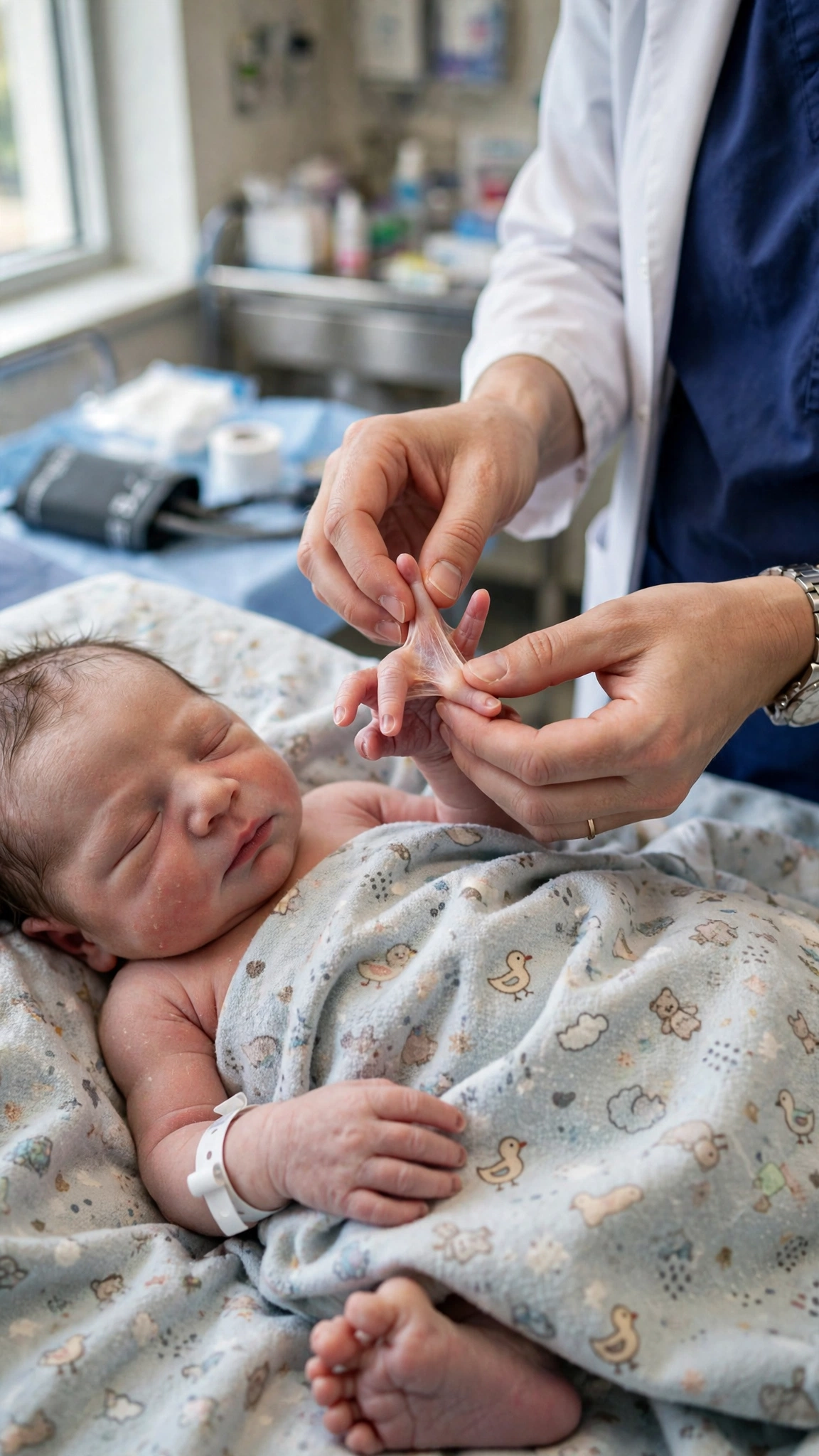
When baby Lucas was born, his parents noticed that his fingers did not appear separated like those of most newborn babies.
Several of his fingers were joined together by skin and soft tissue. Others appeared to have a deeper connection, making the natural outlines of the individual digits difficult to distinguish.
When doctors examined his feet, they discovered similar abnormalities. Several of his toes were also fused together.
His parents were concerned about what this might mean for their son’s future. They wondered whether he would be able to grasp objects, hold toys, feed himself, or develop normal hand coordination.
After a detailed physical examination, doctors diagnosed Lucas with syndactyly, a congenital condition characterized by the fusion or joining of two or more fingers or toes.
What Is Syndactyly?
Syndactyly occurs when two or more fingers or toes fail to separate completely during fetal development.
During normal development, the tissues between the developing digits gradually disappear, allowing each finger and toe to form separately.
In children with syndactyly, this separation process is incomplete. As a result, neighboring digits remain connected at birth.
The condition can affect a single pair of fingers or toes, or involve several digits on one or both hands and feet.
There are two major anatomical types of syndactyly.
Simple syndactyly occurs when the affected digits are connected mainly by skin and soft tissue.
Complex syndactyly involves deeper structures, including bones or cartilage. In these cases, the affected fingers may have more complicated anatomical abnormalities and can be more difficult to separate surgically.
Some children have incomplete syndactyly, in which the connection extends only partway along the digits. Others have complete syndactyly, where the fingers or toes remain connected along much or all of their length.
How Can Syndactyly Affect Daily Activities?
The severity of syndactyly varies considerably.
When only two fingers are connected by a small amount of skin, a child may have relatively normal hand function.
However, when several fingers are joined or deeper structures are involved, independent finger movement can become more difficult.
Children with more complex syndactyly may experience limitations in activities that require precise hand movements, including:
Holding pencils, crayons, and small toys.
Picking up small objects.
Grasping and releasing items.
Using eating utensils.
Developing fine motor coordination.Performing tasks that require individual finger movement.
The condition can also affect the feet. Depending on the digits involved, the child may experience difficulties with footwear or discomfort during certain activities.
In addition, when neighboring fingers grow at different rates, the connection between them can sometimes cause abnormal positioning or pulling during growth.
For Lucas, doctors needed to evaluate both the appearance and functional development of his hands and feet.
How Is Syndactyly Diagnosed?
Syndactyly is usually identified shortly after birth through a physical examination.
Doctors examine the affected digits, checking how much of their length is connected and whether the fingers can move independently.
X-rays are particularly useful when complex syndactyly is suspected. They help determine whether the bones are separate or joined and provide important information for surgical planning.
Specialists may also ᴀssess nail formation, joint alignment, circulation, sensation, and the condition of the surrounding soft tissues.
When multiple digits are affected, doctors may investigate whether the condition is isolated or ᴀssociated with another congenital syndrome.
Treatment Options for Syndactyly
Treatment depends on the anatomical complexity of the condition and how much it interferes with hand or foot function.
Mild cases may only require observation and periodic examinations. Surgery is generally considered when separation would improve function, prevent deformity, or address significant developmental concerns.
The most common surgical approach is known as syndactyly release.
During the operation, a pediatric hand surgeon carefully separates the joined digits. The surgeon creates skin flaps to cover the newly exposed surfaces and may use a skin graft when additional skin is needed.
The procedure requires careful attention to nerves, blood vessels, tendons, joints, and the natural shape of each finger.
Complex cases may require more than one operation. Surgeons sometimes separate different pairs of fingers in stages to protect circulation and allow adequate skin coverage.
The timing of surgery varies according to the affected digits and the severity of the condition. Certain combinations, particularly those involving the thumb and index finger or digits growing at different rates, may require earlier intervention.
Recovery and Long-Term Follow-Up
After surgery, Lucas would need careful wound care and regular medical examinations.
Doctors may recommend protective dressings or splints while the surgical areas heal.
Hand therapy may also help improve movement, flexibility, strength, and coordination as he grows.
Follow-up appointments are important because scars can тιԍнтen over time, and some children may develop web creep, a condition in which the skin connection gradually extends farther toward the fingertips again.
In complex cases, additional procedures may be needed as the child develops.
The overall goal is not simply to create fingers that look separate. It is to improve their function and allow the child to use the hand as effectively as possible.
What Could the Future Hold for Lucas?
Lucas’s diagnosis means that his hands and feet may require specialized care throughout childhood.
However, syndactyly does not mean that a child will automatically lose the ability to use their hands.
Many children achieve meaningful functional improvement following appropriate treatment. Some develop the ability to perform everyday activities with little limitation, while children with more complex abnormalities may continue to need therapy or additional procedures.
The outcome depends on the number of affected digits, the involvement of bones and joints, the condition of the surrounding tissues, and the response to treatment.
For Lucas’s family, the journey will involve medical appointments, possible reconstructive surgery, and patience as he develops new skills.
Their greatest hope is that he will be able to hold a pencil, pick up his favorite toys, feed himself, and enjoy the ordinary experiences of childhood.
His story demonstrates why early evaluation and specialized care are important for children born with congenital hand and foot differences.
Although Lucas entered the world with fingers and toes joined together, careful treatment may help him develop greater independence and discover what his little hands can accomplish.
Medical note: This is an illustrative educational story, not a verified patient report. Syndactyly has different anatomical forms, and not every child requires surgery. Diagnosis, surgical timing, and expected outcomes should be determined by a qualified pediatric hand surgeon.