PART 2 — THE WOMAN WHO MADE THE CHILDREN BELIEVE AGAIN
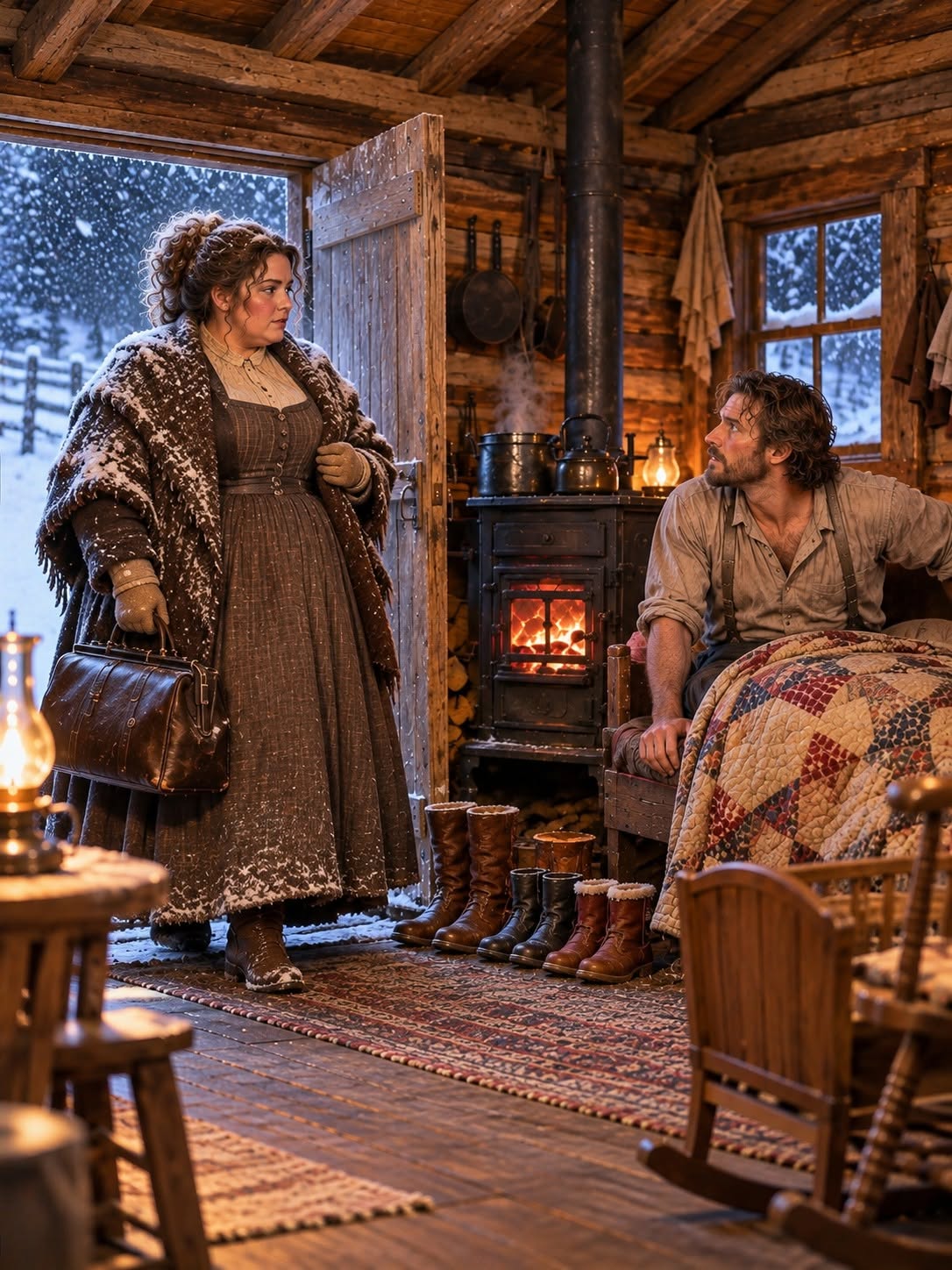
PART 2 — THE WOMAN WHO MADE THE CHILDREN BELIEVE AGAIN
“I’m going to ask you something that’s going to sound like I’ve lost my mind.”
Judith looked at Graham Dyer.
The baby was sleeping against her shoulder now, one tiny fist curled into the fabric of Judith’s gray dress.
“What is it?”
Graham swallowed.
“Will you come home with us?”
The mercantile went completely silent.
Mr. Pruitt stopped counting coins.
The old ranch hand near the flour barrels turned his head.
Even Sarah looked shocked.
Graham seemed to realize how the question sounded.
He rubbed a hand over his tired face.
“I mean as a housekeeper. A nurse, if you want to call it that. I’ll pay you. Room and board. Whatever’s fair.”
Judith looked down at Rose.
The baby had finally stopped crying.
Then she looked at the other children.
Caleb was watching her cautiously.
Daisy had hidden half behind Sarah’s skirt.
And Sarah…
Sarah looked at Judith as if she were afraid to hope.
Judith knew that look.
She had seen it on wounded soldiers.
On widows.
On mothers sitting outside hospital doors.
Hope was dangerous when you had already lost something.
“How much?” Judith asked.
Graham named a sum.
Judith raised an eyebrow.
“That is not enough for four children.”
Graham blinked.
“What?”
“You need someone to cook, clean, mend, keep the baby, teach the girls, keep Caleb from breaking his neck, and remind you that children require baths.”
Caleb looked offended.
“I bathe.”
“Once a week isn’t bathing,” Judith said.
The boy stared at her.
Then, unexpectedly, he grinned.
Graham’s mouth twitched.
Judith looked at him.
“I’ll take the job.”
His shoulders dropped with relief.
“But,” she added.
Graham waited.
“I will not be your servant.”
He frowned.
“What will you be?”
Judith glanced at the children.
“The person keeping your family from falling apart.”
For the first time in months, Graham almost smiled.
“All right.”
“Then we have an agreement.”
They left town before noon.
The ride to Eagle Rock took nearly an hour.
Judith sat beside Graham in the wagon while the children rode behind them.
For most of the journey, neither adult spoke.
Finally, Graham said,
“Ellen used to do everything.”
Judith looked at him.
“I gathered that.”
“She could cook for ten men with half a sack of flour.”
“She sounds capable.”
“She was.”
His voice softened.
“She was the best woman I ever knew.”
Judith didn’t answer.
She understood that grief did not need advice.
When they reached the ranch, Judith immediately saw the problem.
The house wasn’t filthy because Graham was careless.
It was filthy because one man had been trying to do the work of six people while grieving.
Laundry was piled near the stairs.
Dishes stood in the sink.
The pantry held almost nothing.
The children’s clothes were patched and mismatched.
And on the kitchen table sat a plate with four biscuits.
Hard as stones.
Judith picked one up.
“Did you make these?”
Graham nodded.
“They’re supposed to be biscuits.”
Judith tapped one against the table.
“It could be used to repair a fence.”
Caleb laughed.
Graham actually smiled.
Then Sarah spoke.
“Papa doesn’t know how to cook.”
“I know how to cook.”
“You burned the beans.”
“Once.”
“Three times.”
Judith looked at Graham.
He sighed.
“I’ll stay out of your way.”
“Good.”
By sunset, the house smelled different.
Warm bread.
Soap.
Cinnamon.
Something had changed.
Not because Judith performed a miracle.
Because she knew how to organize chaos.
She gave Caleb a list of chores.
She taught Sarah how to make biscuits.
She bathed Daisy.
She rocked Rose until the baby’s fever eased.
And when Graham returned from the barn, he stopped in the doorway.
All four children were sitting around the table.
They were eating.
Together.
Sarah was laughing.
Caleb had flour on his nose.
Daisy was telling a story that made absolutely no sense.
And Rose was sleeping peacefully in a basket beside the stove.
 Graham stared.
Judith looked up.
“Dinner’s ready.”
He removed his hat.
For a moment, he said nothing.
Then:
“Thank you.”
Judith nodded.
“You’re welcome.”
That night, after the children went to bed, Judith found Graham sitting on the porch.
She carried two cups of coffee outside.
He accepted one.
“Why did you come here?” he asked.
“Because I needed work.”
“That isn’t the whole answer.”
Judith looked toward the dark prairie.
“My husband died two years ago.”
Graham’s eyes shifted toward her.
“And your children?”
“I never had any.”
He lowered his gaze.
“I’m sorry.”
Judith smiled faintly.
“So am I.”
Silence settled between them.
Then Graham said,
“Ellen died four months ago.”
“I know.”
“Fever.”
Judith looked at him.
“What kind?”
He hesitated.
“Started with a headache. Then chills. Then she couldn’t keep water down.”
Judith’s expression changed.
“Did she have a rash?”
“No.”
“Neck stiffness?”
Graham thought.
“Yes.”
Judith set down her cup.
“And how long was she sick?”
“Three days.”
Judith stared into the darkness.
“Graham.”
“What?”
“That doesn’t sound like ordinary fever.”
His face тιԍнтened.
“What are you saying?”
“I don’t know yet.”
She stood.
“I want to see the medical supplies Ellen used.”
“Why?”
“Because if she was sick with something contagious, I need to know.”
Graham followed her inside.
They went to the small bedroom that had belonged to Ellen.
The room had been untouched.
Her dress still hung from a peg.
Her hairbrush remained beside the mirror.
A Bible sat on the nightstand.
Graham stopped at the doorway.
“I haven’t been in here since the funeral.”
Judith entered carefully.
She opened a drawer.
Nothing.
Another.
Nothing.
Then she noticed something beneath the bed.
A small wooden box.
She pulled it out.
Graham frowned.
“I’ve never seen that.”
Judith opened it.
Inside were several bottles.
A vial of laudanum.
Dried herbs.
A packet of powders.
And one small glᴀss bottle with a handwritten label.
Judith held it toward the light.
Her face changed.
“Where did this come from?”
Graham stepped closer.
“What is it?”
Judith read the label again.
“Arsenic.”
Graham went completely still.
“That can’t be.”
Judith looked at him.
“Did Ellen take this?”
“No.”
“Are you certain?”
“I told you. I never saw this box.”
Judith examined the bottle.
The cork had been opened.
Recently.
Graham’s face hardened.
“Are you telling me Ellen was poisoned?”
“I don’t know.”
Judith placed the bottle back.
“But I know one thing.”
“What?”
“Someone wanted this hidden.”
Before Graham could answer, a sound came from the hallway.
A floorboard creaked.
Both turned.
The hallway was empty.
Graham grabbed the lamp.
“Who’s there?”
No answer.
He rushed toward the front door.
It was locked.
But when he opened it, he found something lying on the porch.
A small envelope.
His name was written across it.
Graham opened it.
Inside was a single sentence.
Stop digging into Ellen’s death, or you will bury another woman.
Graham looked toward Judith.
She was standing behind him.
And for the first time since she arrived at Eagle Rock, Judith looked frightened.
Because she recognized the handwriting.
It belonged to a man she had once treated at Fort Riley.
A man who had been ᴅᴇᴀᴅ for six years.