“For God. And Now I’m in Hell”: The Interrogation Video That Reopened a Closed Case

More than two years after Chad Doerman pleaded guilty and was locked away for life, the Clermont County Sheriff’s Office released interrogation video that put his own voice back into a story many people thought they already understood. The footage, obtained and reported in August 2026 by local stations and national outlets, shows Doerman in blood-stained clothes, handcuffed, moving between confusion, religious ranting, self-pity, and a claim that he had acted under a divine test. Detectives asked him what he had done. For a long stretch he answered that he did not know. Then the talk turned to hell. “Am I in Hell?” he asked. A detective said no, they were having a conversation. Doerman insisted the room, the world, the moment was hell, that Jesus was coming, that people were “walking like zombies,” that signs had been “all over the place,” and that he would not leave his family in harm.
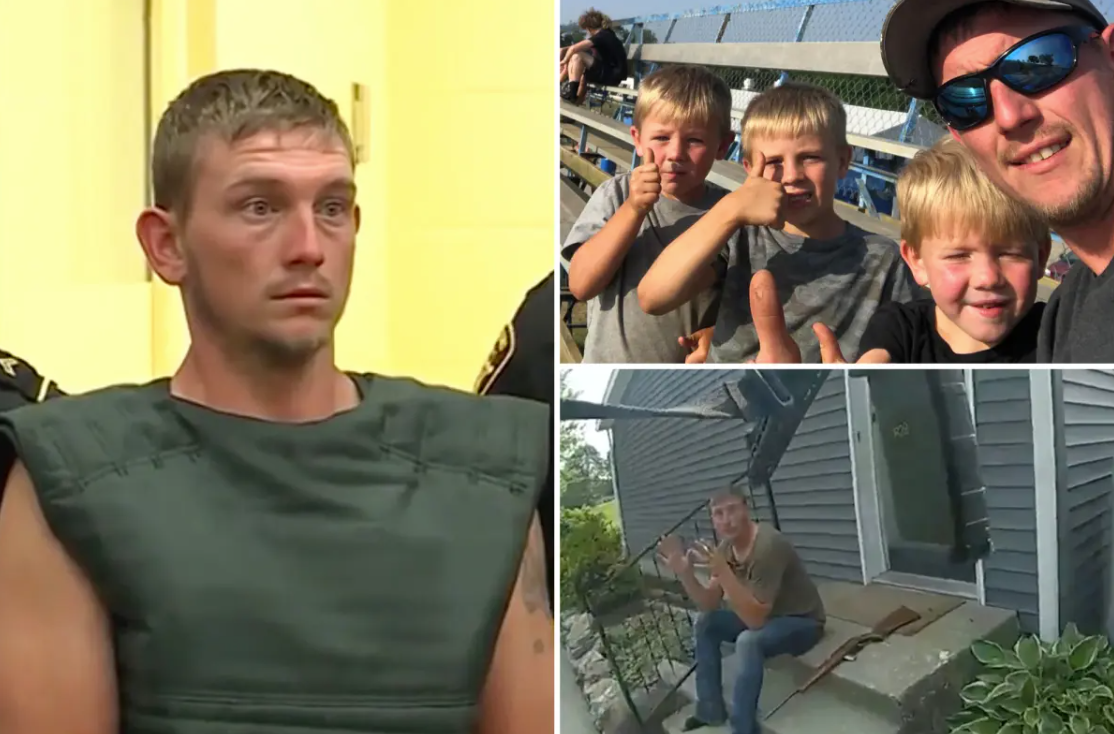
The most circulated exchange is short and cold. He said God tests you and you have to do it, that you cannot deny it, that you cannot stop. “And you did?” a detective asked. “For God,” Doerman said. “And now I’m in Hell.” He also said he had meant to send the boys to heaven while he went to hell, and he expressed regret not for killing them but for the order in which he believed he had done it, saying one child had suffered because he had not started with another. He claimed he trusted God and that it was “all there in the Bible,” then admitted, when asked where that Bible was, that he had never actually read it. He had been “told the story.” He talked about a church service the same day and about seeking help because bad thoughts would not leave him. Toxicology later found alcohol in his system and no drugs. The video is not a clean confession in the legal sense that first reached a jury.

In March 2024, Judge Richard P. Ferenc ruled the interrogation inadmissible after finding that investigators failed to handle Miranda warnings properly and continued questioning after Doerman asked for a lawyer. That ruling is why the footage can now circulate as a public document of motive-talk without having been the centerpiece of a death-penalty trial. Prosecutors had already built a case from the scene, the timeline, witness accounts from Laura and Alexis, and later jail statements. The 2026 release did something else: it showed a man trying to wrap filicide in scripture he conceded he had not read, while also saying he had wanted help and felt no one gave it. Viewers argued online over whether the tape proved delusion, calculation, or both.
Courts had already rejected the idea that a serious-mental-illness defense would carry the case to acquittal. Doerman pleaded guilty in August 2024 rather than face a capital trial. The new video does not change the sentence. It does change the sound of the motive. “Best boys ever” was what he told the children. “For God” was what he told the police. Between those two sentences sits the entire unanswered question of the Doerman case: whether a father who spoke of heaven believed a word of it, or whether religion was the last costume he put on after the decision had already been made.
Source: nypost.com