Dinosaur Fossils on Noah’s Ark: Religious vs Scientific Debate Reaches Its Peak? Science Remains Unmoved.lh
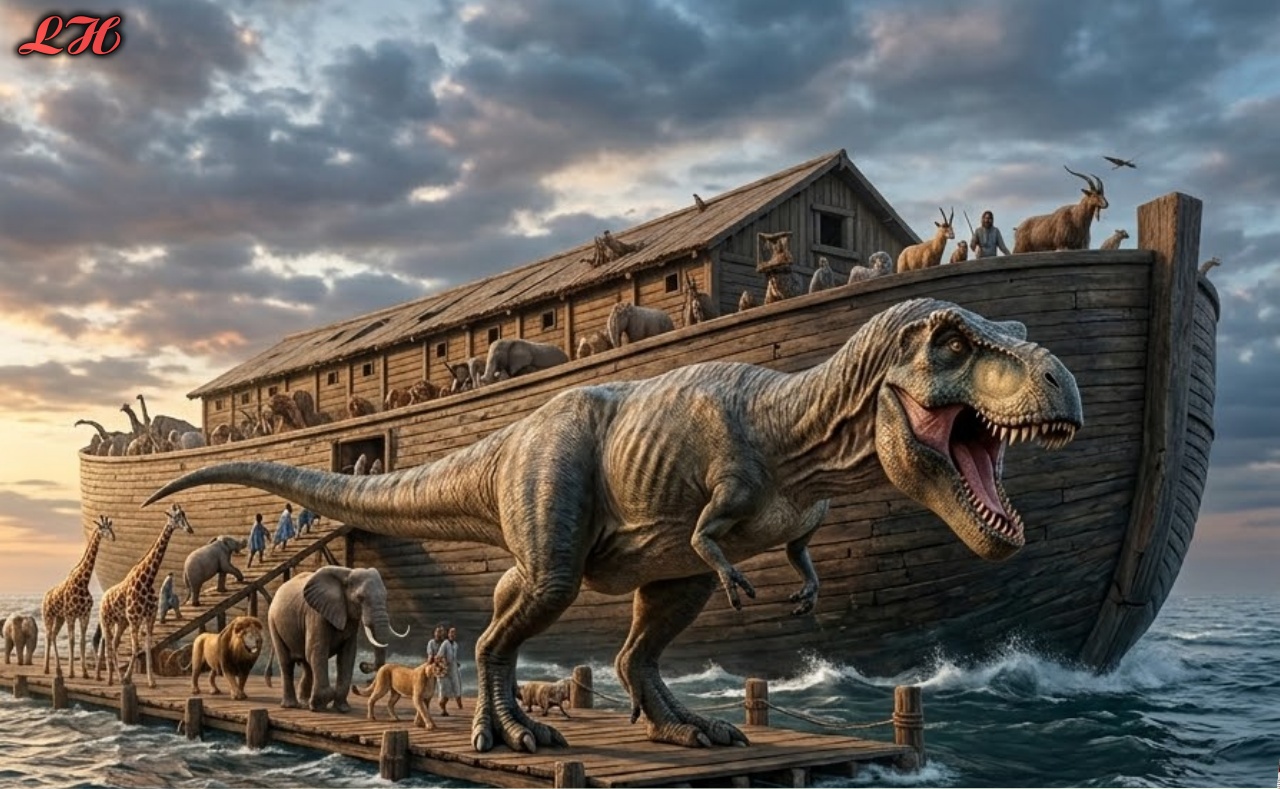
Dinosaur Fossils on Noah’s Ark: Religious vs Scientific Debate Reaches Its Peak? Science Remains Unmoved
A wave of online videos and creationist publications is once again claiming that dinosaur fossils prove the animals were aboard Noah’s Ark, survived the global Flood, and lived alongside humans until recently. The argument suggests that the fossil record is actually post-Flood debris and that radiometric dating is fundamentally flawed.
Scientists across paleontology, geology, and archaeology reject these claims outright. Non-avian dinosaurs went extinct 66 million years ago at the end of the Cretaceous, while anatomically modern humans appeared only around 300,000 years ago — a gap of more than 65 million years. No dinosaur bones have ever been found in the same geological layers as human artifacts or in deposits younger than the K-Pg boundary.
Creationist arguments typically rely on misidentified tracks (such as the debunked Paluxy River “human footprints”), hoaxes, or deliberate misrepresentations of soft-tissue preservation in fossils like the T. rex vessels reported by Mary Schweitzer. These specimens are chemically altered and mineralised, not evidence of recent burial.
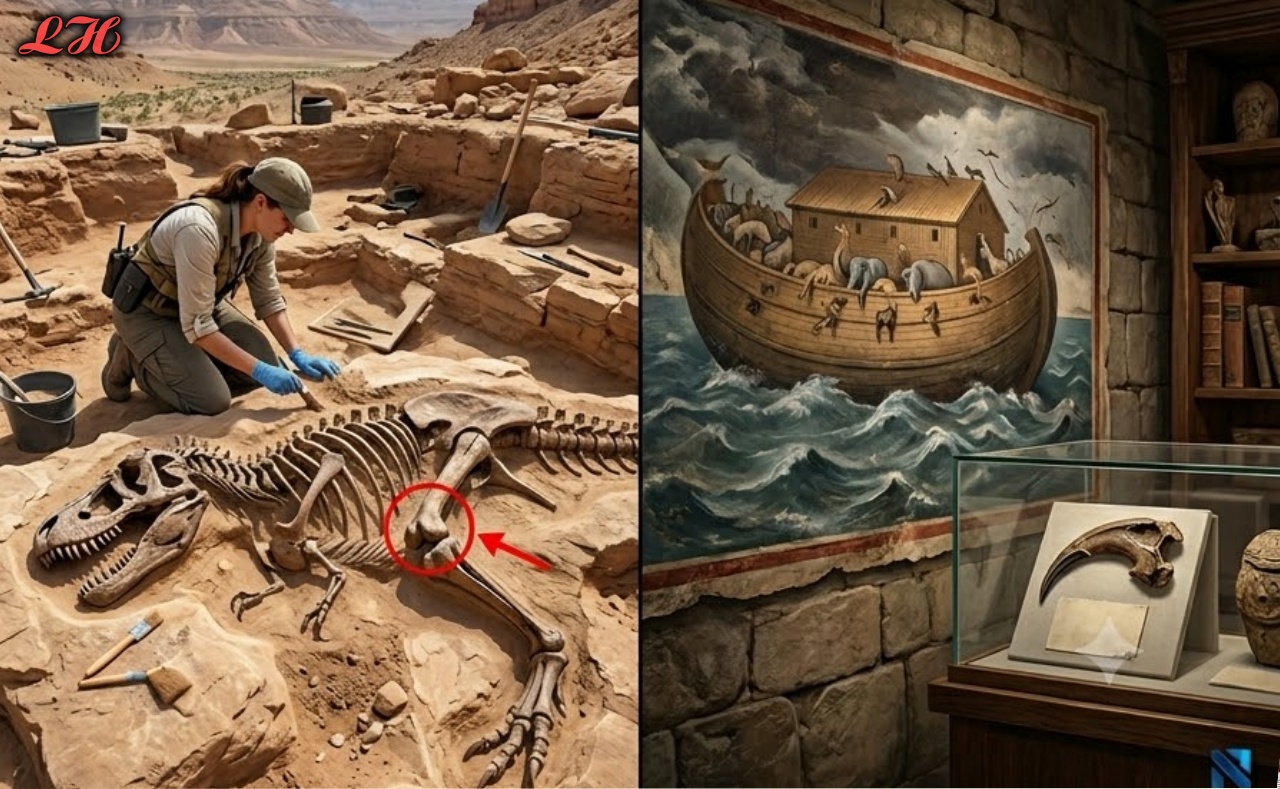
Radiometric dating, biostratigraphy, and the global iridium anomaly at the K-Pg boundary consistently place dinosaur extinction at 66 million years ago. A single global flood would have produced one chaotic deposit layer worldwide; instead, the rock record shows hundreds of distinct formations laid down over millions of years.
The debate may generate headlines and social-media engagement, but within the scientific community it is settled. Dinosaurs ruled the Earth for 165 million years and vanished long before the first humans appeared. Claims that their fossils were once aboard Noah’s Ark remain a matter of faith, not evidence.