Reuters Headline Debunked: No International Expedition Has Found Hundreds of Dinosaur Bone Fragments on the Atlantic Mid…lh
Reuters Headline Debunked: No International Expedition Has Found Hundreds of Dinosaur Bone Fragments on the Atlantic Mid-Ocean Ridge – The Geology Makes It Impossible
A dramatic Reuters-style claim that an international team recovered “hundreds of dinosaur bone fragments” from the Atlantic Mid-Ocean Ridge is not supported by any credible scientific report. The story appears to be pure sensationalism.
The Mid-Atlantic Ridge is an active seafloor-spreading centre where new oceanic crust is continuously created. The crust right at the ridge axis is geologically extremely young — in many places less than 1 million years old, and nowhere older than about 10–15 million years along the ridge itself. Non-avian dinosaurs went extinct 66 million years ago. Any dinosaur bone on the ridge would therefore have to have been transported there after the crust formed, which is geologically implausible on that scale.
Even isolated dinosaur bones occasionally recovered from marine settings (such as the North Sea Plateosaurus or Pacific theropod fragments) come from ancient continental margins or coastal plains that were later submerged by sea-level rise and tectonic subsidence. They are never found on active mid-ocean ridges, where the seafloor is brand new and constantly being renewed.
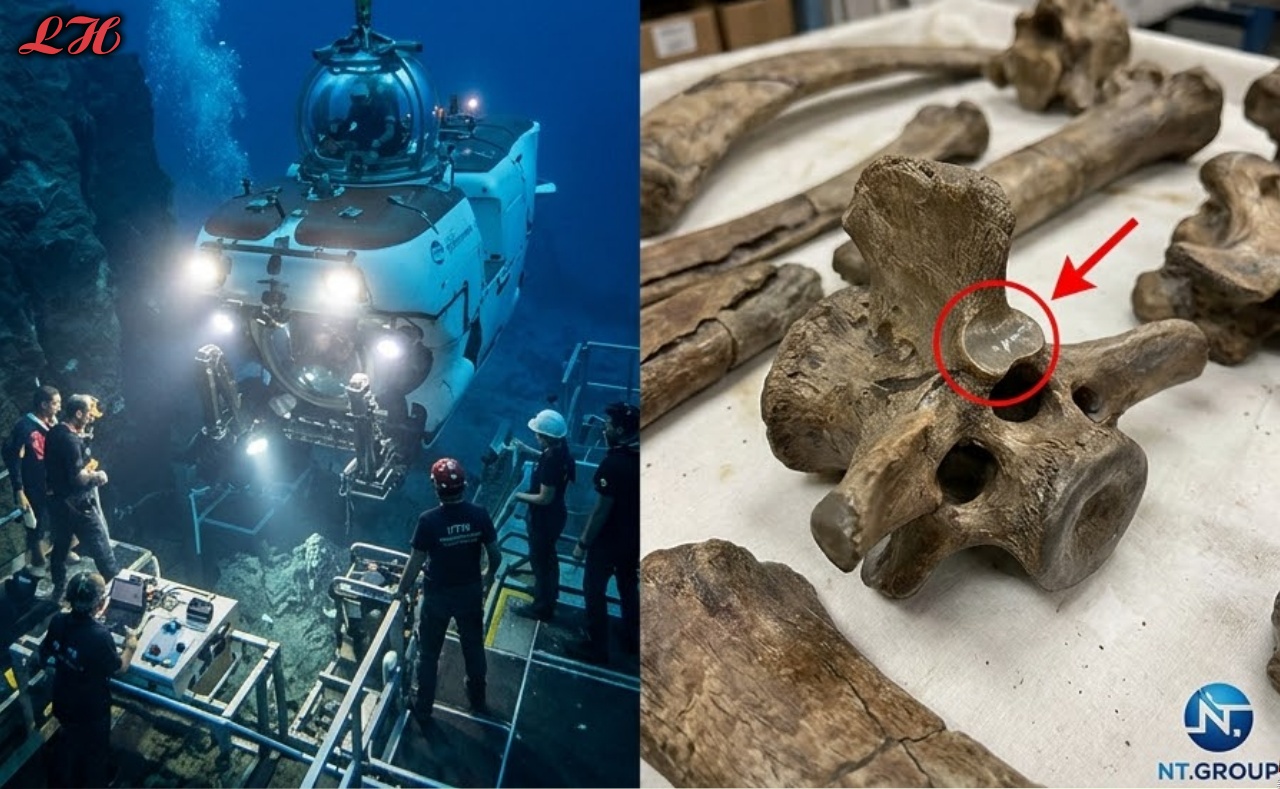
If any bone fragments were genuinely recovered from the ridge, they would almost certainly be modern marine mammal or fish remains misidentified, or the result of contamination during drilling or dredging operations. No peer-reviewed paper, expedition report, or reputable news outlet has ever documented hundreds of Mesozoic dinosaur bones on the Atlantic Mid-Ocean Ridge.
The real science remains consistent: dinosaurs were exclusively terrestrial. Their rare appearances in marine sediments result from normal river or storm transport followed by millions of years of burial. The Mid-Atlantic Ridge simply cannot host 66-million-year-old terrestrial fossils in any significant quanтιтy.
From the active spreading centre of the Atlantic, this headline collapses under basic geological reality. Paleontology and plate tectonics continue to tell a coherent story — one that needs no dramatic “hundreds of bones on the ridge” to be fascinating.