Ambystoma quetzalcoatli: First Named Fossil Axolotl Species from Mexico Unearthed in 4.2-Million-Year-Old Lake Deposits.lh
Ambystoma quetzalcoatli: First Named Fossil Axolotl Species from Mexico Unearthed in 4.2-Million-Year-Old Lake Deposits
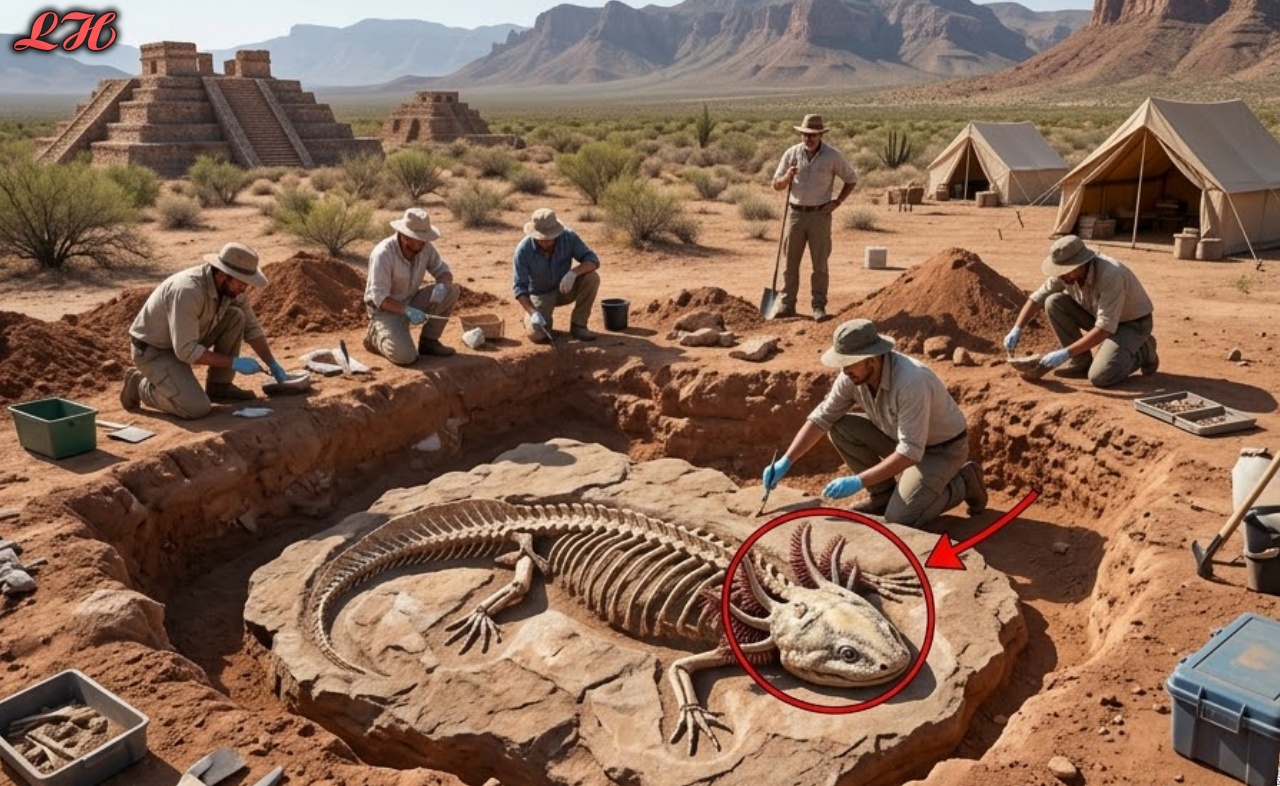
In a June 2026 announcement, Mexican and international paleontologists have formally described Ambystoma quetzalcoatli, the first named fossil salamander species ever recorded from Mexico and the oldest confirmed member of the living Ambystoma lineage (axolotls and tiger salamanders) on the continent.
The exquisitely preserved specimens—multiple complete, articulated skeletons up to 20 cm long—were recovered from the Pliocene Santa María Amajac site in Hidalgo, within the Trans-Mexican Volcanic Belt. Dated to approximately 4.2 million years ago via volcanic ash layers and magnetostratigraphy, the fossils retain delicate external gills, a neotenic trait still seen in the famous axolotl (Ambystoma mexicanum) today.
The new species is distinguished by a unique skull shape, including an elongated snout and specific cranial suture patterns that set it apart from both living Mexican axolotls and earlier North American fossil salamanders. Lead author Gerardo Carbot-Chanona noted: “These are the first fully articulated fossil axolotl relatives found in Mexico. They prove the neotenic lifestyle was already established here millions of years ago.”
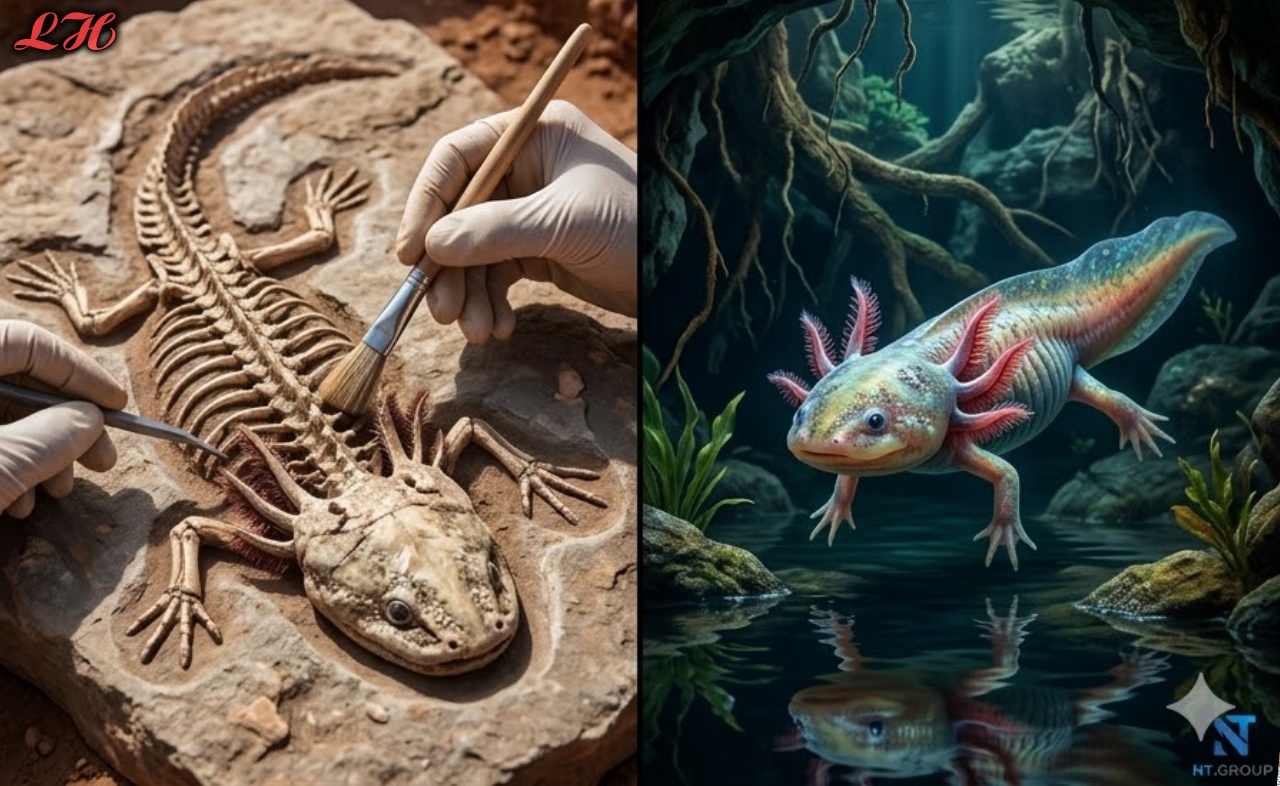
The discovery fills a major gap in the fossil record of the Ambystomatidae and shows that the iconic Mexican axolotl lineage has deep roots in the region’s ancient lakes and wetlands. It also highlights the extraordinary preservation potential of volcanic lake environments, where fine sediments captured even the most fragile larval features.
Ambystoma quetzalcoatli—named after the Aztec feathered serpent deity—demonstrates that the evolutionary experiment of permanent larval retention was already successful in Pliocene Mexico, long before humans arrived. The Trans-Mexican Volcanic Belt has once again revealed a hidden chapter in the story of one of the world’s most beloved amphibians.