💔 Lauren Dickason Trial: Court Hears of Severe Depression Before Daughters’ Deaths
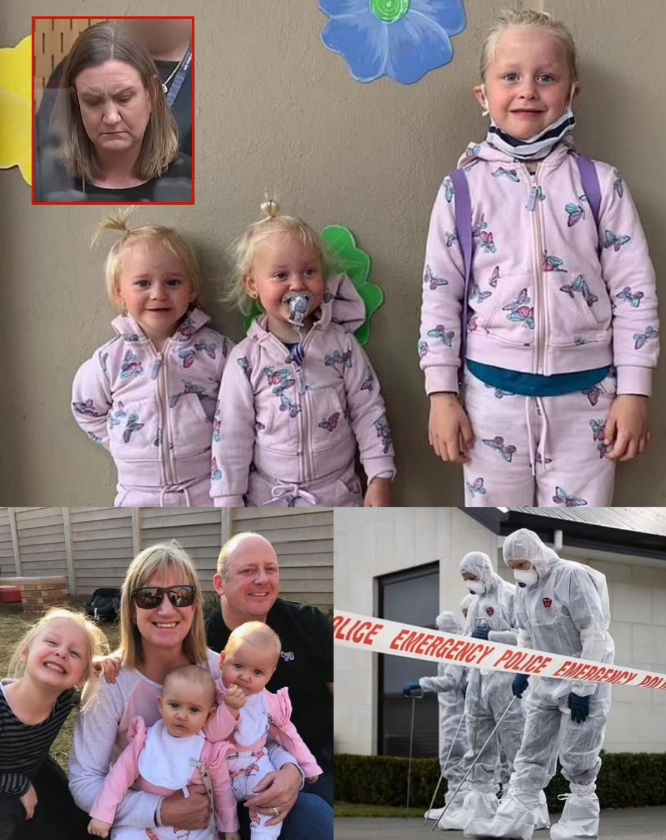
A New Zealand court has heard detailed psychiatric evidence about the deteriorating mental state of Lauren Anne Dickason before the deaths of her three young daughters in 2021.
Dickason, 42, is on trial in Christchurch High Court over the September 2021 deaths of her 6-year-old daughter, Liane, and her 2-year-old twins, Maya and Karla, at the family’s home in Timaru, on New Zealand’s South Island.
Dickason has admitted causing the deaths of the three children but pleaded not guilty to murder by reason of insanity. Her mental condition and its possible effect on her understanding of events have therefore become central issues in the proceedings.
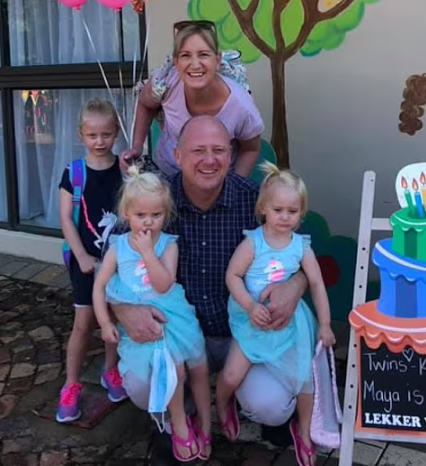 The family had moved from South Africa to New Zealand only about a month before the children died. According to psychiatric evidence presented in court, the major relocation became an increasing source of distress for Dickason.
Forensic psychiatrist Dr Justin Barry-Walsh told the court that he believed Dickason was experiencing severe depression that had progressively worsened.
According to evidence attributed to Dickason, she described feeling as though she were in a dream on the day her daughters died. She also reportedly felt overwhelmed by the family’s circumstances and increasingly troubled by questions her children had been asking about their new life.
The girls had reportedly asked when they would see their grandparents and friends again. They also questioned why their family had moved to a country they found cold.
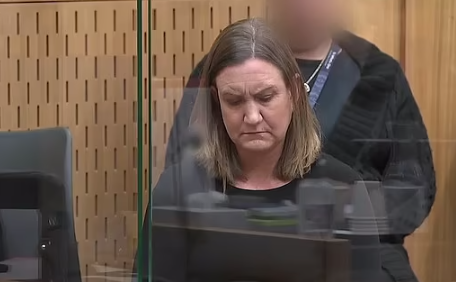 Dr Barry-Walsh told the court that Dickason interpreted those questions through an increasingly negative state of mind. She reportedly began believing that moving the children away from South Africa had subjected them to unnecessary hardship.
Her thinking, the psychiatrist said, became increasingly focused on the future and on the belief that she had made an irreversible mistake.
The court heard that Dickason eventually developed the belief that her daughters would be better off ***. That belief formed part of the psychiatric evidence being considered during the trial.
Dickason also reportedly described experiencing emotional detachment during the events. She told the psychiatrist that she felt very little emotion and experienced what was happening as though she were separated from herself.
After the children’s deaths, Dickason also attempted to end her own life, according to evidence presented to the court. Dr Barry-Walsh said she had not expected to survive and was surprised when she regained awareness and encountered police officers.
The psychiatrist further told the court that, at that stage, Dickason continued to believe that what had happened to her children had been the correct outcome, reflecting the severely negative thinking she was experiencing at the time.
 She reportedly returned repeatedly to the family’s decision to leave South Africa, describing the move to a country she had never previously visited as one of the decisions she most regretted.
Dickason told Dr Barry-Walsh that she wished the family had remained in South Africa.
She also reportedly said she did not want to leave her children without their mother or leave her husband, Graham Dickason, to raise them alone. Her thinking at the time, according to the psychiatric evidence, led her to view taking the children with her as a solution rather than abandoning them.
Those statements are now being examined as part of the court’s consideration of whether her mental illness affected her ability to understand the nature and moral consequences of her actions.
Graham Dickason returned home from a work dinner and discovered the three children ᴅᴇᴀᴅ while his wife was in a serious condition.
The deaths occurred only weeks after the family had relocated to New Zealand in what had been intended as the beginning of a new chapter.
The trial is now examining that devastating period through medical testimony, Dickason’s reported statements, and other evidence.
The court will ultimately consider the evidence presented during the proceedings in determining the legal issues before it.
For the families involved, however, the tragedy remains centered on three children whose lives ended at extraordinarily young ages.
💔 Liane, Maya, and Karla were just beginning their lives when their family’s new beginning in New Zealand turned into an unimaginable tragedy.
⚖️ The trial continues, with psychiatric evidence playing a central role in the court’s examination of what happened.