Years of Overlooked Warnings: The Troubling Path That Led to the Siders Family Child Endangerment Case in Ohio

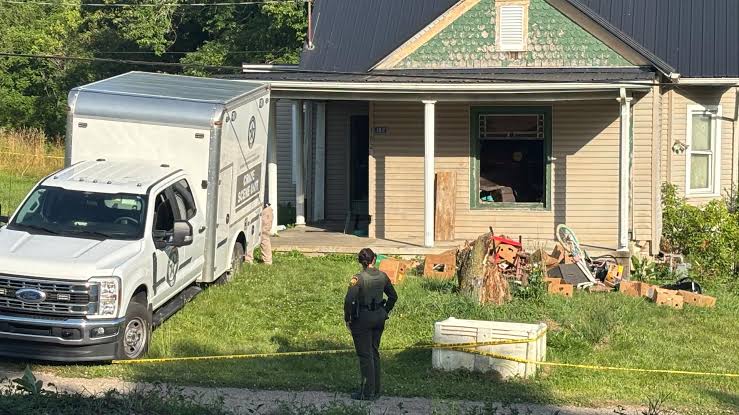
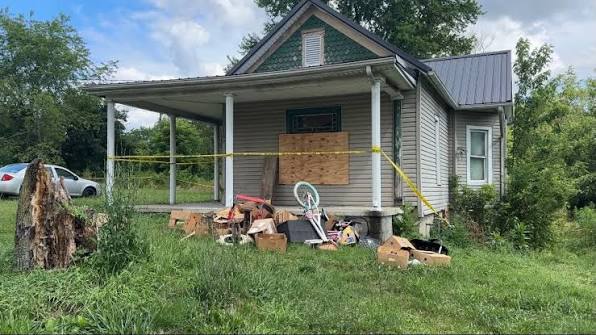
In the final days of June 2026, law enforcement officers entering a small rental house on Ohmer Street in the quiet village of Hamden, Vinton County, Ohio, uncovered a scene so severe that seasoned investigators later called it among the worst they had ever witnessed. Inside the home they found sixteen children, ranging in age from about eighteen months to eighteen years, living in conditions described as worse than those endured by livestock. The children had allegedly been confined for years to a cramped space measuring roughly twelve feet by twelve feet, surrounded by human waste, bacteria, insects, and filth. Several were in critical medical condition; two had to be airlifted to trauma centers. Officials warned that some might not have survived another day without rescue. Four adults—Gary Siders Sr., then seventy-three, his wife Christina Siders, around sixty-seven or sixty-eight, their son Gary Siders Jr., thirty-six, and Gary Jr.’s wife Elizabeth Siders, thirty-three—were arrested and each charged with sixteen counts of second-degree felony child endangerment, allegations that the abuse had caused serious physical harm. All four pleaded not guilty. Bonds were set at three hundred thousand dollars each, with strict no-contact orders. The discovery quickly drew statewide and national attention, with Ohio Attorney General Andy Wilson describing the situation as “pure evil.”
What has since come to light through newly released Gallia County Juvenile Court documents is that this was not the first time authorities had raised serious concerns about the welfare of children in the Siders household. Years earlier, in neighboring Gallia County, child-protective services and the courts had intervened twice. In March 2020, officials opened dependency cases after discovering that several children living with Elizabeth and Gary Siders Jr. were enrolled in an online academy with little or no prior formal schooling and significant developmental delays. One nine-year-old could count only to twelve and recognized just fourteen of the twenty-six lowercase letters. Case workers noted that the children’s grandmother, Christina Siders, frequently served as the main contact with the school rather than the parents. The court found the children dependent yet allowed them to remain with their parents under protective supervision. By October 2020 the case was closed after the family completed parenting classes, obtained more suitable housing, and provided proof of school enrollment. A second wave of concerns surfaced in December 2020, when a case worker reported dangerous conditions for the roughly ten children then in the home: elevated lead levels confirmed by medical exams, heavy infestations of roaches and other insects, and scratches and bruises on some children that suggested possible physical abuse. In January 2021 a judge again ordered temporary protective supervision without removing the children. Those cases closed in May or June 2021 after the court concluded the parents had made progress, though an order required them to keep scheduled medical appointments.

Further records show that six of the older children, while enrolled at Addaville Elementary School in Gallia County, missed every single day of the 2021–2022 school year. Truancy complaints were filed in October 2021. When deputies attempted to serve court papers at the family’s address in Cheshire, they found the home vacant. The truancy cases were dismissed in January 2022 because the family could not be located. These earlier interventions reveal a pattern of official involvement focused on education, developmental delays, medical neglect, and housing conditions, yet each time the children stayed in parental custody after case plans were deemed completed.
The June 30, 2026, search that ultimately exposed the children was itself triggered by a parallel investigation. Authorities were seeking a DNA sample from Gary Siders Jr. in connection with alleged Sєxual offenses involving a minor who was not a member of the immediate family. Once inside the house, officers encountered the sixteen children in the squalid conditions that led to the mᴀss child-endangerment charges. In August 2026 a Vinton County grand jury returned additional indictments. Gary Siders Jr. and Elizabeth Siders each face two counts of Sєxual battery and two counts of unlawful Sєxual conduct with a minor—third-degree felonies—related to that separate victim. The broader child-endangerment charges against the four adults were refined, with varying combinations of second-degree and third-degree felony counts plus misdemeanor counts. Separate indictments were also issued against two other men from a nearby community whose alleged Sєxual-abuse cases had helped lead investigators to the Siders home.
As of late August 2026 the criminal cases remain in relatively early stages. Competency and sanity evaluations have been ordered for several of the defendants, pausing the trial timeline under Ohio law until the results are completed and reviewed. Gary Siders Sr. was temporarily released on a modified recognizance bond with GPS monitoring after medical issues required hospitalization; other bond-modification requests have been opposed by the prosecution. The sixteen children were placed in the temporary custody of child-welfare authorities and continue to receive medical care and evaluation. Officials have consistently stated that the children’s physical, mental, and emotional well-being remains the top priority, while separate abuse, neglect, and dependency proceedings move forward in juvenile court.
The newly publicized Gallia County records have intensified questions about how repeated early warnings failed to prevent the later crisis. Although courts and agencies documented concerns and closed cases after reported compliance, the children ultimately ended up in circumstances that authorities say placed their lives at immediate risk. Investigators emphasize that the case appears to involve prolonged interfamilial neglect and abuse rather than any broader public threat. The full legal process—both criminal and juvenile—continues, with further details expected as competency evaluations conclude and proceedings advance.