The Woman They Tried to Discredit Part 5: The Woman My Father Saved
Patricia stared at the document for a long time.
Her hands trembled as she read my father’s recommendation.
Then she covered her mouth.
“No,” she whispered.
She read it again.
And again.
For eight years, she had treated me as an embarrᴀssment.
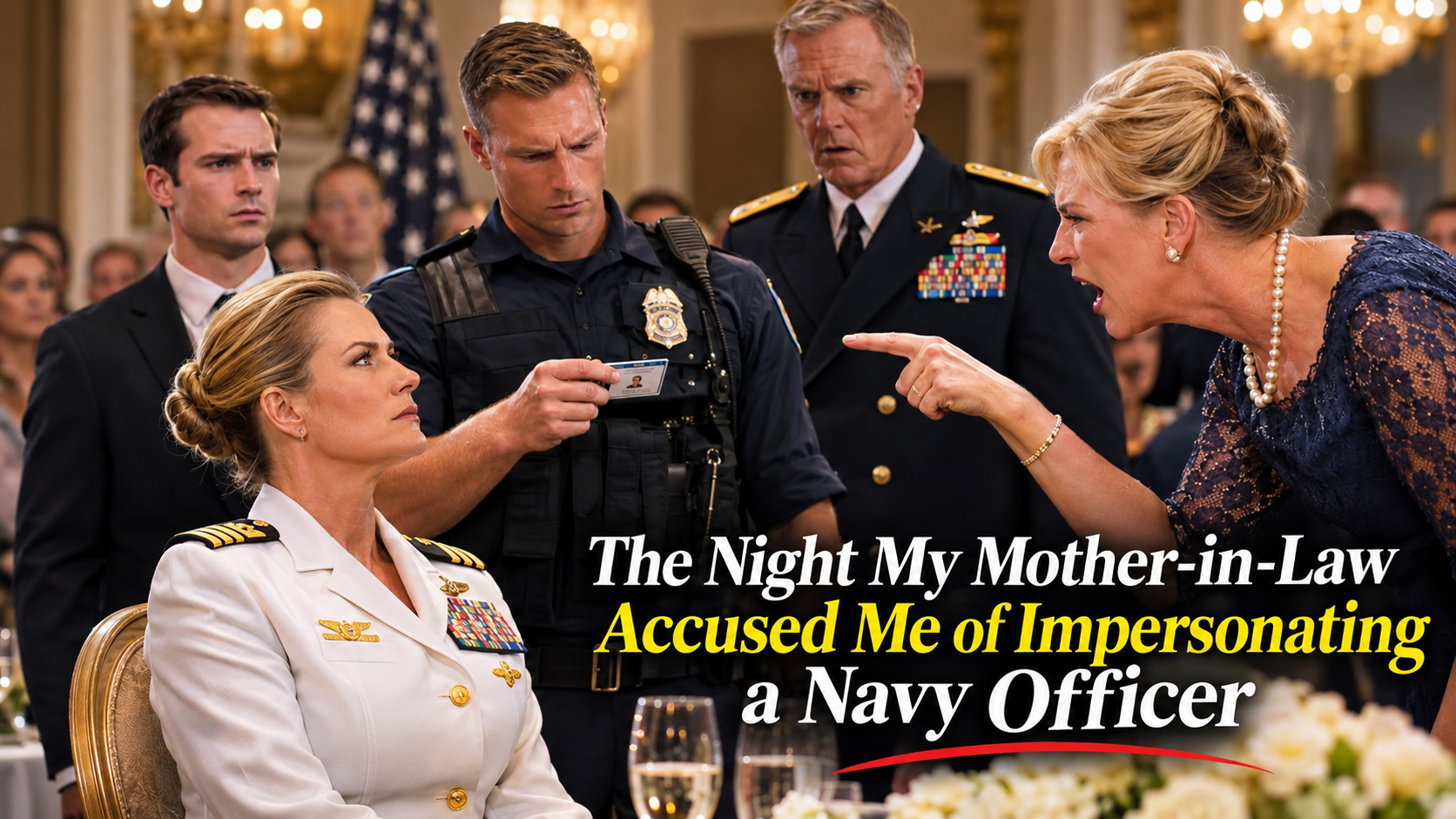
She had questioned my marriage, mocked my career, and publicly accused me of wearing a uniform I hadn’t earned.
Yet the man whose memory she had helped violate had once risked his professional reputation to protect hers.
“Rebecca, I didn’t know.”
I remained silent.
“I swear I didn’t know.”
“I believe you,” I finally said.
Her eyes lifted.
“But not knowing what my father did for you doesn’t excuse what you did to me.”
She began crying.
For once, there was no performance in her tears.
She looked like a woman who had finally run out of excuses.
The investigation continued for months.
With the additional documents Evelyn provided and the communications Patricia and Daniel preserved, authorities were able to pursue several previously unresolved questions.
Charles Bennett was eventually charged with offenses related to alleged financial misconduct and obstruction.
The case concerning my father’s death was also reviewed.
Although investigators uncovered further evidence that raised questions about the circumstances, they could not conclusively establish that Bennett had caused the accident.
I had to accept that some answers might never come.
But my father’s honesty was finally recognized.
The records established that he had not stolen company property or participated in the suspicious payments.
He had been trying to expose them.
Patricia cooperated with investigators and publicly withdrew her accusations against me.
She also accepted responsibility for submitting information she had never independently verified.
For the first time, she stopped trying to explain her behavior by blaming somebody else.
Daniel, meanwhile, moved out of our home.
Not because I wanted revenge.
Because I needed distance.
He had spent eight years asking me to tolerate his mother’s cruelty.
Then, when an outsider encouraged his suspicions, he had betrayed my privacy.
Love alone couldn’t repair that.
One evening, he came to collect the remainder of his belongings.
He placed our wedding pH๏τograph on the kitchen counter.
“I wish I could go back,” he said.
“You can’t.”
“I know.”
He looked at the pH๏τograph.
“But I can stop being the man who allowed this to happen.”
For the following months, Daniel attended counseling, established boundaries with Patricia, and gradually began rebuilding his own life.
He never asked me to forget what happened.
See more Stories :
He never demanded another chance.
That mattered more than any apology.
Six months after the disastrous reception, Admiral Whitmore invited me to another formal military ceremony.
I almost declined.
The memory of Patricia pointing at me in front of hundreds of people still made my chest тιԍнтen.
But I knew I couldn’t allow that afternoon to become my final memory of wearing my dress uniform in public.
I arrived alone.
Several officers greeted me warmly.
My mother sat in the front row.
Beside her was Evelyn Carter.
And to my surprise, Patricia was sitting several seats away.
She didn’t approach me.
She simply nodded.
Then Admiral Whitmore stepped onto the stage.
He spoke about leadership, integrity, and the sacrifices that never appear in official biographies.
When he called my name, I walked toward him.
He presented me with recognition for my professional service and leadership.
Then he made an unexpected announcement.
“Commander Mitchell has demonstrated that integrity is not only about defending yourself when you are falsely accused. It is also about defending the truth when that truth protects someone who has wronged you.”
The audience stood.
I saw my mother crying.
Evelyn applauded.
And Patricia stood with both hands pressed against her chest.
After the ceremony, she approached me.
“Rebecca, may I have a moment?”
I nodded.
She handed me an envelope.
Inside was a handwritten letter.
Dear Rebecca,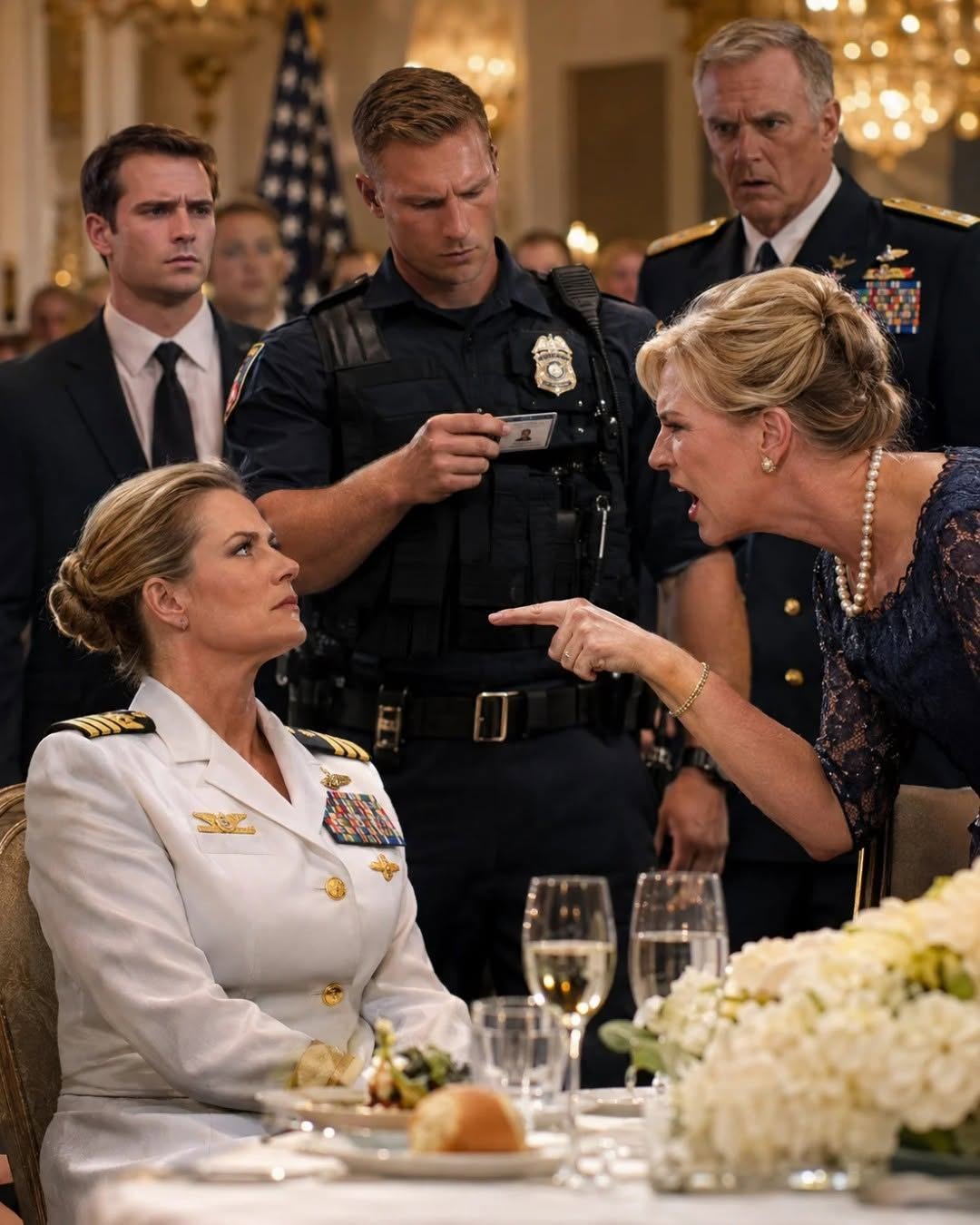
For eight years, I judged you because your life challenged everything I believed a woman should be.
When someone offered me a reason to believe the worst about you, I accepted it because it was easier than admitting I had been wrong.
Your father tried to protect me before I even knew your name.
And when I gave you every reason to hate me, you did the same.
I cannot repay either of you.
But I can spend the rest of my life becoming someone worthy of the kindness I received.
I am sorry.
Patricia.
I folded the letter.
She looked at me nervously.
“I don’t expect you to forgive me.”
“Forgiveness takes time,” I answered.
She nodded.
“I understand.”
Then, unexpectedly, she smiled through her tears.
“Your father would have been proud of you.”
For the first time in eight years, I believed she meant what she said.
A year later, Daniel and I met at a small seaside restaurant.
We were no longer living together, but we had spent months having the conversations we should have had long before the reception.
He had learned that protecting a marriage did not mean keeping everyone comfortable.
Sometimes it meant confronting the people you loved.
Sometimes it meant admitting you were the problem.
He placed a small box on the table.
I expected jewelry.
Instead, inside was a carefully restored pH๏τograph of my father beside the blue sailboat.
“I thought you should have this.”
I smiled.
“Thank you.”
Daniel looked toward the ocean.
“I don’t want our old marriage back, Rebecca.”
I raised an eyebrow.
See more Stories :
“That’s an unusual thing to say.”
He laughed softly.
“I want the opportunity to build a better one. But only if that’s something you want, too.”
I didn’t answer immediately.
Then I reached across the table and took his hand.
“We start slowly.”
“Slowly,” he agreed.
There were no dramatic promises.
No guarantees.
Only two people who finally understood that trust was something they had to earn every day.
Months later, I received word that I had been selected for promotion to Navy captain.
My mother hosted a small celebration.
Patricia arrived early to help prepare dinner.
When a relative jokingly suggested that my military career must make marriage difficult, Patricia immediately interrupted.
“Rebecca doesn’t need to make herself smaller so anyone else can feel important.”
I nearly dropped my glᴀss.
Daniel laughed.
My mother smiled.
And Patricia looked at me with quiet pride.
That evening, I placed my father’s pH๏τograph beside my new insignia.
I thought about the military police officer holding my identification.
The admiral rising from his chair.
The accusations that had threatened everything I had built.
Patricia had believed that exposing me would save her family.
Charles Bennett had believed that discrediting me would protect his past.
Neither had imagined that their actions would bring my father’s evidence back into the light.
And neither could have predicted the greatest irony of all.
The woman who demanded my arrest eventually discovered that her own freedom had once depended on my father’s integrity.
In the end, I didn’t need revenge.
I had my honor.
I had my father’s truth.
I had the possibility of a stronger marriage and a family that was finally learning how to respect one another.
And when I wore my white Navy uniform again, Patricia was the first person to stand beside me for a pH๏τograph.
This time, she didn’t question a single ribbon.
She simply looked at the camera and said proudly,
“That’s my daughter-in-law.”
THE END.