Anencephaly: A Rare and Severe Congenital Condition That Prevents Normal Brain and Skull Development

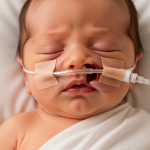
A two-month-old infant from Tbong Khmum, Cambodia, approximately 167 kilometers northeast of Phnom Penh, was reported to have been born with a rare and extremely serious congenital condition known as Anencephaly.
The condition is among the most severe abnormalities affecting the development of the central nervous system. It occurs during the earliest stages of pregnancy and results in the absence or severe underdevelopment of major portions of the brain and skull.
In affected newborns, the physical differences can be immediately noticeable. Large portions of the upper skull may be missing, leaving the underlying brain tissue without its normal protective bony covering.
The severity of the condition can vary in appearance, but the neurological consequences are profound.
What Is Anencephaly?
Anencephaly is a severe neural tube defect that occurs when the upper portion of the neural tube fails to close properly during early embryonic development.
The neural tube is a structure that forms during the first weeks after conception. As development progresses, it becomes the brain and spinal cord.
Normally, the upper end of the neural tube closes during approximately the fourth week after conception. When this process fails, the brain and skull cannot develop normally.
As a consequence, major portions of the brain, particularly the forebrain and cerebrum, are absent or severely underdeveloped.
The protective bones that normally cover the upper part of the skull also fail to form properly. Remaining neural tissue may be exposed or covered by thin membranes.
Anencephaly is classified as a neural tube defect because it originates from an abnormality in the early formation of the nervous system.
Physical Characteristics of Babies Born With Anencephaly
The physical appearance of an affected newborn can differ significantly from that of a typical infant.
One of the most recognizable characteristics is the absence of substantial portions of the skull vault.
The upper part of the head may appear unusually small, irregularly shaped, or incomplete. Because the skull does not develop normally, major portions of the brain remain without their usual bony protection.
Other possible physical characteristics include prominent eyes, unusual facial proportions, and abnormalities involving the development of the head and neck.
These features are ᴀssociated with the underlying disruption of early embryonic development.
However, the appearance of an affected infant can vary, and not every baby displays exactly the same physical characteristics.
How Anencephaly Affects Brain Function
The most devastating consequences of anencephaly involve the underdevelopment or absence of major brain structures.
The forebrain and cerebrum are responsible for many complex neurological functions, including consciousness, thinking, sensory processing, and voluntary movement.
When these structures fail to develop, the affected infant cannot develop these functions normally.
The condition also affects the nervous system’s ability to regulate essential bodily activities.
Some newborns may retain certain brainstem functions, which can allow limited spontaneous breathing, reflex movements, or responses to external stimulation.
However, these functions are severely limited and do not represent normal neurological development.
The extent of remaining brainstem function varies between infants.
Why Is Anencephaly Considered a Fatal Condition?
Anencephaly is considered a universally fatal congenital condition.
Many affected pregnancies end in miscarriage or stillbirth. Babies who survive pregnancy and are born alive typically live for a short period after birth.
Survival beyond the neonatal period is exceptionally uncommon, although rare cases of longer survival have been documented.
There is currently no surgery, medication, or other medical intervention capable of replacing the missing brain structures or reversing the underlying developmental abnormality.
Medical treatment therefore focuses on comfort, supportive care, and the prevention of unnecessary suffering.
Depending on the infant’s condition and the family’s wishes, healthcare professionals may provide palliative neonatal care, including warmth, gentle handling, feeding support when appropriate, and relief of discomfort.
Families may also receive psychological support and guidance from specialists throughout the process.
What Causes Anencephaly?
The exact cause of anencephaly is not fully understood. Most cases are believed to result from a combination of genetic, nutritional, and environmental factors.
One of the most established risk factors is insufficient folic acid during the period immediately before conception and in the earliest weeks of pregnancy.
Folic acid is a B vitamin essential for DNA production, cell division, and normal embryonic development. Adequate levels are particularly important during the formation and closure of the neural tube.
Other factors ᴀssociated with an increased risk of neural tube defects include:
Maternal diabetes: Poorly controlled diabetes before and during early pregnancy can increase the likelihood of neural tube defects.
Certain medications: Some antiseizure medications, particularly valproic acid, are ᴀssociated with an increased risk of neural tube abnormalities.
High fever and overheating: Significant maternal fever or exposure to excessive heat during early pregnancy may increase the risk.
Genetic and environmental factors: The development of neural tube defects can involve multiple interacting influences, and the cause cannot always be identified in an individual pregnancy.
It is important to understand that parents should not automatically be blamed when a baby is born with this condition.
How Is Anencephaly Diagnosed?
Anencephaly can often be detected before birth through prenatal screening and diagnostic examinations.
Ultrasound is one of the most important tools for identifying this condition.
During an ultrasound examination, specialists may observe the absence of the normal skull vault and major abnormalities in the development of the fetal brain.
The condition can sometimes be identified during the first trimester, although it is commonly diagnosed during the second-trimester anatomical examination.
Maternal blood screening may also reveal elevated alpha-fetoprotein (AFP), a protein that can be ᴀssociated with open neural tube defects.
Additional examinations may be recommended to ᴀssess fetal development and confirm the findings.
Early diagnosis allows medical professionals to explain the condition, discuss available care options, and help families prepare for the medical and emotional challenges ahead.
Can Anencephaly Be Prevented?
Although not every case of anencephaly can be prevented, adequate folic acid supplementation significantly reduces the risk of neural tube defects.
Public health recommendations generally advise women who may become pregnant to consume 400 micrograms of folic acid every day, beginning at least one month before conception and continuing through early pregnancy.
Women with a previous pregnancy affected by a neural tube defect or certain other high-risk circumstances may need a higher prescribed dose under medical supervision.
Folic acid is especially important because the neural tube closes very early in pregnancy, often before a woman knows she is pregnant.
For this reason, prevention should begin before conception rather than waiting until pregnancy is confirmed.
Compᴀssionate Care for Affected Infants and Families
Anencephaly is one of the most devastating congenital conditions a family can encounter.
There is no treatment that can reverse the missing brain and skull structures. Nevertheless, affected newborns deserve careful, compᴀssionate medical attention.
Healthcare teams can help maintain the baby’s comfort, provide appropriate supportive care, and guide parents through an extremely difficult experience.
Behind every medical diagnosis is a family whose hopes and expectations have suddenly changed.
Although anencephaly cannot currently be cured, every affected infant deserves dignity, tenderness, and compᴀssionate care.
The condition also highlights the importance of prenatal healthcare, folic acid supplementation, and early pregnancy screening to help reduce the risk of neural tube defects.