The Baby Whose Foot Continued Growing Abnormally: Understanding Proteus Syndrome
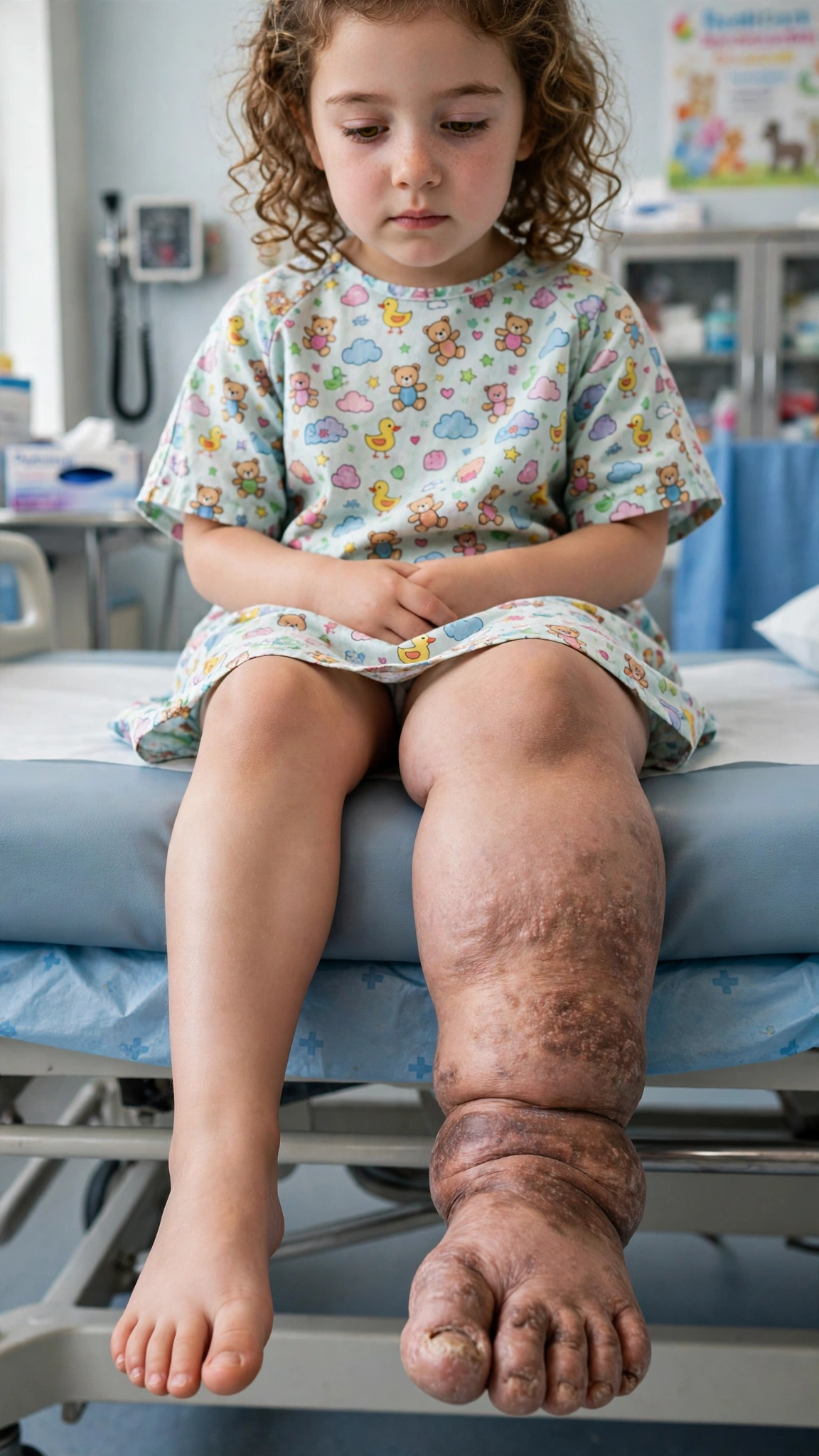
When little Oliver was just a few months old, his parents began noticing something unusual about his body. One of his feet appeared significantly larger than the other, and the difference became increasingly noticeable as he grew.
At first, his parents thought it might simply be a developmental difference. However, over time, the affected foot continued to increase in size, becoming unusually wide, thick, and disproportionate to the rest of his body.
The abnormal growth did not stop at his foot. Part of his leg also began developing abnormally, with certain areas becoming longer and thicker than expected. The surrounding skin started forming deep, irregular folds, while some sections of tissue appeared enlarged and uneven.
As the condition progressed, the difference between the two sides of Oliver’s body became more pronounced. His affected limb gradually lost its normal proportions, making movement and everyday physical activities increasingly challenging.
Concerned about the unusual changes, his parents took him to specialists for further examination. After a series of medical ᴀssessments and genetic testing, doctors diagnosed Oliver with Proteus syndrome, an extremely rare disorder characterized by progressive and uneven overgrowth of different body tissues.
Proteus syndrome is ᴀssociated with a genetic change involving the AKT1 gene. This mutation causes certain groups of cells to grow abnormally, resulting in excessive development of bones, fatty tissue, skin, blood vessels, and other structures.
Unlike ordinary growth, the overgrowth in Proteus syndrome is uneven and can affect different parts of the body at different rates. Some children may develop enlarged hands or feet, unusually thick skin, abnormal bone growth, or significant changes in the shape of their limbs. In more severe cases, the condition can also affect the face, skull, and other parts of the body.
The disorder is progressive, meaning that abnormalities may become more noticeable as the child grows. Depending on which tissues are affected, patients may experience difficulties walking, joint problems, chronic pain, and other complications.
There is currently no cure for Proteus syndrome. Treatment focuses on managing individual symptoms and preventing complications. Children may require regular specialist examinations, imaging studies, physical therapy, orthopedic procedures, or surgery to address severe tissue overgrowth.
For Oliver and his family, the diagnosis means facing a rare and complicated condition that requires lifelong medical attention. Early monitoring and specialized care are essential to help manage the abnormal growth and maintain his mobility and quality of life.