The Baby Born With Two Openings in His Upper Lip: Understanding Bilateral Cleft Lip and Cleft Palate
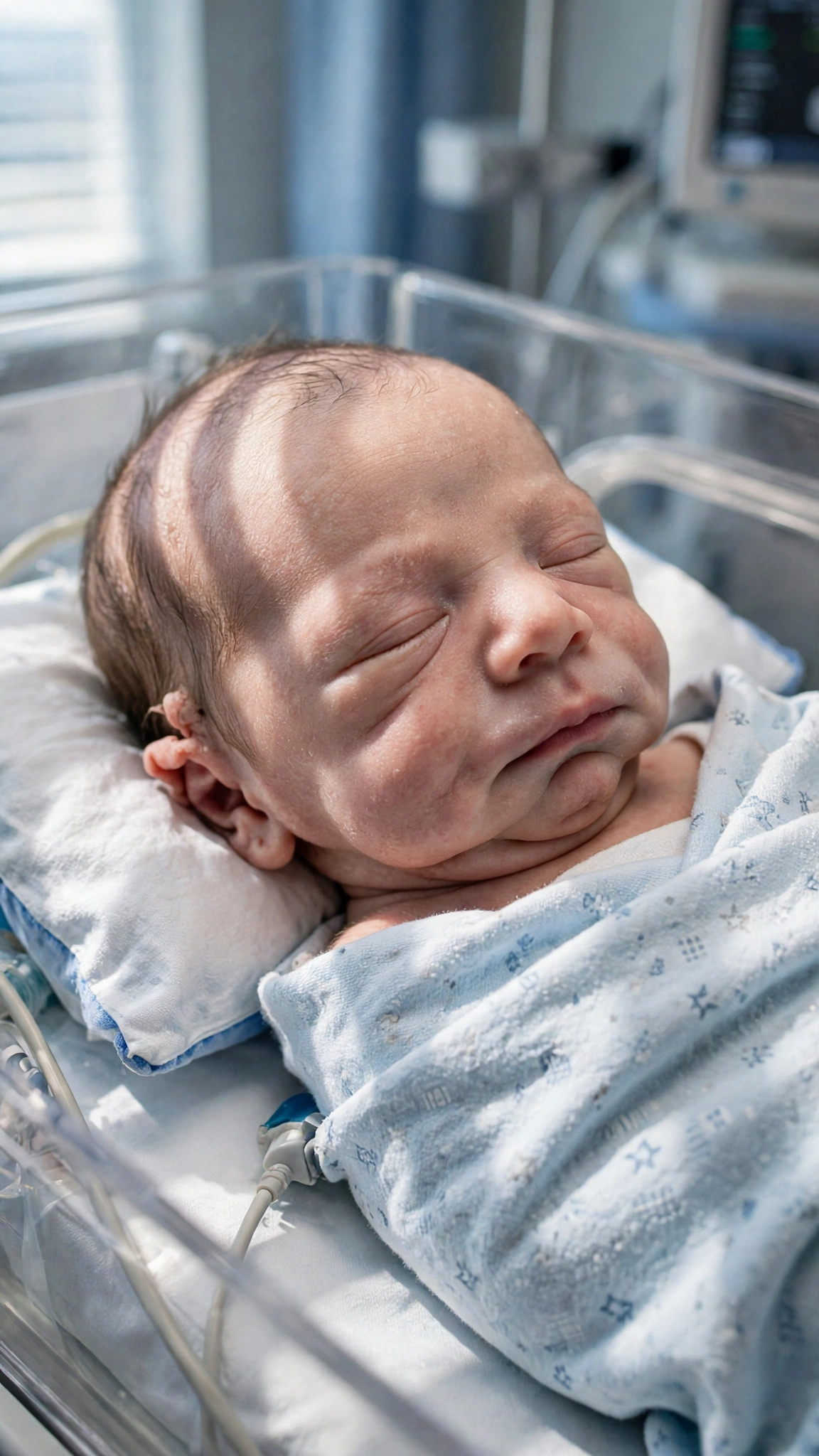
When baby Ethan was born, his parents were shocked to discover that his upper lip had not fully formed.
Instead of a continuous upper lip, two visible openings extended through both sides, creating a noticeable separation beneath his nose. The difference in his facial structure immediately raised concerns about his health and development.
Following further medical examinations, doctors discovered that the condition extended beyond his upper lip. Ethan also had a cleft palate, meaning that the roof of his mouth had not completely formed during pregnancy.
His parents were overwhelmed by the diagnosis. They had never expected their newborn son to face such challenges, and they wanted to understand how the condition might affect his ability to eat, speak, hear, and develop normally.
Doctors explained that Ethan had bilateral cleft lip and cleft palate, a congenital condition that would require coordinated medical care throughout his childhood.
What Are Bilateral Cleft Lip and Cleft Palate?
A cleft lip and cleft palate are congenital conditions that occur when the tissues forming parts of the upper lip and roof of the mouth do not completely join during early fetal development.
A cleft lip creates an opening in the upper lip. When the opening extends through both sides, it is known as a bilateral cleft lip.
A cleft palate is a separate but sometimes ᴀssociated condition in which an opening remains in the roof of the mouth. This opening can involve the soft palate, the hard palate, or both.
In some children, the opening may extend from the front of the mouth toward the back, creating a connection between the oral and nasal cavities.
These conditions can occur independently or together. When a baby is born with both a bilateral cleft lip and a cleft palate, the physical differences can be particularly noticeable and may create additional functional challenges.
For Ethan, the openings in his upper lip and palate affected both his facial appearance and his ability to feed effectively.
Why Feeding Became a Daily Challenge
One of the most immediate difficulties Ethan experienced was feeding.
Newborn babies normally use their lips, tongue, and palate to create suction and transfer milk from the breast or bottle into the throat.
However, a cleft palate interrupts the separation between the mouth and nasal cavity. As a result, affected babies may struggle to generate sufficient suction.
During feeding, milk can sometimes escape through the nose because the opening allows liquid to move between the oral and nasal cavities.
Some infants also swallow excessive air, become tired during feeding, or take longer to consume enough milk.
For Ethan, every feeding session required additional care and attention.
His medical team introduced specialized feeding equipment designed for babies with cleft conditions. These bottles allow milk to be delivered more effectively, even when an infant cannot generate normal suction.
His parents were also taught appropriate feeding positions, pacing techniques, and ways to recognize signs of swallowing difficulties.
Regular weight measurements and nutritional ᴀssessments helped doctors determine whether he was receiving enough milk to support healthy growth.
The Surgical Procedures That Could Help
After evaluating Ethan’s condition, doctors explained that reconstructive surgery would play an important role in his treatment.
Cleft lip repair is generally performed during early infancy, depending on the baby’s health and surgical readiness. The procedure involves bringing the separated tissues together to reconstruct the upper lip and improve its structure.
Cleft palate repair is commonly performed during infancy, often within the first year or so of life, although the exact timing varies according to the child’s medical needs and the specialist team’s treatment plan.
During palate surgery, surgeons close the opening in the roof of the mouth and reposition the tissues and muscles to improve the separation between the oral and nasal cavities.
These operations aim to improve important functions, including feeding and speech development, as well as the appearance and structure of the face.
However, surgery does not necessarily complete the entire treatment process.
Some children need additional procedures as they grow, depending on the development of their facial bones, jaw, teeth, and speech.
Hearing, Dental Health, and Speech Development
Ethan’s parents soon learned that cleft palate could affect several aspects of his development beyond feeding.
The muscles of the palate play an important role in regulating pressure in the middle ear. Children with cleft palate may have difficulty with this process, increasing their risk of fluid accumulation behind the eardrum, recurrent ear infections, and conductive hearing loss.
For this reason, regular hearing ᴀssessments and examinations by ear specialists would be an important part of Ethan’s long-term care.
His dental development would also require close monitoring.
Children with cleft lip and palate may develop missing teeth, additional teeth, irregular tooth positions, or problems with the alignment of their upper jaw.
Depending on how his teeth and facial bones developed, Ethan might eventually need orthodontic treatment, dental reconstruction, or additional surgical procedures.
Speech development was another important consideration.
Some children with cleft palate experience difficulties producing certain speech sounds because the palate cannot effectively separate the mouth from the nasal cavity during speech.
Even after surgical repair, some children may continue to experience excessive nasal airflow or difficulty pronouncing particular sounds.
Speech-language therapy and regular evaluations could help Ethan develop clearer communication skills as he grew older.
A Childhood Filled With Medical Milestones
Ethan’s treatment would involve a long-term team of specialists, including pediatricians, craniofacial surgeons, plastic surgeons, pediatric dentists, orthodontists, audiologists, and speech-language therapists.
Each professional would help monitor a different aspect of his development.
His parents understood that there would be many hospital visits and that some stages of treatment might require additional procedures.
However, they also learned that early intervention and coordinated specialist care could make a meaningful difference in the lives of children born with cleft conditions.
They began to look beyond the initial shock of his diagnosis and focus on the progress he could make over time.
Every successful feeding, every healthy growth measurement, and every new sound he learned to produce became a meaningful achievement.
A Future Beyond His Diagnosis
For Ethan’s parents, their son’s condition was never the measure of who he would become.
They knew that he might need several operations, years of dental care, hearing ᴀssessments, and speech therapy.
They also understood that his treatment would require patience and that progress would happen gradually.
But they remained determined to give him every opportunity to grow up healthy, confident, and supported.
With appropriate surgical treatment, regular medical follow-up, and developmental support, many children born with cleft lip and palate can attend school, communicate, build friendships, and participate in everyday life.
Ethan’s journey would involve challenges, but those challenges would not determine his potential.
He entered the world with two openings in his upper lip and an opening in the roof of his mouth. Yet his future would be shaped by far more than his birth condition: it would be shaped by the care he received, the love surrounding him, and the opportunities he would have as he grew.