The Baby Born With Extra Fingers and Toes: Understanding Polydactyly
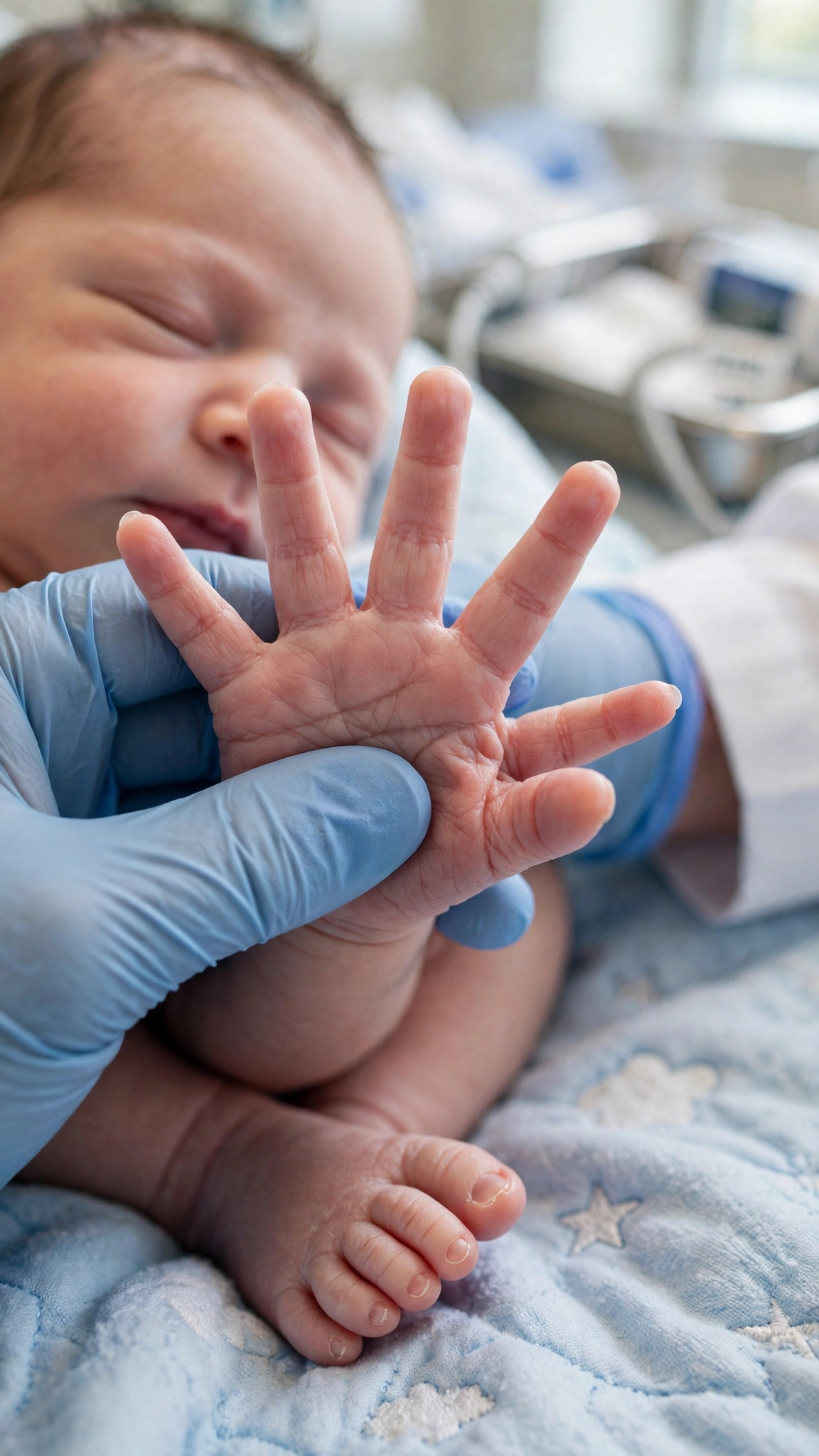
When little Daniel was born, his parents were surprised to discover that both of his hands had more than the usual five fingers.
Instead of having the typical hand structure, Daniel had additional fingers growing alongside his normal ones. Some of these extra digits were surprisingly well developed, with visible bones, joints, and fully formed fingernails.
His parents soon noticed that the unusual development was not limited to his hands. Both of his feet also showed signs of extra digits, giving him more toes than most newborn babies.
Concerned about these physical differences, his parents brought him to specialists for a detailed examination. Doctors carefully evaluated the structure of his hands and feet, including the bones, joints, and surrounding soft tissues.
After the examinations, Daniel was diagnosed with Polydactyly, a congenital condition in which a person is born with one or more additional fingers or toes.
Polydactyly develops during early pregnancy, when the hands and feet are forming. It can affect one or both hands and feet, and the extra digits may appear on the thumb side, little-finger side, or between the normally developed fingers.
The appearance of the extra digits varies considerably. In some babies, an additional finger or toe consists only of a small piece of soft tissue attached to the hand or foot. In other cases, the extra digit may contain bones, joints, muscles, nerves, and blood vessels, making it look almost like a fully developed finger or toe.
Although polydactyly does not always cause serious medical problems, more complex forms can affect the alignment and structure of the hands and feet. Depending on how the additional digits are connected to the surrounding bones and joints, children may experience difficulties with gripping objects, finger coordination, walking, or wearing properly fitted shoes.
Treatment depends on the type and severity of the condition. Some children require only observation, while others may undergo surgery to remove the additional digits and reconstruct the surrounding structures.
Before treatment, doctors carefully examine the affected limbs, sometimes using X-rays to determine whether the extra digits contain bones and how they connect to the main skeletal structure.
For Daniel, regular medical evaluations are important to determine how his extra fingers and toes may affect his future development. With appropriate treatment and follow-up care, many children with polydactyly can develop good hand function and mobility.