The Baby Born With an Unusual Head Shape: Understanding Craniosynostosis
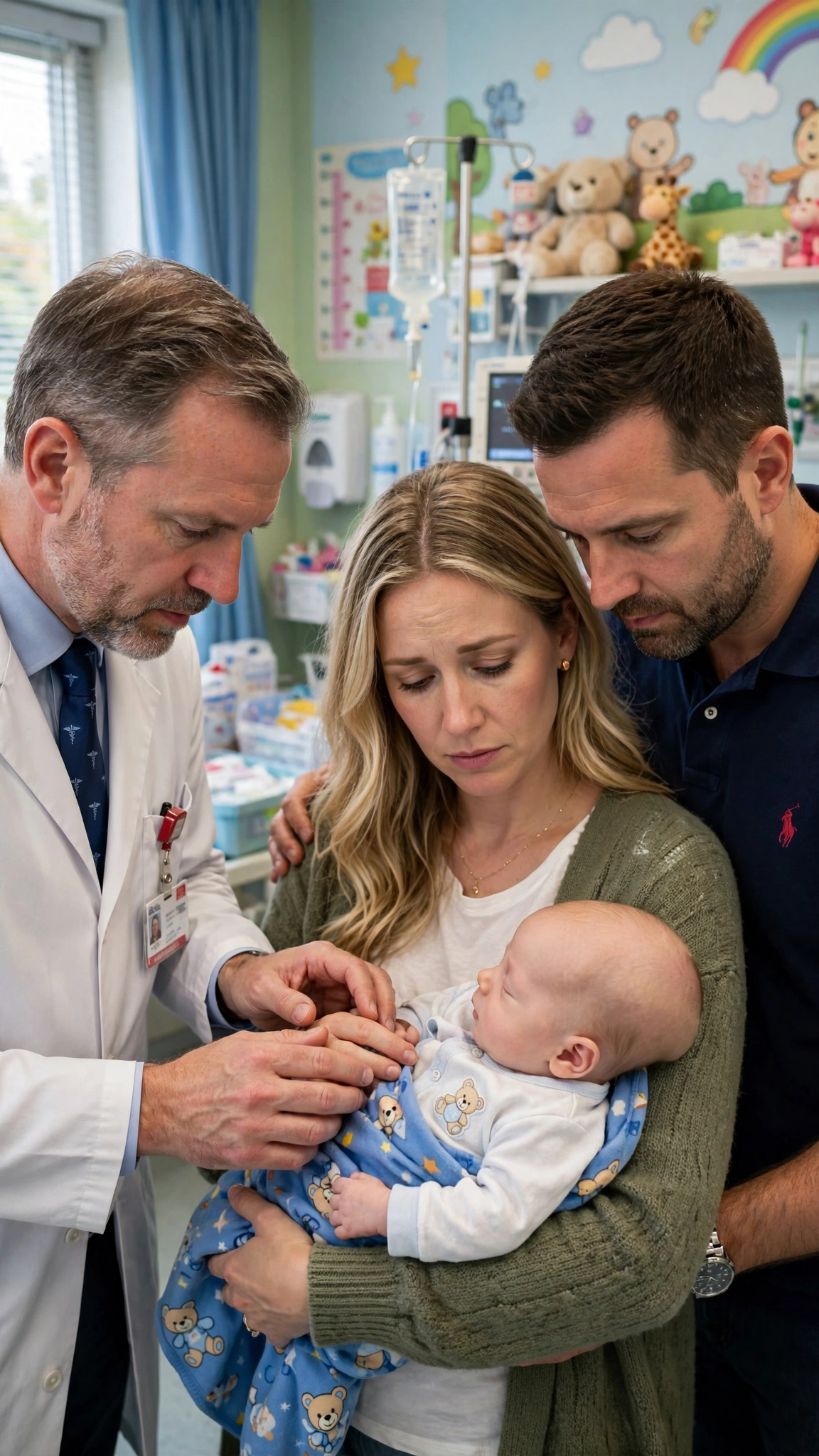
When little Oliver was born, his parents noticed that his head had an unusual appearance.
Unlike most newborn babies, whose skulls are relatively rounded, Oliver’s head appeared noticeably long and narrow. His forehead and the back of his skull seemed more elongated, creating a distinctive shape that became increasingly apparent as he grew.
At first, his parents were unsure whether this was simply a variation in normal development. However, as they continued observing his head shape, they became concerned that something might be affecting the growth of his skull.
They decided to seek medical attention.
After several examinations and specialized imaging scans, doctors diagnosed Oliver with craniosynostosis, a congenital condition in which one or more of the joints connecting the bones of the skull fuse prematurely.
What Is Craniosynostosis?
A newborn baby’s skull is not formed from one solid bone. Instead, it consists of several separate bones connected by flexible fibrous joints known as cranial sutures.
These sutures play an important role during infancy and early childhood. They allow the skull to expand gradually as the brain grows.
Under normal circumstances, the sutures remain open during the early stages of development and gradually close as the child gets older.
However, in babies with craniosynostosis, one or more sutures close earlier than expected.
When this happens, the skull cannot expand normally in the direction of the fused suture. Instead, it continues growing in other directions where the sutures remain open.
This can produce an unusual head shape and, in some cases, may restrict the space available for the developing brain.
Craniosynostosis can affect one suture or several sutures, and the appearance of the skull depends on which ones are involved.
Why Did Oliver’s Head Become Long and Narrow?
Oliver’s elongated head shape was consistent with a specific type of craniosynostosis called sagittal craniosynostosis.
The sagittal suture runs along the middle of the skull, extending from the front toward the back of the head.
When this suture closes prematurely, the skull may be unable to grow normally from side to side.
As a result, the head compensates by growing more in the front-to-back direction.
This can create a long, narrow skull shape known medically as scaphocephaly.
Some children with this condition develop a prominent forehead, an elongated back of the head, or a noticeable ridge along the top of the skull.
The degree of deformity varies depending on how early the suture fuses and how much skull growth is affected.
How Is Craniosynostosis Diagnosed?
Once Oliver’s parents sought medical attention, doctors began a detailed evaluation of his skull and overall development.
The initial ᴀssessment typically includes examining the shape of the head, measuring head circumference, checking for palpable ridges along the skull sutures, and reviewing the child’s developmental history.
When necessary, imaging studies help confirm the diagnosis.
A three-dimensional CT scan can provide detailed information about the skull bones and identify which sutures have fused.
In selected cases, ultrasound or other imaging techniques may be considered to evaluate the sutures while limiting radiation exposure.
Doctors also ᴀssess whether the child has signs of increased intracranial pressure or other complications.
Early diagnosis is important because it allows specialists to determine the most appropriate treatment before abnormal skull growth progresses further.
Potential Complications and Medical Concerns
One of the main concerns ᴀssociated with craniosynostosis is whether the growing brain has enough room to develop normally.
Not every child with craniosynostosis experiences increased pressure inside the skull. The risk depends on the number of fused sutures, the severity of the condition, and other individual factors.
However, when intracranial pressure becomes elevated, children may develop symptoms such as persistent headaches, vomiting, unusual irritability, or changes in vision.
In some cases, craniosynostosis may also be ᴀssociated with developmental or visual difficulties, particularly when multiple sutures are involved or when it forms part of a broader genetic syndrome.
For this reason, Oliver’s doctors emphasized the importance of monitoring his skull growth, neurological development, and overall health.
Surgical Treatment: Helping the Skull Grow Normally
After confirming Oliver’s diagnosis, his medical team discussed possible surgical treatment with his parents.
The main goal of surgery is to correct the abnormal skull shape and create sufficient space for the brain to continue growing.
The appropriate procedure depends on the child’s age, the specific fused suture, and the severity of the condition.
There are two major surgical approaches.
Endoscopic strip craniectomy
This minimally invasive procedure is generally performed in younger infants. Surgeons use small incisions and specialized instruments to remove the prematurely fused suture.
After surgery, the baby may need to wear a custom cranial molding helmet to guide skull growth into a more typical shape.
Cranial vault remodeling
This is a more extensive procedure in which surgeons carefully reshape portions of the skull bones.
It may be recommended for older infants or children, depending on their condition and surgical ᴀssessment.
Both approaches require careful postoperative monitoring and follow-up appointments with a specialized craniofacial team.
Recovery and Long-Term Monitoring
Oliver’s parents learned that surgery would not necessarily mark the end of his medical journey.
After treatment, doctors would continue monitoring his head shape, skull growth, neurological development, and vision.
Some children require additional procedures or prolonged follow-up, while others experience significant improvement after their initial treatment.
Developmental ᴀssessments may also be recommended to identify any difficulties with movement, learning, language, or other milestones.
With appropriate medical care, many children with isolated craniosynostosis go on to grow and develop well.
A Family’s Determination to Give Oliver a Healthy Future
For Oliver’s parents, receiving the diagnosis was an emotional experience.
They had never imagined that something as fundamental as the shape of their newborn son’s skull could require specialized surgery.
The possibility of an operation was frightening, and the uncertainty surrounding his development brought many difficult questions.
However, they gradually learned more about the condition and the treatment options available.
They understood that craniosynostosis was a medical condition that could often be treated, especially when identified early and managed by an experienced team.
Through every examination and hospital appointment, they remained committed to supporting their son.
Their hope was that Oliver would have enough room for his brain to grow, develop normally, attend school, make friends, and enjoy an ordinary childhood.
His unusual head shape was part of his medical story, but it would never define his worth or determine how much love he deserved.
For Oliver and his family, every medical milestone represented another step toward a healthier and brighter future.