The Baby Born With a Rare Opening in His Spine
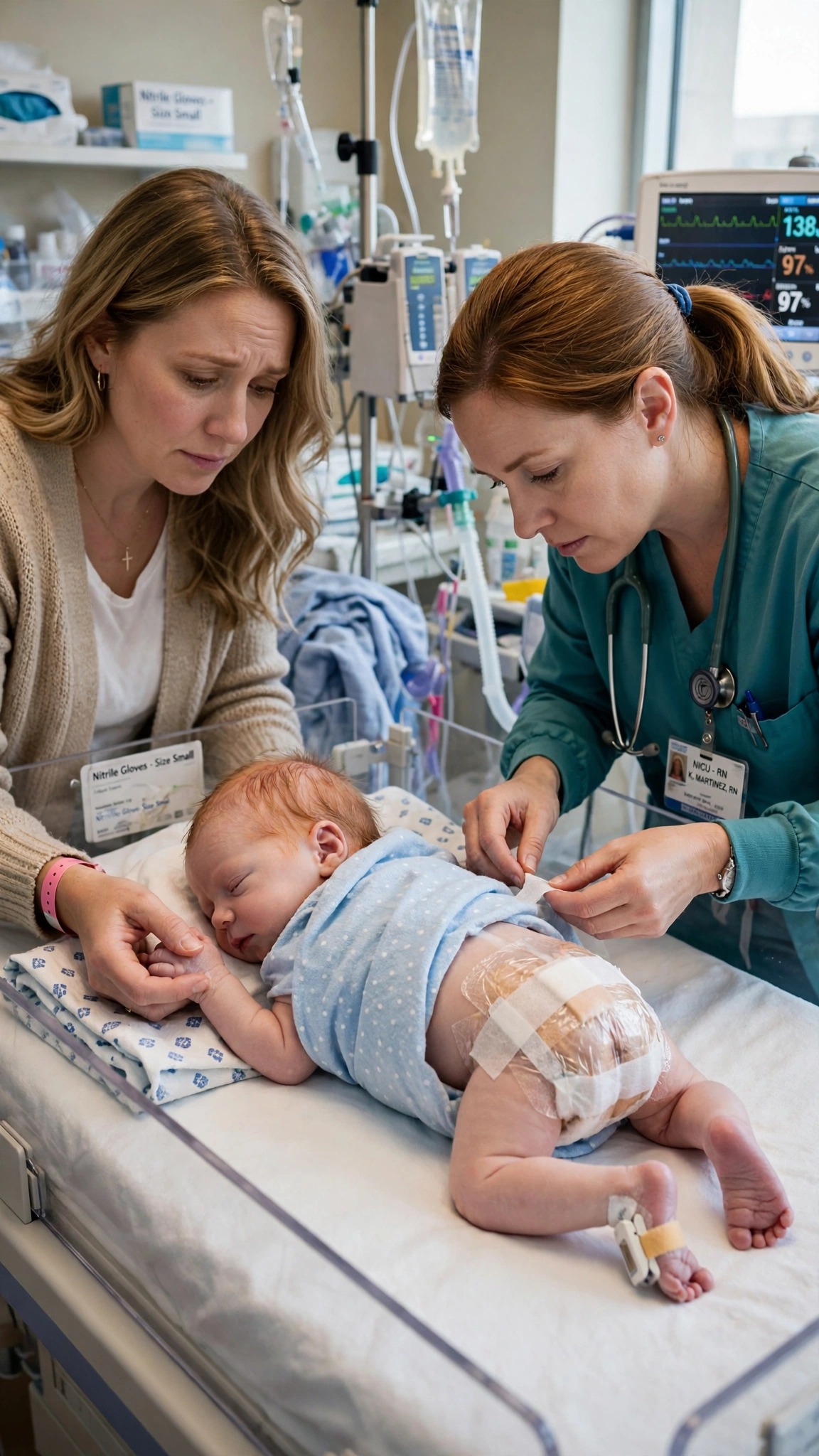
Jacob’s Journey With Myelomeningocele, a Severe Form of Spina Bifida
When little Jacob was born, his parents expected the first moments of his life to be filled with happiness and excitement.
They had spent months preparing for his arrival, imagining the day they would finally hold their newborn son and bring him home.
But shortly after delivery, doctors noticed an unusual abnormality on his lower back.
A sac-like structure was protruding through an opening in his spinal region. Although the area was covered by delicate protective tissue, its appearance immediately raised serious medical concerns.
The medical team quickly arranged further examinations to determine the nature of the spinal abnormality.
For Jacob’s parents, those first hours were overwhelming. They had never encountered such a condition and struggled to understand what it could mean for their baby’s future.
The Medical Examinations That Revealed His Condition
Doctors carefully examined the protruding area and ᴀssessed Jacob’s neurological responses.
They evaluated the movement and muscle strength of his legs, his reflexes, and his response to touch.
Additional imaging was used to understand the structure of the spinal defect and identify any ᴀssociated abnormalities.
After reviewing the clinical findings, doctors diagnosed Jacob with myelomeningocele, a severe form of spina bifida.
The diagnosis explained the unusual opening in his lower back and raised concerns about possible damage to the nerves controlling movement, sensation, and bladder function.
His parents were informed that the condition had developed during early pregnancy and was not something they had caused through ordinary activities after conception.
They now needed to understand the medical challenges ahead and the treatment Jacob would require.
What Is Myelomeningocele?
Myelomeningocele is the most severe common form of open spina bifida.
It occurs when the neural tube does not close completely during the early stages of fetal development.
The neural tube is an embryonic structure that eventually develops into the brain and spinal cord.
When the lower portion fails to close properly, an opening remains in the vertebral column.
Through this opening, the meninges, which are the protective membranes surrounding the spinal cord, and portions of the spinal cord or nerve tissue may protrude.
This creates a sac-like structure that can be visible on the baby’s back at birth.
Unlike some less severe forms of spina bifida, myelomeningocele usually involves neurological abnormalities because the spinal cord and ᴀssociated nerves are directly affected.
The location of the defect is particularly important.
A defect higher along the spine may affect a larger portion of the body, while a lower defect may produce different patterns of weakness and sensory impairment.
The severity also varies depending on how much neural tissue is affected and whether additional complications are present.
How the Condition Affects Movement and Sensation
One of the most significant challenges ᴀssociated with myelomeningocele is damage to the nerves responsible for movement and sensation.
These nerves transmit signals between the brain, spinal cord, muscles, and other parts of the body.
When they are affected, children may experience weakness or paralysis in certain muscle groups.
Some may have difficulty moving their feet, bending their knees, or controlling their leg muscles.
Reduced sensation can also occur, meaning children may not feel pain, pressure, or temperature normally in certain areas.
For Jacob, doctors observed limited movement in his lower legs.
This raised concerns about his future mobility and whether he would eventually be able to stand or walk independently.
However, the exact level of mobility cannot always be predicted immediately after birth.
Children with myelomeningocele can have very different outcomes depending on the location of the spinal defect, the degree of nerve involvement, and the effectiveness of their long-term care.
The Risk of Bladder and Bowel Complications
Myelomeningocele can also affect the nerves that control bladder and bowel function.
Some children develop a condition known as neurogenic bladder.
In this situation, the bladder may not contract properly or coordinate with the muscles that allow urine to leave the body.
As a result, the bladder may not empty completely.
This can increase the risk of urinary tract infections, urinary leakage, and damage to the kidneys if the condition is not properly managed.
Doctors may recommend regular bladder ᴀssessments, ultrasound examinations, and specialized urinary testing.
Some children require clean intermittent catheterization to empty the bladder safely.
Bowel dysfunction is also possible and may require dietary adjustments, medication, or structured bowel management programs.
For Jacob, the medical team considered these potential complications an important part of his long-term treatment plan.
Hydrocephalus: Another Important Medical Concern
Many children with myelomeningocele also develop hydrocephalus.
This condition occurs when cerebrospinal fluid accumulates excessively inside the brain’s ventricular system.
The fluid buildup can enlarge the ventricles and increase pressure within the skull.
Doctors therefore carefully monitor children with myelomeningocele for signs of hydrocephalus.
ᴀssessment may include head circumference measurements, neurological examinations, and brain imaging.
If clinically significant hydrocephalus develops, treatment may involve surgery to redirect excess fluid, commonly through a ventriculoperitoneal shunt.
Not every child with myelomeningocele develops hydrocephalus, but regular monitoring is essential because the complication can affect neurological development.
Protecting the Spinal Defect Before Surgery
One of the immediate priorities after Jacob’s birth was protecting the exposed spinal area.
The protruding sac contained delicate tissue that could be injured or become infected.
Medical staff carefully positioned him to avoid direct pressure on the affected region.
The area was protected with specialized sterile dressings, generally kept moist according to the medical team’s protocol, to reduce the risk of tissue damage and contamination.
Doctors and nurses also monitored for signs of infection, changes in the appearance of the sac, and other complications.
Because newborns with open myelomeningocele may be vulnerable to infection, early medical ᴀssessment and appropriate antibiotic management may also be necessary.
His parents were instructed not to apply pressure to the affected area and to allow trained healthcare professionals to manage its protection.
Surgical Closure of the Spinal Opening
After evaluating Jacob’s condition, doctors explained that surgery would be necessary to close the spinal defect.
The procedure is generally performed by a pediatric neurosurgical team.
During surgery, the exposed neural tissue is carefully protected and repositioned when possible.
The surrounding protective membranes, muscle layers, and skin are then closed to cover the defect.
The main goals are to protect the remaining neural tissue, reduce the risk of infection, and prevent additional damage to the spinal cord and surrounding structures.
Surgical closure is an important part of treatment, but it cannot reliably restore nerve function that was already lost before birth.
This means Jacob may continue to experience weakness, reduced sensation, or bladder and bowel difficulties after the operation.
His doctors explained that surgery was only the beginning of a longer treatment and rehabilitation journey.
Long-Term Rehabilitation and Medical Support
Children with myelomeningocele often benefit from coordinated care involving several medical specialties.
Depending on their individual needs, treatment may include:
- Pediatric neurosurgical follow-up to monitor the spinal repair and neurological condition.
- Physical therapy to improve strength, flexibility, positioning, and mobility.
- Occupational therapy to support independence in everyday activities.
- Orthopedic ᴀssessment for foot deformities, hip problems, or spinal curvature.
- Braces, crutches, walkers, or wheelchairs when needed.
- Bladder and bowel management to protect kidney health and improve daily comfort.
- Developmental ᴀssessments and educational support.
- Monitoring for hydrocephalus and other ᴀssociated neurological complications.
Some children with myelomeningocele learn to walk independently, while others require mobility aids or use wheelchairs.
The goal of rehabilitation is not to force every child to achieve the same physical milestones.
Instead, specialists work with families to help each child develop the greatest possible independence and quality of life.
For Jacob, this support would become an important part of growing up.
A Family Learning to Face an Uncertain Future
Jacob’s diagnosis changed the way his parents imagined their son’s childhood.
They had expected ordinary newborn challenges, such as feeding schedules and sleepless nights.
Instead, they were introduced to surgical procedures, neurological ᴀssessments, rehabilitation plans, and long-term medical appointments.
His mother often sat beside his hospital bed, gently holding his hand.
She imagined watching him sit up, play with toys, explore his surroundings, and eventually discover the activities he enjoyed most.
His father spent time learning about the condition and speaking with doctors about how best to support their son.
They gradually understood that Jacob’s future could not be determined by one diagnosis or one medical examination.
There would be challenges, but there would also be opportunities for learning, development, and independence.
They promised themselves that their son would never be treated as less capable or less valuable because of his physical condition.
More Than His Medical Diagnosis
Myelomeningocele is a serious congenital condition that can affect movement, sensation, bladder function, and neurological development.
It may require surgery, rehabilitation, and lifelong medical monitoring.
But Jacob is more than the opening in his spine or the medical procedures he may undergo.
He is a little boy who deserves affection, friendship, education, and the opportunity to participate in the world around him.
His childhood may look different from that of other children, but different does not mean less meaningful.
His parents know that the road ahead may involve difficult days and unexpected challenges.
Still, they remain committed to celebrating every achievement, supporting his development, and helping him discover his own abilities.
Their greatest wish is to see Jacob grow up feeling loved, respected, and confident in himself.
Because every child deserves the opportunity to live a meaningful life, regardless of the medical challenges they were born with.