The Baby Born With a Bilateral Cleft Lip and Cleft Palate
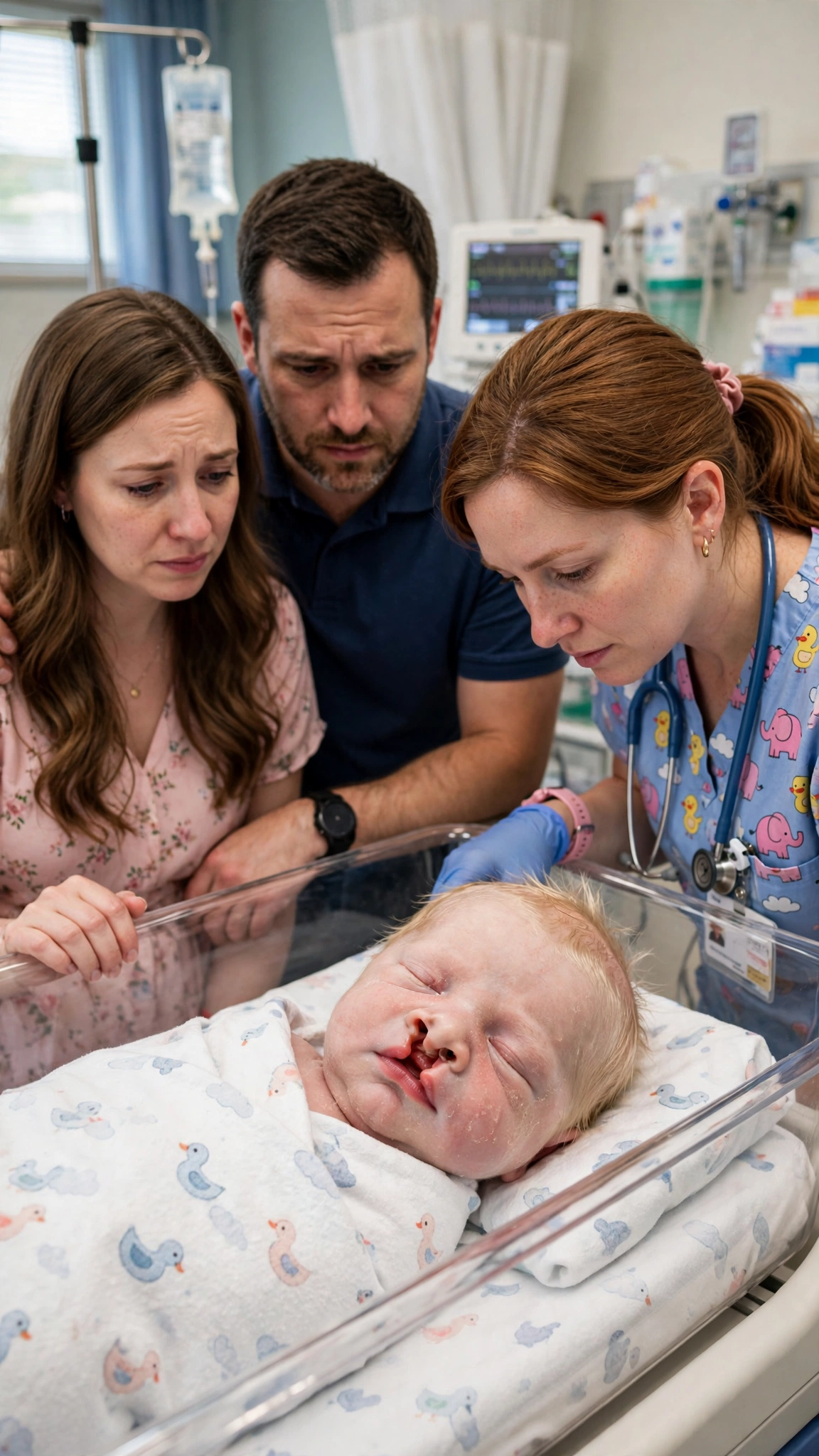
When little Noah was born, his parents immediately noticed that something about his upper lip looked different. Instead of forming a continuous line beneath his nose, his upper lip had visible openings on both sides. The separation extended upward toward his nostrils, giving his newborn face an appearance they had never expected.
At first, his parents were frightened and overwhelmed. They had prepared for the arrival of their baby, but they had not anticipated the medical challenges that would accompany his first days of life.
Following an examination by the medical team, Noah was diagnosed with bilateral cleft lip and cleft palate, a congenital condition that affects the normal development of the upper lip and roof of the mouth.
Understanding Noah’s Condition
A cleft lip develops when the tissues that form the upper lip do not completely join together during early pregnancy. When the opening affects both sides of the upper lip, it is known as a bilateral cleft lip.
A cleft palate occurs when the tissues forming the roof of the mouth fail to fuse completely. This can leave an opening between the mouth and nasal cavity.
In Noah’s case, both conditions were present. The openings on either side of his upper lip extended toward his nose, while the cleft palate affected the separation between his oral and nasal cavities.
The severity and exact structure of a cleft can vary from one child to another. Some babies have a small opening, while others have a more extensive separation involving the lip, gums, and palate.
Although the condition can affect facial appearance, it is also important to understand that cleft lip and palate may create functional challenges involving feeding, hearing, speech, and dental development.
The First Challenge: Feeding
One of the earliest difficulties Noah experienced was feeding.
Most newborn babies create suction by coordinating their lips, tongue, and palate. However, because Noah’s palate had an opening, he could not generate the same suction as other babies.
When his parents initially attempted to feed him using a regular bottle, milk intake was difficult. Feeding sessions often took longer, and they needed guidance to ensure he received enough nutrition.
His healthcare team recommended specialized feeding equipment designed for babies with cleft palate. These bottles allow milk to be delivered more effectively without requiring the same level of suction.
His parents were also taught how to position him during feeding, recognize signs of fatigue, and monitor for milk coming through his nose.
Regular weight checks became an important part of his care. Maintaining adequate nutrition and healthy growth was essential before considering major surgical procedures.
A Treatment Journey Involving Several Stages
As Noah grew, his doctors explained that treatment would involve more than one procedure.
The first major goal was to repair the opening in his upper lip. Cleft lip surgery is commonly performed during infancy, although the exact timing depends on the child’s overall health and the surgeon’s ᴀssessment.
During the operation, the surgeon carefully brings the separated tissues together to reconstruct the upper lip. The goal is to improve both its function and appearance while creating a more natural shape.
Repairing the cleft palate is another important stage. This procedure involves bringing the tissues of the roof of the mouth together to close the opening.
The palate plays an essential role in feeding and speech. Closing the opening helps create the anatomical separation needed for more effective speech development and reduces certain feeding difficulties.
The timing of palate surgery varies according to the child’s individual needs and the treatment protocol.
Like all operations, these procedures require careful preparation, medical monitoring, and follow-up care.
Speech, Hearing, and Dental Development
Noah’s medical journey would not end after his surgeries.
As he grew older, his development would need to be monitored by a multidisciplinary team.
Children born with cleft palate can experience speech difficulties because the palate is important for directing airflow during speech. Some may develop hypernasal speech or have difficulty producing certain sounds.
Speech-language therapy can help children improve their pronunciation, communication, and overall speech development.
Hearing examinations are also important. Some children with cleft palate experience recurrent middle-ear fluid or ear infections, which can affect hearing. Doctors may recommend additional treatment when necessary.
Dental care is another essential part of long-term treatment. Depending on the location and extent of the cleft, children may develop missing, extra, misaligned, or unusually shaped teeth.
As Noah’s permanent teeth began to develop, regular dental visits and possible orthodontic treatment would help support his oral health.
In some cases, children may also need additional procedures as their facial bones and teeth grow.
A Family’s Hope for the Future
For Noah’s parents, every stage of treatment brought a mixture of worry, patience, and hope.
There were hospital visits, feeding appointments, medical examinations, and difficult days when progress seemed slower than they had expected.
Yet they continued to stand beside their son.
They learned that his condition would require long-term attention, but they also discovered that modern medical care could offer children born with cleft lip and palate meaningful opportunities for improvement.
His journey would not necessarily be simple or short. However, with appropriate surgical care, speech therapy, dental treatment, and family support, Noah could continue developing and reaching important milestones.
His parents did not want their son to grow up believing that his facial difference defined him.
They wanted him to attend school, make friends, laugh without fear, and feel comfortable showing the world his smile.
Noah was more than his diagnosis. He was a child with his own personality, dreams, and future.
And his family hoped that one day, when he looked in the mirror, he would see not the challenges he had faced since birth, but the strength, love, and possibilities that had carried him through them.
His journey began with a difficult diagnosis, but it did not have to end there.