PART 96 — THE PRICE OF THE FIRST DEBT
PART 96 — THE PRICE OF THE FIRST DEBT
The water struck Nora’s ankles.
Then her knees.
The stone chamber shook as another section of the wall cracked beneath the force of the river.
Silas held one arm around her waist while keeping his revolver trained on the gunman blocking the exit.
“Move!” he shouted.
The man shook his head.
“Not without the money!”
“There is no gold,” Nora replied.
Jonathan Vale’s expression had turned desperate.
“Put the pistol down, Caleb!”
The gunman looked at him.
“You lied to us.”
“I promised you payment.”
“You promised a fortune!”
Another crack echoed through the chamber.
Water poured through the wall in a sudden torrent.
The gunman stumbled.
Silas seized the moment.
He struck the man’s wrist, sending the pistol into the water, then shoved him away from the doorway.
“Everyone out!”
James helped Isabella toward the tunnel.
Daniel grabbed the folded map.
Samuel Dyer lifted the surveying instrument from the shelf, then dropped it when the current surged around his legs.
Nora held the ledger against her chest.
The pages were wrapped in oilcloth, but the water was rising fast.
Jonathan stood beside the open chest.
For one moment, he looked as though he might stay.
Nora turned.
“Jonathan!”
He stared at her.
“You don’t understand.”
“Then explain it outside.”
He shook his head.
“My grandfather built everything on those accounts. My father protected them. I spent my life believing that if I could control the records, I could control what happened to the family.”
Nora stepped toward him.
“And now?”
Jonathan looked at the water filling the chamber.
“Now I see there was never anything to inherit except debt.”
Nora reached out.
“Then help us repay it.”
For several seconds, Jonathan did not move.
Then he took her hand.
They ran.
The tunnel was almost completely flooded.
Silas led the group through the rushing water, holding the lantern above his head.
Behind him came Isabella and James, followed by Daniel, Samuel, Jonathan, and Nora.
The river thundered through the stone pᴀssage.
At one narrow turn, Isabella slipped.
James caught her before she fell.
“Grandmother!”
“I’m all right.”
“Keep moving!”
A wooden support beam snapped behind them.
 The tunnel shook.
Then a wave of water surged through the pᴀssage.
Nora lost her footing.
The ledger slipped from her arms.
“No!”
She lunged after it.
Silas grabbed her coat.
“Nora!”
“The ledger!”
He held her firmly.
“You can’t save it if you’re ᴅᴇᴀᴅ!”
For one terrible moment, Nora watched the oilcloth bundle disappear beneath the dark water.
Then Samuel Dyer dove forward.
He caught the bundle against the stone wall and pulled it free.
“Take it!” he shouted.
Nora grabbed the ledger.
Silas helped Samuel to his feet.
“Move!”
They reached the tunnel entrance just as another section collapsed behind them.
The last wave of water burst through the opening, throwing them onto the muddy riverbank.
For several seconds, nobody spoke.
They lay beneath the rain, coughing and struggling to breathe.
Then Nora sat up.
She looked around.
Silas.
Isabella.
James.
Daniel.
Samuel.
Jonathan.
All alive.
The ledger lay beside her, soaked on the outside but still protected by the oilcloth.
Nora opened it carefully.
The pages were damp at the edges.
But the writing remained visible.
She closed her eyes.
After all the years of searching, the original account had survived.
Silas sat beside her.
“You frightened me.”
Nora looked at him.
“I know.”
“Don’t ever do that again.”
She almost smiled.
“I can’t promise that.”
He shook his head.
“Then promise you’ll let me help.”
Nora leaned against him.
“That I can promise.”
They returned to Blackwater Crossing the following morning.
The news spread quickly.
The original railway account had been recovered.
The names of the first investors were known.
The illegal land purchases could now be traced to their source.
Nora met with the independent commission and presented the ledger in the presence of witnesses.
The commission ordered that the records be copied and preserved in multiple locations. Lawyers representing affected families began reviewing the original transfers against the surviving deeds.
The investigation would take years.
Some land could be returned.
Some money could be recovered.
Other losses would never be repaired completely.
But for the first time, the people who had been told their claims were worthless possessed the evidence needed to challenge the men who had profited from their suffering.
Jonathan Vale was taken into custody.
He did not resist.
When Nora pᴀssed him outside the courthouse, he stopped.
“You could have left me in that chamber.”
“Yes.”
“Why didn’t you?”
Nora looked at him.
“Because I wasn’t going to let the river decide whether you answered for what you did.”
Jonathan lowered his eyes.
“I suppose that’s fair.”
“You will testify.”
He nodded.
“Yes.”
“And you will tell the court everything you know.”
“Yes.”
Nora studied him for a moment.
Then she walked away.
There were apologies she did not owe him.
Forgiveness he had not earned.
And years of damage that could never be erased by one decision in a flooded tunnel.
But the truth had survived.
That was enough for now.
Several weeks later, the first resтιтution hearing began.
Families filled the courthouse.
Farmers brought deeds that had been dismissed for decades.
Railway workers presented wage records.
Widows carried letters from husbands who had died believing their children would inherit nothing.
Nora sat beside Silas as the commission examined the claims.
Margaret Vale and Lillian Hart testified about the concealed beneficiary records.
Abigail Mercer explained the financial accounts.
Isabella Whitmore identified Samuel Ward’s original surveying notes and confirmed how the coded maps had been preserved.
Even Arthur Blackwood, under guard, was required to explain the legal arrangements he had helped create.
For once, the powerful men were not controlling the questions.
They were answering them.
At the end of the hearing, the commission announced its first decisions.
Several fraudulent deeds would be challenged.
The remaining trust funds would be placed under independent administration.
Affected families would be invited to submit claims without paying filing fees.
And the foundation created by Eleanor Ashford would oversee the recovery process through representatives selected from the communities themselves.
Nora listened quietly.
She had spent years imagining this moment.
She thought she would feel triumphant.
Instead, she felt tired.
And grateful.
Not because everything had been repaired.
But because the work of repairing it had finally begun.
Silas took her hand.
“What are you thinking?”
Nora looked toward the courthouse windows.
“About my grandfather.”
“Thomas Whitmore?”
“Yes.”
“He wanted you to find the ledger.”
“He did. But I think he was afraid of what would happen if I did.”
Silas smiled faintly.
“You found it anyway.”
Nora looked at him.
“With help.”
He squeezed her hand.
“Always.”
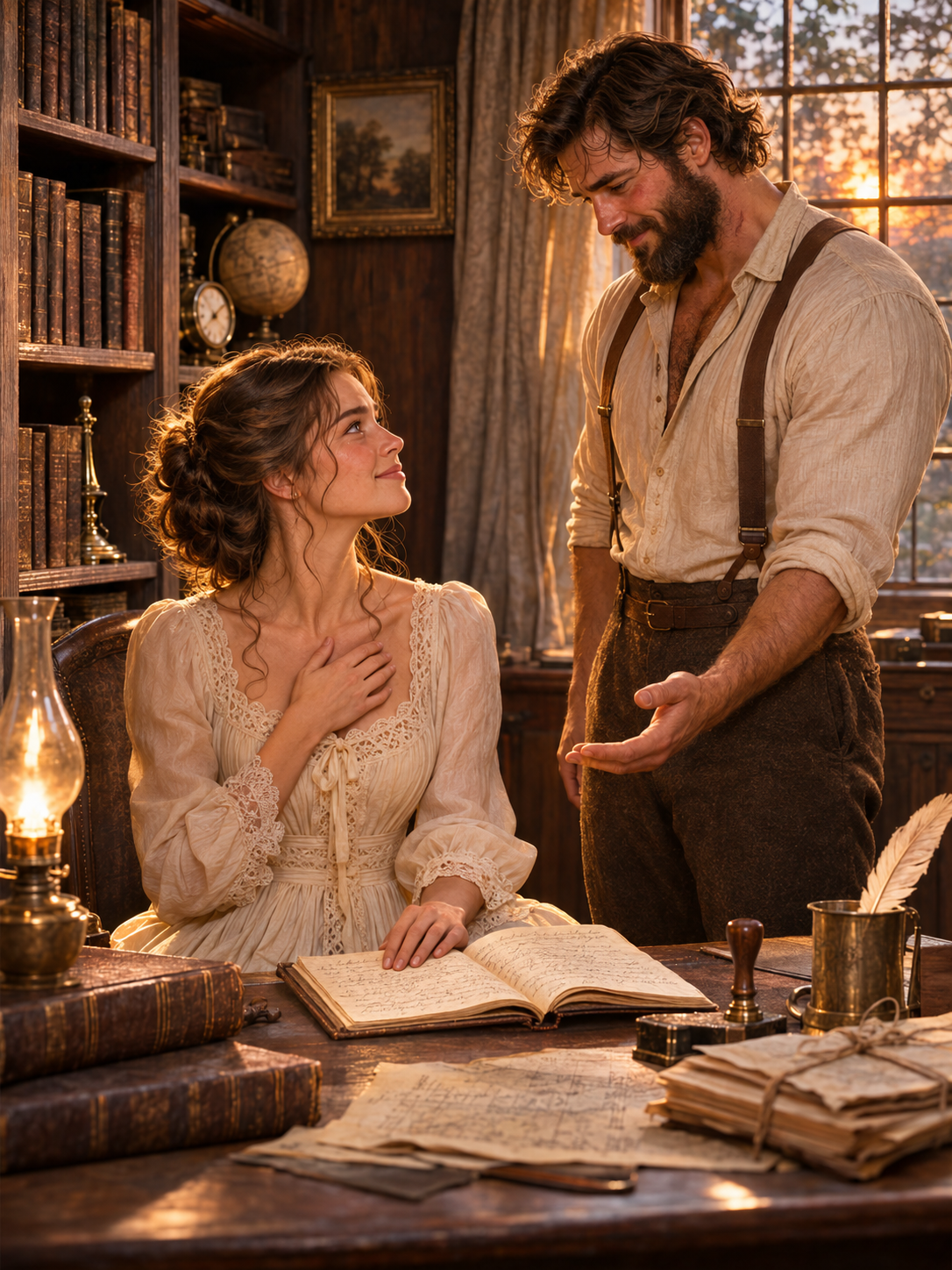
That evening, Nora returned to the old Whitmore house.
She climbed the stairs to her grandfather’s study and opened the wooden cabinet where he had once kept his coded notebooks.
The room smelled of old paper and cedar.
She sat at his desk.
Then she opened the last notebook.
Most of its pages contained the familiar symbols.
Mountains.
Rivers.
Circles.
Numbers.
But near the end was a page she had never seen.
The handwriting was Thomas Whitmore’s.
My dear Nora,
If you are reading this, then you have found what I spent too many years trying to hide and too few years trying to restore.
I cannot ask you to forgive me.
I cannot undo the suffering I caused.
But I can leave you the truth.
The land was never ours.
The money was never ours.
And the names of those who suffered should never have been erased.
Nora’s eyes filled with tears.
She continued.
I hope you will become the person I failed to be.
Not because you carry the Whitmore name.
But because you understand that a name means nothing without the courage to do what is right.
She folded the letter.
For a long time, she sat in silence.
Then she opened the final page.
There was one last sentence.
The greatest treasure was never hidden beneath the bridge.
Nora frowned.
Beneath it was a small drawing.
A mountain.
A river.
A circle.
And beside the drawing were three words.
THE CHILDREN’S FUTURE.
Nora looked toward the window.
She understood.
The trust had been built to protect the people who came after them.
The children whose parents had lost land.
The families whose wages had been stolen.
The descendants who deserved something better than the lies their ancestors had inherited.
Nora closed the notebook.
Then she placed it beside Eleanor’s original declaration.
For the first time, the Whitmore and Ashford records rested together—not as proof of ownership, but as a record of responsibility.
Outside, the evening sun fell across the fields.
The land was still scarred by the old railway.
The families were still waiting for much of what they were owed.
But the first steps had been taken.
And Nora knew the story would continue.
Not because another secret was waiting in the dark.
But because justice, once begun, demanded more than a single victory.
She rose from the desk.
Silas waited in the doorway.
“Ready?”
Nora smiled.
“Yes.”
He held out his hand.
She took it.
Together, they walked downstairs.
And for the first time in her life, Nora Whitmore was no longer searching for the truth about her family.
She was finally free to decide what to do with it.
To be continued…