PART 5: THE FINAL TWIST AND A NEW BEGINNING
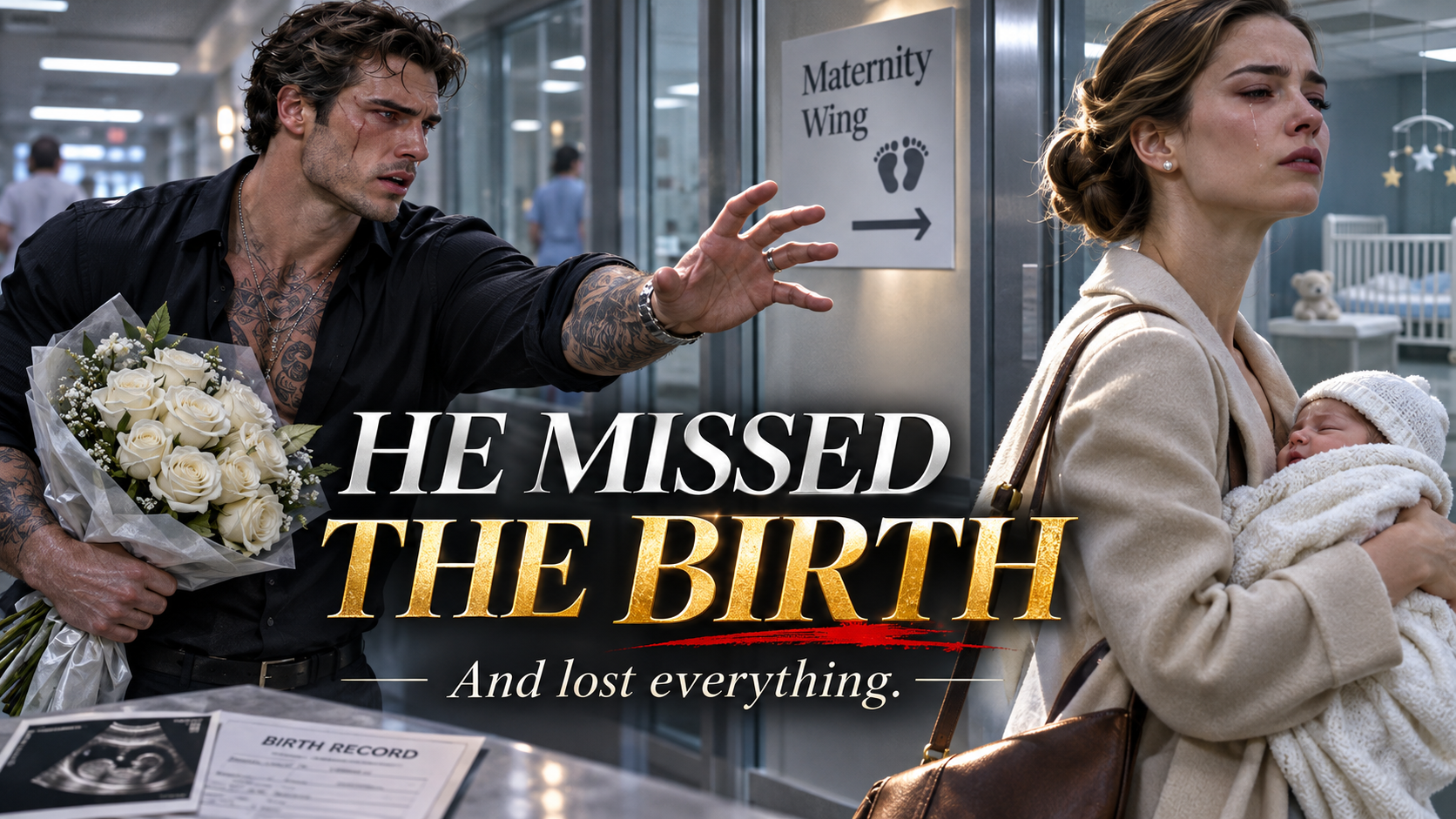
The pH๏τograph of Oliver’s nursery door lay on the conference table.
Wesley Mercer stared at the three red words.
BRING ME OLIVER.
For several seconds, he couldn’t speak.
Then he looked at Detective Laura Hensley.
“Tell me where my son is.”
Hensley shook her head.
“No.”
“Someone is threatening him!”
“And that’s exactly why we aren’t telling you.”
Wesley slammed his palm against the table.
“I’m his father!”
Adrian Vale stepped between them.
“Then start acting like someone who understands that protecting a child sometimes means not knowing where he is.”
Wesley froze.
The words were cruel.
But they were true.
He had spent seventeen days choosing himself.
Now the only useful thing he could do was choose differently.
He sat down.
“What do you need from me?”
Adrian looked at Hensley.
Then he opened Harrison Mercer’s letter.
The final page contained a handwritten instruction.
A sequence of numbers.
And a phrase.
“The truth is where the first home stood.”
Wesley recognized it immediately.
His grandfather’s first architectural project had been a small apartment building in Queens.
A modest property that Harrison had renovated long before the Mercer name became ᴀssociated with luxury towers and multimillion-dollar developments.
The building was still standing.
And Wesley knew something nobody else did.
In the basement, behind the original boiler room, was a sealed concrete compartment.
His grandfather had shown it to him when he was eleven.
He called it the family vault.
Wesley had ᴀssumed it was empty.
“It isn’t about the watch,” Wesley said suddenly.
Adrian looked up.
“What?”
“The watch is a key.”
See more Stories :
He turned the gold pocket watch over.
On its back was a tiny engraved symbol.
An oak tree.
Wesley remembered the same symbol on a brᴀss plate inside the basement vault.
“The original Mercer building,” he whispered. “That’s where he hid the records.”
Within an hour, investigators had secured the property.
Wesley accompanied them under strict supervision.
The basement smelled of old concrete and damp wood.
Behind the boiler room, the brᴀss plate was exactly where he remembered.
Wesley inserted the narrow winding stem of the watch into a small opening beneath the oak-tree engraving.
It turned.
A mechanical latch clicked.
The panel opened.
Inside was a waterproof metal case.
And inside that case were three things.
A ledger.
A sealed recording.
And a document bearing the signature of Wesley’s father, Richard Mercer.
Wesley stared at the signature.
His father had died in a car accident eight years earlier.
He had always believed Richard was an honest man.
A difficult father, perhaps.
Emotionally distant.
Obsessed with the family reputation.
But honest.
The recording destroyed that belief.
Harrison Mercer’s voice filled the room.
“If this message is being heard, then my efforts to stop the fraud have failed.”
The old man’s voice was tired.
“I trusted my son, Richard. I believed he would protect the people whose money built our company.”
A pause.
“Instead, he allowed Nathaniel Cross to move their investments into shell corporations.”
Wesley closed his eyes.
Harrison continued.
“When I confronted them, Richard begged me not to report the crimes. He said the scandal would destroy the Mercer name.”
The recording crackled.
“I told him the name meant nothing if we had stolen the futures of innocent families.”
Wesley began crying silently.
Then came the final revelation.
“I have appointed Corinne Dwyer as protector of the resтιтution trust because she refused to accept payment to remain silent.”
Adrian looked at Wesley.
Harrison’s voice continued.
“She is the only investigator who returned every dollar offered to her. She chose the truth when everyone around her chose money.”
The recording ended.
For a long moment, nobody spoke.
Then Adrian opened the ledger.
The entries contained the original fraudulent transfers, the names of the shell companies, and instructions connecting the old scheme to Nathaniel’s newer developments.
It was the evidence investigators had been missing.
But the final document was even more surprising.
Harrison had transferred controlling interests in several protected ᴀssets into the resтιтution trust.
The trust’s purpose was not to enrich the Mercer family.
It was to repay the people harmed by the fraud.
And Corinne had the authority to administer it.
Wesley understood at last.
His grandfather had not left behind a hidden fortune for him to inherit.
He had left behind a responsibility.
One that Corinne had accepted before Wesley even knew her.
***
Nathaniel Cross was arrested thirty-six hours later.
Investigators tracked a series of transfers through the offshore accounts and identified the private aviation company he had contacted.
He was detained before boarding a charter flight.
The threats against Corinne and Oliver were traced to two men working for him.
Both were arrested.
Paige Ledbetter was found alive in a rented apartment outside Philadelphia.
She had fled after receiving a warning that Nathaniel intended to make her disappear.
She surrendered the blue folder, her payment records, and communications proving the arrangement.
Her cooperation helped investigators establish how Nathaniel had used the affair to distract Wesley and obtain compromising pH๏τographs.
It did not excuse her deception.
But it prevented the evidence from being destroyed.
Over the following months, prosecutors pursued the financial crimes, while civil proceedings began recovering ᴀssets for defrauded investors.
Wesley resigned from Mercer Architecture Group.
He surrendered his ownership interest to a court-supervised process and agreed to repay compensation he had received from the fraudulent projects.
He also accepted responsibility for his negligence.
He didn’t ask anyone to praise him.
He knew doing the right thing after years of doing the wrong thing was not heroism.
It was simply overdue.
But none of those consequences hurt as much as the divorce papers.
They arrived on a rainy Thursday in February.
Corinne had signed them.
Wesley sat at his kitchen table, staring at her name.
For the first time, he didn’t call to argue.
He didn’t send flowers.
He didn’t offer jewelry.
He didn’t ask Alma to intervene.
He signed.
Then he returned the documents with a short handwritten note.
“Corinne,
You deserved a husband who showed up.
Oliver deserved a father who was there from the beginning.
I cannot change what I did.
I won’t ask you to forget it.
But I will spend the rest of my life making sure Oliver never has to wonder whether I love him.
Whatever boundaries you need, I will respect them.
— Wesley”
He expected nothing in return.
Three weeks later, Corinne called.
“Oliver has a pediatric appointment next Tuesday,” she said.
Wesley sat upright.
“Is he okay?”
“He’s perfect.”
He closed his eyes.
“Good.”
A silence followed.
Then Corinne said, “After the appointment, you can meet us at the park.”
Wesley couldn’t speak.
“Wesley?”
“Yes.”
“One hour. Adrian will be nearby, and my mother is coming.”
“Of course.”
“And Wesley?”
“Yes?”
“This isn’t about us.”
He swallowed.
“I know.”
“It’s about Oliver.”
“I understand.”
***
The first time Wesley held his son, Oliver was four months old.
They sat on a wooden bench beneath the bare branches of a maple tree.
Corinne placed the baby carefully into Wesley’s arms.
Oliver had dark hair.
Round cheeks.
And the same serious gray eyes Wesley remembered from pH๏τographs of his grandfather.
Wesley looked down at him.
“Hello, little man.”
Oliver blinked.
See more Stories :
Then wrapped his tiny fingers around Wesley’s thumb.
Wesley began crying.
Not loudly.
Not dramatically.
Just tears falling onto the sleeve of his coat.
Corinne watched from the other end of the bench.
She didn’t comfort him.
She didn’t need to.
After several minutes, Wesley whispered, “I missed everything.”
Corinne answered quietly.
“You missed the beginning.”
He looked at her.
“That doesn’t mean you have to miss the rest.”
It wasn’t forgiveness.
It wasn’t reconciliation.
It was an opportunity.
And Wesley knew the difference.
***
ONE YEAR LATER
The building in Queens reopened on a bright spring morning.
It was no longer an abandoned property tied to the Mercer family’s troubled history.
It had become the Harrison Dwyer Family Center.
A nonprofit community space providing financial counseling, affordable childcare referrals, and ᴀssistance to families affected by housing fraud.
Corinne stood outside the entrance holding Oliver, now a cheerful toddler who had recently discovered the joy of throwing crackers onto the floor.
Reporters gathered near the ribbon.
Former investors stood beside local residents.
Several families who had lost money in the original development scheme had already begun receiving resтιтution through the court-supervised recovery process.
Corinne had spent months helping organize the records.
She had declined a substantial trustee fee.
Instead, she requested a modest salary for the center’s staff and redirected the remaining administrative budget toward services.
When someone asked why she had worked so hard to recover money that wasn’t hers, Corinne gave a simple answer.
“Because it belonged to somebody.”
The crowd applauded.
Wesley stood near the back.
He had arrived early to help set up chairs.
He wore an ordinary blue shirt.
No expensive watch.
No tailored designer suit.
No performance.
He had started working for a smaller architectural practice, designing community buildings and accepting projects he could manage without sacrificing his responsibilities as a father.
He now saw Oliver regularly under an agreed parenting arrangement.
He had attended parenting classes.
He had learned how to change diapers, prepare bottles, handle fevers, and soothe nightmares.
Most importantly, he had learned to be reliable.
He had also stopped asking Corinne to take him back.
Their marriage was over.
But their son had two parents who were learning to work together.
That was enough.
Or so Wesley believed.
Until the ceremony ended.
Corinne approached him with Oliver in her arms.
“Can you hold him for a minute?”
Wesley smiled.
“Always.”
She handed him the baby.
Then she reached into her handbag.
“I have something for you.”
Wesley frowned.
A small cream-colored envelope.
For a moment, he remembered the first envelope Alma had given him.
The evidence.
The betrayal.
The beginning of everything falling apart.
He opened it slowly.
Inside was a pH๏τograph.
Harrison Mercer standing beside a young Corinne Dwyer.
The same pH๏τograph investigators had discovered during the investigation.
But this copy was different.
On the back, Harrison had written a message.
“Corinne,
One day, I hope my grandson meets someone who teaches him that integrity matters more than ambition.
If that person is you, I will consider it the greatest gift this family ever received.
— Harrison”
Wesley stared at the words.
Then he looked at Corinne.
“You knew my grandfather wanted us to meet?”
She shook her head.
“Not exactly.”
“What do you mean?”
Corinne smiled faintly.
“Your grandfather invited me to a charity exhibition thirteen years ago. He wanted me to meet his grandson, the young architect he couldn’t stop talking about.”
Wesley felt his heart stop.
“You were there?”
“I was.”
He remembered that exhibition.
A crowded gallery in Manhattan.
A woman in a navy dress had stood beside one of his models.
They had spoken for almost an hour.
He had forgotten her name.
But he remembered her laugh.
And how she challenged him when he said beautiful buildings were more important than their budgets.
He looked at Corinne.
“That was you?”
She nodded.
“We met long before the coffee shop.”
Wesley stared.
The coffee shop was where he had always believed their love story began.
Corinne continued.
“I recognized you when we met again two years later.”
“Why didn’t you tell me?”
“Because I wanted to know whether you’d remember me without your grandfather arranging it.”
Wesley laughed through tears.
“And I didn’t.”
“No.”
She smiled.
“But you bought me coffee anyway.”
He looked down at Oliver.
For the first time, Wesley understood the strange shape of his life.
His grandfather had trusted Corinne before Wesley did.
She had tried to protect the family long before she married into it.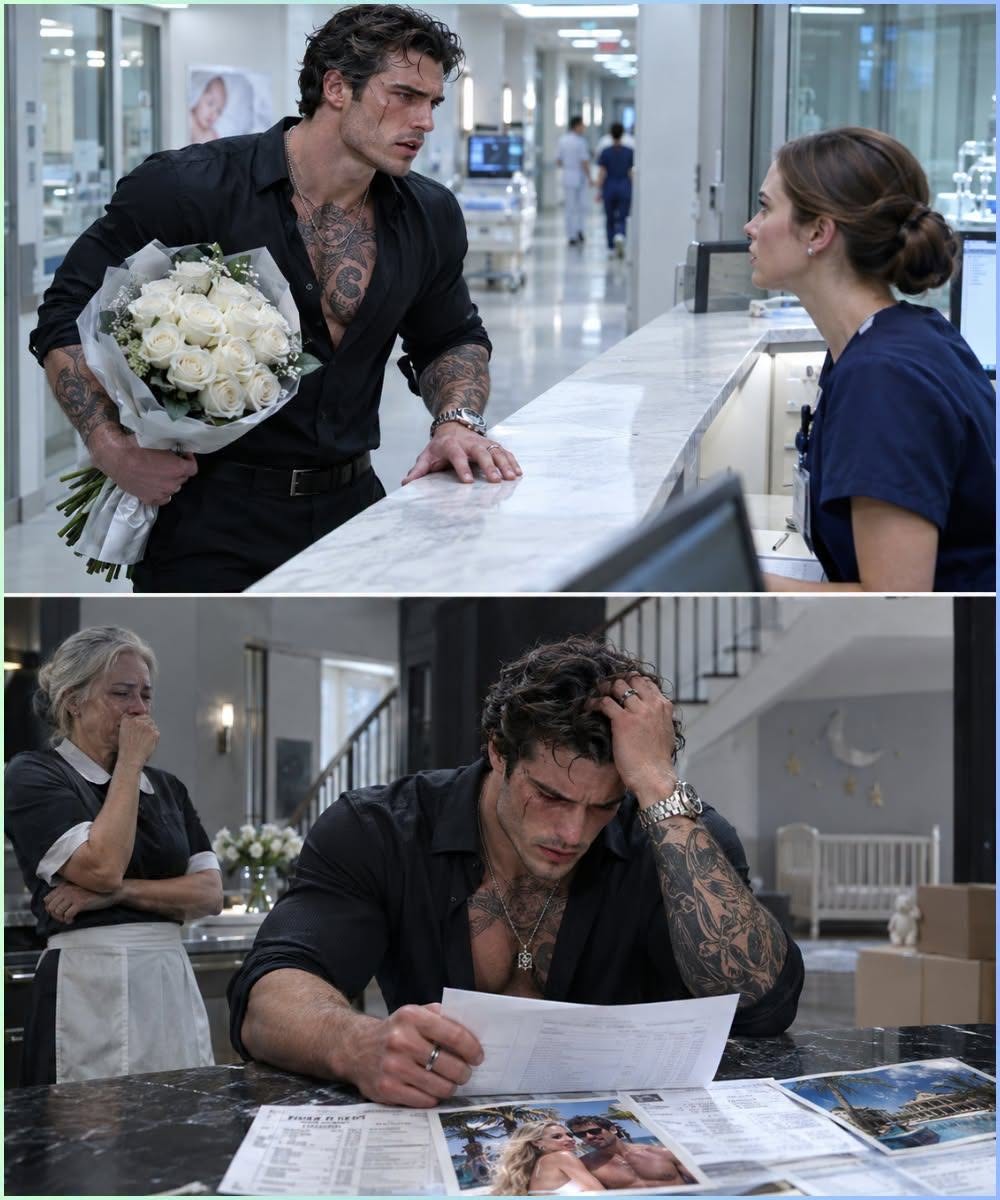
And when the family nearly destroyed itself, she had protected the one person who mattered most.
Their son.
Wesley looked at her.
“Corinne, I—”
She gently raised her hand.
“Don’t.”
He stopped.
She wasn’t angry.
She was simply certain.
“We had our story,” she said. “And we have Oliver. That’s something good we can still protect.”
Wesley nodded.
“You’re right.”
Corinne glanced toward the building.
“There’s one more thing.”
He looked at her.
“The center’s board voted yesterday.”
“About what?”
“We’re opening a second location.”
“That’s wonderful.”
“In Connecticut.”
Wesley smiled.
“Where?”
“Silvermere.”
His smile disappeared.
“The lake house?”
Corinne nodded.
“The property was insured, and the trust has recovered the land. We’re rebuilding it as a retreat for families who need temporary housing and support.”
Wesley stared at her.
The place Nathaniel had tried to destroy would become a place where vulnerable families could begin again.
It was the kind of ending Harrison Mercer would have loved.
“That’s perfect,” Wesley whispered.
Corinne smiled.
Then Oliver reached toward his mother.
Wesley handed him back.
The little boy laughed as she kissed his forehead.
For a moment, the three of them stood together in the spring sunshine.
Not as the family Wesley had once imagined.
But as something more honest.
A family that had survived the truth.
***
SIX MONTHS LATER
On Oliver’s second birthday, Wesley arrived at Corinne’s home carrying a small wrapped present.
No white roses.
No expensive jewelry.
Just a wooden model of a little house he had built himself.
See more Stories :
Oliver tore the wrapping paper and squealed with delight.
Corinne watched him play.
Then she turned toward Wesley.
“There’s someone I’d like you to meet.”
A man stepped out of the kitchen.
Tall.
Kind-eyed.
Holding a tray of birthday cupcakes.
Wesley recognized him from the family center’s opening.
Dr. Samuel Bennett.
A pediatric specialist who volunteered at the center twice a month.
Corinne looked slightly nervous.
“Samuel and I have been seeing each other.”
Wesley felt a familiar ache.
But it wasn’t jealousy.
Not really.
It was the quiet understanding that life had continued.
That Corinne was allowed to be happy.
That her happiness no longer depended on him.
He extended his hand.
“Nice to meet you properly.”
Samuel shook it.
“Oliver talks about you all the time.”
Wesley smiled.
“Mostly about the toy trucks, I imagine.”
“Mostly about how you make pancakes shaped like dinosaurs.”
They laughed.
And something inside Wesley finally settled.
Later, as the birthday party ended, Corinne walked him to the door.
“Thank you,” she said.
“For what?”
“For making today easy.”
Wesley glanced toward the living room, where Oliver was laughing with Samuel.
“He’s happy.”
“He is.”
“And you?”
Corinne looked at him.
For a moment, she seemed to consider the question.
Then she smiled.
“Yes, Wesley. I really am.”
He nodded.
“Good.”
As he stepped outside, she called after him.
“Wesley?”
He turned.
“Your grandfather would be proud of what you’ve done with the community projects.”
Wesley looked down.
“I hope so.”
Corinne smiled.
“Just keep showing up.”
He returned the smile.
“I will.”
Then he walked toward his car.
Two years earlier, Wesley Mercer had entered a maternity ward carrying white roses and a carefully rehearsed lie.
He had expected to buy forgiveness.
Instead, he lost his marriage, his reputation, and the life he thought he controlled.
But the woman he underestimated had uncovered a conspiracy, protected their child, recovered millions for innocent families, and transformed a damaged legacy into something worth preserving.
And the greatest twist wasn’t the hidden trust.
It wasn’t Nathaniel’s betrayal.
It wasn’t even the fact that Corinne had known his grandfather before she knew him.
It was that the man who once believed money could solve every problem finally learned something his wife had understood all along.
Love wasn’t proven by what you promised when everything was easy.
It was proven by what you did when nobody was watching.
Corinne found happiness without surrendering her dignity.
Oliver grew up surrounded by people who loved him.
And Wesley finally became the father his son deserved.
Not because he was forgiven for the past.
But because he stopped allowing the past to define the future.
THE END.