PART 4: THE LAST PROMISE — THE END
Love wasn’t proven by how desperately you held on to someone.
It was proven by whether you could give them the freedom to walk away—and still choose to become someone worthy of their return.
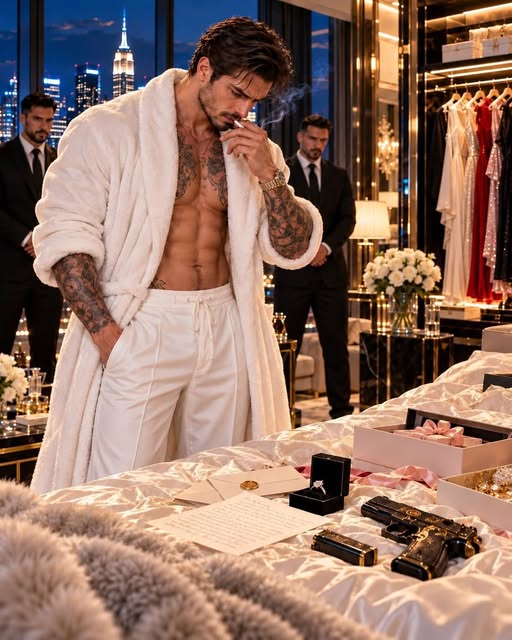
My name is Dante Moretti.
For most of my life, I had believed that everything could be negotiated. Loyalty could be purchased. Enemies could be eliminated. Problems could be buried beneath enough money and power.
But Isabella had taught me that the one thing I wanted most was the one thing I could never force.
Her forgiveness.
And perhaps, someday, her love.
I was sitting in my office when my phone vibrated.
One message.
Isabella: Are you free on Saturday? There’s something I’d like to show you.
I stared at those words for nearly a minute.
Then I typed, For you, always.
I deleted it.
It sounded like a promise from the old Dante—the man who had believed grand declarations could repair the damage caused by his actions.
Instead, I wrote:
Yes. Tell me where and when. I’ll be there.
Her reply arrived a few seconds later.
The lighthouse at four. Don’t be late.
For the first time in years, I smiled without feeling the weight of my empire pressing against my chest.
Saturday arrived beneath a pale autumn sky.
I reached the lighthouse ten minutes early, carrying no bodyguards, no expensive gifts, and no carefully rehearsed speech. Just myself.
Isabella stood near the railing, her hair moving gently in the ocean breeze. She wore a cream-colored sweater and the small silver pendant her mother had given her before our wedding.
For a moment, I saw the woman I had married.
Then she turned, and I remembered that she was no longer the woman who had stood beside me eleven years ago.
She was someone who had survived my betrayal.
Someone who had rebuilt herself without me.
And if I wanted to stand beside her again, I would have to meet her where she was—not demand that she return to where we had been.
“You’re early,” she said.
“You told me four.”
“Most people would consider four o’clock the time to arrive.”
“I’ve made a habit of being late to the things that matter.”
Her expression softened, though the sadness in her eyes remained.
“At least you’re learning.”
We walked along the path overlooking the sea. For a while, neither of us spoke.
Then Isabella stopped.
“I received the final documents from your father’s attorney.”
I nodded. “The trust is yours. It always was. You don’t owe me anything because of it.”
“I know.”
She looked at me carefully.
“Do you know what your father said to me when he gave me those documents?”
I shook my head.
“He told me that one day you might become so powerful that everyone around you would be afraid to tell you the truth. He asked me to remember that the man behind the power was still capable of being good.”
My throat тιԍнтened.
“My father knew me better than I wanted to believe.”
“He loved you, Dante. But he wasn’t blind to your flaws.”
She glanced toward the horizon.
“He also told me that if I ever felt unsafe or unhappy, I should leave without worrying about what would happen to you.”
I lowered my gaze.
“And you did.”
“Yes.”
The word was quiet, but it carried the weight of everything I had done.
I took a breath.
“Isabella, I want to tell you something. Not because I expect you to forgive me. Not because I hope you’ll come home. I just need you to hear it.”
She waited.
“The affair wasn’t a mistake that happened to me. It was a decision I made. Every lie, every night I came home and kissed you while hiding the truth, every time I watched you trust me—I chose those things.”
My voice faltered.
“And when you left, I kept thinking about what I’d lost. My wife. My home. The life I thought belonged to me. It took me too long to understand that I was grieving the consequences of hurting you, not just the loss of having you.”
Isabella’s eyes glistened.
“I can’t undo any of it,” I continued. “I can’t ask you to forget. And I won’t tell you that I’ve changed as if that sentence is supposed to settle everything.”
I looked directly at her.
“I can only keep making different choices. Even if you never come back.”
For a long moment, she said nothing.
Then she asked the question I had feared for months.
“Do you still love me?”
I could have answered immediately.
Instead, I considered what the word meant now.
“Yes,” I said. “But I understand that loving you doesn’t give me a right to your life. It doesn’t mean you owe me another chance.”
She looked away, blinking back tears.
“I used to think that if you ever admitted what you’d done, I would feel better,” she whispered. “I imagined hearing you apologize and finally being able to breathe again.”
“And now?”
“Now I know that an apology doesn’t erase what happened. Some days, I still remember the woman who thought her marriage was safe. I miss her sometimes.”
My chest ached.
“Isabella—”
“Let me finish.”
I nodded.
“I don’t want to spend the rest of my life being the woman you betrayed. I don’t want every new relationship, every quiet evening, every happy moment to be measured against what you did to me.”
She wiped a tear from her cheek.
“I’m trying to become someone who can be happy again without needing you to understand every part of my pain.”
“You deserve that.”
“I know.”
For the first time, she said it without hesitation.
And somehow, that certainty gave me more hope than any promise she could have made.
Then she reached into her coat pocket and took out a small envelope.
“I wrote this a few weeks after I left.”
She handed it to me.
Inside was a single sheet of paper.
Dante,
I loved you when you had nothing but ambition and a name people feared. I loved you when you came home exhausted and rested your head in my lap. I loved you when you told me about the boy you had been before the world taught you to become a man nobody dared to challenge.
For a long time, I thought loving you meant standing beside you no matter what you did.
I was wrong.
I can love the good in you and still refuse to live with the harm you cause.
I can remember our beautiful years without pretending the terrible ones never happened.
And I can wish you peace without giving you another chance to hurt me.
If we ever find our way back to each other, it will not be because I am afraid of losing you.
It will be because I am no longer afraid of choosing myself.
Isabella.
I read it twice.
Then I folded the letter carefully and returned it to the envelope.
“Thank you,” I whispered.
She studied me.
“You’re not going to ask what it means?”
“No.”
“You’re not going to ask whether there’s still a chance for us?”
I met her eyes.
“If you want to tell me, I’ll listen. If you don’t, I’ll respect that.”
Something changed in her expression.
Not a sudden return of love. Not a magical erasure of the past.
Just a small, quiet relief.
“There’s something I want you to know,” she said.
I waited.
“I don’t hate you anymore.”
My breath caught.
She continued before I could speak.
“But that doesn’t mean I’m ready to be your wife again.”
“I understand.”
“And I don’t want you to mistake my kindness for a promise.”
“I won’t.”
She searched my face, perhaps expecting to find the familiar impatience of a man who wanted everything immediately.
But I had finally learned that some things were worth waiting for, even when the waiting hurt.
Then Isabella did something I hadn’t expected.
She reached for my hand.
Her fingers rested against mine, tentative and warm.
I didn’t тιԍнтen my grip.
I didn’t pull her closer.
I simply let her decide how long she wanted to hold it.
After a moment, she smiled faintly.
“Would you like to have dinner with me next Friday?”
I looked at her, almost afraid that I had misunderstood.
“Yes.”
“Just dinner, Dante.”
“Just dinner.”
“And no bodyguards standing outside the restaurant.”
A quiet laugh escaped me.
“I’ll leave them at home.”
“And no expensive jewelry.”
“I’ll bring myself.”
She tilted her head.
“That might actually be enough.”
For the first time since she had left, I laughed with her.
Not because everything was fixed.
Because something honest had finally begun.
One year later
People still called me Don Moretti.
My businesses still operated across the East Coast. Men still lowered their voices when I entered a room, and enemies still believed that the name Moretti meant danger.
But I no longer measured my life by how many people feared me.
I had stepped away from several operations that had kept violence and corruption woven into the foundation of my empire. It cost me money. It cost me influence. Some men called me weak.
I let them.
For the first time, I understood that protecting the people I loved sometimes meant refusing to become the person they needed protection from.
And every Friday, when our schedules allowed it, Isabella and I had dinner.
Sometimes we talked about the past.
Sometimes we argued.
Sometimes we sat across from each other and discussed ordinary things—books, bad weather, the neighbor’s ridiculous dog—as if we were two people learning how to meet for the first time.
We did not rush.
We did not pretend.
And slowly, without either of us announcing it, our conversations began to last longer.
One evening, I arrived at the little restaurant by the harbor and found Isabella standing outside beneath the golden lights.
She was holding two tickets.
“What’s that?” I asked.
“A trip.”
I frowned. “Where?”
“Portugal. Ten days. I’ve wanted to go for years.”
I stared at the tickets.
“You’re asking me to go with you?”
“I’m asking if you’d like to.”
I searched her face.
“Isabella, I don’t want you to feel obligated—”
“Dante.”
I stopped.
“I’m not doing this because I feel sorry for you. I’m not doing it because you bought me something or because your father left me money. And I’m certainly not doing it because I’m afraid you’ll be unhappy if I say no.”
She stepped closer.
“I’m asking because I want to see what it feels like to travel with you now. The man you are today. Not the man I married. Not the man who betrayed me.”
My eyes burned.
“And if it doesn’t work?”
“Then we’ll come home and figure out what comes next.”
I nodded slowly.
“Then yes. I’d love to go.”
She smiled.
“Good. Because the tickets are nonrefundable.”
I laughed, and she laughed with me.
Then, for the first time in a very long time, she kissed me.
It was brief.
Gentle.
Not a declaration that the past had disappeared, but an acknowledgment that the future was still ours to discover.
When she drew back, I rested my forehead against hers.
“I love you,” I whispered.
She closed her eyes.
“I know.”
Then she opened them again.
“And I’m learning to love you differently.”
I held her hand as we walked toward the restaurant.
I didn’t ask whether she would ever wear my wedding ring again.
I didn’t ask when she would come home.
I didn’t ask her to promise that the rest of our lives would belong to each other.
I had spent too many years believing that love was something I could secure through power, money, loyalty, or fear.
Now I knew better.
Love was not the ring on her finger.
It was not the house we once shared.
It was not the vows I had broken or the years I could never recover.
It was the freedom she had to leave—and the freedom she now had to choose me again, one day at a time.
And if she never chose to marry me again, I would still be grateful for the chance to become a better man than the one who had destroyed our marriage.
Because Isabella had never needed a king.
She had needed a husband.
And I had finally begun to understand the difference.
THE END.