PART 3: THE SECRET THAT COULD SAVE BROKEN SPUR
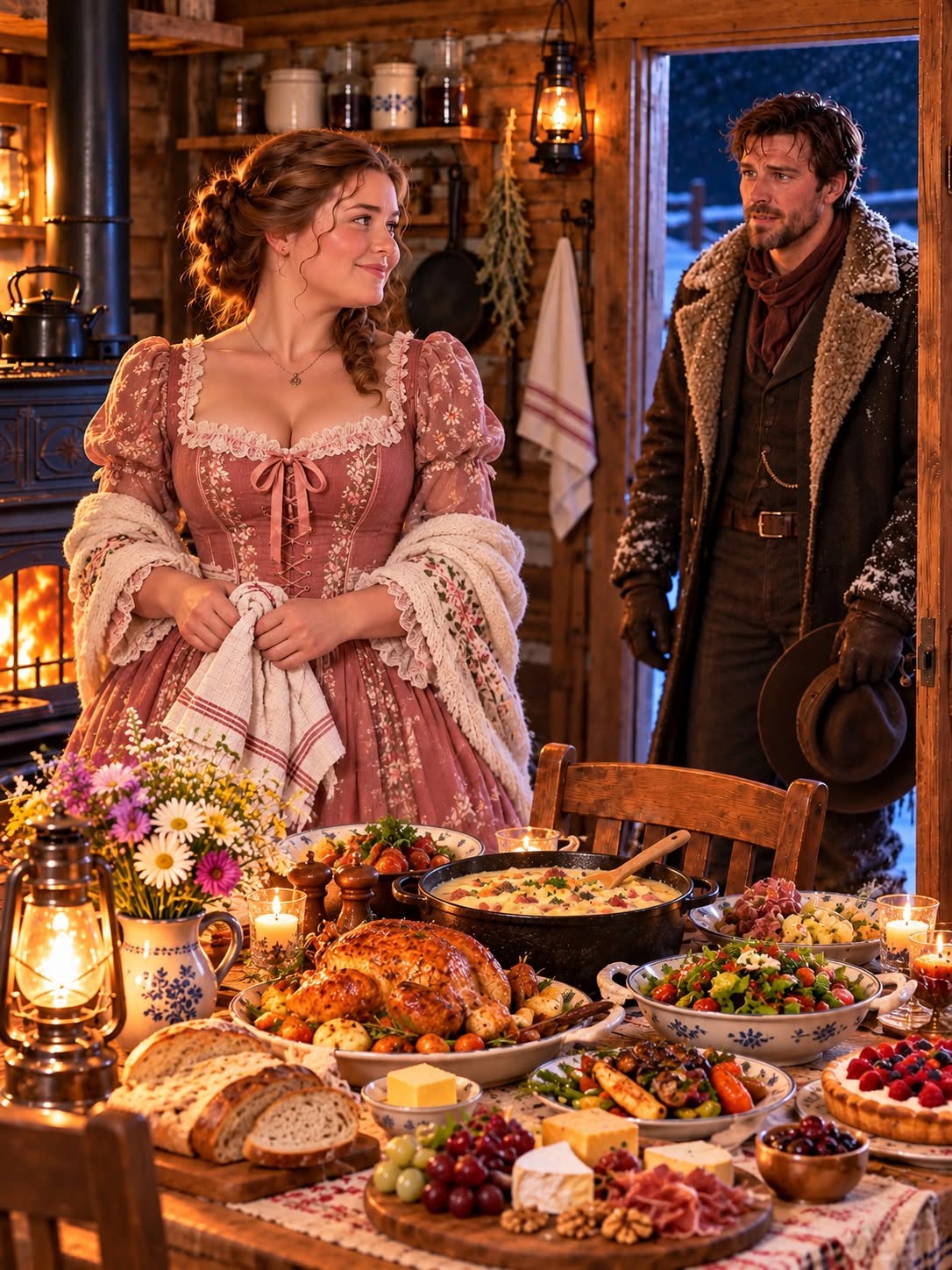
PART 3: THE SECRET THAT COULD SAVE BROKEN SPUR
Caleb read the letter again.
The name at the bottom was unfamiliar.
Margaret Whitcomb.
“Who is she?” he asked.
“She owned the Whitcomb House in St. Louis. It was one of the finest boarding establishments in the city.”
“Owned?”
“Her husband died three years ago. His family took the business from her, claiming a woman couldn’t manage it alone.”
Caleb looked at Beatatrice.
“And you know her?”
“I worked in her kitchen for almost two years.”
“What does she want from you?”
Beatatrice hesitated.
“She once told me I had a gift for making inexpensive food taste like something served at a wealthy man’s table. Before I left Missouri, she mentioned opening a food supply business for railroad workers and mining camps.”
Caleb leaned back.
“There’s already a H๏τel in Oak Haven. Two restaurants, and a saloon that serves breakfast.”
“I’m not talking about opening another restaurant.”
She spread a piece of paper across the table.
“I’m talking about supplying them.”
Caleb studied her rough drawing.
It showed a small commercial kitchen, storage shelves, delivery wagons, and a list of foods.
Biscuits.
Preserved meat.
Fruit pies.
Dried vegetables.
Jars of soup.
“You’re suggesting we sell food?”
“Not just food. Meals that can be transported, stored, and reheated. Railroad crews spend days away from their families. Miners work underground for twelve hours. Ranch hands travel between settlements.”
She tapped the paper.
“They all need to eat.”
Caleb shook his head.
“We don’t have the money to build a kitchen.”
“We have a kitchen.”
“Not a commercial one.”
“We have a stove, a smokehouse, a well, and a barn that isn’t being used.”
“We don’t have workers.”
“Then we’ll hire them.”
“With what money?”
Beatatrice looked at him.
“With the money we earn.”
Caleb stared at her.
She was proposing to save an eight-hundred-dollar ranch debt with a business that didn’t yet exist.
It sounded ridiculous.
But then he remembered the last four days.
The pantry.
The repaired shed.
The organized supplies.
The first decent meal he had eaten in years.
For the first time, he didn’t dismiss her idea.
“All right,” he said.
Beatatrice looked up.
“All right?”
“Show me what you need.”
Her eyes widened.
“You’re serious?”
“ᴅᴇᴀᴅ serious.”
She smiled.
And Caleb realized he hadn’t seen her smile quite like that before.
The next morning, Beatatrice rode into Oak Haven with Caleb.
She wore her best brown dress, a clean wool coat, and a hat decorated with a small blue ribbon.
Caleb noticed that she had carefully mended the sleeve herself.
When they entered the general store, the proprietor, Mr. Hensley, looked up.
“Hayes. What brings you in?”
“Supplies.”
Hensley glanced at Beatatrice.
“Didn’t know you were bringing company.”
“My wife,” Caleb replied.
The words came naturally.
Beatatrice looked at him briefly.
Hensley raised an eyebrow.
“Well, congratulations.”
But when Beatatrice presented her shopping list, his expression changed.
“That’s quite a lot of flour.”
“I’ll need six sacks.”
“Six?”
“Yes.”
“Planning to feed the entire territory?”
“Possibly, if they enjoy my biscuits.”
Hensley laughed.
He didn’t mean to be cruel, but the sound carried through the store.
Two women near the fabric counter turned.
One whispered something to the other.
 Beatatrice heard it.
She always heard it.
Caleb stepped forward.
“What’s funny?”
“Nothing, Hayes. Just making conversation.”
“Then make it somewhere else.”
Hensley stopped smiling.
Beatatrice gently touched Caleb’s arm.
“It’s all right.”
But she didn’t lower her eyes.
She completed the purchase, paid for the supplies, and asked Hensley to arrange delivery.
As they left, Caleb looked at her.
“You shouldn’t have to tolerate that.”
“I’ve tolerated worse.”
“That doesn’t make it right.”
She looked toward the street.
“Caleb, I don’t expect the world to change overnight. I only want to build something that doesn’t depend on people’s opinions of me.”
He nodded.
“Then let’s build it.”
For the next ten days, Broken Spur became a different place.
Caleb repaired the unused barn and turned half of it into a storage building.
Beatatrice scrubbed the old worktables, arranged the shelves, and began testing recipes.
She made small batches of biscuits, meat pies, vegetable stew, and apple cakes.
Every recipe was carefully recorded.
Every ingredient was measured.
Every cost was calculated.
She even created a system for packaging food in waxed paper and sealed wooden containers.
Caleb watched her work with growing admiration.
He had spent years believing survival depended on strong horses, good rifles, and healthy cattle.
His wife was teaching him that survival could also depend on flour, patience, and knowing exactly how to stretch a dollar.
Then came the first customer.
A railroad foreman named Walter Briggs arrived with three men.
He had heard about the biscuits from a ranch hand.
“I need food for twenty workers,” he announced.
Beatatrice wiped her hands.
“What kind?”
“Something filling. Something that won’t spoil before lunchtime.”
She offered him a sample of her meat pies.
Walter took one bite.
Then he looked at his companions.
“How many can you make?”
“Forty by Friday.”
“Make sixty.”
Beatatrice’s heart jumped.
“Sixty?”
“Sixty. If my men like them, I’ll order every week.”
Caleb nearly dropped the wooden crate he was carrying.
When Walter left, Beatatrice stood motionless in the doorway.
“Did you hear that?”
Caleb grinned.
“I heard.”
“That’s sixty pies!”
“And sixty chances to keep this ranch.”
She laughed.
For the first time, Broken Spur seemed to have a future.
But success brought trouble.
Three days later, a black carriage arrived from Oak Haven.
A well-dressed man stepped down.
It was Mr. Pritchard, the bank’s local representative.
He carried a leather briefcase and wore the expression of someone who had come to deliver bad news.
“Mr. Hayes.”
Caleb wiped his hands.
“Pritchard.”
“I understand you’ve started a food business.”
“That’s right.”
“Without informing the bank.”
Caleb frowned.
“Why would I need your permission?”
Pritchard opened his briefcase.
“Because your property is collateral against your loan. Any substantial commercial alteration requires approval.”
“We’re using an existing barn.”
“Nevertheless, the bank is concerned.”
Beatatrice stepped forward.
“We have already received an order from the railroad.”
Pritchard looked at her.
“You’re the wife?”
“Beatatrice Hayes.”
He glanced at her from head to toe.
“I see.”
Something about his tone made Caleb’s jaw тιԍнтen.
“She runs the business.”
Pritchard gave a thin smile.
“An interesting choice.”
Beatatrice remained calm.
“Would you like to inspect our accounts?”
The banker looked surprised.
“Your accounts?”
She brought out her ledger.
Every purchase, every ingredient, every sale, and every expected payment had been recorded.
Pritchard examined the figures.
His expression slowly changed.
The business was small, but the numbers were promising.
Then he closed the book.
“Unfortunately, there’s another matter.”
He handed Caleb a document.
“Your mortgage was sold last week. The new creditor has accelerated the repayment.”
Caleb stared at the paper.
“That’s impossible.”
“I’m afraid not.”
“Who bought it?”
Pritchard adjusted his gloves.
“Mayor Montgomery of Oak Haven.”
Beatatrice went completely still.
The same Montgomery family that had once mocked her in Missouri had nothing to do with this situation—or so she thought.
Then she noticed the signature at the bottom.
Horace Montgomery.
Caleb read the next paragraph.
The mayor had demanded immediate payment of the full debt.
Not eight hundred dollars.
Two thousand.
And if Caleb couldn’t pay within fourteen days, the entire ranch would be auctioned.
Pritchard put the document back into his briefcase.
“I’m sorry, Hayes. Business is business.”
After he left, Caleb stood silently beside the barn.
Two thousand dollars.
They would never earn that much in fourteen days.
Beatatrice took his hand.
“Don’t give up.”
Caleb looked at her.
“I brought you here to be my wife, not to watch you lose everything.”
She shook her head.
“You didn’t bring me here to lose anything. You brought me here to build a life.”
Then she returned to the kitchen.
Caleb followed.
“What are you doing?”
“Writing a letter.”
“To whom?”
“Margaret Whitcomb.”
She dipped her pen into the ink.
“If she still remembers her promise, I think she can help us.”
Two mornings later, a stagecoach arrived.
A woman stepped down wearing a dark traveling dress and a magnificent burgundy hat.
She was in her late fifties, with silver hair, sharp eyes, and the confident manner of someone accustomed to running an establishment.
Beatatrice rushed outside.
“Margaret!”
The woman opened her arms.
“My dear girl!”
They embraced.
Caleb approached cautiously.
“Mrs. Whitcomb?”
Margaret turned.
“So this is the husband.”
“Caleb Hayes.”
She shook his hand firmly.
“I’ve heard quite a bit about you.”
Caleb looked confused.
“From whom?”
Margaret smiled.
“Your wife.”
She entered the cabin and examined the kitchen, the ledgers, and the first completed food orders.
Then she tasted a meat pie.
She closed her eyes.
“Just as I remembered.”
Beatatrice waited nervously.
“Well?”
Margaret placed the plate down.
“I have an offer.”
She opened her traveling case and removed a thick folder.
Inside were contracts from three mining companies, two railroad operators, and a H๏τel in Cheyenne.
“They’ve been searching for someone who can supply reliable meals to their workers. I’ve already spoken to their representatives.”
Caleb stared.
“How many orders?”
Margaret smiled.
“Enough to keep twenty women employed.”
Beatatrice’s eyes filled with tears.
Twenty women.
That was more than a business.
It was an opportunity to give other women the independence she had spent her life searching for.
But Margaret wasn’t finished.
She placed one final paper on the table.
“This is why I came personally.”
It was an old legal document.
A land agreement dated 1861.
Margaret pointed to a name.
Horace Montgomery.
Caleb frowned.
“What’s he got to do with this?”
Margaret looked toward Beatatrice.
“Your wife’s father once helped my husband uncover a fraud involving the Montgomery family.”
Beatatrice went pale.
“My father?”
“Yes. And before he died, he gave me something to protect.”
Margaret opened a small leather pouch.
Inside was a brᴀss key.
Caleb examined it.
“What’s it for?”
Margaret lowered her voice.
“A safe deposit box in Cheyenne. Your wife’s father left a document there proving that the Montgomerys have been illegally claiming land and collecting payments that never belonged to them.”
Beatatrice stared at the key.
“Why didn’t my father tell me?”
“Because he was afraid they’d hurt you.”
Margaret turned toward the window.
“And now that Montgomery knows you’re married to Caleb Hayes, he’s trying to take this ranch before you discover what’s inside that box.”
Caleb slowly stood.
“Then we’ll go to Cheyenne.”
Margaret shook her head.
“Not so quickly.”
She removed another folded paper.
It contained a list of names.
The names of five other families whose land had allegedly been taken by the Montgomerys.
At the bottom was a name Caleb recognized.
His own father’s.
He stared at the paper.
Then he looked at Beatatrice.
Suddenly, the ranch debt, the suspicious mortgage, and the mayor’s cruelty began to make sense.
This wasn’t simply about two thousand dollars.
It was about a secret that had been buried for more than twenty years.
And the woman Caleb had once believed would be a burden might be the only person capable of exposing it.
But when Margaret finally revealed what was inside the Cheyenne safe deposit box, Caleb would discover something even more shocking:
The ranch Montgomery was trying to steal had never legally belonged to the bank—or even to the Hayes family.
It belonged to someone whose name nobody in Oak Haven had spoken aloud for decades.
To be continued in Part 4…