PART 3 — THE SECRET HER FATHER LEFT BEHIND
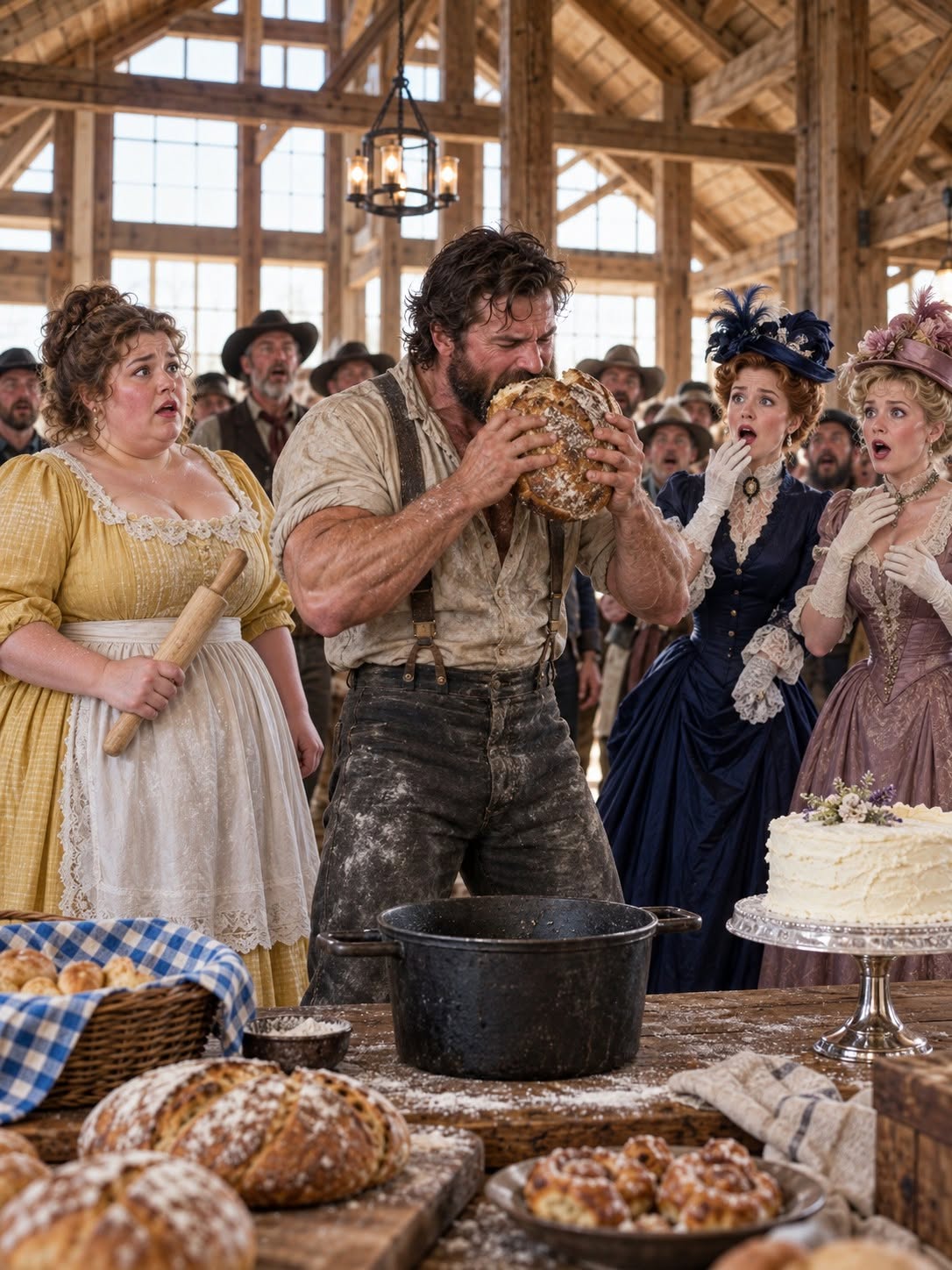
THE WOMEN AT THE FRONTIER MARKET LAUGHED AT HER HOMEMADE BREAD AND CALLED HER A HOPELESS NOBODY—UNTIL THE RUGGED MOUNTAIN MAN TOOK ONE BITE, TURNED TOWARD THE ENTIRE CROWD, AND DECLARED, “THAT’S THE ONE I’M TAKING HOME.”
PART 3 — THE SECRET HER FATHER LEFT BEHIND
Harriet read the name twice.
JOSEPHINE WHITCOMB.
She looked up at Harlan.
“That’s Josephine. The ᴀssayer’s wife.”
“I know.”
“But why would my father write her name in a letter to me?”
Harlan pulled his chair closer to the fire.
“Because your father discovered something about the boarding house before he died.”
Harriet glanced down at the letter again.
The house was never meant to belong to the bank.
She continued reading.
When your grandfather bought the property, he purchased it from the Whitcomb family. But the deed contained an agreement that the house and the spring behind it could never be taken from the family who operated the public kitchen.
The spring was the reason the boarding house was built there. Travelers, miners, and ranch hands needed clean water. Your grandfather promised the Whitcombs that the kitchen would always remain open to anyone who needed a meal, regardless of whether they could pay.
When the bank came asking for the property, I showed them the original agreement. They told me it had no legal value.
I do not believe them.
Harriet stopped reading.
“There’s a spring behind the boarding house,” she whispered. “I’ve used it all my life.”
Harlan nodded.
“Your father showed it to me years ago.”
She turned the page.
I hid the original deed somewhere only someone who knew the old kitchen would think to look. If the bank tries to take the house, find the iron bread oven. Look beneath the stone that never gets warm.
The letter ended with a sentence that made Harriet’s eyes fill.
I am sorry I could not leave you a fortune, sweetheart. But I hope I have left you something worth protecting.
Harriet lowered the paper.
“The old oven.”
Harlan watched her.
“You know where it is?”
“I’ve used it since I was twelve. There’s a stone at the back that always stays cold, even when the oven is burning.”
“Then that’s where we’ll look.”
She shook her head.
“Why would you help me?”
Harlan didn’t answer immediately.
Instead, he took another piece of her bread and turned it between his fingers.
“Your father helped me when I had nothing. I was twenty-three, injured, and sleeping in a lumber shed after losing my trapping cabin to a fire. Thomas brought me food every evening for two months.”
Harriet smiled faintly.
“That sounds like him.”
“He never asked for a penny. Told me a hungry man couldn’t make good decisions.”
Harlan looked at her.
“I’ve been carrying that debt for twenty years.”
“You don’t owe me anything.”
“Perhaps not. But I owe him.”
He rose and placed another log on the fire.
“And I reckon he wouldn’t want his daughter losing her home because a few men in town decided they could take advantage of her.”
For the first time that evening, Harriet felt something stronger than graтιтude.
She felt hope.
The next morning, they returned to Bitter Creek.
Harriet had barely stepped into the boarding house when she noticed the notice nailed to the front door.
<text></text>
PROPERTY TO BE SEIZED — PAYMENT DUE WITHIN SEVEN DAYS.
Her stomach тιԍнтened.
“They’ve shortened the ᴅᴇᴀᴅline.”
Harlan read the notice.
“Who posted it?”
“Bank agent, most likely.”
She pushed open the door.
The kitchen was exactly as she’d left it: flour on the counter, pots hanging above the stove, and her father’s old wooden rolling pin beside the bread board.
For a moment, she stood still.
This was more than a building.
It was where her father had taught her to knead dough. Where he had sat by the stove on his last winter, telling her stories to keep her from worrying. Where she’d learned that feeding someone was sometimes the only way to tell them they mattered.
She couldn’t lose it.
“Show me the oven,” Harlan said.
Harriet led him to the enormous brick structure built into the kitchen wall.
She opened its iron door.
The oven was old, blackened by years of use, but the bricks were solid.
At the back sat a large flat stone.
Harriet pressed her palm against it.
Cold.
Even though the oven had been warming since dawn, that stone felt like winter.
“Here,” she whispered.
Harlan brought a small iron tool from his saddlebag.
Together, they worked the stone loose.
Behind it was a narrow cavity.
Inside lay a tin box wrapped in oilcloth.
Harriet’s hands shook as she pulled it out.
The box contained three things: an old deed, a folded map, and a small leather notebook.
Harlan opened the deed first.
The paper was brittle, but the writing remained clear.
It confirmed that the boarding house and the spring belonged to the Bell family under a special agreement with the Whitcombs.
More importantly, it stated that the property could not be seized for personal debt while the public kitchen remained in operation.
Harriet read the words again.
“Does that mean the bank can’t take it?”
“It means they have a problem.”
Harlan examined the document.
“But we need someone who can verify it.”
Harriet looked at the map.
It showed the original property boundaries, including a strip of land behind the boarding house.
A red line marked the spring.
Then she noticed something else.
A small handwritten note in her father’s script.
Ask Josephine what her father really sold.
Harriet frowned.
“What does that mean?”
Before Harlan could answer, someone knocked on the kitchen door.
Three sharp raps.
Harriet opened it.
Josephine Whitcomb stood on the step.
Her eyes went immediately to the open tin box.
For a moment, she looked frightened.
Then her expression hardened.
“Where did you get that?”
Harriet held the deed against her chest.
“It belonged to my father.”
Josephine stepped inside without waiting for an invitation.
“That document is worthless.”
Harlan moved between them.
“Funny. You haven’t even read it.”
 “I know what’s written there.”
Harriet stared at her.
“Why?”
Josephine’s eyes flickered toward the old oven.
Then she lowered her voice.
“Because my father told me about it before he died.”
The room went still.
“Your father?” Harriet asked.
Josephine nodded.
“My father was Silas Whitcomb. He owned the spring and the land before your grandfather bought the boarding house.”
“Then why does the deed say the spring belongs to the Bell family?”
“Because the agreement was never supposed to be permanent.”
Josephine looked toward Harlan.
“My father believed your grandfather had promised to pay him for the property. But the money never came.”
Harriet shook her head.
“My father said the agreement was made freely.”
“Your father was wrong.”
“Then why did you wait until now to say something?”
Josephine’s face flushed.
“Because I didn’t want the whole town digging through old family business!”
Harlan folded his arms.
“Or because you knew the bank was using that old agreement to make money.”
Josephine turned sharply.
“What are you suggesting?”
Harlan pointed at the deed.
“Your father signed this. The bank has been collecting payments on a property it has no right to seize.”
Josephine went pale.
Harriet looked between them.
“How do you know that?”
Harlan hesitated.
“Because I saw the bank agent carrying a copy of this agreement three months ago. He was asking about the spring.”
Josephine’s mouth тιԍнтened.
“That’s none of your concern.”
“It became my concern when they started threatening Harriet.”
Josephine stepped closer to Harriet.
“Listen to me. You should burn that paper. Take whatever money you can get from the bank and leave this town. There are people who won’t be pleased if you start asking questions.”
Harriet held the deed тιԍнтer.
“My father spent his last days protecting this house. I’m not burning anything.”
Josephine looked at her for a long moment.
Then she said something unexpected.
“Your father wasn’t the only one who tried to protect it.”
Harriet blinked.
“What?”
Josephine glanced at the tin box.
“There’s another name on the original agreement. Someone who promised to stand with Thomas Bell if the property was ever challenged.”
“Who?”
Josephine looked toward Harlan.
He had gone very still.
Then she spoke.
“Silas Whitcomb.”
Harriet’s eyes widened.
“Your father?”
Josephine nodded.
“He knew your grandfather wasn’t trying to cheat him. He agreed that the spring should belong to the people who needed it.”
Harriet looked at the document.
“Then why are you telling me it’s worthless?”
Josephine’s expression crumpled.
“Because my husband has been trying to sell the spring to the mill for two years. If the deed is valid, he loses the money he’s already been promised.”
The pieces began to fall into place.
Josephine’s cruel remarks at the social. Her insistence that Harriet’s bread was worthless. Her sudden appearance at the boarding house.
She hadn’t simply been mocking Harriet.
She had been trying to make sure nobody took her seriously.
“Your husband knew about the deed?” Harlan asked.
Josephine nodded.
“He told me the bank would take the property before anyone could challenge it. He said the original agreement had disappeared.”
Harriet’s voice was barely audible.
“So you knew I might lose my home.”
Josephine looked down.
“Yes.”
“And you said nothing.”
“I was afraid.”
Harriet stared at her.
For a moment, she felt anger rise so sharply that it almost frightened her.
Then she looked at the older woman and saw something beneath the fear.
Shame.
“Who has the original agreement?” Harriet asked.
Josephine swallowed.
“I believe your father’s copy is the original.”
“Then why would my husband think it disappeared?”
“Because he has the second copy.”
Harlan’s eyes narrowed.
“Where?”
Josephine took a breath.
“In the bank vault.”
By sundown, Harlan and Harriet had decided to take the deed to the county recorder in the morning.
But the bank agent arrived before they could leave.
His name was Mr. Pritchard, a narrow-faced man who wore a black coat and carried a leather briefcase.
He entered the boarding house with two men behind him.
“Miss Bell,” he said. “I’m here to collect the property keys.”
Harriet stood her ground.
“I have a deed proving the house cannot be seized.”
Pritchard smiled.
“An old piece of paper does not cancel a signed mortgage.”
Harlan stepped forward.
“Neither does a banker’s signature make a stolen property his.”
Pritchard’s smile disappeared.
“Mr. Jessup, I suggest you stay out of this.”
“That’s getting harder by the minute.”
Pritchard turned to Harriet.
“You have until tomorrow morning to surrender the keys. If you refuse, the sheriff will remove you.”
Harriet’s fingers тιԍнтened around the deed.
“I won’t.”
Pritchard nodded to the two men.
One of them stepped toward the kitchen.
Harlan moved so quickly that the man stopped in his tracks.
“Try it,” Harlan said quietly.
Pritchard backed toward the door.
“This isn’t finished.”
“No,” Harlan replied. “It isn’t.”
The men left.
Harriet leaned against the counter, breathing hard.
“I thought we had more time.”
Harlan looked at the old oven.
“We do.”
“How?”
He took the deed and carefully placed it back inside the tin box.
“Because tomorrow, we’re going to make sure the whole town knows what your father left you.”
He paused.
“And there’s something else I want to ask you.”
Harriet looked at him.
“What?”
“I don’t want you thinking I’m helping because I feel sorry for you.”
She shook her head.
“I don’t.”
“Good. Because I have a feeling you’re going to be a very difficult woman to argue with.”
Despite everything, she laughed.
Harlan smiled.
Then he reached for her flour-covered hand.
“I’d like you to come home with me again.”
Harriet looked at him.
“To bake bread?”
“That would be a fine reason.”
He hesitated.
“But it isn’t the only one.”
Her cheeks warmed.
Before she could answer, a horse galloped past the front window.
Then came the sound of a crash.
The kitchen door flew open.
Gus Hanley stood there, gasping for breath.
“Jessup! You need to get outside!”
Harlan released Harriet’s hand.
“What happened?”
Gus pointed toward the street.
“Somebody’s set fire to the bank office!”
Harriet rushed to the window.
Smoke was rising above the rooftops.
And standing across the street, watching the flames, was Josephine’s husband.
He was holding a leather document case.
The same case that had contained the bank’s copy of the original agreement.
Then, through the smoke, Harriet saw him turn.
He looked directly at her.
And smiled.
Harlan reached for his rifle.
“Stay here,” he ordered.
But Harriet was already moving.
Because she had just noticed something in the man’s other hand.
A small, folded piece of paper.
It was her father’s handwriting.
And she knew, with sudden certainty, that the man had not burned the bank to destroy the evidence.
He had burned it because he was trying to hide something far more dangerous than a stolen deed.