PART 3 — The Nameless White Horse
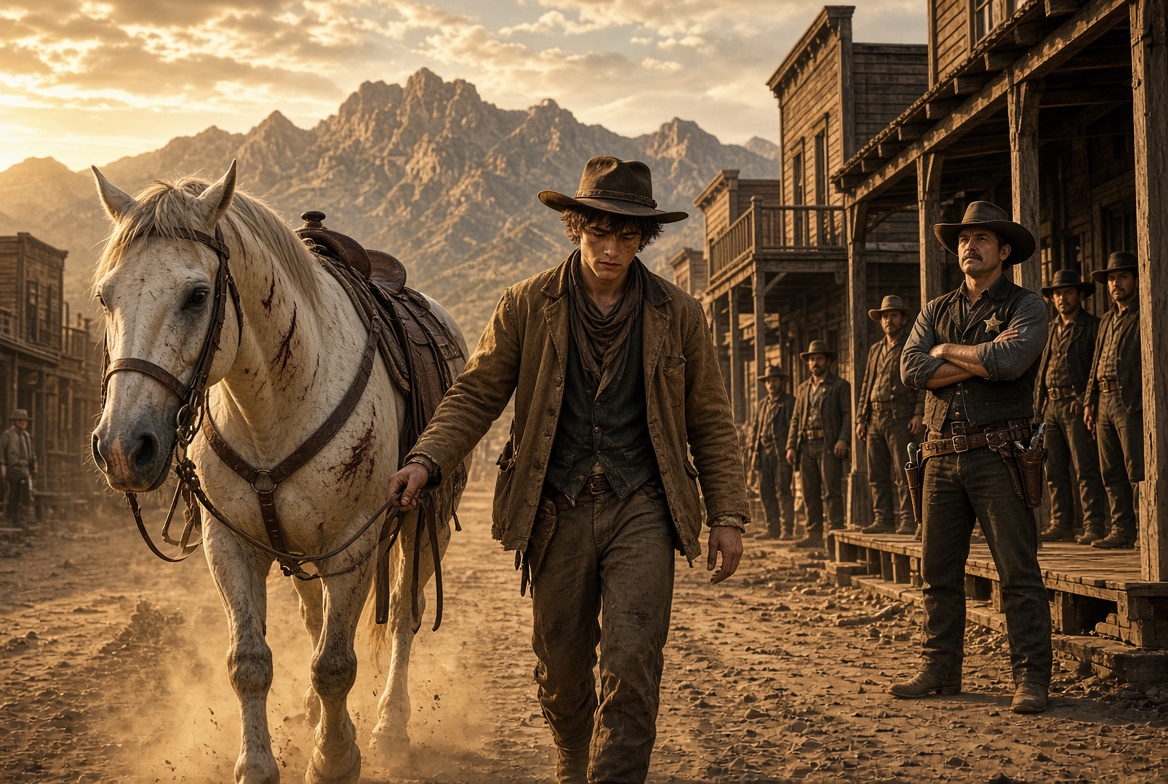
PART 3 — THE MEN WHO CAME LOOKING
Eli heard the horses before he saw them.
Three riders coming down the north road, moving slow, like men who already knew where they were going. He was in the corral with the white horse when the sound reached him. The horse’s head came up. Its ears locked forward.
Eli rested a hand on its neck.
“Easy.”
The riders stopped at the edge of the yard. The man in front swung down. He was older than Eli, with a face that had been broken more than once and a coat that had seen too many winters. The other two stayed mounted, rifles across their saddles.
“You Eli Walker?” the man asked.
Eli didn’t answer right away. He kept one hand on the horse.
“Depends who’s asking.”
The man looked at the white horse for a long moment. Something shifted in his eyes.
“Name’s Harlan. I rode with Red Calhoun for six years. That horse belonged to him. Now it belongs to us.”
“Horse doesn’t belong to anybody,” Eli said. “Not anymore.”
Harlan smiled without humor.
“Red’s ᴅᴇᴀᴅ. The men who rode with him ain’t. We’ve been looking for that animal since the day they buried him. It knows trails the rest of us forgot. And it knows where Red hid what he took from the bank in Cheyenne.”
Eli felt the note in his shirt pocket press against his chest.
“I don’t know anything about a bank.”
“Maybe not,” Harlan said. “But the horse does. And from what I hear, it’s taken a liking to you. So either you help us, or we take the horse and leave you here for the sheriff to find.”
One of the mounted men shifted his rifle.
Eli looked at the white horse. It hadn’t moved. It was watching Harlan the way it watched everything—calm, steady, like it had already decided how this ended.
“I need time,” Eli said.
Harlan studied him.
“You got until sundown. After that, we stop asking.”
They rode out the way they came.
Eli stood in the corral until the dust settled. Then he went inside and found Mr. Hargrove in the tack room.
“Three men just left,” Eli said. “They want the horse.”
Hargrove didn’t look surprised.
“Figured somebody would come eventually. Red Calhoun didn’t die poor.”
“They said he hid money from a bank job.”
“Maybe he did.” Hargrove set down the bridle he was mending. “And maybe that horse is the only thing left that knows where.”
Eli pulled the folded note from his pocket and set it on the workbench.
Hargrove read it. His face didn’t change.
“Your father’s handwriting?”
“Yes.”
The old man was quiet for a moment.
“I knew your father,” he said finally. “Not well. But I knew him. He came through here once, years ago, looking for work. Had a boy with him about your age now. Said he was trying to get clear of some men who didn’t like being told no.”
Eli felt something cold move through him.
“Did he say their names?”
“No. But he left that horse here for three days while he went into town. When he came back, he looked like a man who had already lost.”
Hargrove folded the note and handed it back.
“Whatever you’re carrying, boy, that horse has been carrying it longer. You can run. Or you can find out what it wants you to remember before those men come back.”
Eli looked out the barn door. The white horse was standing in the sun, head turned toward the north ridge again.
“I don’t know if I want to remember,” he said.
Hargrove nodded.
“Most men don’t. That’s usually when the remembering starts anyway.”
Eli walked back to the corral as the light began to fade.
He rested his forehead against the horse’s scarred shoulder and closed his eyes.
This time the dream didn’t wait for sleep.
He saw his father tying the white horse to the porch rail. He saw the same three men riding in. He saw his father look at him—twelve years old, standing in the doorway—and say the words that were written on the note.
Then he saw himself run.
And he saw the white horse break its tie and follow him into the dark, even as the first flames climbed the walls behind them.
Eli opened his eyes.
The sun was almost gone.
Somewhere on the north road, three men were waiting for sundown.
And the horse that had carried his father was still standing beside him, waiting for him to decide whether he was going to run again.
TO BE CONTINUED IN PART 4…