PART 3: THE FAMILY THAT PUT A PRICE ON LOVE
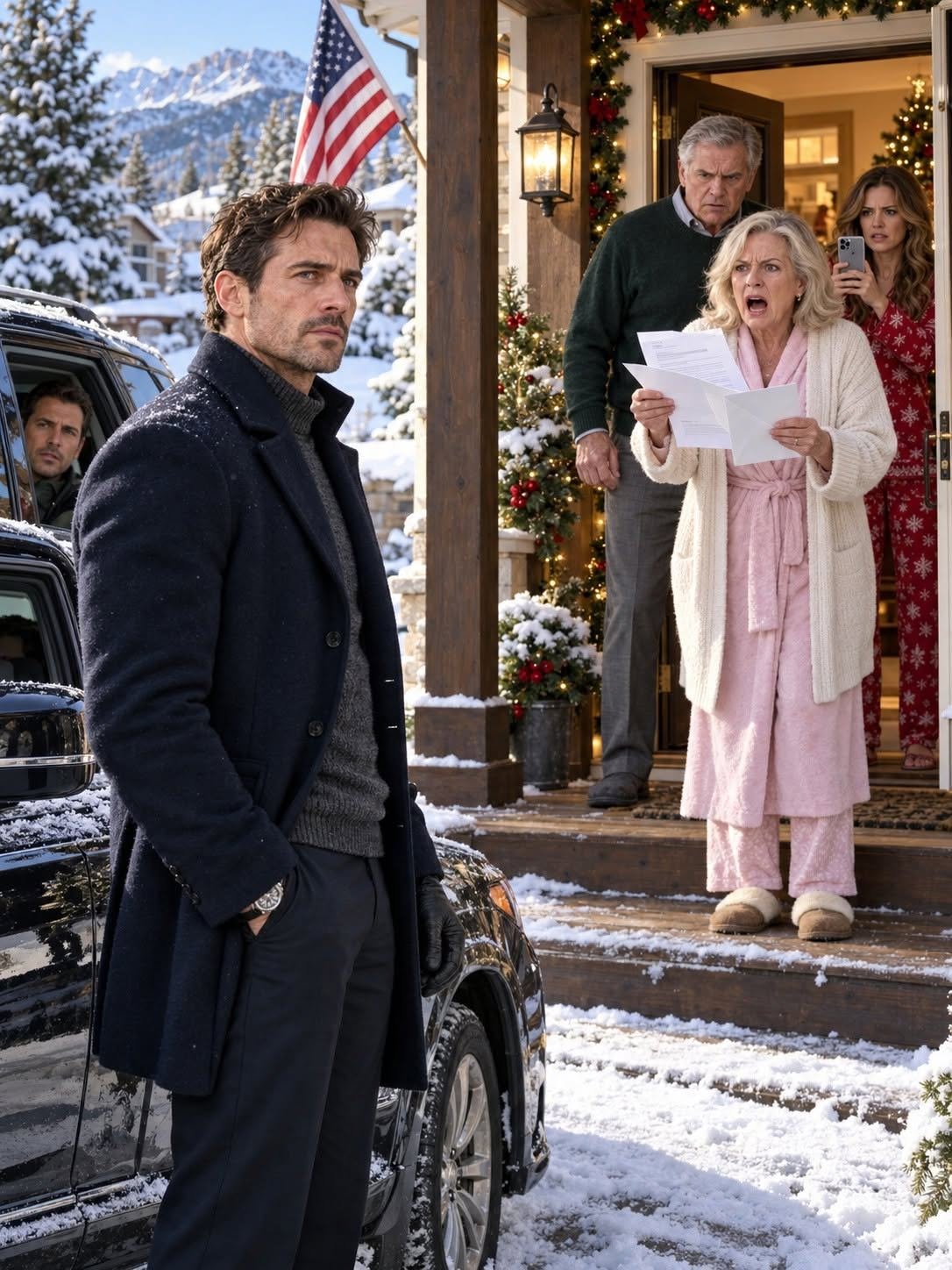
I was sitting in the hospital parking garage, drinking coffee that had gone cold while I finished reading patient notes before my shift.
His name appeared on my screen.
For a moment, I considered letting it ring.
Then I remembered the folder he had brought to my kitchen, the way his voice had cracked when he admitted he had watched Lennon leave that Christmas night, and the first honest apology he had almost managed to offer.
I answered.
“Dad?”
“Orion.” His voice sounded strained. “I need your help.”
I closed my eyes.
“What happened?”
“Your mother and Sienna are fighting. The bank wants more paperwork, and Sienna says you have to fix it.”
I let out a slow breath.
“Fix what, exactly?”
“The house. The bills. Her business. Everything.”
“Dad, we went through the numbers together. I showed you which expenses were household costs and which appeared to be related to Sienna’s business. I gave you the information you needed to speak with the lender.”
“I know.”
“Then what do you need me to do?”
He was silent for several seconds.
Finally, he whispered, “Your mother says she’ll never forgive you if you don’t start paying again.”
I stared at the concrete wall in front of me.
There it was.
Not a question about whether I was okay.
Not a question about Lennon.
A demand wrapped in the language of family.
“Dad, I need you to listen carefully. I love you. But I’m not restarting the payments because Mom is angry. If you need help understanding a statement, I’ll help. If you need to speak with the lender, I’ll help you prepare. But I won’t take responsibility for expenses that aren’t mine.”
“She says you’re choosing Lennon over your parents.”
“No,” I replied. “I’m refusing to make Lennon pay for the choices you made.”
He exhaled shakily.
“I was afraid you’d say that.”
“Why?”
“Because I think you’re right.”
That answer caught me off guard.
Before I could respond, I heard my mother’s voice in the background.
“Richard! Give me the phone!”
My father moved away from her, but not far enough.
“I’m talking to him,” he said.
“You tell him he cannot do this to us!”
Then the phone went quiet.
When my father returned, his voice had changed.
“Orion, your mother wants you to come over this afternoon. She says the family needs to settle everything once and for all.”
I glanced at the time.
“I have a shift.”
“Could you come afterward?”
I thought about refusing.
Then I remembered that I had spent years allowing every disagreement to end with an unresolved accusation, another financial request, and a promise that the next holiday would be different.
Perhaps it was time to end the cycle properly.
“I’ll come at seven,” I said. “But I’m not coming to argue about money. I’m coming to establish boundaries.”
“Understood.”
“And Dad?”
“Yes?”
“Lennon won’t be there unless she decides she wants to be.”
He paused.
“That’s fair.”
For the first time, I believed he might actually mean it.
I ended the call, put my coffee down, and went to work.
I had no idea that by seven that evening, I would discover the real reason my sister had been so determined to keep my daughter away from that Christmas table.
And it had nothing to do with seating arrangements.
1. The Meeting at My Parents’ House
At 7:03 p.m., I pulled into my parents’ driveway.
The house looked exactly as it always had: white siding, green shutters, a porch light that flickered in cold weather, and a small wooden sign beside the door that read Family Is Everything.
I had helped pay for the new roof.
I had paid the emergency plumbing bill when the basement flooded.
I had covered the insurance deductible after a storm damaged the garage.
For seven years, I had quietly helped keep that house running.
Yet the one person who had never been treated as an inconvenience was Sienna.
My sister’s car was parked beside the garage.
When I entered, I found her sitting on the living room sofa, scrolling through her phone. My mother stood near the fireplace, arms folded. My father was at the dining table with the financial documents I had helped him organize.
Nobody greeted me.
Sienna looked up first.
“Finally. We need to talk.”
I removed my coat.
“Then let’s talk.”
She tossed her phone onto the sofa.
“My business account is nearly empty.”
I looked at her.
“I’m sorry to hear that.”
“Don’t act like you don’t know why.”
“I don’t know why. Explain it to me.”
She gave a bitter laugh.
“You stopped covering the house expenses. My deliveries are being disrupted, the utilities are becoming a problem, and now I have to pay for things you’ve been paying for all these years.”
“Those expenses were never part of a business agreement between us.”
“You knew I was using the garage!”
“I knew you were storing supplies there. I didn’t agree to subsidize your business indefinitely.”
She leaned forward.
“You could afford it.”
I stared at her.
“That doesn’t make it my obligation.”
My mother stepped between us.
“Can we please have one civil conversation without you turning everything into a legal argument?”
“I haven’t mentioned the law once.”
“You keep talking about obligations and expenses!”
“Because you keep asking me to pay them.”
Dad cleared his throat.
“Everyone, please sit down.”
I remained standing.
“Before we start, I want one thing understood. I’m willing to review the household budget with you and Mom. I’ll help you prepare questions for the bank. But I’m not promising to resume the payments.”
My mother shook her head.
“Then what is the point of this meeting?”
“To figure out what you can afford without depending on me.”
She stared at me as if I had slapped her.
Sienna stood abruptly.
“You’re enjoying this. You finally have something you can hold over us, and you’re loving every second.”
I felt a tiredness settle over me.
“Sienna, if I wanted to hold something over you, I wouldn’t have spent seven years paying bills without asking you to repay me.”
“Then why keep records?”
“Because I needed to understand where the money was going.”
“You don’t trust anyone!”
“No,” I said quietly. “Not anymore.”
My father looked up from the table.
“That’s enough. We asked you here to discuss the future.”
He opened the folder.
“The bank has given us a list of documents they need. We can review our income, expenses, and options. We may have to reduce spending.”
My mother sat down heavily.
“What about the holidays? What about family gatherings? What are we supposed to tell people?”
I looked at her.
“The truth.”
Her eyes narrowed.
“And what truth would that be?”
“That you and Dad need to adjust your finances because the voluntary help I’ve provided is ending. It isn’t a scandal. It’s a budget.”
Sienna scoffed.
“Easy for you to say. You have a career.”
“Yes,” I replied. “I have a career I worked hard for, a daughter I’m raising, and bills of my own.”
“You always make everything about Lennon!”
I turned toward her.
“She’s my daughter.”
“And I’m your sister!”
“Then stop treating her like an inconvenience.”
The room fell silent.
My mother slowly lowered herself into a chair.
Dad rubbed his forehead.
Sienna looked toward the window, her jaw working.
Finally, she said, “Fine. You want the truth? I didn’t want Lennon at the Christmas dinner because I knew she’d make everything uncomfortable.”
“Why?”
She hesitated.
“Because people ask questions.”
“What questions?”
“About her mother. About why you never bring anyone to family events. About why you spend every holiday working.”
I stared at her.
“Those questions have never bothered Lennon.”
“They bother me!”
There it was.
I took a slow breath.
“Why?”
Sienna looked at our parents.
Neither of them spoke.
Then she said something I had never expected to hear.
“Because Bradley’s family was there, and I didn’t want them asking about Elise.”
My wife’s name hung in the room.
Elise had died three years earlier after a sudden medical emergency. Lennon had been thirteen. I had been a widower overnight, a father trying to keep his daughter afloat while learning how to live inside a house that suddenly seemed too quiet.
My family had attended the funeral.
They had brought food.
They had sent sympathy cards.
And then, as the months pᴀssed, they had gradually returned to their usual routines, expecting me to do the same.
I had never demanded that they grieve as I did.
But I had never expected my sister to turn my wife’s death into something embarrᴀssing.
“Why would Bradley’s family ask about Elise?” I said.
Sienna’s cheeks reddened.
“Because they know people. They know how to read a room. I didn’t want everyone feeling sorry for you.”
I stared at her.
“You didn’t want them feeling sorry for me, so you sent my sixteen-year-old daughter away on Christmas Eve?”
“I didn’t send her away!”
“You knew she was coming. You knew she had brought cookies. You knew Mom had told her there wasn’t a place for her.”
“I wasn’t the one who made the seating chart!”
Dad slowly looked up.
“Actually, Sienna…”
She spun toward him.
“What?”
He hesitated.
Then he reached into the folder and pulled out a folded sheet of paper.
“Your mother asked me to print this a few weeks before Christmas. She said you had given her the final guest list.”
Sienna’s face went white.
Dad placed the paper on the table.
It was a seating chart.
Twenty-eight names.
Twenty-eight places.
And beside the final name, written in my mother’s handwriting, was a note:
Do not add Lennon. Sienna says she will make things awkward.
My father stared at the paper.
“You told me the seating was finalized before you knew Lennon was coming.”
Sienna didn’t answer.
My mother closed her eyes.
I looked at the chart, then at my sister.
“You had time to plan this.”
She started crying.
“It’s not what it looks like.”
I shook my head.
“Then tell us what it is.”
She opened her mouth.
But before she could answer, my father pulled another sheet from the folder.
“There’s something else,” he said.
He looked at me, and his expression was filled with shame.
“When I was reviewing the household bills, I found a series of emails from last summer. They concern your sister’s business and a financial request she made to your mother.”
Sienna lunged toward the table.
“Dad, don’t!”
He moved the papers away.
“Why did you tell your mother that Orion had agreed to guarantee your business loan?”
The room went absolutely still.
I looked at my sister.
“What loan?”
Sienna’s lips parted.
No sound came out.
Dad continued, his voice shaking.
“The email says you needed a family guarantor. It says Orion had agreed to help, but that he wanted the details kept private until the loan was approved.”
I felt something cold move through me.
“I never agreed to guarantee a loan.”
“I know,” Dad whispered.
He turned the page.
“That’s why I started asking questions.”
My sister looked as though she might collapse.
And for the first time that evening, my mother appeared genuinely afraid.
Because the Christmas seating chart had revealed that my daughter was deliberately excluded.
But the emails suggested something much more serious.
Someone had been using my name to obtain money.
And if my father had found those emails by accident, there was no telling how many other documents existed.
2. The Loan Nobody Told Me About
“Give me the papers,” I said.
My father slid the folder across the table.
I read the email twice.
It was dated six months earlier. Sienna had written to our mother explaining that a lender required additional financial reᴀssurance before approving a business loan.
The message included the following sentence:
Orion has agreed to support the application. Please don’t contact him directly because he’s working long hospital shifts, and we don’t want to distract him before the paperwork is complete.
I read it again.
Then I looked at Sienna.
“Did you send this?”
She wiped her cheeks.
“I was going to explain.”
“Did you tell the lender I had agreed to guarantee your loan?”
“I was trying to get the application moving.”
“That isn’t an answer.”
She stared at the floor.
“Yes.”
My mother gasped.
Dad stood up.
“You told us he had agreed!”
“I thought he would!”
I felt as if the room had suddenly become smaller.
“You represented that I had agreed to guarantee a debt without asking me?”
“You’re my brother!”
“That doesn’t give you permission to use my name.”
“I wasn’t trying to hurt you!”
“Then why didn’t you call me?”
She had no answer.
I turned to my father.
“Do we know whether the loan was approved?”
He shook his head.
“Not from these emails. I haven’t seen a signed guarantee. I only found the correspondence because the bank requested updated information about our household expenses, and your mother asked me to search for the original paperwork.”
I nodded.
“We need to establish what was actually submitted. An email doesn’t prove that a lender relied on it or that a guarantee exists. But this needs to be taken seriously.”
Sienna looked up.
“Are you going to report me?”
“I haven’t decided what action is appropriate. First, I need to know exactly what happened.”
She began crying harder.
“Please, Orion. My business was struggling. I had employees. I had orders. I couldn’t afford to let everything collapse.”
I studied her.
For years, I had watched Sienna make decisions based on how impressive they looked from the outside.
She wanted a beautiful storefront, expensive packaging, a growing social media presence, and the kind of clients who invited her to charity galas.
I had never begrudged her ambition.
But ambition did not enтιтle her to another person’s money.
“You could have asked me for help,” I said.
She gave a bitter laugh.
“You would have said no.”
“Perhaps I would have. Perhaps I would have helped you create a realistic budget or find another solution. But you didn’t give me the chance to decide.”
My father lowered his head.
My mother began to cry.
Sienna shook her head.
“You don’t understand what it was like. Everyone expected me to succeed. Bradley’s family expected me to be successful. Mom kept telling people my business was growing. I couldn’t admit I was struggling.”
I looked at her.
“So you decided to pretend I had agreed to take on your debt.”
“I thought I could fix it before you ever found out.”
“That’s what people say when they know they’re doing something wrong.”
She covered her face.
For a long time, nobody spoke.
Then I asked the question that had been troubling me since I entered the house.
“Was this why you didn’t want Lennon at Christmas?”
Sienna lowered her hands.
“What?”
“You said you didn’t want Bradley’s family asking questions about Elise. But now we have emails suggesting you were trying to hide financial problems. Was the dinner really about protecting your image?”
Her eyes darted toward our mother.
That glance told me more than her answer.
“Mom,” I said, “what did you know?”
My mother shook her head.
“I didn’t know about the loan.”
“Did you know Sienna was struggling financially?”
She hesitated.
“Yes.”
“Did you know she had been telling people I was helping her business?”
My mother looked away.
“I thought you were.”
I stared at her.
“Why?”
“Because Sienna said you had offered.”
“And you never asked me?”
“You’ve always helped us!”
I closed my eyes.
There it was again.
The ᴀssumption that because I had helped in the past, my consent could be presumed in the future.
I opened my eyes.
“Helping someone once doesn’t mean they own your future.”
My mother began sobbing.
Dad pulled out a chair and sat down heavily.
“I should have asked you,” he said.
“Yes,” I replied. “You should have.”
He nodded.
“I know.”
For a moment, I felt sorry for him.
Then I remembered Lennon standing on my porch with her cookie tin, trying not to cry because her grandparents had told her there was no room for her.
And I realized that feeling sorry for someone did not require me to protect them from the consequences of their decisions.
I closed the folder.
“Here’s what happens next. I’m going to contact my attorney and request that any document using my name be preserved. I want the lender’s records reviewed so we can determine whether a guarantee was submitted, whether my signature appears anywhere, and whether any money was advanced based on a representation about me.”
Sienna looked terrified.
“And if they find something?”
“Then we’ll respond to what the evidence establishes.”
“Are you going to ruin my life?”
I met her eyes.
“No, Sienna. I’m going to stop you from using mine without permission.”
She looked away.
I stood and reached for my coat.
My father followed me to the door.
“Orion, please. Don’t let this destroy the family.”
I turned toward him.
“Dad, I’m not the one who brought my name into a financial application without my consent.”
He flinched.
“I know.”
“And I’m not the one who deliberately excluded a sixteen-year-old girl from Christmas.”
He looked down.
“I know that too.”
I opened the door.
Then I stopped.
“One more thing. Don’t contact Lennon about any of this. Don’t ask her to forgive anyone. Don’t tell her that the family is falling apart because of me. She is a child, and this is an adult problem.”
My father nodded slowly.
“I understand.”
I walked out.
For the first time in seven years, I left my parents’ house without feeling responsible for what happened after I closed the door.
3. The Email That Exposed Everything
The following morning, my attorney called.
His name was David Mercer, and he had helped me review several financial matters after Elise died. He was methodical, cautious, and allergic to ᴀssumptions.
I explained what my father had found.
David listened without interrupting.
When I finished, he asked me to forward the emails and any related documents.
“I’ll review them,” he said. “But don’t accuse your sister of fraud publicly, and don’t contact the lender pretending to be someone you’re not. We need the actual records before deciding what happened.”
“I understand.”
“Also, don’t ᴀssume the loan was approved just because the application was discussed. We need to determine whether the lender received a formal guarantee and whether it was accepted.”
“Agreed.”
By the end of the day, David had sent a formal request for information through the appropriate channels. He also advised me to review my own credit records and retain copies of any relevant communications.
Two days later, he called again.
“We have a development.”
I sat down at my kitchen table.
“What did you find?”
“The lender’s preliminary response indicates that your name appeared in the supporting materials for Sienna’s application. They have not yet established whether a legally effective guarantee was created. They’re reviewing the original submission and the authorization records.”
“Does the file contain my signature?”
“There’s a document that appears to contain one. Its authenticity has not been established.”
I stared at the wall.
“Someone may have copied my signature?”
“That’s one possibility. Another is that the document was prepared using information supplied by someone else. We need the original file and an appropriate examination before drawing a conclusion.”
“Who submitted it?”
“We’re still establishing that.”
I rubbed my forehead.
“David, I want to be clear. I never authorized Sienna to guarantee a loan in my name. I never signed a personal guarantee for her business.”
“I’ve recorded that position. We’ll put it in writing.”
He paused.
“There is something else. The application included a statement that you had agreed to provide ongoing financial support to your parents and that this support would help cover the household’s expenses.”
I went completely still.
“What?”
“It appears the lender was given information about your voluntary payments to your parents. The application may have presented those payments as evidence of a continuing source of support.”
I thought about the bills I had paid for seven years.
The roof.
The utilities.
The repairs.
The expenses that had quietly accumulated until everyone ᴀssumed they would continue forever.
I had helped my parents because I loved them.
Now those acts of generosity might have been presented as evidence that I would continue supporting someone else’s business.
“Did the lender rely on that statement?”
“We don’t know yet. That’s one of the questions we’re asking.”
I took a slow breath.
“Keep going.”
“There’s another attachment. It contains an email exchange between Sienna and your mother. Your mother appears to have been told that your financial support would continue, even though you had not agreed to it.”
I closed my eyes.
“Was Dad included?”
“Not in the exchange we’ve seen so far.”
I thought about the Christmas seating chart.
The deliberate exclusion.
The way Sienna had talked about important guests.
The way my mother had treated Lennon’s presence as a threat to her evening.
Suddenly, another possibility emerged.
Sienna had not simply wanted my daughter out of the way because she was quiet or because people might ask about Elise.
She had wanted the family’s public image to remain intact.
She wanted Bradley’s family to see a successful businesswoman surrounded by supportive relatives.
She wanted my financial help without the inconvenience of acknowledging that she needed it.
And she wanted the family to keep playing their ᴀssigned roles.
My parents would continue receiving support.
Sienna would continue looking successful.
I would continue paying.
And Lennon would remain invisible whenever she complicated the picture.
“David,” I said, “I want every document preserved, and I want to know whether anyone submitted a statement on my behalf without my authorization.”
“We’ll pursue that.”
I thanked him and ended the call.
Then I sat in silence for a long time.
I had spent years believing that my family’s problem was favoritism.
I thought they simply valued Sienna’s glamorous life more than my quieter one.
But now the records suggested that my role had become something much more specific.
I was the dependable one.
The person who would pay the bill, cover the shortfall, absorb the inconvenience, and never make a scene.
They hadn’t merely expected me to help.
They had begun building plans around the ᴀssumption that I would.
And when I finally stopped, they had treated my refusal as betrayal.
That evening, I told Lennon what I could safely explain without burdening her with every detail.
She listened quietly.
When I finished, she asked, “Does this mean Aunt Sienna was using you?”
“I don’t know the full extent of what happened yet.”
“But she told people you agreed to help when you didn’t.”
“Yes. That’s what the emails suggest.”
Lennon looked down at her hands.
“Why does everyone think you have to fix things?”
I didn’t have an easy answer.
“Because I kept fixing them,” I admitted. “And I didn’t set clear boundaries early enough.”
She looked up.
“Is that your fault?”
I considered the question.
“I am responsible for my decisions. I’m not responsible for someone else’s decision to misrepresent them.”
She nodded slowly.
Then she said something that stayed with me.
“Maybe Grandma thinks that if you keep paying for everything, she never has to decide who she wants at the table.”
I stared at my daughter.
At sixteen, she had understood something I had taken years to recognize.
As long as I kept paying, the family could pretend nothing needed to change.
My money had been protecting their comfort.
And their comfort had been costing my daughter her sense of belonging.
I reached across the table and squeezed her hand.
“That’s a very perceptive observation.”
She gave a small smile.
“I get that from Mom.”
For the first time in days, I laughed.
It was brief, but it was real.
And it reminded me that although my family had tried to make our lives smaller, there was still a future waiting beyond their opinions.
We just had to choose it.
4. The Apology With Conditions
A week later, my mother sent Lennon a message.
It was longer than the first one.
Sweetheart, I miss you. Christmas was a difficult evening, and I regret that you were upset. I hope we can put this behind us. Your grandfather and I love you very much, and family should always forgive each other.
Lennon read it twice.
Then she handed me her phone.
“Do I have to answer?”
“No.”
“Will Grandma get angry if I don’t?”
“Possibly.”
She frowned.
“Then why would I answer?”
I sat beside her.
“You can answer if you want to express something. You can wait until you’re ready. Or you can decide not to respond. You don’t have to manage Grandma’s emotions for her.”
Lennon stared at the message.
“I want her to understand that I didn’t just feel upset. I felt unwanted.”
“Then you can tell her that.”
She opened a new message and began typing.
She deleted the first version.
Then the second.
Finally, she showed me what she had written.
Grandma, I didn’t leave because I was upset about one chair. I left because I realized you had planned the dinner without me and nobody wanted to tell me the truth. I brought the cookies because I wanted to share something Mom taught me. I wasn’t asking you to make the evening about me. I just wanted to be part of the family.
She hesitated.
“Is that okay?”
I read it carefully.
“It’s honest. That’s what matters.”
She sent it.
For the next two hours, there was no reply.
Then my mother responded.
You have misunderstood what happened. Your aunt was under pressure, and we were trying to make the evening work for everyone. You are young, and one day you’ll understand how complicated these things can be.
Lennon stared at the screen.
Then she set the phone down.
“She’s still blaming me.”
I put an arm around her shoulders.
“She hasn’t taken responsibility for what happened.”
“Will she ever?”
“I don’t know.”
Lennon leaned against me.
“I think I need some time.”
“Take all the time you need.”
That evening, my mother called me.
I answered because I wanted to hear what she had to say, not because I owed her immediate access to me.
“Why did you let Lennon send that message?” she demanded.
“I didn’t write it for her.”
“She made me feel terrible!”
I closed my eyes.
“Mom, she was telling you how she felt.”
“She accused me of not wanting her!”
“Then perhaps you should ask yourself why she felt that way.”
My mother began crying.
“I don’t know how to fix this.”
For once, I believed she might be telling the truth.
“You start by acknowledging what happened without explaining it away,” I said. “You tell Lennon you were wrong to exclude her. You apologize without demanding forgiveness. And then you give her space to decide what she wants.”
“But she’s my granddaughter!”
“Yes. Which means you need to treat her feelings with care, not use the relationship as a reason she has to forgive you.”
My mother sniffed.
“Are you saying I might never see her again?”
“I’m saying that the relationship is damaged, and it will take more than one message to repair it.”
She was silent.
Then she asked, “And what about the money?”
I felt my shoulders тιԍнтen.
“What about it?”
“Your father says the lender is still reviewing the paperwork. Sienna is very upset. We need to know whether you’re going to help if things go wrong.”
I stared at the wall.
There it was again.
Even in the middle of an emotional conversation about her granddaughter, my mother had found a way back to the money.
“Mom, I won’t guarantee Sienna’s loan. I won’t pay her business debts. And I won’t resume household support simply because the consequences of the decisions you’ve made are becoming uncomfortable.”
“But what if we lose the house?”
“You need to speak with your lender and review your options. I’ll help you understand the paperwork, but I can’t promise to fund whatever solution you choose.”
“You would let your own parents lose their home?”
“No,” I said quietly. “I’m telling you to take responsibility for your finances before making that conclusion. I’m not agreeing to pay an unlimited amount of money to prevent every possible consequence.”
She began crying harder.
I felt the old reflex rising inside me.
Offer money.
Make the call.
Solve the problem.
Restore the peace.
But then I remembered Lennon’s message.
I just wanted to be part of the family.
And I understood that peace built on one person’s endless sacrifice was not peace at all.
It was a system that benefited everyone except the person doing the sacrificing.
“I love you, Mom,” I said. “But I won’t continue this conversation if you use love to pressure me into paying.”
I ended the call.
Then I put my phone away and sat with Lennon while she finished her homework.
We didn’t discuss my mother again that night.
We talked about school.
About a book Lennon wanted to read.
About whether we could take a short trip during spring break.
For the first time in years, our plans didn’t revolve around someone else’s expectations.
We were building a life that belonged to us.
5. The Truth About the Christmas Guest List
Three weeks later, Bradley Sterling contacted me directly.
His message was polite and brief.
Captain Vance—Orion, I apologize for contacting you unexpectedly. I believe there are some things about the Christmas gathering that you should know. I am not asking you to intervene in Sienna’s business or family matters. I would simply like to clarify what happened from my perspective.
I read it twice.
Then I replied that I was willing to speak by phone.
He called that evening.
“Thank you for taking the time,” he said. “I know this is uncomfortable.”
“It is. What did you want to tell me?”
He paused.
“First, I want you to know that I was not aware Lennon had been excluded until after the dinner. Sienna told me your daughter preferred not to attend family gatherings and that you had agreed to keep the evening adults-only.”
I felt my jaw тιԍнтen.
“That isn’t true.”
“I know that now. When I learned what had happened, I asked my family to review the communications we had received about your circumstances.”
“What communications?”
“Several messages from Sienna over the previous year. She had described herself as the person holding the family together. She said your parents were financially dependent on her, and that you were largely absent because you were struggling with work and personal matters.”
I let out a slow breath.
“She said that?”
“Yes. She also implied that you had offered to help with some of her business expenses but had become unreliable.”
I leaned back in my chair.
For years, I had paid my parents’ bills while Sienna took credit for being the responsible daughter.
Now it seemed she had been telling another version of that story to Bradley’s family.
“Why are you telling me this?”
“Because I don’t want you to think we all accepted her account without question. We did accept some of it, and I regret that. The financial documents raised concerns, and we are taking those concerns seriously. But the Christmas dinner made me realize how little I actually knew about your family.”
I was quiet.
Then I asked, “Did Sienna tell you why she didn’t want Lennon there?”
Bradley hesitated.
“She said the evening would be difficult because your daughter was grieving and might become emotional. She said she wanted to protect the guests from an uncomfortable situation.”
I closed my eyes.
There it was again.
Lennon’s grief had become a problem to manage.
Her sadness had become an inconvenience.
Her presence had been treated as a risk to someone else’s image.
“What happened to your relationship with Sienna?” I asked.
He exhaled.
“We postponed the wedding discussions. I asked her to provide an explanation for the financial documents and to be honest about what she had told my family. She said she was under pressure and made mistakes. But she has not yet given us a complete account.”
“I’m sorry you’re dealing with that.”
“Thank you. But I need to be clear: I am not asking you to fix anything. This is between Sienna and me.”
I appreciated that.
For once, someone was acknowledging that another adult’s choices belonged to them.
Bradley continued.
“There is one thing I want you to know. I saw the message your mother sent about the seating chart. It was included in a forwarded email. Your sister had written to her that Lennon should not be added because she might draw attention away from the business guests.”
I sat very still.
“What exactly did she write?”
Bradley read the relevant sentence.
If Lennon comes, Mom will spend the whole night worrying about her, and the conversation will turn to Elise again. Please don’t let her come.
I felt my throat тιԍнтen.
Not because I hadn’t suspected something like that.
Because seeing it in writing made the cruelty impossible to dismiss.
I thanked Bradley for telling me and ended the call.
Then I sat at the kitchen table long after the house had gone quiet.
I thought about Elise.
How she used to laugh when Lennon spilled flour across the kitchen counter.
How she would tell our daughter that grief was not something to be ashamed of.
How she would have hugged Lennon on the porch that Christmas night and told her that no invitation could determine her worth.
I wished Elise had been there.
Not to fight my family.
Not to expose Sienna.
Just to remind Lennon that she was loved.
When Lennon came downstairs for water, she found me staring at the old family pH๏τograph beside the refrigerator.
“Dad?”
I looked up.
“Hey, sweetheart.”
“Are you okay?”
I smiled faintly.
“I’m thinking about your mom.”
Lennon came over and stood beside me.
“Me too.”
She studied the pH๏τograph.
Then she said, “Mom would have made Grandma let me in.”
I laughed softly, though my eyes were burning.
“Your mom would have opened the door herself, brought you inside, and asked why everyone was standing around arguing instead of eating.”
Lennon smiled.
“Then she’d have made everybody wash dishes.”
“Absolutely.”
For a moment, we stood there together, remembering her.
Then Lennon reached for my hand.
“Dad, I don’t want to hate Aunt Sienna.”
“You don’t have to.”
“But I don’t want to pretend what she did was okay.”
“You don’t have to do that either.”
She nodded.
“Maybe someday I’ll forgive her. But I don’t want to see her right now.”
I squeezed her hand.
“Then you won’t.”
And that was the end of the discussion.
Not because we had solved every problem.
Because, at last, Lennon’s wishes were being treated as important.
6. The Last Financial Request
In early March, David called with an update.
The lender had completed an initial review of the records.
The results did not establish every detail of what had happened, but they confirmed that the application contained information about my supposed financial support that I had never authorized anyone to represent as a binding commitment.
The lender was continuing its review of the relevant documents.
David explained that the next steps would depend on the original records, the lender’s findings, and whether any document purported to carry my authorization.
I thanked him.
Then I asked the question I had been avoiding.
“What happens to Sienna?”
“That depends on what the evidence establishes and on the lender’s decisions. We shouldn’t speculate. Our priority is to protect your position and ensure that no one treats you as responsible for an obligation you never agreed to undertake.”
I understood.
I didn’t need revenge.
I needed the facts established.
And I needed my name kept separate from decisions I had never made.
That afternoon, my father called.
“They’ve asked Sienna for additional documentation,” he said. “She’s furious.”
“I can imagine.”
“She says you caused this by stopping the payments.”
I closed my eyes.
“Dad, the lender is reviewing an application that contained representations about me. That review would not be solved by me sending more money to the household.”
“I know.”
“Do you?”
“Yes.”
He sounded tired.
Then he said, “Your mother wants to know if you’ll come to dinner on Sunday.”
I was silent.
“Just dinner,” he added quickly. “No discussion about money. No discussion about Sienna. She says she wants to apologize to Lennon.”
I looked toward the living room.
Lennon was sitting on the sofa, drawing in a sketchbook.
“Has she said that directly to Lennon?”
“No.”
“Then I don’t want to make any promises on Lennon’s behalf.”
“I understand.”
“Dad, if Mom wants to apologize, she can write to Lennon. She can acknowledge what she did. She doesn’t need a dinner invitation to do that.”
He sighed.
“Your mother says you’re making everything difficult.”
I almost smiled.
“I’m making it clear.”
He was quiet for a moment.
Then he asked, “Would you consider meeting us without Sienna?”
I thought about it.
“Possibly. But not this Sunday. Lennon and I have plans.”
“What plans?”
“We’re going to visit the coast.”
He paused.
“You never used to take trips like that.”
“No,” I said. “I used to spend most of my free time trying to keep everyone else happy.”
I heard him breathe out.
“I’m sorry, Orion.”
This time, he didn’t add an excuse.
He didn’t mention my mother’s feelings.
He didn’t ask me to help with the bills.
He simply apologized.
“Thank you, Dad,” I said.
After the call, Lennon looked up from her sketchbook.
“Are we really going to the coast?”
“Yes.”
“Just us?”
“Just us.”
She smiled.
“Can we get ice cream?”
“Even if it’s cold.”
“And take pictures?”
“As many as you want.”
She returned to her drawing.
Then she said, almost casually, “I think Mom would like that.”
I looked at the pH๏τograph on the refrigerator.
“I think she would too.”
We went that weekend.
We walked along the shore, ate ice cream with numb fingers, and took pictures of the waves. Lennon laughed when the wind blew her hair into her face, and I caught myself smiling without thinking about what my family might say.
It was a small trip.
Nothing luxurious.
Nothing worth bragging about.
But it was ours.
And for the first time in years, I understood that a good life did not have to look impressive to anyone else.
It simply had to feel like home.
7. The Apology That Finally Meant Something
In April, an envelope arrived at our house.
Lennon’s name was written on the front in my mother’s handwriting.
She looked at it for a long time before opening it.
Inside was a letter.
Not a text message.
Not a request to come over.
A handwritten letter.
Lennon read it silently.
Then she read it again.
I waited until she was ready to speak.
Finally, she handed it to me.
The letter read:
Dear Lennon,
I have spent a long time trying to explain why Christmas happened the way it did. I told myself that the house was crowded, that your aunt was under pressure, and that everyone had difficult circumstances.
Those explanations did not change what I did.
I knew you were coming. I knew you had brought cookies. I knew you wanted to spend Christmas with us. I also knew that the seating chart had been made without you.
I should have made room for you. I should have welcomed you when you arrived. Instead, I allowed you to believe that you were an inconvenience in your own family.
You were not.
I was wrong.
I am sorry that I hurt you. I am sorry that I made you feel you had to earn a place at my table. You should never have had to do that.
I understand if you are not ready to see me. I will not ask you to forgive me before you are ready, and I will not ask your father to persuade you.
I love you, Lennon. I hope that one day my actions will give you a reason to believe that I mean it.
Grandma.
When Lennon finished reading, she sat very still.
Then she wiped her eyes.
“Do you think she means it?”
I considered the question.
“I think she has finally acknowledged what she did. That’s a start. Whether she means it in the long term will depend on how she behaves from now on.”
Lennon nodded.
“I’m glad she wrote this.”
“Me too.”
“I’m still not ready to visit.”
“You don’t have to be.”
She folded the letter carefully and placed it in a drawer beside her mother’s old recipe cards.
Then she returned to the kitchen.
“Dad?”
“Yeah?”
“Can we make those cookies again?”
I smiled.
“Of course.”
We baked them that afternoon.
Lennon measured the flour while I mixed the ʙuттer and sugar. We argued about whether the first batch had been too sweet, laughed when one tray came out uneven, and packed the best ones into a tin.
When we finished, Lennon looked at the cookies.
“Do you think we should send Grandma some?”
I didn’t answer immediately.
“You can if you want to,” I said. “But you don’t have to use a gift to prove you’re willing to forgive her.”
She thought about that.
Then she selected six cookies and placed them in a small container.
“I want to send these because I want to,” she said. “Not because I owe her anything.”
I nodded.
“Then that’s exactly what you should do.”
We sent the cookies with a short note.
Grandma, thank you for writing to me. I’m not ready to visit yet, but I appreciate your apology. I hope you enjoy the cookies.
Lennon signed her name.
Nothing more.
No promise of reconciliation.
No declaration that everything was forgiven.
Just a small gesture offered freely.
And that, I realized, was what a real beginning looked like.
Not a dramatic reunion.
Not a perfect speech.
Just two people, one of whom had finally admitted she was wrong, and another who was learning that kindness did not require surrendering her boundaries.
8. The Empty Chair
Months pᴀssed.
My parents adjusted their budget. They spoke with their lender and made changes to their household expenses. I helped them understand the paperwork, but I did not resume the automatic payments.
Sienna’s financial application remained a matter between her, the lender, and the professionals reviewing the documents. I refused to speculate about the outcome or turn the situation into a family spectacle.
What I did know was that my name would no longer be used as a subsтιтute for permission.
My relationship with my parents changed slowly.
My father began calling without immediately asking for money.
My mother learned to send Lennon messages without demanding an answer.
Sienna and I remained distant.
I wasn’t ready to trust her, and she had not yet given me a reason to do so.
But life moved forward.
Lennon finished her school year. She made new friends, joined an art club, and started talking about college programs she might want to explore.
One evening in October, she came into the kitchen holding a piece of paper.
“Dad, can I ask you something?”
“Always.”
“Would you mind if we invited Grandma and Grandpa for Thanksgiving?”
I looked up from the vegetables I was chopping.
“Are you sure?”
She nodded.
“I don’t want to pretend Christmas didn’t happen. But I think I’m ready to see them again, as long as they understand that I can leave if I feel uncomfortable.”
I put the knife down.
“That’s completely fair.”
“And I don’t want Aunt Sienna there.”
“Then we’ll discuss the guest list before anyone receives an invitation.”
She smiled.
“Can we have a seating chart?”
I laughed.
“Yes, we can have a seating chart.”
“And can you make sure there’s a place for everyone?”
I looked at my daughter.
“I can promise you that no one will be excluded from our table without a conversation first.”
She nodded, satisfied.
We sent the invitations.
My father accepted immediately.
My mother asked whether she could bring dessert.
Lennon said yes.
Sienna did not receive an invitation. That decision wasn’t made to punish her. It was made because Lennon wasn’t ready to see her, and this gathering was meant to be a safe first step.
On Thanksgiving morning, my father arrived early to help set the table.
My mother brought a pumpkin pie and a small bouquet of flowers.
For the first half hour, everyone was polite and slightly awkward.
Then my father pulled out a chair.
He placed it beside Lennon’s.
“This one is yours,” he said.
Lennon looked at him.
“Grandpa, I’m already sitting here.”
He smiled sadly.
“I know. I just wanted to make sure you never have to wonder whether there’s a place for you again.”
Her eyes filled with tears.
She reached for his hand.
“Thank you.”
We ate dinner together.
It wasn’t perfect.
My mother became defensive once when someone mentioned Christmas, and my father gently reminded her that we were there to move forward, not rewrite the past.
But nobody demanded forgiveness.
Nobody asked about money.
Nobody told Lennon she was too quiet or too sensitive.
After dinner, we washed dishes together.
My mother dried the plates.
My father packed leftovers.
Lennon stood at the counter arranging cookies into a tin.
At one point, my mother approached her.
“May I help you with those?”
Lennon looked at her.
Then she nodded.
They worked side by side without saying much.
It wasn’t a miracle.
It wasn’t the restoration of everything that had been broken.
But it was a moment in which my daughter could decide whether to let someone closer—and the decision belonged to her.
Later that night, after my parents had gone home, Lennon and I sat in the living room.
She leaned against my shoulder.
“Dad?”
“Yeah?”
“I’m glad we didn’t keep paying for everything.”
I looked at her.
“Why?”
“Because I think if you had, everyone would still be pretending nothing happened.”
I considered that.
“You may be right.”
She looked toward the dining room.
“Do you think Grandma really changed?”
“I think she’s trying to change. We’ll have to see whether she keeps trying.”
Lennon nodded.
Then she smiled.
“But I know one thing.”
“What?”
She rested her head against my shoulder.
“There’s always a chair for me here.”
I wrapped my arm around her.
“Always.”
And for the first time in a long time, the words felt completely true.
EPILOGUE: WHAT FAMILY SHOULD MEAN
A year after the Christmas that changed everything, I found the original seating chart in a folder of old documents.
Twenty-eight names.
Twenty-eight places.
And the handwritten note that had once been used to justify leaving my daughter out.
I stared at it for a moment.
Then I placed it in the shredder.
I didn’t need it anymore.
The records had served their purpose. The financial matters had been addressed through the proper channels. The boundaries had been established. And the most important part of my life no longer depended on whether my family approved of my choices.
Lennon was seventeen now.
She still baked her mother’s cookies every Christmas.
She still kept Elise’s recipe cards in a wooden box beside her desk.
And she had learned something I wished I had understood years earlier.
Love is not measured by how much you are willing to sacrifice.
It is measured, in part, by whether the people around you respect your dignity when you say no.
I had spent seven years paying bills because I believed family meant showing up, even when it was difficult.
I still believed in showing up.
But I no longer believed that love required me to finance disrespect.
My parents were still my parents.
My sister was still my sister.
And I didn’t need to hate them to acknowledge what they had done.
I could love my family and still protect my daughter.
I could help my parents without taking responsibility for every choice they made.
I could leave a door open without standing there forever, begging someone to walk through it.
Most importantly, I could teach Lennon that her place in this world did not depend on whether other people found her convenient.
One evening, as we prepared for another Christmas dinner, she came into the kitchen holding the seating chart she’d drawn herself.
There were six names on it.
Mine.
Hers.
My parents’.
And two friends who had become part of our little family over the past year.
At the bottom, she had written a sentence in neat handwriting:
Everyone at this table is here because they are wanted, not because they are useful.
I read it twice.
Then I looked at my daughter.
“That’s a pretty good rule.”
She grinned.
“Mom would approve.”
I smiled, feeling the familiar ache of missing Elise and the quiet graтιтude of having Lennon beside me.
“Yes,” I said. “She absolutely would.”
We set the table together.
Six plates.
Six chairs.
And not one person who had to earn the right to sit down.
Because the greatest lesson I learned that Christmas wasn’t about money, mortgages, or even the relatives who had hurt us.
It was about the difference between being needed and being loved.
For years, my family had needed my money.
My daughter had needed my protection.
And I had finally learned that the two responsibilities were not the same.
Sometimes, the most loving thing you can do for a family is stop paying the price for everyone else’s refusal to change.