PART 3 — HE HAD CARRIED HER HUSBAND’S LAST WORDS FOR EIGHT MONTHS… BUT THE TRUTH COULD DESTROY THEM BOTH
PART 3 — HE HAD CARRIED HER HUSBAND’S LAST WORDS FOR EIGHT MONTHS… BUT THE TRUTH COULD DESTROY THEM BOTH
Harlon waited until the evening to tell Ada.
All day, he had worked without being asked.
He repaired the barn latch, stacked firewood, and patched the broken leather on his boot with a strip cut from an old saddle.
Ada watched him from the kitchen window.
He was a strange man.
He moved like someone who had spent years surviving alone, yet he handled every small task with surprising care.
When he finished, she placed two bowls of stew on the table.
“Sit down.”
Harlon obeyed.
Ada folded her hands.
“You promised.”
He stared at the bowl.
Then slowly reached inside his coat.
The silver pocket watch rested in his palm.
Ada stopped breathing.
She knew it immediately.
The watch had belonged to Caleb’s father. Caleb had carried it every day since their wedding.
She reached for it, but her fingers trembled too badly to take it.
“Where did you get this?”
Harlon’s voice came out rough.
“Caleb gave it to me.”
Ada closed her hand around the watch.
“Where is he?”
Harlon looked at her.
“He saved my life.”
The words hung between them.
“What happened?”
Harlon took a long breath.
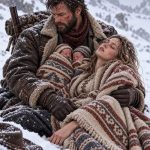
“Last March, we were crossing the northern pᴀss. The snow had been falling for two days, but Caleb wanted to get the medicine through before the road closed.”
Ada lowered her eyes.
“He always worried about other people first.”
“We heard the first crack just before sundown. I looked up. Saw the ridge breaking.”
Harlon paused.
His fingers curled against the table.
“Caleb pushed me into a rock shelter. The snow hit before I could pull him in.”
Ada covered her mouth.
“I dug for him.”
Harlon’s voice broke.
“God knows I dug.”
He looked down at his scarred hands.
“Three days. Maybe four. I don’t remember anymore. I found him beneath the timber. He was alive when I reached him, but his legs were trapped. He knew the rest of the slope was coming down.”
Tears slipped down Ada’s cheeks.
“What did he say?”
Harlon swallowed.
“He told me to get out.”
“He wouldn’t have said that.”
“He did.”
“Caleb would never have asked someone to leave him.”
“He wasn’t asking.”
Harlon looked directly at her.
“He was saving me.”
Ada’s shoulders shook.
“Did he suffer?”
Harlon could have softened the truth.
He could have offered a comforting lie.
But he had carried enough silence.
“He was frightened,” he whispered. “But he wasn’t alone. I stayed beside him until the last moment.”
Ada closed her eyes.
For months, she had imagined Caleb dying alone beneath a mountain.
Now she knew someone had held his hand.
It did not bring him back.
But it gave her something she had not possessed since the day he disappeared.
An ending.
“Why didn’t you come sooner?” she asked.
Harlon looked toward the dark window.
“Because I couldn’t.”
“Couldn’t?”
“Every time I tried to speak, I heard that mountain. I saw his face. I heard him telling me to leave.”
He touched his throat.
“I thought if I stayed quiet long enough, I’d stop remembering.”
Ada studied him.
“Did it work?”
“No.”
“Then all those months, you were punishing yourself for surviving.”
Harlon said nothing.
Ada reached across the table.
“You think Caleb would have wanted that?”
His eyes filled.
“He died because of me.”
“No.”
“He could’ve saved himself if he hadn’t pushed me.”
Ada’s voice sharpened.
“He made a choice. You don’t get to turn his love into a crime just because you survived it.”
Harlon stared at her.
Then, for the first time since August, he began to cry.
Not loudly.
He simply bent his head and covered his face with both hands.
Ada rose, walked around the table, and placed a hand on his shoulder.
She did not tell him to stop.
She did not ask him to be strong.
She stayed.
The next morning, Harlon found Ada standing outside the barn.
She was holding the mortgage notice.
“Barlow says the bank will send someone in three days.”
Harlon studied the paper.
“How much?”
“One hundred and eighty dollars.”
“Do you have any?”
“Forty-two.”
He nodded.
“Then we need another hundred and thirty-eight.”
Ada gave a bitter laugh.
“That’s easy to say when you have no idea where to find it.”
“I know a place.”
She looked at him.
“Where?”
“The northern pᴀss.”
Her face тιԍнтened.
“You’re not going back there.”
“I know where the supply party lost its cargo.”
“What cargo?”
Harlon hesitated.
“Two crates of tools, medicine, and silver coins. Caleb was carrying payment for the settlement. The crates went under the snow when the ridge collapsed.”
Ada stared at him.
“Silver coins?”
“Enough to pay what you owe.”
“Can you reach them?”
“If the snow hasn’t shifted too much.”
“And if it has?”
Harlon looked toward the mountains.
“Then I don’t come back.”
Ada stepped in front of him.
“No.”
He blinked.
“You don’t get to decide that,” she said. “Caleb already gave his life trying to save yours. I’m not going to let you throw yours away because you think that’s what you owe him.”
Harlon looked at her for a long moment.
Then he nodded.
“Then I won’t go alone.”
They left before sunrise.
Ada insisted on accompanying him as far as the lower trail. She knew the old logging paths better than he expected, and she carried enough food for two days.
By noon, they reached the place where the trees thinned.
Harlon stopped.
The mountain rose ahead, white and silent.
He had not seen it since the day Caleb died.
His breathing grew shallow.
Ada noticed.
“Look at me.”
He turned.
“Not the mountain. Me.”
He tried.
“Caleb is gone,” she said gently. “But you’re here.”
Harlon nodded.
Together, they climbed.
At the edge of the old avalanche field, Harlon found a broken wagon wheel protruding from the snow.
He knelt and began digging.
Within an hour, the corner of a wooden crate appeared.
Then another.
The first held rusted tools and medicine bottles. The second was heavier.
Harlon pried it open.
Inside lay several small canvas bags filled with silver coins.
Ada stared.
“That’s enough.”
Harlon nodded.
Then he noticed something beneath the last bag.
A leather document case.
He pulled it free.
The case was damaged, but the papers inside were mostly dry.
One envelope bore Caleb’s handwriting.
For Ada. If I don’t make it home.
Ada’s hand flew to her mouth.
Harlon held it out.
She opened it carefully.
My dearest Ada,
If this letter reaches you, I am trusting someone else to bring it home. I wish I could be there to do it myself.
The land Barlow wants is not rightfully his. The original deed is in this case, along with the payment records proving that I paid the bank in full last autumn.
I discovered that Barlow and the bank clerk had been charging interest on a debt that no longer existed. I intended to confront them when I returned.
Do not surrender the farm. It is yours. It is the place where we planned to grow old.
And if Harlon is the one who brings you this letter, please do not blame him for what happened in the pᴀss. He did everything he could. I would have done the same for him.
Tell him he still owes me a fishing trip.
And tell him to stop living like a ghost.
All my love,
Caleb.
Ada pressed the letter against her heart.
Harlon turned away.
 He could not look at her.
Not yet.
Then Ada spoke.
“He knew.”
Harlon glanced back.
“He knew what?”
“That you’d blame yourself.”
She wiped her cheeks.
“And he knew you needed someone to remind you that you were still alive.”
Three days later, Harlon and Ada walked into the bank together.
Mr. Barlow stood behind the counter, smiling as though he had already won.
“Mrs. Whitlock. I trust you’ve come to sign the surrender papers.”
Ada placed the original deed on his desk.
“No.”
Barlow’s smile disappeared.
She placed the payment records beside it.
“And I have proof that my husband’s debt was paid in full.”
The bank clerk examined the documents.
His face changed.
Barlow reached for the papers.
Harlon caught his wrist.
“Don’t.”
The clerk hurried into the back office.
A few minutes later, the bank manager arrived. He studied the deed, compared the signatures, and examined the payment records.
When he looked up, his expression was grim.
“These documents appear authentic. The foreclosure is suspended pending an investigation.”
Barlow turned red.
“This is a misunderstanding.”
“Then you’ll have no trouble explaining the missing payments,” the manager replied.
The sheriff was called.
By the end of the week, Barlow had been charged with fraud and attempted unlawful seizure of property.
Ada kept her farm.
The silver recovered from the mountain paid for the repairs, the overdue bills, and a new roof for the barn.
But the greatest thing Harlon brought back from the mountain was not money.
It was Caleb’s final letter.
And the permission to stop blaming himself.
Spring came late that year.
One afternoon, Ada found Harlon sitting on the barn steps, watching the first green shoots emerge through the thawing ground.
His beard was shorter.
His coat had been mended.
And his eyes no longer looked quite so empty.
She handed him a cup of coffee.
“Planning to disappear again?”
He looked up.
“Thought about it.”
Ada sat beside him.
“And?”
“Didn’t seem like much of a life.”
She smiled faintly.
“No. It doesn’t.”
Harlon turned the cup between his hands.
“I don’t know how to live among people anymore.”
“Then start with one.”
He looked at her.
“One person?”
“One meal. One conversation. One morning at a time.”
He was quiet for a while.
Then he said, “Have you eaten?”
Ada laughed.
It was the first time he had heard that sound.
“Not yet.”
He stood.
“Then I’ll make supper.”
“You know how to cook?”
“No.”
“That’s unfortunate.”
“I can learn.”
She rose beside him.
“That’s a start.”
At the door, Harlon paused.
“Ada?”
“Yes?”
“Thank you for opening the door.”
She looked at him.
“I almost didn’t.”
“Why did you?”
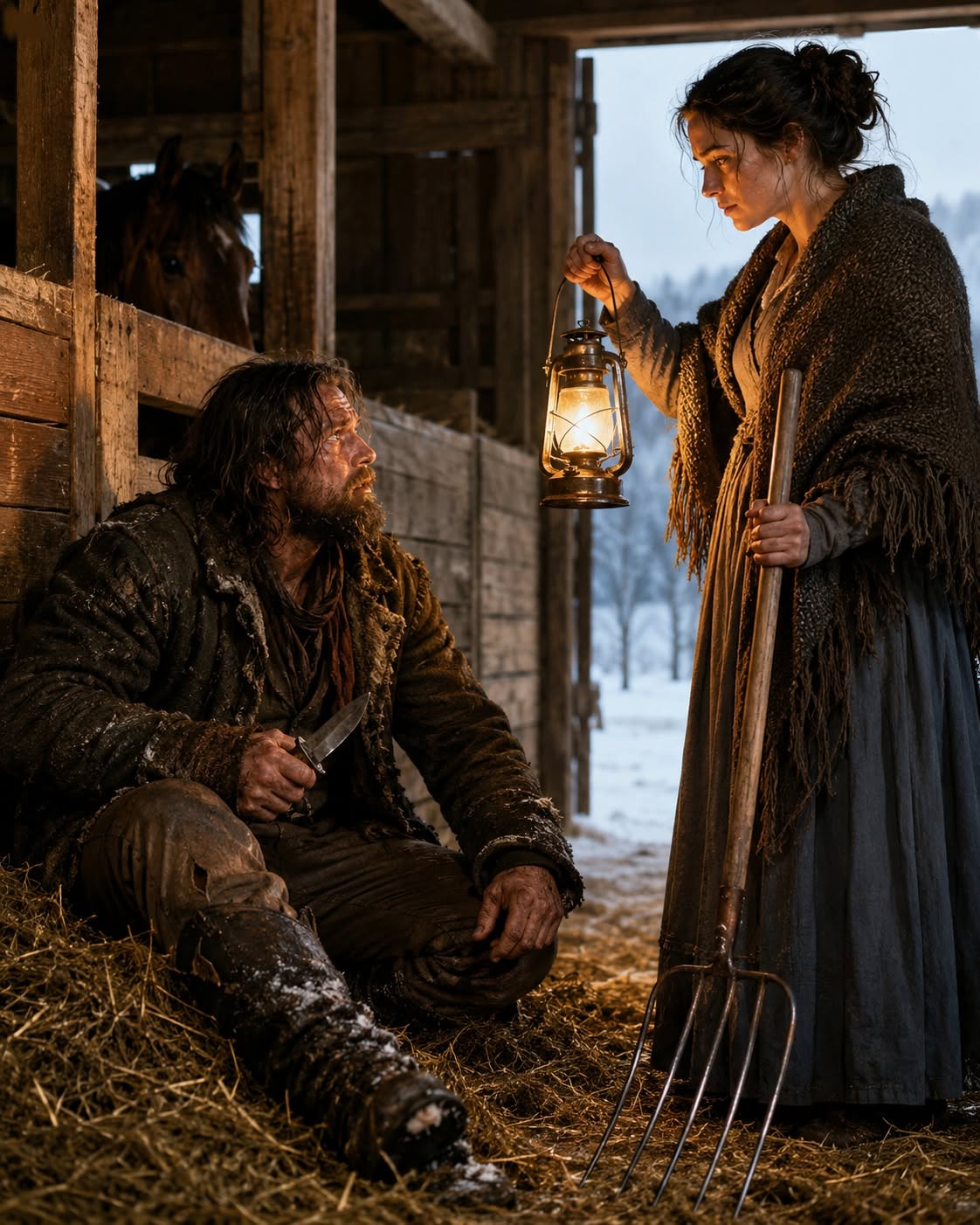
She glanced toward the barn, where the hay still bore the shallow impression of the place where she had found him crouching with his knife.
“Because I saw a hungry man,” she said. “Not a dangerous one.”
Harlon lowered his eyes.
“And you gave me more than food.”
Ada touched his arm.
“Then don’t waste it.”
He nodded.
That evening, for the first time in eight months, Harlon sat at a table without feeling like a trespᴀsser.
There were two bowls of stew.
Two cups of coffee.
And a chair beside the stove that no longer felt like a place he had to earn.
Outside, the last of the winter snow melted from the roof.
Inside, a man who had forgotten how to speak began learning how to live again.
And it all started with one simple question.
“Have you eaten?”