PART 2: THE LEDGER THAT COULD SAVE THE BROKEN SPUR
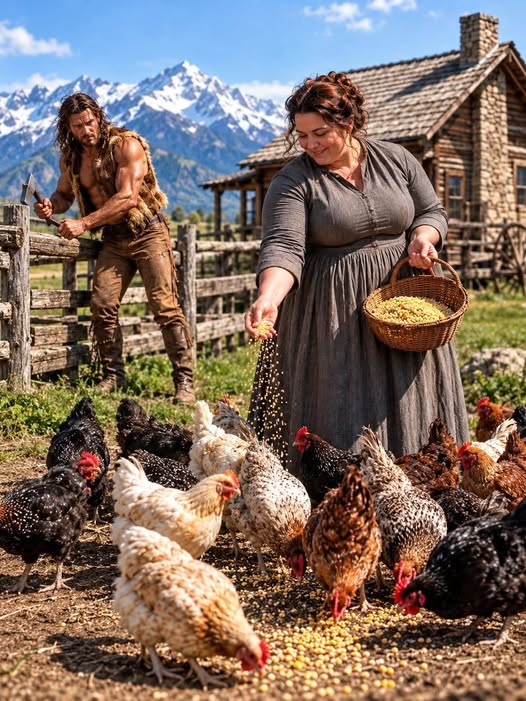
It was a dry, ugly sound that carried across the yard and startled a pair of hens scratching beneath the porch.
“Co-signer?” he repeated, looking Mattie up and down. “You expect me to believe you have any authority over this property, Mrs. Tucker?”
Mattie adjusted the cuffs of her traveling dress.
“No, Mr. Caldwell. I expect you to read.”
The smile slipped slightly from his face.
Behind him, the deputy shifted in his saddle. One of Caldwell’s hired men rested a hand near his holster, while the other watched Griffin with the bored expression of someone who had already decided how the day would end.
Griffin stood on the porch, his hands clenched at his sides.
He knew Caldwell’s methods. The banker never needed to shout. He simply arrived with papers, witnesses, and enough men to make resistance seem foolish.
Griffin had spent three years watching his father’s homestead shrink beneath unpaid debts. First, the north pasture had gone. Then the good breeding stock. Last winter, Caldwell had taken the machinery Griffin needed to repair his own fences, claiming it as collateral.
Now he wanted the land itself.
“Mattie,” Griffin said under his breath, “please go inside.”
She didn’t look at him.
“Not yet.”
“You don’t understand what this man can do.”
At last, she turned her head.
“Griffin, I’ve spent eleven years keeping books for men who believed a woman could not tell the difference between a dollar and a dime. I understand exactly what this man can do.”
She faced Caldwell again.
“Now, unless you have brought a warrant authorizing you to seize this property, I suggest you explain the legal basis for your visit.”
Caldwell’s eyes narrowed.
“Your husband owes me four thousand, eight hundred dollars, plus accrued interest. The note is overdue. I have every right to take possession.”
“Then you won’t mind showing us the original note.”
“I have the necessary documents.”
“Wonderful. Let’s see them.”
He motioned to the deputy.
The deputy dismounted, reached into his saddlebag, and produced a folded packet. Caldwell accepted it with the smug confidence of a man presenting a death certificate.
He handed the first sheet to Mattie.
She studied it carefully.
Then she asked, “Who witnessed this agreement?”
Caldwell’s smile returned.
“Does it matter?”
“It usually matters when a lender claims the borrower agreed to terms he never saw.”
Griffin stepped closer.
“What does that mean?”
Mattie raised one finger, asking him to wait.
She turned to the second page.
“Here we have the original loan amount: two thousand dollars. Here we have a repayment schedule. And here, rather interestingly, we have a separate fee for livestock inspection.”
Caldwell folded his arms.
“Standard business practice.”
“Perhaps. But this fee appears three times, under three different names.”
“Because the inspections were repeated.”
“Were they?”
Mattie opened her ledger.
She had spent the previous week reconstructing every transaction Griffin could remember. She had matched cattle weights against sale receipts, copied dates from old correspondence, and written down the names of every man who had visited the ranch on Caldwell’s behalf.
She turned to a page marked in red.
“On March fourteenth, you charged Mr. Tucker thirty-eight dollars for inspecting twenty head of cattle. The ranch foreman signed a receipt confirming that twenty animals were weighed.”
She turned another page.
“On March sixteenth, you charged another thirty-eight dollars for inspecting the same twenty cattle. According to the sale record, those animals had already been shipped out of the county.”
Caldwell’s expression changed.
Mattie continued.
“On March eighteenth, you charged a third inspection fee. This time, the report lists twenty-two cattle. But the shipping manifest shows that only eighteen animals left the ranch.”
The deputy leaned forward.
“Mr. Caldwell?”
“Clerical errors,” Caldwell snapped. “Nothing more.”
Mattie nodded thoughtfully.
“Then the clerk must have been remarkably careless. The errors always seem to favor you.”
A quiet murmur pᴀssed through the ranch hands gathered near the barn.
Caldwell’s face darkened.
“You’re making accusations you can’t prove.”
“I’m identifying discrepancies in your own records. Whether they amount to fraud is a matter for a court to determine.”
She closed the ledger.
“But we’re not finished.”
Mattie asked the deputy to compare the original loan with the amount Caldwell claimed was due.
The deputy hesitated.
“I’m not an accountant.”
“Neither am I asking you to be one,” Mattie replied. “Just read the numbers.”
She pointed to the figures.
“Two thousand dollars borrowed. Five hundred repaid through cattle sales. Another two hundred and forty dollars credited for a wagon taken as collateral. That leaves twelve hundred and sixty dollars before interest and legitimate fees.”
Caldwell’s jaw тιԍнтened.
Mattie tapped the document in his hand.
“Yet your demand is four thousand, eight hundred dollars. Would you explain how the debt more than doubled?”
“Interest compounds.”
“According to which clause?”
Caldwell said nothing.
Mattie waited.
The deputy took the note and examined it more closely.
“There’s no compounding clause here.”
“It’s in the supplemental agreement.”
“Then let’s see it,” Mattie said.
Caldwell’s gaze flicked toward his men.
For the first time, the confidence in his face looked forced.
“The supplemental agreement isn’t relevant to today’s proceedings.”
“Then it shouldn’t be difficult to produce.”
The deputy looked from Caldwell to the papers.
“Mr. Caldwell, I was told this was a straightforward repossession.”
“It is.”
“Then show me the agreement.”
A long silence followed.
The wind moved across the dry pasture. Somewhere behind the barn, a cow lowed.
Finally, Caldwell snatched the documents back.
“You’re all making a mistake,” he said. “This is my business. I have a signed note, and I intend to enforce it.”
Mattie remained perfectly still.
“Then enforce it through the proper legal process. You will not take this property today.”
Caldwell laughed again, but the sound had lost its certainty.
“And who is going to stop me? You?”
“Yes.”
The answer was so immediate that even Griffin stared at her.
Mattie stepped forward, holding the ledger against her chest.
“I am Martha Tucker, the lawful wife of Griffin Tucker. I have reviewed the records concerning this debt, and I have reason to believe the balance you are demanding is inaccurate. Until those discrepancies are investigated, no one will surrender the deed or permit you to remove property from this ranch.”
Caldwell looked at Griffin.
“Are you going to let your wife speak for you?”
Griffin’s mouth opened.
For most of his life, he had been taught that a man who could not protect his own property was not much of a man at all. He had watched his father die believing that the ranch’s failure was a personal disgrace, and he had inherited that shame along with the land.
But now he looked at Mattie.
She wasn’t pleading.
She wasn’t pretending the debt didn’t exist.
She was demanding that the numbers be honest.
Griffin straightened.
“My wife has said exactly what I would have said if I’d understood the books half as well as she does.”
Caldwell stared at him.
“You’re choosing to humiliate yourself in front of your own hired men?”
“No,” Griffin replied. “I’m choosing to stop being humiliated by you.”
The words surprised him as much as they surprised Caldwell.
For a moment, the banker seemed unable to respond.
Then he turned to the deputy.
“Seize the cattle. We can settle the argument afterward.”
The deputy didn’t move.
“Not without a court order, Mr. Caldwell. Not with these discrepancies.”
Caldwell’s face flushed a deep red.
“You’re refusing my instruction?”
“I’m refusing to participate in something that may not be lawful.”
One of Caldwell’s hired men shifted in his saddle.
Caldwell wheeled toward him.
“Get the horses ready.”
The man hesitated.
“Sir, perhaps we ought to—”
“Now!”
The hired men turned their horses.
Caldwell gathered his papers and climbed into his saddle with stiff, furious movements.
He leaned down toward Mattie.
“You think you’ve won something today. You haven’t. A ledger won’t save a bankrupt ranch, Mrs. Tucker.”
Mattie met his eyes.
“No. But the truth might.”
He rode away without another word.
The deputy followed after a brief, apologetic nod to Griffin.
When the last hoofbeat faded, the ranch fell silent.
Griffin stood on the porch, staring at the empty trail.
Then he turned to Mattie.
“What have you done?”
She closed the ledger.
“Bought us time.”
He let out a breath that sounded almost like a laugh.
“Time? Mattie, you just stood up to the most powerful banker in the county.”
“And he rode away without your cattle.”
Griffin looked toward the pasture.
For the first time in years, the Broken Spur still belonged to him at sunset.
He rubbed his face.
“I don’t know whether to thank you or be frightened of you.”
Mattie raised an eyebrow.
“You can start by helping me move those rotten feed sacks out of the chicken shed.”
Griffin blinked.
“What?”
“The hens are still eating spoiled grain. We need to clear the shed, dry what’s salvageable, and find a better feed supply. Unless you’d prefer to go back to losing money one egg at a time.”
For a moment, he simply stared at her.
Then, unexpectedly, he laughed.
It was a rough, rusty sound, as though he hadn’t used it in years.
“All right, Mrs. Tucker. Show me where to begin.”
The following morning, Mattie began the work of saving the Broken Spur.
She started with the chickens.
Griffin had ᴀssumed she would need help carrying feed, but Mattie organized the shed with an efficiency that left him scrambling to keep up. She separated the moldy grain from the dry sacks, cleaned the water troughs, and moved the feed onto raised wooden platforms to keep moisture from seeping in through the floor.
She also inspected the hens.
“Half of them are underweight,” she announced.
“That’s what happens in a drought.”
“Some of it is the drought. Some of it is poor feeding. And some of it is that you’re keeping too many birds for the grain you have.”
Griffin frowned.
“We need eggs.”
“We need profitable eggs. There’s a difference.”
She examined the flock, counted the healthy layers, and made a list of which birds were producing consistently.
Then she told Griffin to sell the oldest nonproductive hens to a local butcher and use the money to buy better feed.
He objected.
“They’re good birds.”
“They’re good birds that aren’t earning their keep.”
“They’ve been here for years.”
“So has that broken wagon wheel. Shall we keep it too?”
Griffin stared at her.
Mattie returned to her ledger.
By noon, he’d stopped arguing.
Within a week, the chickens were eating properly, their water was clean, and the egg count began to rise.
Mattie sold the surplus to the boardinghouse in town, arranging a standing weekly order instead of relying on whatever price a pᴀssing merchant felt like offering.
She insisted on writing receipts.
She insisted on weighing the eggs.
And she insisted that Griffin stop giving away produce to neighbors who promised to pay later but never did.
“You can’t run a business on good intentions,” she told him one evening.
Griffin sat across from her at the kitchen table.
“That’s what my father used to say.”
“Was he good with numbers?”
He stared at the ledger.
“No. He was good with cattle. He trusted people to do what they said they would.”
Mattie softened.
“Trust isn’t foolish, Griffin. But trust without records gives dishonest people room to take advantage.”
He considered that.
Then he opened his own account book.
“Show me how you do it.”
Mattie looked up, surprised.
“You want to learn?”
“I’d rather learn than lose another acre.”
That was the beginning.
Every evening, after the animals had been fed and the stove had been banked for the night, they sat together at the kitchen table. Mattie taught Griffin how to track costs, compare prices, calculate margins, and distinguish a profitable sale from a desperate one.
He was slower than she was, but he was not stupid.
He understood cattle better than anyone she’d met. He knew which calves would thrive through winter, which pasture could support another month of grazing, and how to recognize illness before it spread through a herd.
Mattie understood something different.
She could see the ranch as a system rather than a collection of emergencies.
The cattle needed feed.
The feed required money.
The money came from sales.
The sales only mattered if the prices covered the costs.
And every decision had to be made before the crisis arrived, not after.
Together, they began to see the Broken Spur differently.
It wasn’t simply a failing ranch.
It was a business that had never been properly measured.
Three weeks later, Mattie made a discovery that changed everything.
She was examining the ranch’s old supply receipts when she noticed a pattern.
Every time Griffin purchased feed from Caldwell’s preferred merchant, the price was higher than the rate quoted by other suppliers. Every time Griffin sold cattle through Caldwell’s brokerage, the recorded weight was lower than the weight listed in Griffin’s own notes.
At first, the differences seemed small.
A few pounds here.
A few dollars there.
But when Mattie added them together, the losses became impossible to ignore.
She spent an entire evening checking the figures.
Griffin watched her from across the table.
“You’ve been at that ledger for four hours.”
“Five.”
“Are you certain there’s something there?”
Mattie tapped the page.
“I’m certain the numbers don’t agree.”
She turned the book toward him.
“Look at the sale from last October. You delivered forty-two steers. Your notes say they weighed a combined twenty-four thousand pounds.”
“That sounds right.”
“Caldwell’s receipt lists twenty-two thousand, seven hundred and fifty.”
Griffin leaned forward.
“That’s more than a thousand pounds missing.”
“Exactly.”
“He said the cattle lost weight during transport.”
“Then why do the weights from his own scale records show a difference before transport even began?”
Griffin stared at the figures.
Mattie turned another page.
“The same pattern appears in three other shipments. And the interest charges are calculated on the inflated balance created by those missing credits.”
Griffin went pale.
“How much has he taken?”
“I can’t say yet. We need the original shipping manifests, scale records, and bank statements. But if these discrepancies are confirmed, the amount could be substantial.”
He stood and walked to the window.
For years, he had believed his own incompetence had destroyed the ranch. Every poor season, every missed payment, every lost calf had become evidence that he was unfit to inherit his father’s land.
Now he wondered how much of his failure had been engineered.
Mattie rose and joined him.
“Griffin.”
He didn’t turn.
“I sold my father’s best horses to pay that man. I sold the hay equipment. I let good cattle go because I thought I’d miscalculated the cost of keeping them.”
His voice broke.
“And all this time, he was taking more than he was owed.”
Mattie placed a hand on his arm.
“We don’t know the full truth yet.”
“But we know enough.”
“Yes,” she said. “We know enough to investigate.”
He turned toward her.
“Why are you doing all this?”
She looked genuinely confused.
“Because it’s our ranch.”
“You could have arrived here, done the chores, cooked the meals, and let me go under. That’s what I expected when I sent for a wife.”
“I know.”
“Then why didn’t you?”
Mattie was silent for a moment.
Then she answered honestly.
“Because I didn’t travel all this way to spend my life watching a man drown in a river he could have crossed.”
Griffin stared at her.
“Is that all I am to you? A drowning man?”
“No.”
Her voice softened.
“I think you’re a decent man who has mistaken suffering for failure. And I think you’ve been so ashamed of what happened that you stopped looking for ways to change it.”
He lowered his eyes.
“I don’t know how to thank you.”
“You don’t have to thank me tonight. Tomorrow, we go to Laramie and request the records.”
Caldwell did not welcome them.
When Griffin and Mattie entered the bank the following morning, the clerks fell silent. Caldwell sat behind his desk, dressed in a dark suit, a gold watch chain crossing his vest.
He looked up as they approached.
“Back again, Mrs. Tucker?”
“Mr. Caldwell.”
“What can I do for you?”
“We would like copies of the original loan documents, all payment credits, and the account statements ᴀssociated with the Broken Spur estate.”
Caldwell’s smile was thin.
“Those records are confidential.”
“I’m the lawful co-owner of the property and have authority to review the estate’s financial records,” Mattie replied. “I can provide the relevant documentation.”
“Your husband signed the original note.”
“And I signed the subsequent agreement concerning the estate’s obligations. If you believe I lack authority, please provide that determination in writing so our attorney can review it.”
Caldwell’s expression hardened.
“You seem remarkably fond of lawyers.”
“Only when people refuse to answer reasonable questions.”
Griffin stood beside her, saying nothing.
He had spent years entering this bank with his hat in his hands, apologizing for debts he barely understood. This time, he kept his shoulders straight.
Caldwell looked between them.
At last, he pressed a bell on his desk.
“Mr. Jenkins will prepare copies of the records available to you.”
Mattie nodded.
“Thank you.”
“And Mrs. Tucker?”
She turned.
“You should understand that business disputes can become expensive. I would hate to see you spend the little money you have on a lawsuit you cannot win.”
Mattie met his gaze.
“Then you should have no objection to an independent accountant examining your figures.”
For the first time, Caldwell had no immediate answer.
They left the bank with a promise that the records would be ready within three days.
Outside, Griffin stopped on the boardwalk.
“You never blink.”
“Of course I blink.”
“Not when you’re facing Caldwell.”
Mattie adjusted her hat.
“That’s because he wants me frightened. If I let him decide how I feel, he’s already won something.”
Griffin looked at her with an expression she couldn’t quite read.
Then he offered his arm.
“Would you care to have lunch with me, Mrs. Tucker?”
She smiled.
“Is it a business meeting?”
“Absolutely not.”
“Then I’ll consider it.”
He laughed, and they walked down the street together.
For the first time since their marriage began, Griffin wasn’t thinking about the woman he’d ordered from an advertisement.
He was thinking about the woman beside him.
And he was beginning to realize that the best thing he had ever brought to the Broken Spur wasn’t another pair of hands to feed the chickens.
It was Mattie Cole Tucker herself.
The records arrived four days later.
Mattie spent the entire afternoon comparing them against her ledger. By sunset, she had identified a series of discrepancies large enough to justify a formal complaint.
But one document troubled her more than the others.
It was a supplemental agreement dated six months earlier, bearing what appeared to be Griffin’s signature.
The document granted Caldwell the right to seize the entire property if Griffin missed a payment by more than thirty days.
Griffin stared at the page.
“I’ve never seen this.”
Mattie looked up.
“Are you certain?”
“Absolutely. I signed the original note. I signed the cattle-sale agreement. But I’ve never seen this paper.”
The signature looked convincing.
Almost too convincing.
Mattie placed it beside an older document Griffin had signed in her presence.
She compared the shape of the letters, the spacing, and the pressure of the pen.
Then she reached for her magnifying glᴀss.
“Griffin,” she said quietly, “I think someone copied your signature.”
He stared at her.
“What?”
“Look at the final stroke of the T in Tucker. On the original, you lift your pen here. On this document, the line continues. And the ink appears different under magnification.”
Griffin sank into a chair.
“If that paper is forged, what does it mean?”
“It means we need a handwriting examiner and a lawyer. It does not prove who created it, or why. But it gives us another reason to challenge Caldwell’s claim.”
He looked at her ledger, then at the woman who had once seemed so utterly out of place on the platform in Laramie.
“Mattie, if we win this, we’ll owe you everything.”
She closed the book.
“No, Griffin. If we win this, we’ll owe the truth a debt. And we’ll pay it by making sure this ranch never becomes vulnerable to the same tricks again.”
He reached across the table and took her hand.
It was the first time he’d touched her without a practical reason.
Mattie looked at their joined hands.
Then she looked at him.
Neither spoke.
Outside, the wind moved through the dry grᴀss, carrying the first hint of autumn.
The Broken Spur was still in debt. The cattle still needed feed, the fences still needed repair, and the future remained uncertain.
But they had something they hadn’t possessed before.
A plan.
A partner.
And a reason to believe the ranch might survive.
Then, just as Mattie began gathering the papers, a rider came galloping up the trail.
He reined in hard outside the house and shouted Griffin’s name.
“Mr. Tucker! You need to come to town!”
Griffin rushed to the door.
“What happened?”
The rider’s face was pale.
“Caldwell’s been arrested.”
Mattie froze.
“Arrested for what?”
The man swallowed.
“Forgery and fraudulent lending. The county sheriff found another set of books in his office.”
Griffin stared at him.
“Another set?”
The rider nodded.
“And your ranch isn’t the only property listed in them.”
Mattie slowly opened her ledger again.
“How many others?”
The rider looked toward the road, as though he feared someone might be listening.
“Eleven. Maybe more.”
For a moment, nobody moved.
Then Mattie reached for her coat.
“Griffin, saddle the horses.”
He looked at her.
“Why?”
“Because if Caldwell has been doing this to eleven families, then this is bigger than our ranch.”
She slipped the ledger into her satchel.
“And if we’re going to save the Broken Spur, we may have to help save the entire valley.”
Griffin watched her step onto the porch, her broad shoulders squared against the wind, her eyes bright with determination.
He had once believed he’d ordered a wife to tend his chickens.
Now he understood that the woman who had arrived in Laramie carrying a velvet ledger was about to change the history of every ranch in the county.
And she was only getting started.