How an Appellate Ruling Turned a Life Sentence Into 25 Years to Life and Then Into a Prison De@th

In October 2019 a Bronx jury convicted Jonaiki Martínez-Estrella of first-degree murder, second-degree murder, conspiracy, and gang ᴀssault for the killing of 15-year-old Lesandro “Junior” Guzmán-Feliz. The first-degree count rested in part on the prosecution’s argument that the attack involved an element of torture. The judge imposed life without the possibility of parole. Four years later the Appellate Division vacated that top count. The panel wrote that the evidence established an extremely heinous second-degree murder but did not satisfy the very specific statutory requirements for first-degree murder. The remaining convictions stayed in place. The case returned to Bronx Supreme Court for resentencing. On May 30, 2025, the court imposed 25 years to life, the maximum available on the second-degree murder charge. Bronx District Attorney Darcel Clark noted that thirteen other defendants continued to serve their sentences for roles in the same attack. Martínez-Estrella addressed the court that day and said he was sorry, that his intention had not been to cause death, and that drugs, alcohol, and allegiance to the Trinitarios had shaped his actions.
The legal reduction meant he would become eligible for parole consideration after serving the 25-year minimum rather than remaining imprisoned for the rest of his life without review. He was transferred to Coxsackie Correctional Facility to begin serving the new term. On June 27, 2025, less than a month after the resentencing, staff found him unresponsive in his cell at approximately 1:15 p.m. Resuscitation efforts that included CPR, a defibrillator, and Narcan were unsuccessful. He was pronounced ᴅᴇᴀᴅ at a local hospital. The cause of death has not been released and is under investigation. The sequence from the 2023 appellate decision through the May 2025 resentencing to the June death compressed what had been an open-ended life sentence into a brief final period of incarceration under the reduced term. Observers who followed the appeals noted that the appellate ruling focused narrowly on the statutory elements of first-degree murder and did not disturb the factual findings about the brutality of the sidewalk attack.
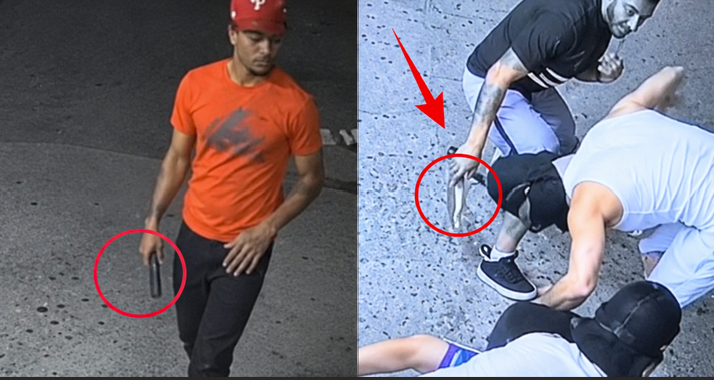
The original trial evidence included multiple surveillance videos that showed the group dragging Junior from the bodega and the moment Martínez-Estrella delivered the neck wound. Those recordings had already been played for the jury and for the public. The appellate court accepted that the killing was extremely heinous yet concluded that the particular legal definition required for first-degree murder had not been met. After the resentencing, the Department of Corrections listed the controlling sentence as 25 years to life. The subsequent death rendered the parole-eligibility date moot. State investigators examining the in-custody death are required to determine whether any violation of procedure or medical issue contributed, independent of the underlying criminal case. The thirteen other convicted participants remain subject to their own sentences, which were not affected by the appellate ruling that applied only to Martínez-Estrella’s first-degree count.
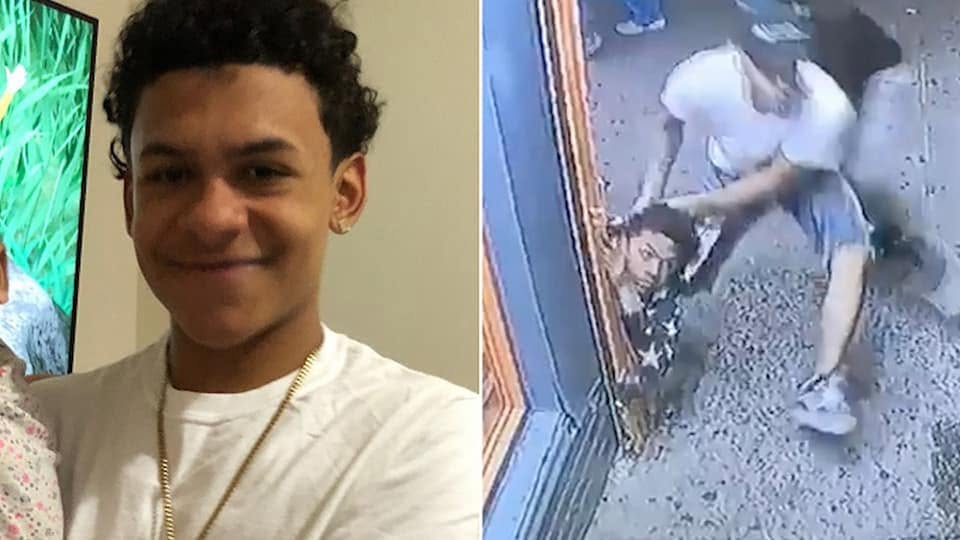
For the family of Junior Guzmán-Feliz the successive legal developments never altered the central loss. Leandra Feliz attended the resentencing and later responded to news of the death by stating that the outcome did not restore her son. The court record now contains both the original life-without-parole judgment and the later 25-years-to-life judgment, followed by the notation that the defendant died in custody on June 27, 2025. The investigations into the precise cause continue. Until those reports are complete, the public record shows a defendant whose maximum sentence was reduced by appellate action and who then died inside the facility where he had been sent to serve the revised term, while the facts of the 2018 attack and the convictions of the remaining participants stay unchanged.