Henry Turner: The Little Boy Born Without Arms Who Refused to Let His Condition Define Him
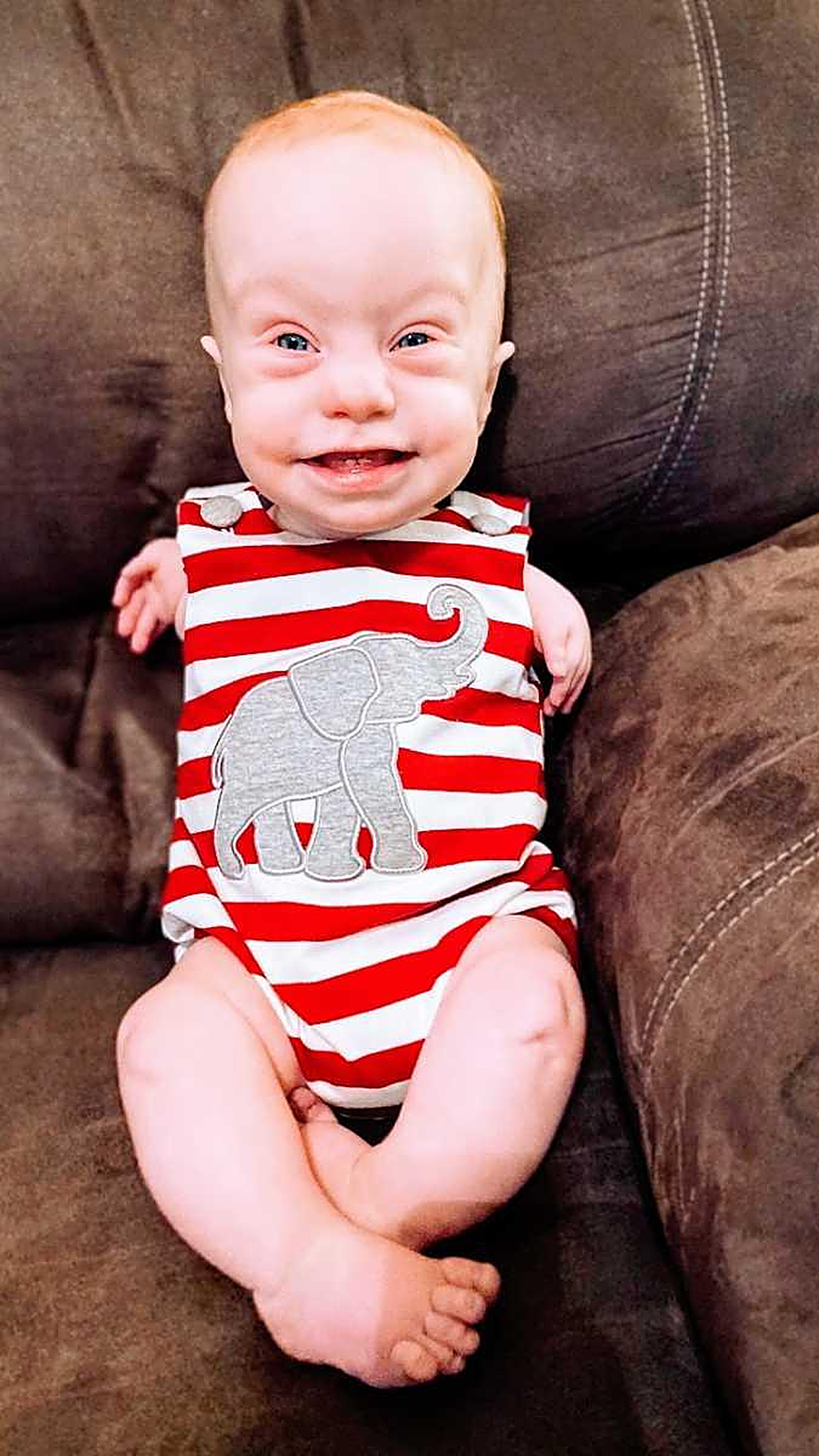
Henry Turner was born in Alabama, United States, with a rare genetic condition known as TAR syndrome, or Thrombocytopenia-Absent Radius Syndrome. This uncommon disorder affects the development of the forearm bones, particularly the radius, and is also ᴀssociated with low platelet levels in the blood.
When Henry first entered the world, his parents were confronted with an unexpected discovery. Their newborn son had been born without arms, a physical difference that immediately raised questions about his health, development, and future.
Like many parents facing an unfamiliar congenital condition, Henry’s family experienced a difficult period of uncertainty. They needed time to understand the diagnosis, learn about the medical complications ᴀssociated with TAR syndrome, and prepare themselves for the challenges of raising a child with different physical needs.
The condition required ongoing medical attention. Henry experienced hospital visits, medical procedures, and multiple surgeries as his family worked closely with healthcare professionals to support his development. The additional concern of low platelet counts also meant that his medical care required particular attention because of the potential risk of bleeding.
However, as Henry grew, his parents began to see more than the medical challenges. They saw a curious, playful little boy who wanted to experience everything around him.
Although he did not have arms, Henry gradually began developing his own ways of interacting with the world. He learned to use his feet to perform activities that other children might naturally do with their hands.
One of his favorite things was playing with toy trucks. He enjoyed moving them around, pushing them with his feet, and creating his own little games. His toys became more than just entertainment; they were also part of the way he explored his abilities and learned to control his movements.
Henry also worked on everyday activities such as drinking from a bottle and learning to feed himself. These tasks required patience and experimentation. He had to discover which positions worked best, how to balance objects, and how to use his feet effectively.
What might seem like a small accomplishment to someone else could represent an important milestone in Henry’s development. Each new skill gave him another opportunity to become more independent and confident.
Despite his medical difficulties and repeated hospital visits, Henry remained an active and cheerful child. He loved exploring, playing, and discovering new things. His personality was not defined by his diagnosis, but by the same curiosity and excitement that make childhood special.
His parents played an important role in encouraging this atтιтude. They wanted Henry to grow up knowing that he was capable of learning, experiencing new things, and developing his own abilities. Rather than allowing his physical differences to become the focus of his childhood, they encouraged him to find solutions and approach challenges in ways that suited him.
Of course, his journey was not without difficulties. There would still be medical appointments, developmental challenges, and moments when certain activities required extra effort. But his family remained committed to supporting him and celebrating every step forward.
Henry’s story offers a meaningful reminder that every child develops differently. Physical differences may change the way a child approaches everyday activities, but they do not take away that child’s curiosity, personality, or desire to participate in the world.
His parents hope that Henry will grow up with confidence, independence, and the freedom to pursue his dreams without feeling limited by his appearance.
For this little boy, growing up means discovering new possibilities every day and learning that there is more than one way to accomplish something.