From Land to Deep Sea: Dinosaur Bones in Marine Sediments Result from Repeated Local Processes — Not a Single Global Event.lh
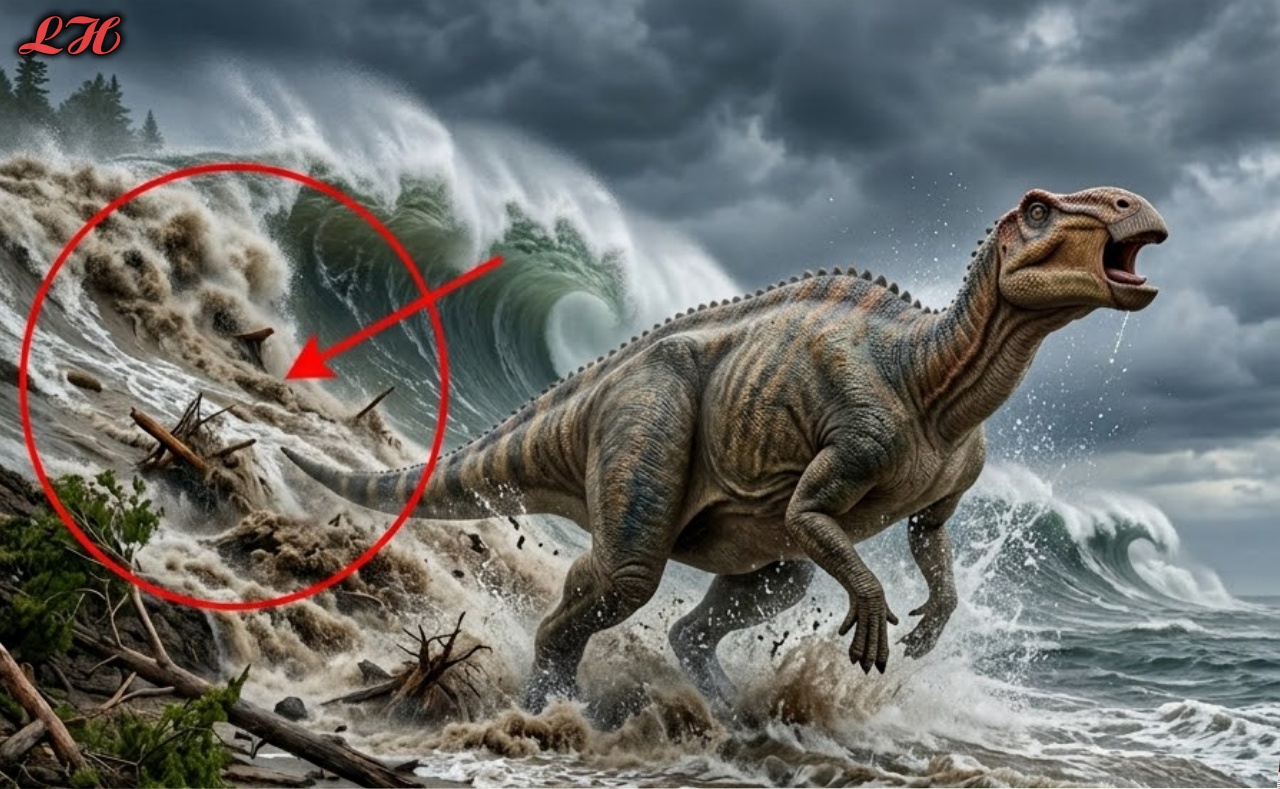
From Land to Deep Sea: Dinosaur Bones in Marine Sediments Result from Repeated Local Processes — Not a Single Global Event
The idea that a single global catastrophe (such as a worldwide flood) buried dinosaurs underwater is not supported by any scientific evidence. Dinosaur bones found in marine rocks reached the seafloor through ordinary, repeated geological processes that operated over 165 million years — not one instantaneous worldwide event.
The actual mechanism is well documented:
- Dinosaurs lived on land or near rivers and coastal plains.
- After death, many carcᴀsses floated out to sea via the “bloat and float” process (gases from decomposition kept bodies buoyant for days or weeks).
- Currents and storms carried them offshore, where they sank into marine mud alongside fish, ammonites, and sharks.
- These events happened repeatedly across different regions and time periods during the Mesozoic.
This is why we find isolated dinosaur bones mixed with marine fossils in coastal and shallow-marine deposits worldwide — from the North Sea (Plateosaurus at 2,256 m depth) to Pacific cores, the Gulf of Mexico, and Mediterranean shelf rocks. All such specimens are fragmentary and show signs of transport, exactly as expected from normal river and storm activity.
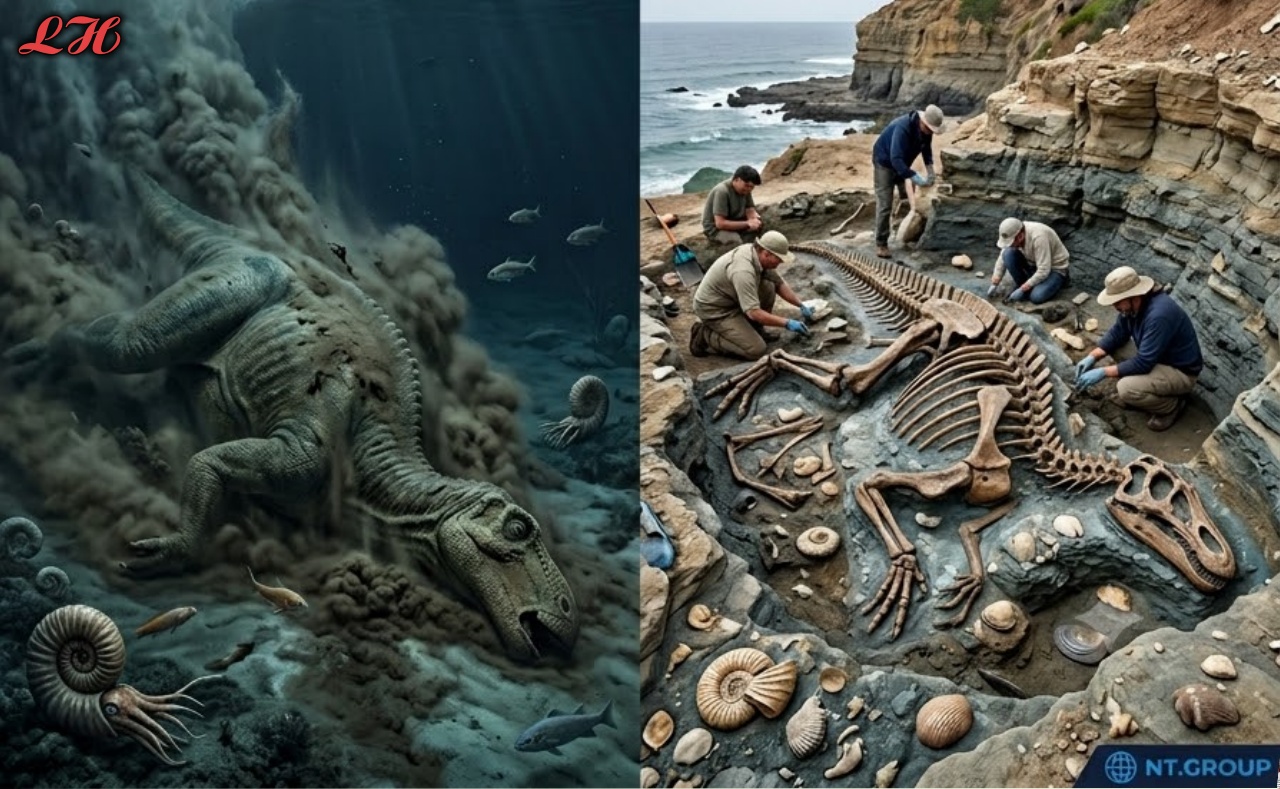
A single global flood would have produced one chaotic, unsorted deposit layer across the entire planet. Instead, the geological record shows hundreds of distinct formations deposited gradually over millions of years, with clear evidence of varying environments, repeated sea-level changes, and normal sedimentary processes (varves, paleosols, volcanic ash layers, and radiometric dating all confirm this).
These marine dinosaur bones do not indicate aquatic dinosaurs or a global deluge. They simply demonstrate how dynamic Mesozoic coastlines were, with rivers and storms routinely moving terrestrial remains into the sea. Over tens to hundreds of millions of years, sedimentation and plate tectonics buried some of them kilometres deep.
The scientific consensus remains unchanged: non-avian dinosaurs were strictly land animals. Their occasional appearance in marine sediments is a predictable result of normal biology and geology — not evidence of a single worldwide catastrophe.