A Year After Iryna Zarutska’s Death, Her Family Sues Charlotte Over Transit Security
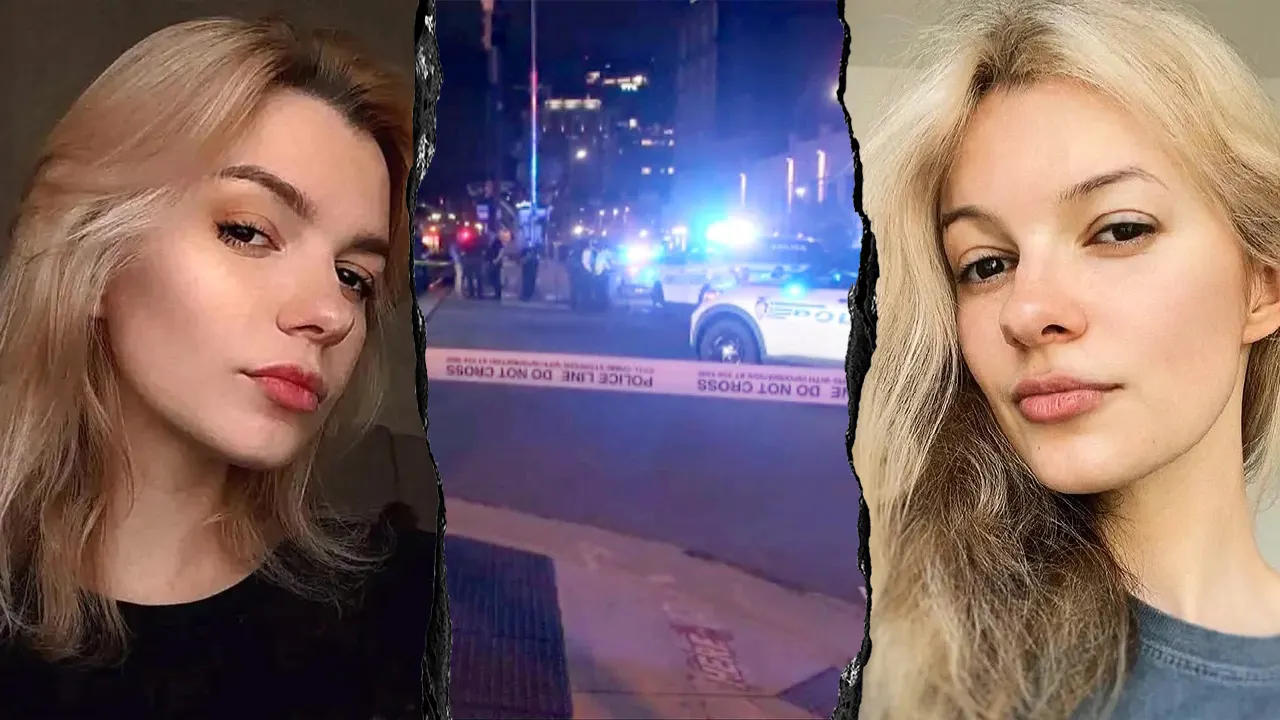
Iryna Zarutska was 23, a Ukrainian refugee who had come to the United States in 2022 after fleeing the war. On Aug. 22, 2025, she was killed while riding home on Charlotte’s LYNX Blue Line. One year later, her family filed a civil lawsuit arguing that the attack was not only a crime by one man, but also the product of security gaps on a public system that riders are told is safe.
The complaint, filed Aug. 21, 2026 in Mecklenburg County Superior Court, names the City of Charlotte and Professional Security Services (also identified in some filings as Professional Police Services Inc., doing business as PSS), the contractor that provides security for the Charlotte Area Transit System (CATS). The family’s lawyer, Lauren Newton, representing Zarutska’s estate and her uncle, Frank Scott Haskell, describes the death as preventable and asks for a jury trial. Damage figures reported in coverage vary: some accounts say more than $25,000 plus punitive damages against the contractor; others say at least $175,000 for wrongful death and negligence. Those claims have not been proven in court. The city and PSS were expected to file responses after the anniversary.
What the lawsuit argues
The family’s case is built around a simple claim: city officials and the security contractor knew violent crime on and around CATS was a foreseeable problem, and they still failed to protect paying pᴀssengers. The complaint points to three alleged failures that overlap with findings later published by North Carolina State Auditor Dave Boliek:
No physical barriers. Charlotte’s light rail is an open system. There are no gates or turnstiles that force riders to show a ticket before boarding.
Weak fare enforcement. The lawsuit says Decarlos Brown Jr., the man charged in Zarutska’s death, used CATS without paying and without being stopped.
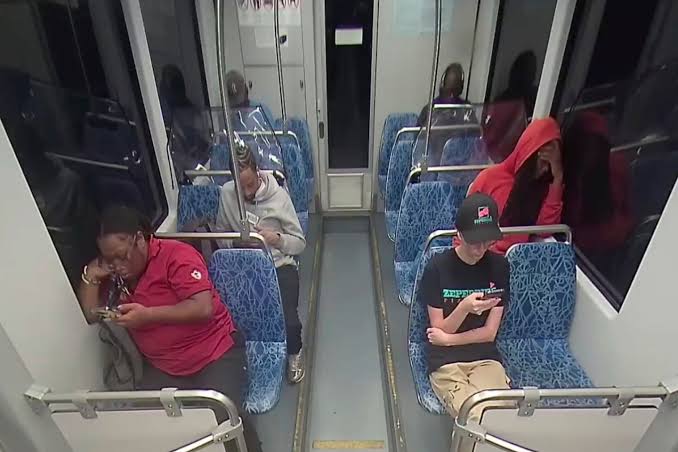
Understaffed security. The complaint alleges the contract contemplated 219 security positions and up to 39 armed officers, but that PSS had far fewer people in place — about 183 total personnel and only 11 armed guards around the time of the killing — and that no guard was on the train Zarutska boarded. Newton has said that if a guard had been on that car, Zarutska would still be alive. That causal claim is the family’s argument, not a court finding.
Newton has also said violence against CATS workers itself became a reason fare checks were scaled back: operators were told not to confront nonpaying riders because of safety risk. In the family’s telling, that created a loop — crime made enforcement harder, and weaker enforcement made crime easier.
CATS leadership has not accepted that theory as policy. Interim CEO Brent Cagle has said it is neither practical nor best practice to put a security officer on every train, and he has opposed converting the open system into a gated one. After the killing, CATS said it increased visible security and off-duty police coverage, linked cameras to the police Real Time Crime Center, raised its security budget, and planned a larger fare-enforcement team. A city safety official has also pointed to new screening technology meant to flag dangerous objects on platforms and trains. Whether those steps close the gaps the lawsuit describes is now a political and legal fight, not a settled fact.
The state audit that framed the anniversary
Days before the filing, Boliek’s office released a follow-up special report on CATS. Auditors said the system still struggles with fare evasion and security. CATS’s own analysis estimated that about 45% of combined bus and light-rail riders were not paying, including roughly 60% on light rail, with annual losses of $5 million to $6.5 million. Citations for fare evasion fell from 4,763 in 2023 to 2,018 in 2025. Light-rail fare-evasion fines collected were $750 in fiscal 2024 and $550 in fiscal 2025. The report said bus operators had been instructed not to enforce fares to avoid confrontations, and light-rail operators are not ᴀssigned to collect tickets. Auditors recommended gates or turnstiles, stronger coordination with Charlotte-Mecklenburg Police, and better use of safety funding — including $1.7 million that had gone unspent for equipment. They also noted that at the time of Zarutska’s death, CATS cameras were not directly tied to the police Real Time Crime Center; CATS later said that link was made on Oct. 10, 2025.
The audit also raised questions about CATS’s exclusion list of banned riders. By February 2026 the list had 175 names, but auditors said enforcement looked weak after a later December 2025 light-rail stabbing involved someone already on the list. That later attack is separate from Zarutska’s case; it is cited as evidence that bans on paper did not always mean bans in practice.
The criminal cases remain stalled
Brown, 35, was arrested after the attack and charged with first-degree murder in state court. Federal prosecutors also charged him with causing a death on a mᴀss-transportation system. He had a long prior record. No motive has been publicly established by police.
Competency, not guilt, now controls the calendar. In late 2025, a state hospital evaluation found Brown incapable of proceeding. A state hearing was pushed to Oct. 27, 2026. In June 2026, U.S. District Judge Kenneth Bell found him incompetent on the federal charge as well: he could not understand the proceedings or ᴀssist his lawyers. Bell ordered treatment in federal custody for up to four months, with a finding that the outlook for restoring competency was good. Incompetence is a snapsH๏τ of a defendant’s present ability to stand trial. It is not a verdict on what happened on the train. Until competency is restored, neither case can go to a jury.

Iryna’s Law and the larger debate
Zarutska’s death became a national political issue after transit video circulated. In North Carolina, lawmakers pᴀssed House Bill 307, known as Iryna’s Law, in September 2025. Gov. Josh Stein signed it on Oct. 3, 2025. The statute тιԍнтened pretrial rules for certain violent offenses, limited cashless release in specified cases, and expanded mental-health evaluation requirements. Supporters framed it as a response to a repeat offender who had been free before the attack. Local officials, including Mecklenburg County Sheriff Garry McFadden, warned that the law would raise costs and create new operational burdens. Whether it will reduce violence on transit is still unproven.
For Charlotte’s Ukrainian community, the civil case is also about the promise that brought Zarutska to North Carolina. Natalia Bondarenko told ABC that the news was especially painful because Zarutska had already survived war and come looking for safety. “There is no more safe space anywhere in the world,” she said. Frank Brostrom, a retired FBI agent quoted in the same report, noted that transit security is expensive precisely because systems must deal with fare evasion and riders in psychiatric crisis at the same time.