A Heartbreaking Case: The 4-Year-Old Girl with Bulging Eyes and an Enlarged Head Due to Neuroblastoma
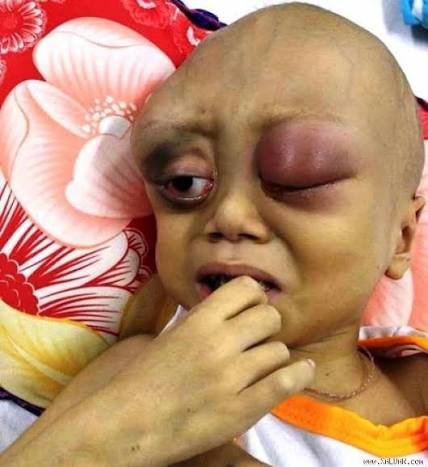
At just four years old, a little girl was facing a frightening medical condition that dramatically affected her appearance and threatened her health.
Her parents first became concerned when they noticed that their daughter’s eyes seemed to protrude unusually from her face. Her head also appeared larger than normal, making them increasingly worried about what could be happening inside her body.
As the symptoms became more pronounced, the family sought medical help. After a series of examinations, doctors identified a serious diagnosis: neuroblastoma.
Neuroblastoma is a rare childhood cancer that develops from immature nerve cells called neuroblasts. It primarily affects babies and young children and most commonly originates in the adrenal glands, although it can develop in other parts of the nervous system.
One of the most concerning characteristics of this cancer is its ability to spread beyond its original location.
When neuroblastoma spreads to the bones around the eyes, children may develop dark bruising around the eyes, swelling, and a noticeable protrusion of the eyeballs. This appearance is sometimes described as raccoon eyes.
In more advanced cases, the cancer may also spread to the skull and other bones, causing pain and additional complications. An enlarged head, however, is not a typical defining symptom of neuroblastoma and requires separate medical investigation.
For a four-year-old child, facing such a serious diagnosis can mean repeated hospital visits, intensive examinations, and difficult treatment.
Depending on the stage and biological characteristics of the tumor, doctors may recommend chemotherapy, surgery, radiation, immunotherapy, or other specialized treatments.
Her family must navigate each stage of the medical journey while trying to preserve the happiness and comfort of their young daughter.
Neuroblastoma can be an aggressive disease, particularly in high-risk cases, but some forms respond very well to treatment. The outlook varies considerably depending on the child’s age, disease stage, and tumor biology.
This little girl’s story reminds us how vulnerable young children can be when faced with serious illnesses. Behind the physical changes is a child who still deserves to play, smile, feel safe, and experience the love of her family.