Sirenomelia: The Rare and Devastating Congenital Condition Known as Mermaid Syndrome
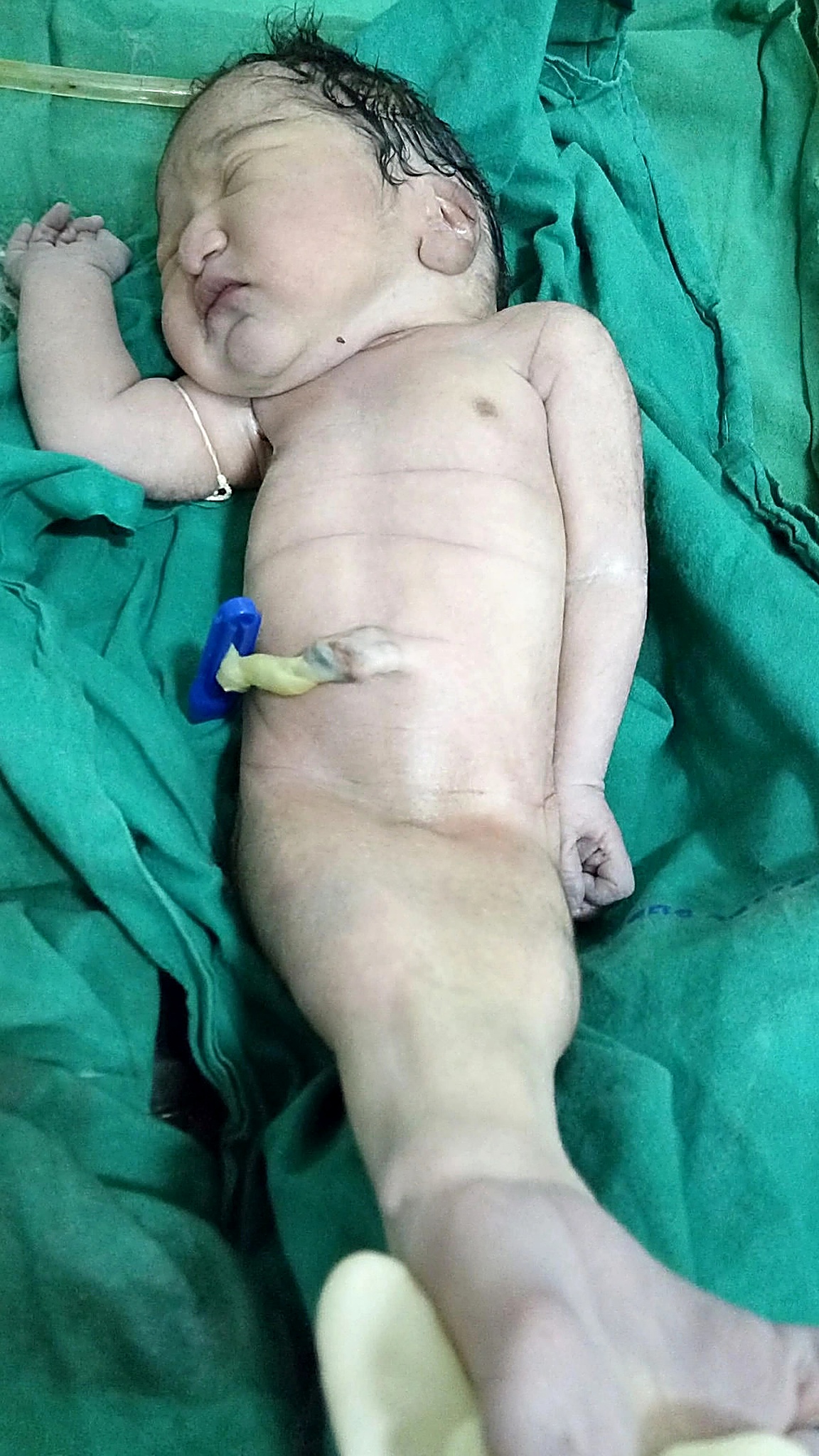
The birth of a baby is usually one of the happiest moments in a family’s life. Parents look forward to holding their newborn, counting their tiny fingers and toes, and watching their child begin a new journey.
However, for families affected by Sirenomelia, the first moments after birth can bring an unexpected and frightening medical discovery.
Instead of developing two normally separated lower limbs, a baby with this rare congenital condition may be born with legs that are partially or completely fused together. The unusual appearance resembles the tail of a mermaid, which is why the disorder is commonly known as Mermaid Syndrome.
Sirenomelia is one of the rarest and most severe congenital abnormalities in humans. Its estimated occurrence is approximately 1 in 60,000 to 100,000 births, although reported estimates vary between sources.
Beyond its unusual external appearance, the condition can involve serious abnormalities affecting several internal organs.
What Is Sirenomelia?
Sirenomelia is a rare congenital disorder characterized by varying degrees of fusion of the lower limbs.
The condition develops during early pregnancy, when the structures responsible for forming the lower part of the body do not develop normally.
In a typical pregnancy, the baby’s legs gradually develop as separate limbs, with distinct bones, muscles, joints, and feet.
In babies with Sirenomelia, this process is disrupted. The lower limbs may become partially or completely fused, creating a single limb-like structure.
The severity can vary significantly.
Some affected babies have two legs joined together along part of their length. Others may have more extensive fusion, with severely underdeveloped bones, missing joints, or abnormal feet.
In the most severe cases, the lower limbs may appear as one continuous structure without clearly distinguishable legs.
The appearance can be striking, but the greatest medical concerns often involve abnormalities inside the baby’s body.
Serious Abnormalities Affecting Internal Organs
One of the most dangerous aspects of Sirenomelia is its ᴀssociation with abnormalities of the urinary and reproductive systems.
The kidneys are particularly important because they filter waste products from the blood and produce urine.
Many babies affected by Sirenomelia have severe kidney abnormalities. These may include kidney dysplasia, underdeveloped kidneys, or renal agenesis, in which one or both kidneys fail to develop.
When both kidneys are absent or severely underdeveloped, the fetus may produce little or no urine.
This can lead to a serious shortage of amniotic fluid, a condition known as oligohydramnios.
Amniotic fluid plays an essential role in protecting the developing baby and supporting normal lung development.
When there is too little fluid during pregnancy, the baby’s lungs may fail to develop properly, resulting in pulmonary hypoplasia.
This is one of the major reasons why severe Sirenomelia can be life-threatening.
Other abnormalities may involve the bladder, ureters, reproductive organs, intestines, and lower portions of the spine.
Why Does Mermaid Syndrome Develop?
The exact cause of Sirenomelia is not fully understood.
Researchers have proposed several explanations involving abnormal blood vessel development and disruptions in the formation of the lower body during early embryonic development.
One prominent theory involves an abnormal pattern of blood circulation in the developing embryo.
Under this theory, an unusual blood vessel may redirect blood flow toward the placenta, reducing the normal blood supply to structures in the lower part of the developing body.
This may interfere with the development of the lower limbs and nearby organs.
However, the precise biological mechanisms remain under investigation, and no single explanation accounts for every case.
Sirenomelia is generally considered a sporadic developmental condition rather than a typical inherited disorder.
Can Babies With Sirenomelia Survive?
The survival of babies with Sirenomelia depends heavily on the severity of their internal organ abnormalities.
Historically, many infants with severe forms of the condition have died shortly after birth because of profound kidney abnormalities and respiratory complications.
When both kidneys are absent or nonfunctional, the baby cannot maintain normal kidney function.
The resulting lack of fetal urine production can also cause severe pulmonary hypoplasia, making independent breathing extremely difficult or impossible.
However, not every case has the same outcome.
Some babies have less severe abnormalities and may survive with intensive medical treatment, depending on the condition of their kidneys, lungs, digestive system, and other organs.
Medical specialists must evaluate each child individually to determine the available treatment options and expected outcome.
Treatment and Medical Challenges
There is no single treatment that can reverse all the abnormalities ᴀssociated with Sirenomelia.
Medical care focuses on identifying and managing the specific problems affecting each baby.
In selected surviving children, reconstructive surgery may be considered to separate fused lower limbs or improve their positioning and function.
Such procedures can be extremely complex because the bones, muscles, blood vessels, and nerves may have developed abnormally.
Children may require multiple operations, rehabilitation, and long-term orthopedic care.
Additional treatment may be necessary for urinary tract abnormalities, digestive system defects, and other ᴀssociated conditions.
The medical team may include neonatologists, pediatric surgeons, orthopedic specialists, urologists, nephrologists, and rehabilitation professionals.
The overall treatment plan depends on which organs are functioning and how severely they are affected.
A Rare Condition That Reminds Us of the Fragility of Life
Sirenomelia is more than an unusual physical abnormality. It is a complex congenital condition that can affect the development of several vital organs before a baby is even born.
For families receiving this diagnosis, the experience can be overwhelming. They may face difficult medical decisions, uncertain outcomes, and the possibility of losing their child.
Although the condition is exceptionally rare, advances in prenatal imaging, neonatal intensive care, and reconstructive surgery have helped doctors better understand and manage selected cases.
Every baby affected by Sirenomelia deserves compᴀssionate medical attention, dignity, and care.
Behind the medical terminology and extraordinary physical differences is a newborn child whose life matters.