A 3-Year-Old Girl Whose Face Was Transformed by an Aggressive Jaw Tumor
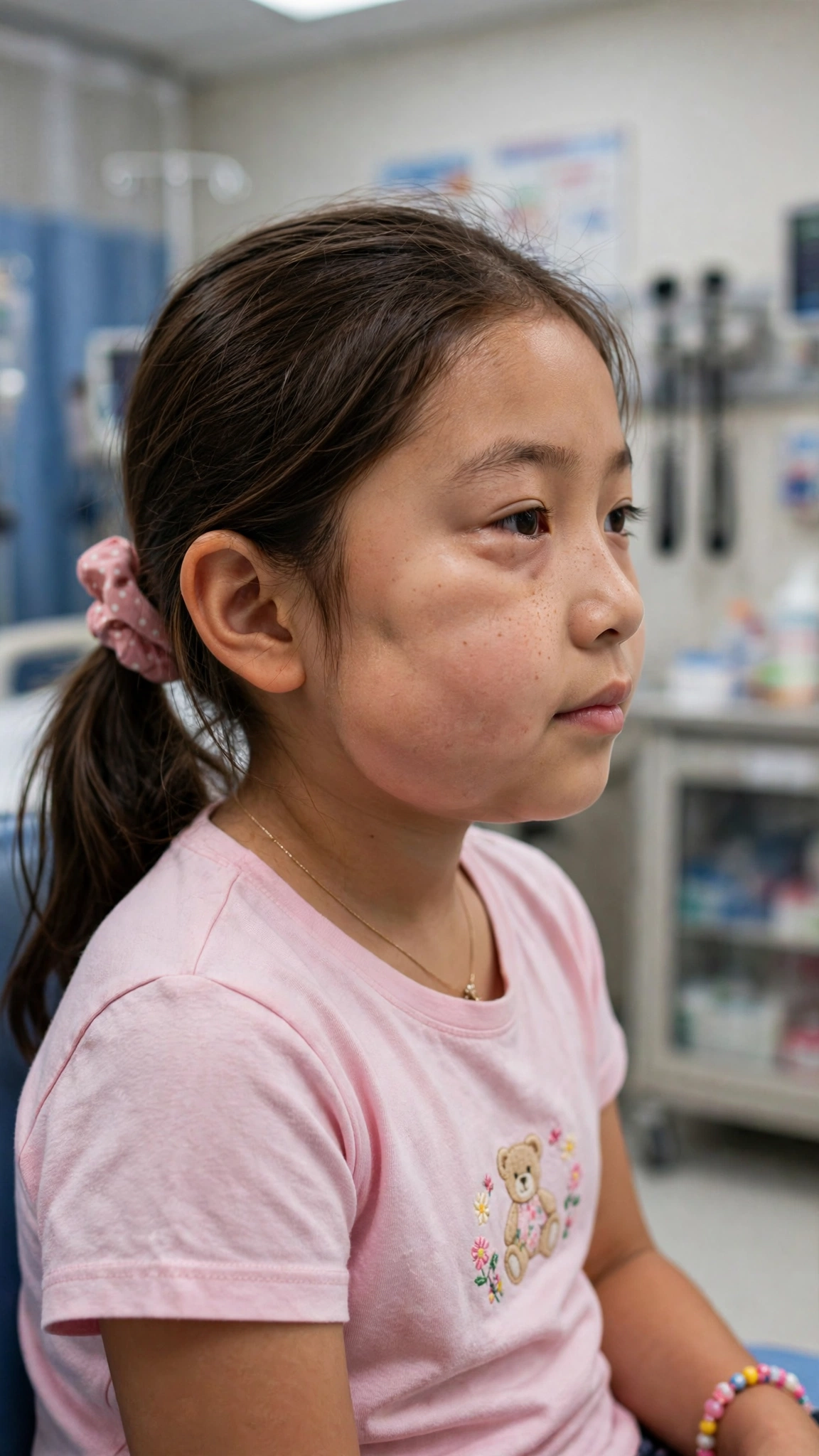
A little girl, just three and a half years old, was taken to the hospital after her family noticed that her left cheek had begun swelling. Initially, the enlargement was relatively small and did not appear to cause significant discomfort.
However, over the next two months, the mᴀss grew rapidly. What had started as a small swelling gradually became a large abnormal enlargement, dramatically changing the appearance of the left side of her face.
As the tumor continued to develop, it extended into the upper jawbone and the floor of the left eye socket. Its growth placed pressure on the surrounding structures, causing severe facial asymmetry and making one side of her face appear unusually enlarged.
Doctors conducted further examinations and performed a biopsy to identify the cause of the swelling. The results revealed that the child had ameloblastoma, a tumor originating from tissues involved in tooth development.
Although ameloblastoma is generally classified as a benign tumor, it can behave aggressively in the area where it develops. It may progressively invade surrounding bone and nearby structures, making treatment particularly challenging when it occurs in a young child.
Given the extent of the tumor, doctors determined that surgery was necessary. The medical team removed the affected portion of the upper jawbone and performed reconstructive surgery to repair the resulting defect.
The operation was an important step in removing the tumor while attempting to restore the affected facial structures.
After surgery, the little girl remained under regular medical observation. One year later, follow-up examinations showed no evidence of recurrence, bringing considerable relief after such a difficult medical journey.
Her experience illustrates how quickly certain tumors can develop, even in very young children. What initially appeared to be a minor swelling became a serious condition requiring extensive surgery.
Today, her story serves as a reminder of the importance of recognizing unusual physical changes and seeking medical attention early, especially when a child’s swelling continues to grow or changes rapidly.