Duonychus tsogtbaatari: the Gobi’s two-fingered “sword-claw” dinosaur—and why it was probably not a serial killer.lh
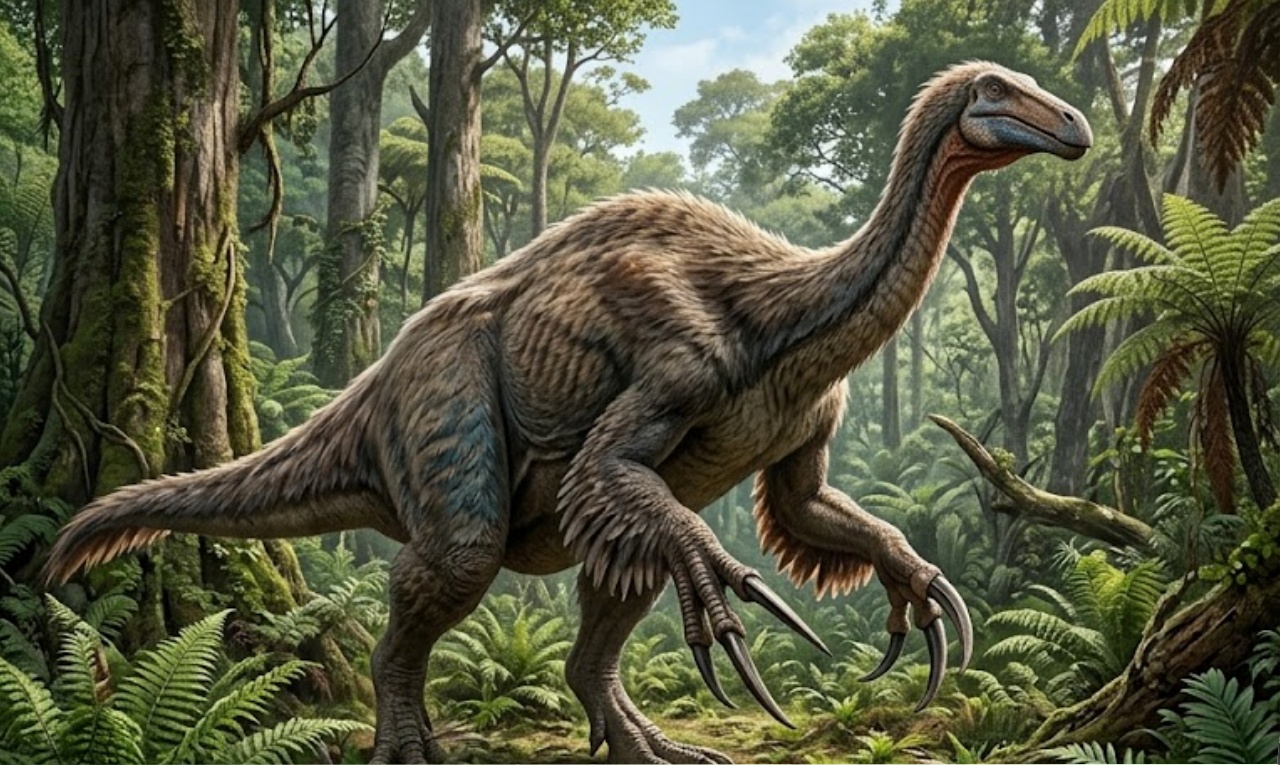
Duonychus tsogtbaatari: the Gobi’s two-fingered “sword-claw” dinosaur—and why it was probably not a serial killer
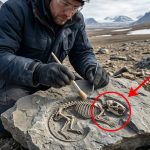
A new therizinosaur from Mongolia’s Gobi Desert, Duonychus tsogtbaatari, has been described from the Late Cretaceous Bayanshiree Formation (~96–90 million years ago)—and it breaks the group’s usual blueprint. Instead of the classic three-fingered “Edward Scissorhands” look, Duonychus had a true two-fingered (didactyl) hand, plus a rare 3D-preserved keratin sheath on one claw—essentially preserving the dinosaur’s “fingernail” as well as the bone beneath.
The claws are the headline: roughly ~30 cm and curved, with the sheath showing the living talon was longer and more hooked than the bony core alone would suggest. The fossil set includes both arms and other skeleton parts; popular reporting based on the study estimates an animal about ~3 m long and ~270 kg.
So—herbivore or killer? The best-supported read is: a plant-eater built to grab, not to hunt. Therizinosaurs are theropods that shifted toward herbivory/omnivory, and the reconstructed claw shape in Duonychus fits a hook-and-pull tool—good for drawing branches within reach. One analysis even estimates it could grasp vegetation about ~10 cm (4 in) thick, a very “browser” behavior rather than a predator’s toolkit.
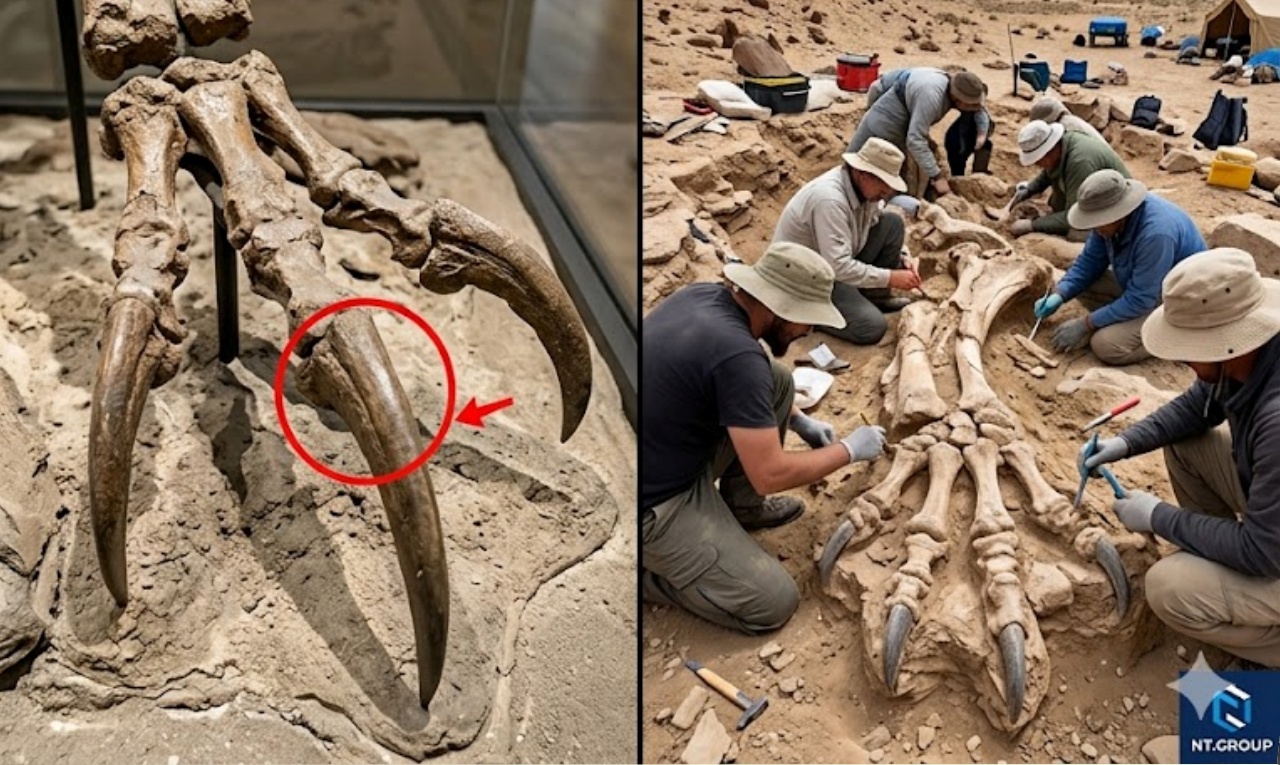
But don’t mistake “herbivore” for “harmless.” A two-fingered hand may have traded dexterity for stronger, more focused grip, making those twin blades excellent for defense, intimidation, or intraspecies combat. Duonychus doesn’t prove therizinosaurs were secret ᴀssᴀssins—it proves their famous claws were likely multi-purpose instruments, and that evolution sometimes sharpens weapons for eating salad.