PART 2: THE WIFE HE THOUGHT HE COULD REPLACE
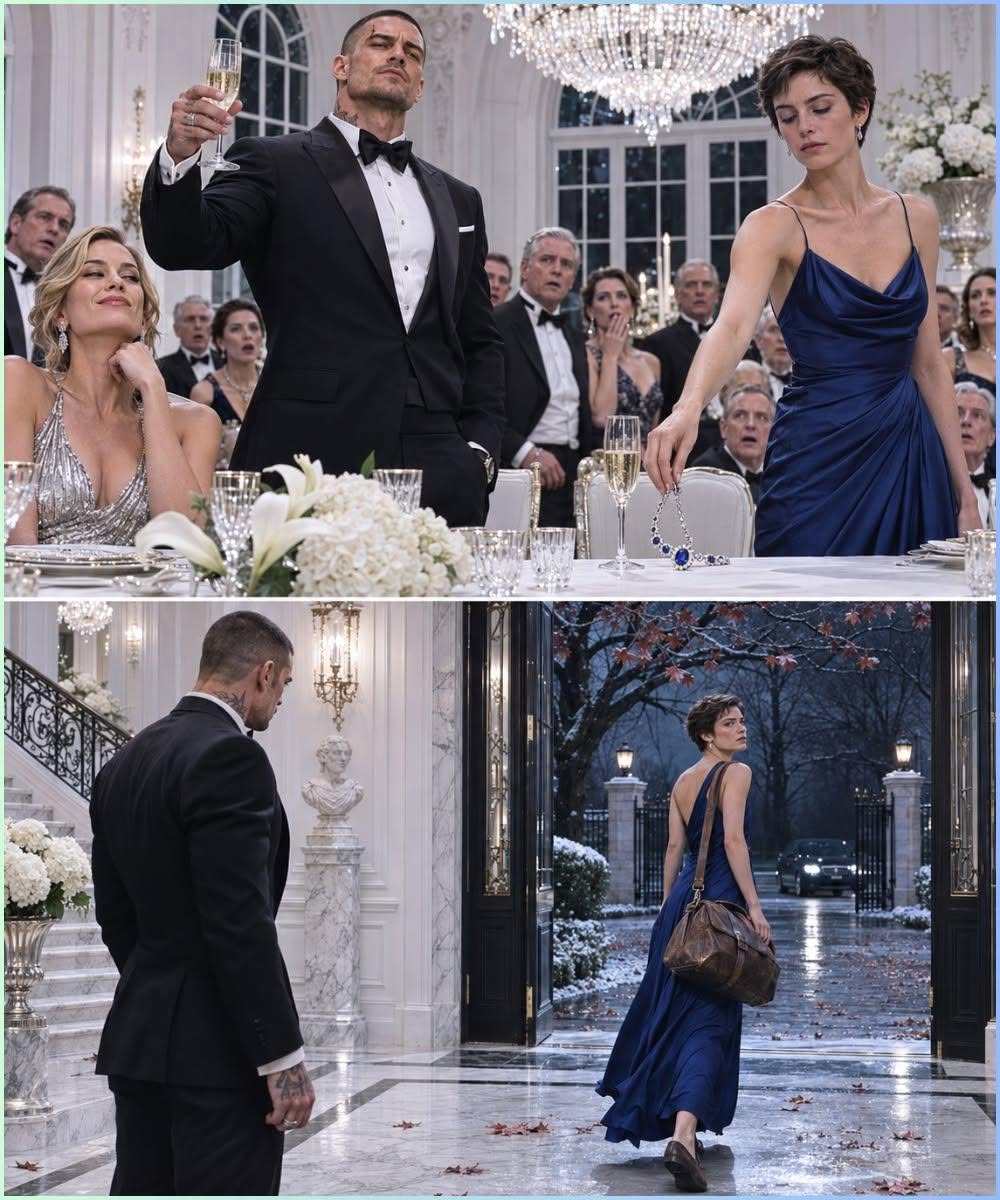
“What issue?”
His ᴀssistant, Natalie, placed the tablet on the table.
“The Baltimore shipping agreement has been suspended. The company handling our East Coast distribution has requested an emergency review of its authorization documents.”
Fletcher frowned.
“Why?”
“They’re saying the original agreement was personally negotiated by Lydia, and they won’t recognize the revised terms without her confirmation.”
He put down his coffee.
“Then get Lydia on the phone.”
Natalie hesitated.
“We’ve tried.”
“And?”
“Her number is disconnected.”
Fletcher looked at Owen.
“Find her.”
Owen didn’t move.
“Perhaps you should ask why the contract requires her specifically.”
Fletcher’s expression hardened.
“Because she negotiated it.”
“Exactly.”
“What’s your point?”
Owen pulled out a chair.
“My point is that you just publicly announced your marriage was over, dismissed the woman who saved that contract, and now you’re surprised the people she dealt with want to speak to her.”
Fletcher stared at him.
“She’s my wife.”
“Not according to the announcement you made in front of two hundred people.”
For a moment, the dining room became painfully quiet.
Fletcher picked up his phone.
“Get me the Baltimore office.”
Lydia was sitting in a small H๏τel room in Washington, D.C., when her old phone began ringing.
She recognized the number immediately.
Fletcher’s office.
She let it ring.
Then she opened her laptop and checked her email.
There were fourteen messages from former colleagues, three from lawyers, and one from a number she hadn’t saved.
The last message read:
Ms. Voss, we need to speak urgently regarding the Baltimore agreement. Your husband has attempted to modify the original authorization structure. We cannot proceed without clarification from you.
Lydia leaned back.
There it was.
The reason she had packed the black drive.
For six years, she had been more than Fletcher’s wife.
She had quietly managed several of the relationships that kept Voss Enterprises functioning. She understood the shipping agreements, the insurance arrangements, the regional contracts, and the financial safeguards that Fletcher preferred to leave to other people.
He was excellent at making deals.
She was excellent at noticing what those deals concealed.
And she had learned a long time ago that the most dangerous thing in business wasn’t a dishonest compeтιтor.
It was an agreement nobody bothered to read.
She opened the black drive.
Inside were copies of correspondence, signed agreements, financial records, and a series of documents she had collected over eighteen months.
She hadn’t stolen anything.
The files had been lawfully retained as part of her work on the company’s restructuring and contract negotiations.
Some were personal copies.
Others were records she had been instructed to preserve.
One folder was labeled:
BALTIMORE — ORIGINAL AUTHORIZATION.
She opened it.
The original contract contained a clause Fletcher had forgotten about.
Any material modification to the distribution agreement required written approval from the original negotiating representative until the contract’s fifth anniversary.
That representative was Lydia.
Fletcher had tried to change the payment structure three days before the gala.
Without her approval, the revised terms were invalid.
And the shipping company had noticed.
Lydia closed the laptop.
She wasn’t going to rescue him this time.
At Voss Enterprises, Fletcher was beginning to lose patience.
“How difficult is it to find one woman?” he demanded.
Natalie stood in front of his desk.
“We’ve contacted her attorney.”
“Which attorney?”
“Ms. Voss has retained independent counsel.”
Fletcher stopped.
“When?”
“Yesterday.”
“Who?”
Natalie gave him the name.
Fletcher recognized it.
Laura Mitchell.
A respected corporate attorney known for handling complicated commercial disputes.
He slowly put down his pen.
“Why would Lydia hire Laura Mitchell?”
Natalie didn’t answer.
Then another call came through.
This time it was from the company’s chief financial officer.
Fletcher answered immediately.
“What’s happening?”
“Fletcher, we have a serious problem.”
“Not another one.”
“The Baltimore company has frozen the revised agreement. They’re also requesting an audit of the previous payment adjustments.”
Fletcher stood.
“Who authorized that?”
“They say Lydia raised concerns about the original accounting structure months ago.”
His face тιԍнтened.
“She never mentioned anything to me.”
“Actually, she did. There are three emails in the compliance archive.”
Fletcher looked at Natalie.
“Find those emails.”
The CFO continued.
“There’s something else. Several of the revised payment instructions were submitted using your executive authorization.”
“Obviously. I’m the CEO.”
“Yes, but the original beneficiary details were changed. The compliance team wants to know why.”
Fletcher closed his eyes.
For the first time, he began to understand that Lydia’s departure had removed something much more important than a wife from his life.
It had removed the person who knew where every weak point was buried.
That afternoon, Celia arrived at his office.
She wore a cream-colored coat and carried two coffees.
“Darling, you’ve been ignoring my messages.”
Fletcher barely looked up.
“Not now.”
Her smile disappeared.
“What happened?”
“Baltimore.”
Celia placed the coffees on his desk.
“Isn’t Lydia handling that?”
Fletcher looked at her.
“That’s the problem.”
Celia hesitated.
“Well, surely someone else can take over.”
“Someone else?”
“You’re running a multimillion-dollar company. You can’t depend on one woman.”
Fletcher stared at her.
Then he laughed bitterly.
“That’s precisely what I thought.”
Celia moved closer.
“Fletcher, don’t let Lydia manipulate you. She knew you were going to leave her. Perhaps this is her way of making things difficult.”
He looked at her for several seconds.
“Do you know what the original contract says?”
“No.”
“Then perhaps you should stop talking about things you don’t understand.”
Her cheeks flushed.
“I was only trying to help.”
He turned back toward his computer.
Celia stood there, realizing that the position she had expected to occupy was becoming considerably less comfortable.
Two days later, Fletcher received an email from Lydia’s attorney.
The subject line was simple.
Formal Notice Regarding Separation and Corporate Authorization.
He opened it.
The letter confirmed that Lydia was seeking a divorce and had no intention of resuming her marital relationship.
It also clarified that she would not authorize any changes to agreements connected to her previous professional responsibilities without independent legal review.
Attached were copies of the original Baltimore contract and the three emails in which Lydia had previously warned the company about the proposed modifications.
Fletcher read the first email.
Then the second.
Then the third.
They had been sent to him six months earlier.
His responses were included.
Handle it yourself, Lydia. I don’t have time for another administrative problem.
He remembered sending that message.
At the time, he had been sitting in Manhattan with Celia.
He had considered Lydia’s concerns an interruption.
Now those emails were part of the official record.
He called her attorney.
Laura Mitchell answered.
“Mr. Voss.”
“I need to speak with Lydia.”
“She has made her position clear.”
“This is about the company.”
“Then you should communicate through the appropriate corporate channels.”
“Laura, don’t turn this into a legal war.”
Her response was immediate.
“Mr. Voss, your wife is not required to protect your company from the consequences of your decisions.”
He ended the call.
Then he did something he hadn’t done in years.
He drove to the place where Lydia’s mother used to live.
He remembered that Lydia sometimes visited the neighborhood when she needed to think.
But the house had been sold.
The new owners knew nothing about her.
For the first time, Fletcher realized he couldn’t simply summon Lydia whenever he needed her.
On Friday morning, the Voss Enterprises board convened an emergency meeting.
Fletcher arrived expecting to discuss the Baltimore agreement.
Instead, he found three additional directors waiting with the company’s legal counsel.
At the head of the table sat Margaret Ellis, the board chairwoman.
“Fletcher, we need to discuss your handling of the contract modifications.”
He sat down.
“There’s no misconduct. The paperwork is being reviewed.”
“That’s what concerns us.”
She opened a folder.
“Ms. Voss raised concerns about the revised payment arrangements six months ago. Those concerns were never presented to the board.”
“I was managing the negotiations.”
“Then why were you attempting to change an agreement that required her written authorization?”
Fletcher looked at the company’s counsel.
“Because the structure needed updating.”
“That may be true,” Margaret replied. “But you cannot simply bypᴀss the person whose approval is contractually required.”
He leaned forward.
“Where is Lydia now?”
Margaret closed the folder.
“That isn’t relevant to this meeting.”
“It is relevant to the company.”
“No, Fletcher. What is relevant is why you dismissed the one person who understood this contract better than anyone else.”
Nobody spoke.
Then the legal counsel placed another document on the table.
“There’s also a question concerning the proposed restructuring of the Baltimore subsidiary. The board needs clarification before proceeding.”
Fletcher glanced at the document.
His signature appeared at the bottom.
But there was something wrong.
The authorization date was two days before the gala.
And the document included a clause transferring certain outstanding liabilities to a new holding company.
A holding company whose sole proposed director was Celia Brandt.
Fletcher stared at it.
He had approved the restructuring proposal, but he hadn’t reviewed the final version.
“Who prepared this?”
Margaret looked at him.
“Your strategic adviser.”
For the first time, Fletcher realized that Celia might have been doing considerably more than helping him manage the business.
That evening, Lydia received a call from Owen.
She almost let it go to voicemail.
But she answered.
“Lydia?”
“Owen.”
“Are you safe?”
She looked toward the H๏τel window.
“Yes. Why?”
“Because Fletcher has been asking everyone where you are.”
“He knows where my attorney is.”
“He’s not interested in speaking to your attorney.”
“Then what does he want?”
Owen hesitated.
“He’s discovered something about Celia.”
Lydia closed her eyes.
“What?”
“She submitted a restructuring proposal that would have given her control over part of the Baltimore operation. The board found discrepancies in the documents.”
Lydia said nothing.
Owen continued.
“There’s something else. The proposal contains a reference to a financial account you once identified as suspicious.”
Her eyes opened.
“Which account?”
Owen gave her the number.
Lydia immediately recognized it.
It was the same account she had flagged in an internal compliance report seven months earlier.
She had asked Fletcher to investigate it.
He had told her to stop looking for problems that didn’t exist.
Now the account was connected to the proposed restructuring.
“Does Fletcher know?”
“Yes.”
“What did he say?”
“Nothing. He’s been sitting in his office for two hours.”
Lydia looked at the black drive on the desk.
“Send the board a copy of my original report.”
“I can’t. It contains confidential information.”
“Then tell their legal counsel how to request it through the proper process.”
Owen exhaled.
“You’re really not coming back, are you?”
Lydia looked at the empty sapphire box beside her pᴀssport.
“No, Owen.”
Her voice was calm.
“I’m not.”
The following Monday, Lydia attended a formal meeting with the board’s independent counsel.
She wore a charcoal suit, simple earrings, and the expression of someone who had finally stopped apologizing for taking up space.
Fletcher was already there.
When he saw her, he stood.
“Lydia.”
She nodded politely.
“Fletcher.”
He looked at her as if he were seeing her for the first time.
She wasn’t wearing the necklace.
She wasn’t carrying the old traveling bag.
And she wasn’t standing behind him.
Margaret Ellis opened the meeting.
“Ms. Voss, thank you for coming. We would like you to explain your concerns regarding the Baltimore agreement and the proposed restructuring.”
Lydia placed her folder on the table.
“Of course.”
She walked them through the original agreement, the authorization clause, the payment discrepancies, and the emails she had sent months earlier.
She explained why the proposed restructuring created unnecessary risk.
She also provided the original compliance report identifying the suspicious account.
The room remained silent.
When she finished, the company’s legal counsel turned toward Fletcher.
“Mr. Voss, did you review these concerns when they were originally submitted?”
Fletcher looked at Lydia.
Then at the documents.
“Not in sufficient detail.”
Margaret’s expression hardened.
“That is an understatement.”
Celia’s proposed restructuring was suspended.
The board initiated a full independent review.
Fletcher was asked to step aside from direct involvement in the Baltimore matter while the investigation continued.
And Lydia?
She was offered an opportunity to consult independently on the contract review.
She declined any permanent position.
She had no interest in returning to the life she had left.
After the meeting, Fletcher caught up with her in the corridor.
“Lydia, wait.”
She stopped.
He looked exhausted.
“I didn’t know.”
She turned.
“Didn’t know what?”
“About Celia’s restructuring proposal. About the account. About the extent of the problems.”
“You didn’t know because you never asked.”
“I thought I was handling everything.”
“You thought you were handling everything because I had spent years quietly fixing what you overlooked.”
He swallowed.
“I know.”
She looked at him.
“Do you?”
He stepped closer.
“I made a terrible mistake at the gala.”
Lydia shook her head.
“The gala wasn’t the mistake, Fletcher. It was just the first time you made your decision in front of witnesses.”
He looked down.
“I want to make this right.”
“You can start by telling the truth to the board.”
“And us?”
“There is no us.”
His eyes filled.
“Six years, Lydia.”
“Yes. Six years.”
“I loved you.”
She studied his face.
“Then you should have treated me like someone you loved.”
He reached for her hand.
She stepped away.
“Please don’t.”
He lowered his arm.
For a moment, they stood in silence.
Then Lydia walked toward the elevator.
This time, Fletcher didn’t follow.
Three months later, the independent review was completed.
The board confirmed that the Baltimore agreement had been improperly modified and that the proposed restructuring contained serious authorization and financial control deficiencies.
Celia’s role was terminated following the review, and the company pursued the appropriate recovery and legal procedures concerning the disputed transactions.
Fletcher remained CEO, but the board imposed additional oversight over major financial decisions.
The Baltimore contract was restored under its original terms.
And the employees kept their jobs.
Lydia’s divorce was finalized shortly afterward.
She received a fair settlement through the legal process, including the ᴀssets she was enтιтled to under the marriage agreement.
She did not ask for the company.
She did not ask for Fletcher’s mansion.
She didn’t even ask for the expensive jewelry.
She asked for the things that were legally hers and nothing more.
Then she moved to a small coastal town in Maine.
She rented a beautiful apartment overlooking the harbor and started a consulting firm specializing in commercial negotiations and business risk management.
Her first client was a shipping company.
Her second was a family-owned construction business.
Within six months, she had hired three employees.
She chose the office furniture herself.
She named the company Harborline Advisory.
And on the wall behind her desk, she placed a framed pH๏τograph of her mother.
One morning, Owen called.
“He’s been asking about you.”
Lydia smiled faintly.
“How is he?”
“Working too much. Sleeping too little.”
“That sounds familiar.”
Owen chuckled.
“He’s not the same man.”
“Neither am I.”
There was a pause.
Then Owen asked the question he had probably been saving for months.
“Do you ever regret leaving?”
Lydia looked through the window.
The morning sun was spreading across the water.
She thought about the woman who had once spent forty-three hours saving Fletcher’s company.
The woman who had apologized for needing him after losing their child.
The woman who had stood in front of two hundred people while her husband announced their separation as if he were canceling a business appointment.
“No,” she said.
“Not anymore.”
A year after the gala, Lydia received an invitation to a business awards ceremony in Boston.
Harborline Advisory had been nominated for a regional leadership award.
She attended wearing a simple midnight-blue dress.
No sapphire necklace.
No borrowed diamonds.
Just a small silver bracelet her mother had given her years earlier.
When the host announced her name, Lydia walked onto the stage.
The audience applauded.
She accepted the award and approached the microphone.
“I used to believe that being indispensable to someone meant they would never let you go,” she began.
The room grew quiet.
“But I learned that being indispensable and being valued are two very different things.”
She looked across the audience.
“Sometimes the greatest professional and personal achievement isn’t saving something you’ve spent years building. Sometimes it’s having the courage to walk away when the cost of staying becomes too high.”
The applause grew louder.
Lydia smiled.
For the first time in years, she wasn’t applauding someone else’s success.
She was standing inside her own.
Across the room, a man approached her after the ceremony.
His name was Andrew Cole, a financial consultant who had collaborated with her on a recent project.
He congratulated her and asked whether she would join him for coffee.
Lydia smiled.
“Perhaps next week.”
Not because she was afraid of love.
Because she had finally learned that she didn’t need to rush toward anyone to prove she was worthy of being chosen.
That night, back in her apartment, Lydia opened an old jewelry box.
At the bottom was the small velvet pouch that had once held the sapphire necklace.
She remembered Fletcher fastening it around her throat.
She remembered his words.
What would I do without you?
For years, she had believed that was a declaration of love.
Now she understood the difference.
He had been grateful for what she could do.
He had never fully understood who she was.
She closed the box and placed it back in the drawer.
Then she turned off the light.
Somewhere in Providence, Fletcher Voss was still living in the mansion where he had announced the end of their marriage.
But Lydia no longer thought about whether he missed her.
She had stopped measuring her worth by the regret of the man who lost her.
He had given her a sapphire necklace because she saved his company.
He had lost her because he forgot she was the woman who made it worth saving.
And this time, when Lydia walked away, she didn’t leave anything behind that she wanted back.
THE END.